
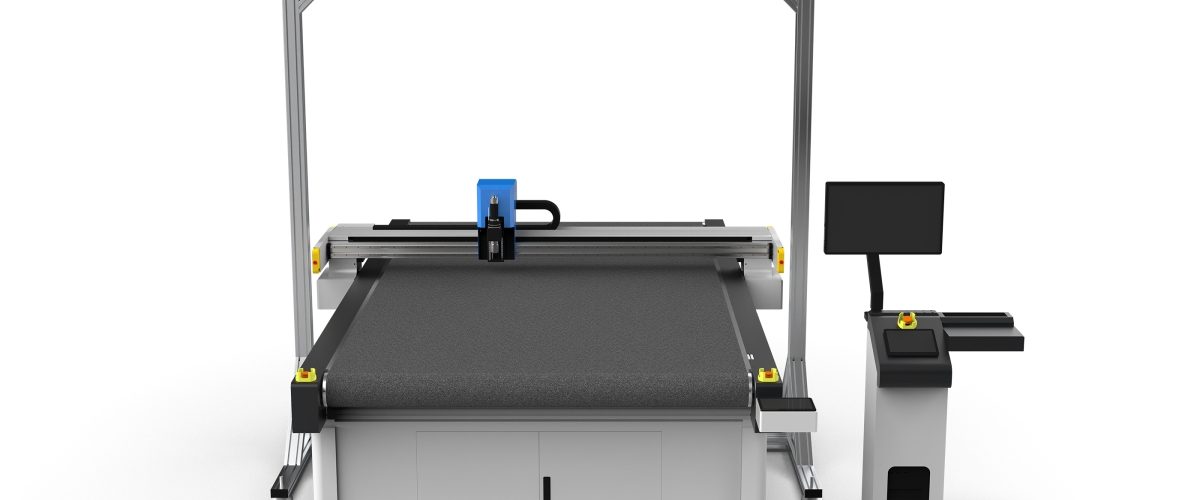
An oscillating knife cutting machine is a computer-controlled cutting tool that uses a rapidly oscillating blade to precisely cut flexible materials such as foam, fabric, and composites.
Practical Guide to Maintenance and Repair of Oscillating Knife Cutting Machines
As core equipment for cutting flexible materials, the stable operation of an oscillating knife cutting machine directly affects production efficiency and cutting quality.However, many users experience frequent equipment failures and shortened service life due to a lack of systematic maintenance knowledge.
Based on practical repair experience, this article summarizes an actionable maintenance and repair plan covering daily inspections, periodic maintenance, and common troubleshooting for reference by equipment operators and maintenance personnel.
I. Daily Maintenance (Performed Every Shift)
Daily maintenance is the first line of defense against failures. It is simple to perform but crucial.
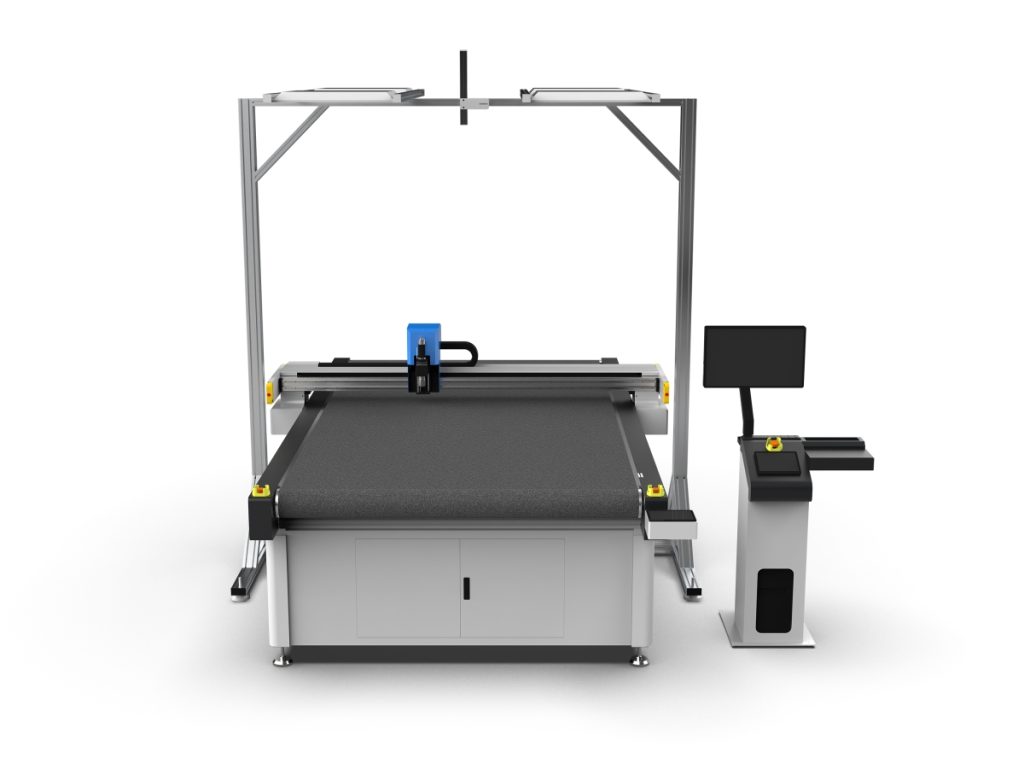
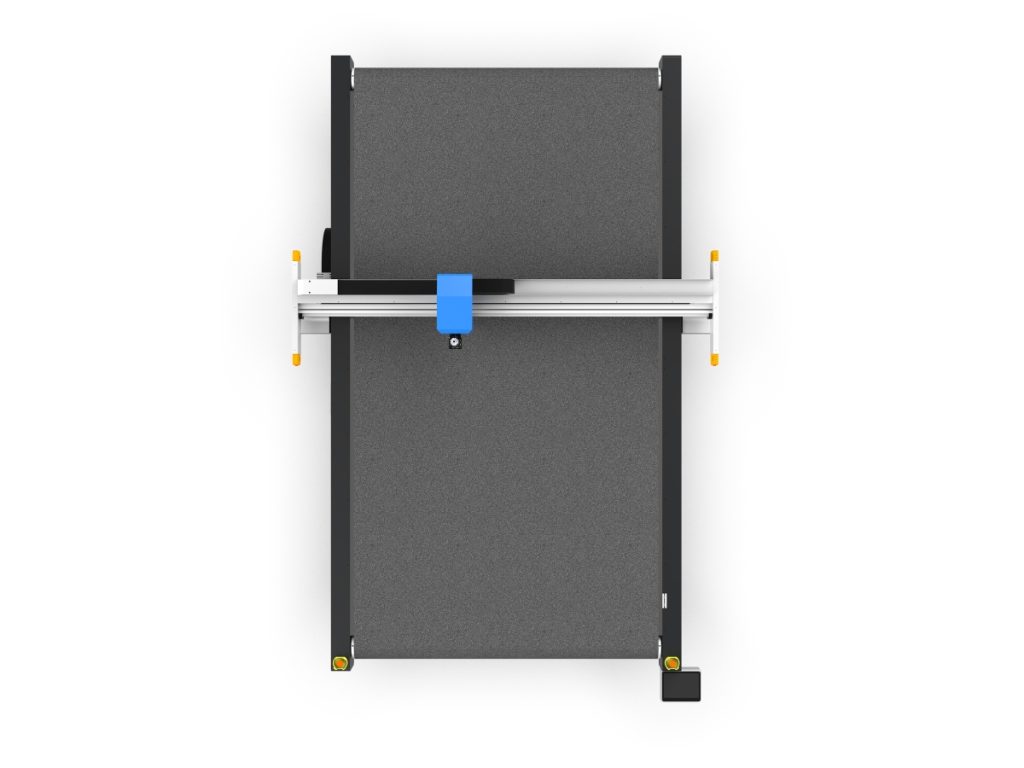
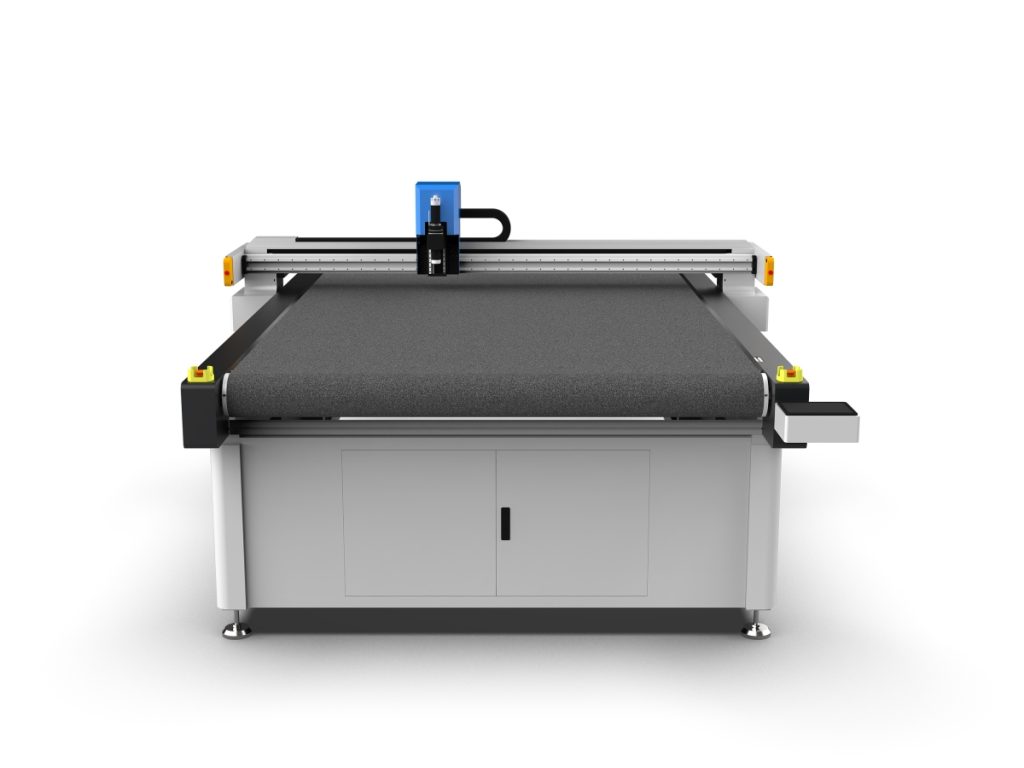
- Clean the worktable and guide rails: After each shift, use a vacuum cleaner or soft brush to remove debris from the table, then wipe the guide rail surfaces with anhydrous ethanol to ensure no dust accumulation. Dust entering the guide rails will aggravate wear and reduce cutting accuracy.
- Check blade condition: Observe whether the blade tip is worn or chipped. If cutting resistance increases significantly or burrs appear at the cut edge, replace the blade promptly. Typically, when cutting medium-density materials (such as EVA foam), blade life is about 8-12 hours, depending on the material.
- Check air supply pressure: Oscillating knife cutting machines mostly use pneumatic clamping or air-blow cooling, and the air supply pressure should be stable at 0.6-0.8 MPa. Check the pressure gauge every shift; if it is below 0.5 MPa, check the air compressor or piping for leaks.
- Clean the electrical cabinet cooling fan: Use compressed air (pressure <= 0.3 MPa) to blow out the electrical cabinet air inlet and outlet to prevent dust blockage from causing overheating. When the ambient temperature is above 40°C, it is recommended to increase the cleaning frequency.
II. Periodic Maintenance (Weekly/Monthly/Quarterly)
1. Weekly Maintenance Items
- Lubricate linear guide rails and lead screws: Use lithium-based grease (NLGI grade 2) to lubricate guide rail sliders and ball screws. First remove old grease, then apply a thin layer evenly; excessive grease will attract dust. For high-speed models (cutting speed > 1 m/s), weekly lubrication is recommended.
- Check timing belt tension: Press the middle of the timing belt with your finger; the deflection should be between 3-5 mm. Too loose will cause lost steps, while too tight will accelerate bearing wear. To adjust, loosen the motor mount bolts, move the motor to the proper position, and tighten.
- Check the tool chuck: Confirm that the chuck is not loose or worn. If clamping force decreases, replace the chuck or spring collet. Chuck runout should be <= 0.02 mm, which can be checked with a dial indicator.
2. Monthly Maintenance Items
- Clean or replace the air filter: Remove the filter cup from the air source treatment unit, clean the filter element with a neutral cleaning agent, and reinstall after drying. If the filter element is damaged or severely clogged, it must be replaced. It is recommended to check once a month and replace the filter element every three months.
- Check electrical connections: After powering off, check whether the terminal blocks and contactor wiring in the electrical cabinet are loose, and tighten them one by one with a screwdriver. Focus on checking the motor power lines and encoder cables to avoid poor connections causing alarms.
- Test the emergency stop and safety devices: Press the emergency stop button and confirm that the equipment stops immediately and cuts off power; check whether the safety light curtain (if equipped) is sensitive. Safety devices that fail must be repaired immediately.
- Calibrate cutting accuracy: Cut a standard test pattern (such as a 100 mm x 100 mm square) once and measure the actual dimensional deviation. If the deviation exceeds +/-0.1 mm, check guide rail wear, timing belt tension, or tool compensation parameters.
3. Quarterly Maintenance Items
- Replace lubricating oil: For reducers or gearboxes using oil lubrication, replace the lubricating oil every 2000 operating hours or every quarter (such as ISO VG68 gear oil). When replacing, drain the old oil and clean the oil plug.
- Check the cable drag chain: Check whether the drag chain is worn or deformed and whether the cables have damaged insulation. The drag chain bending radius should be >= 7.5 times the cable outer diameter; replace promptly if abnormalities are found.
- Tighten mechanical connections: Use a torque wrench to check all mechanical connection bolts (such as guide rail mounting bolts and motor mount bolts) and tighten them to the manufacturer-specified torque values. Typically, the torque for M6 bolts is 8-10 N·m and for M8 bolts is 20-25 N·m.
- Clean the cooling system: If the equipment is equipped with a water cooling system (such as a high-power spindle), replace the cooling water and clean the water tank every quarter to prevent scale blockage. Deionized water or dedicated coolant is recommended for cooling water.
III. Common Fault Diagnosis and Repair
1. Decreased Cutting Accuracy
Possible causes: Guide rail wear, loose timing belt, blade wear, large tool chuck runout, servo parameter drift.
Troubleshooting steps:
① Check whether the blade is worn and test with a new blade;② Use a dial indicator to check chuck runout;if >0.02 mm, replace the chuck;③ Check timing belt tension and adjust to the standard value;④ Clean and lubricate the guide rails;if wear is severe (such as grooves on the surface), replace the guide rails;
⑤ Re-adjust servo gain or restore factory parameters.
2. Equipment Alarm “Servo Overload”
Possible causes: Excessive mechanical resistance, poor contact of motor power lines, incorrect drive parameters, motor overheating.
Troubleshooting steps:
① After powering off, manually move each axis and feel whether the resistance is uniform;if there is sticking, check whether the guide rails or lead screws lack oil or contain foreign matter;② Check whether the motor power line plugs are loose and use a multimeter to measure the resistance between lines (three-phase balance);
③ Check the drive overload parameter settings (such as overload multiple) and adjust if necessary;④ Check the motor temperature;if it exceeds 80°C, improve heat dissipation or reduce the load.
3. Insufficient Pressure in the Pneumatic System
Possible causes: Air compressor failure, pipeline leakage, filter blockage, pressure reducing valve damage.
Troubleshooting steps:
① Check the air compressor output pressure; if normal, inspect the piping;
② Apply soapy water to the joints and observe whether bubbles appear;
③ Clean or replace the filter element;
④ Adjust the pressure reducing valve; if it cannot be adjusted, replace it.
4. Abnormal Blade Wear or Breakage
Possible causes: Improper cutting parameters (too fast speed, too deep cut), hard impurities in the material, incorrect blade installation, insufficient cooling.
Troubleshooting steps:
① Reduce cutting speed (such as from 800 mm/s to 500 mm/s) and cutting depth (no more than 1/3 of material thickness per pass);
② Check whether the material contains metal impurities;
③ Reinstall the blade, ensuring the chuck is clean and the blade is vertical;
④ Turn on air-blow cooling and ensure the airflow is directed at the cutting point.
IV. Maintenance Precautions
- Safety first: Before any maintenance, power and air must be disconnected, and a “Do Not Switch On” warning sign must be hung. Electrical maintenance must be performed by a certified electrician.
- Use original parts: For key components such as blades, timing belts, and guide rails, it is recommended to use original or equivalent-quality parts to avoid secondary failures caused by dimensional tolerances.
- Keep a maintenance log: Establish an equipment maintenance file to record each maintenance activity, replaced parts, and fault symptoms, facilitating pattern analysis and advance spare parts preparation.
- Environmental control: The equipment should be installed in an environment with a temperature of 10-35°C and humidity < 70%, avoiding dust and corrosive gases.
By implementing the above maintenance plan and troubleshooting methods, the failure rate of oscillating knife cutting machines can be significantly reduced and service life extended.In practical application, maintenance intervals should also be appropriately adjusted according to equipment usage frequency and material characteristics.
Regularly training operators to ensure they master basic maintenance skills is key to ensuring long-term stable operation of the equipment.
FAQ
How often should I clean the guide rails of an oscillating knife cutting machine?
Guide rails should be cleaned after every shift using a vacuum or soft brush to remove debris, followed by wiping with anhydrous ethanol. This prevents dust accumulation that can accelerate wear and reduce cutting accuracy. In high-dust environments, increase cleaning frequency to twice per shift.
What is the recommended air pressure for pneumatic systems on these machines?
The air supply pressure should be maintained between 0.6 and 0.8 MPa. Check the pressure gauge every shift; if it drops below 0.5 MPa, inspect the air compressor and piping for leaks. Stable pressure ensures proper clamping and cooling during cutting operations.
How can I check if the timing belt needs adjustment?
Press the middle of the timing belt with your finger; the deflection should be 3-5 mm. If it’s too loose, the machine may lose steps; if too tight, bearing wear accelerates. Adjust by loosening the motor mount bolts, repositioning the motor, and retightening.
What should I do if the cutting accuracy decreases?
First, check for loose chuck or worn blades. Ensure chuck runout is ≤ 0.02 mm using a dial indicator. Also, verify guide rail lubrication and belt tension. If issues persist, calibrate the machine by cutting a test square and measuring actual dimensions against the programmed values.