
- Applicable material thickness 0.5–60mm; cutting 5mm sponge versus 40mm high-density EVA is a one-tier difference in configuration.
- Repeat positioning accuracy ±0.05mm, finished cutting accuracy ±0.1mm; the manufacturer must specify the test conditions.
- Vibration frequency 0–12000 times/minute adjustable, amplitude 0.5–3mm; thin materials use high frequency and small amplitude.
- Vacuum zoned adsorption commonly has 4–8 zones, paired with a 5.5–7.5kW vacuum pump; dense nesting of small parts saves adsorption force.
- Common-edge cutting can save 5%–12% of material in leather, luggage, and automotive interior orders.
- Acceptance: continuous cutting of 200 pieces with all dimensional tolerances within ±0.1mm, and first-to-last piece dimensional difference ≤0.1mm.
1. First make the manufacturer clarify “what is being cut,” then discuss price
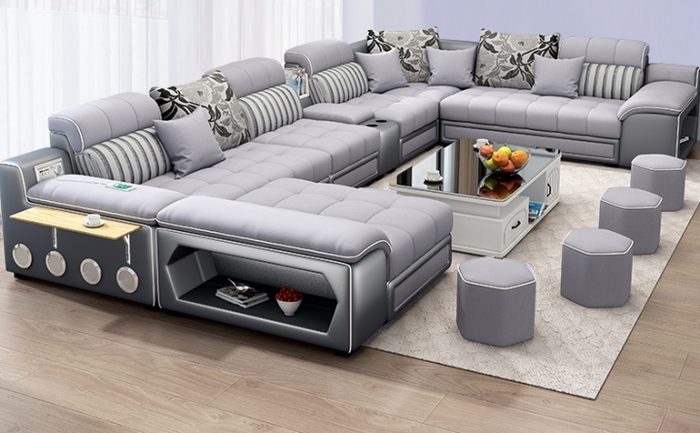
The most common reason for failed inquiries is that the buyer only sent “I want an oscillating knife cutting machine” and the manufacturer only replied “160,000.” Neither side mentioned material, thickness, capacity, or accuracy requirements, so this price is not comparable. The oscillating knife is suitable for 0.5–60mm flexible and semi-rigid materials: EVA, sponge, pearl cotton (EPE), leather, non-woven fabric, carpet, automotive interior carpet, glass fiber prepreg, honeycomb cardboard, corrugated paper, KT board, and PVC foam board, etc. For the same machine, cutting 5mm sponge versus cutting 40mm high-density EVA is a one-tier difference in configuration.
Three specific questions to ask at the outset
- When cutting the same material continuously for 8 hours, is the blade replacement cycle calculated by meters or by hours? The normal value should be in the 3000–15000 meter range, as material abrasiveness varies greatly.
- When the material exceeds 30mm, is the oscillating knife used for layered cutting, or is it switched to a circular knife, long knife, or die cutting? Layered cutting will produce joint marks, and it needs to be confirmed whether this is acceptable.
- For adhesive-containing and glass fiber-containing materials, how are the table felt and adsorption air duct prevented from clogging? Is there a detachable cleaning structure?
Manufacturers who can immediately give specific values and structural explanations are usually those who have assembled and debugged the machines themselves; those who only answer “no problem, it can cut everything” are mostly traders.
II. Core component list, check parameters item by item
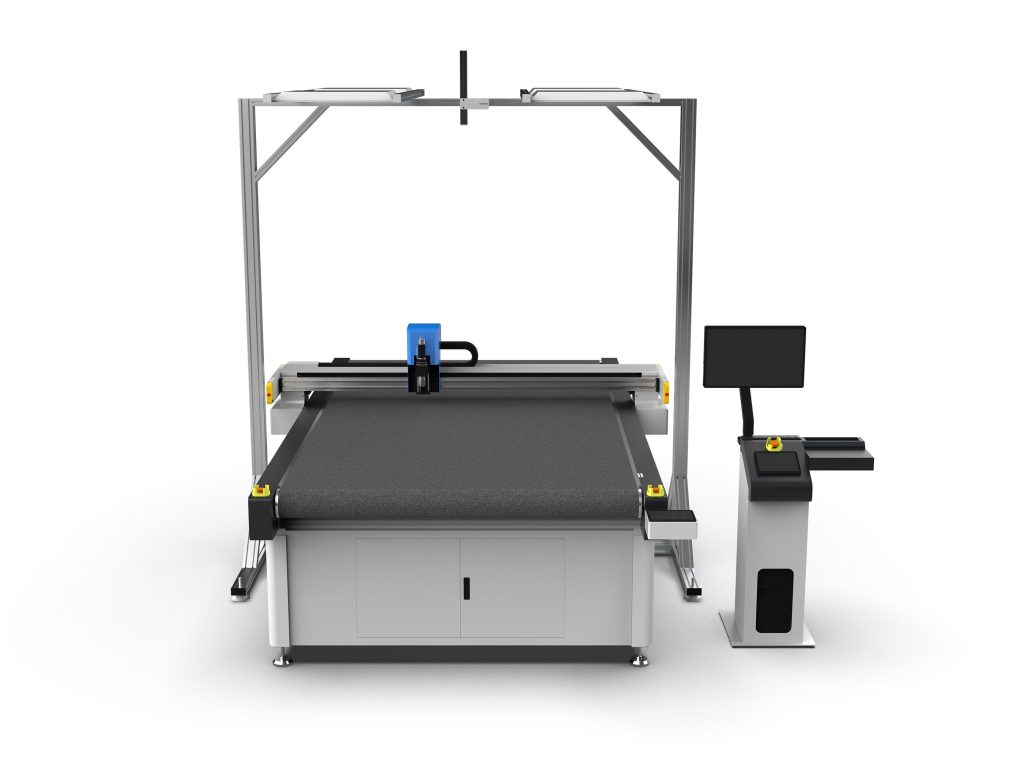
Break the configuration sheet down into components and verify them one by one—this is far more effective than reading brochures. Below are common reference ranges you can require to be written into the contract:
- Accuracy: repeat positioning accuracy ±0.05mm, finished cutting accuracy ±0.1mm (under small-part and thin-material conditions). Require the manufacturer to specify under what material, what pattern, and what speed the data was measured.
- Transmission: X-axis rack-and-pinion dual drive + linear guide rails, Y-axis timing belt or lead screw, depending on working area and speed. The rack must have automatic lubrication or at least be manually lubricatable.
- Servo: 750W–2kW AC servo, absolute encoder, no homing required after power loss, saving 2–5 minutes of zeroing time at each startup.
- Vacuum holding: zoned vacuum holding, commonly 4–8 zones, paired with a 5.5–7.5kW vacuum pump; when small parts are nested densely, the more zones the more vacuum force is saved, and the less likely the material is to shift.
- Oscillation parameters: oscillation frequency adjustable from 0–12000 strokes/min, amplitude 0.5–3mm. Use high frequency and small amplitude for thin materials, low frequency and large amplitude for thick materials; parameters must be directly adjustable in the system rather than requiring mechanical changes.
- Tool interface: Reserve at least a multi-tool position or quick-change interface for oscillating knife, drag knife, circular knife, V-shaped knife, punching knife, and milling cutter, so that expanding product categories later does not require changing the machine.
- Working area: 1600×2500mm and 2100×3100mm are mainstream specifications. Oversized working areas can be customized, but the dimensions of transport and entry passages must be confirmed.
III. Three Things You Must Do When Auditing a Factory
1. Bring your own materials and cut them on site
Sending samples will not reveal problems, because the samples are certainly cut from the materials the manufacturer has selected as the easiest to cut. Bring 2–3 kinds of your own real materials, including the hardest one to cut, and do on-site layout and on-site cutting. Check whether the cut edges turn white, whether they stick together, whether there is burnt edge, and whether small rounded corners (below R2) can be cut out.
2. Watch continuous operation, not a demonstration
A ten-minute demonstration proves nothing about stability. Require continuous running for more than 2 hours and observe three points: whether the table suction force decays, whether there is abnormal noise from the guide rail, and how much the dimensions of the first and last cut pieces differ. The difference between the first and last pieces should be controlled within 0.1mm; if it exceeds this, investigate whether the problem is suction, transmission, or tool wear.
3. Look at the assembly site and commissioning records
A genuine manufacturer will definitely have an assembly area, a commissioning bench, a spare-parts rack, and a commissioning record sheet for each machine (including measured values for perpendicularity, parallelism, and homing accuracy). If there is only a showroom and no workshop, it can basically be ruled out. 127.0.0.1 conducts a 24-hour dry run and material-cutting record for each machine before leaving the factory, and delivers it with the machine; customers can copy this process directly into their own acceptance terms.
IV. Software and File Compatibility
Half of a machine’s efficiency comes from its software. At minimum, confirm that it supports importing DXF, DWG, PLT, HPGL, AI, and PDF; supports automatic nesting, common-edge cutting, bridges (to prevent parts from shifting), and multi-layer nesting; can interface with nesting software such as CAD, ETC, and Gerber; and that the control software can run offline without depending on a computer that is left on year-round. Common-edge cutting can save 5%–12% of material on orders for leather, bags, and automotive interiors, so it is worth specifically requesting a demonstration.
V. How to Tell a Real Manufacturer from a Trader
- Ask about the shipment volume and delivery lead time for a specific model; a real manufacturer can quote its production schedule, while a trader will only say “in stock.”
- Request customers in the same city or province and ask to visit them to see the machine. If this can be arranged and the customer is willing to cooperate, it is the most credible.
- Ask for the spare-parts inventory list and price list. Whether consumable parts such as blade holders, felt, timing belts, and vacuum pump filters are in stock directly affects downtime losses.
- Check whether the business license’s scope of business includes manufacturing, and request live video of the workshop (the factory sign and equipment serial numbers must be visible).
VI. After-Sales and Spare Parts, Written into the Contract
Verbal promises don’t count. The contract should clearly state: response time (e.g., phone response within 2 hours, on-site arrival within 48 hours), warranty period (12 months for the whole machine, servo and control system per original factory standards), list of wear parts with unit prices, remote assistance methods, number and duration of operation and layout training sessions (recommended no less than 3 days, including hands-on practice). For cross-border orders, also specify spare parts shipping methods and customs clearance responsibilities.
7. Break Down the Quotation
Split the total price into seven items: main machine, tool set, vacuum pump, control system, software license, installation and commissioning, and transportation and taxes. A common trap is a low main machine price, but tool sets sold per piece, software charged per module, and on-site commissioning billed separately. Only by breaking it down and comparing item by item can you see where the real price difference lies.
8. Make Acceptance Criteria a Contract Attachment
- Using agreed materials and agreed patterns, continuously cut 200 pieces, with all dimensional tolerances within ±0.1mm.
- Run continuously for 4 hours with no alarms, no deviation, and no obvious abnormal temperature rise.
- Dimension difference between first and last piece ≤0.1mm, with no burrs or burnt edges on cut edges.
- Suction force test: place a 100×100mm small piece at the corner of the maximum working area, cut at 500mm/s without displacement.
- Precision re-test records (return to zero, repeat positioning) delivered with the machine.
Choosing an oscillating knife cutting machine manufacturer is essentially choosing a partner who can clearly explain parameters, lay out the process, and write responsibilities into the contract. Price fluctuations within the same configuration tier generally do not exceed 15%; what truly drives long-term costs is material utilization rate, blade consumption, and downtime.
FAQ
What materials is the oscillating knife cutting machine suitable for?
The oscillating knife cutting machine is suitable for flexible and semi-rigid materials from 0.5–60mm, such as EVA, foam, pearl cotton, leather, non-woven fabric, carpet, fiberglass prepreg, honeycomb cardboard, etc.
What is the precision standard of the oscillating knife cutting machine?
The repeat positioning accuracy of the oscillating knife cutting machine is ±0.05mm, and the finished product cutting accuracy is ±0.1mm. The manufacturer needs to specify the test material, pattern, and speed conditions.
How to tell a real manufacturer of oscillating knife cutting machines from a trader?
A real manufacturer can quote specific model shipment volumes and production schedules, has an assembly workshop and commissioning records, and can arrange for local customers to inspect the machine; a trader only answers “in stock” and “it can cut anything.”
What are the acceptance criteria for an oscillating knife cutting machine?
The acceptance criteria include: all dimensional tolerances within ±0.1mm when continuously cutting 200 pieces, 4 hours of continuous operation with no alarms, dimensional difference between first and last piece ≤0.1mm, and small corner pieces not shifting when cut at 500mm/s.
What items should an oscillating knife cutting machine quotation be broken down into?
The quotation should be broken down into seven items: main machine, tool set, vacuum pump, control system, software license, installation and commissioning, and transportation and taxes. Only by comparing item by item can the real price difference be seen.