
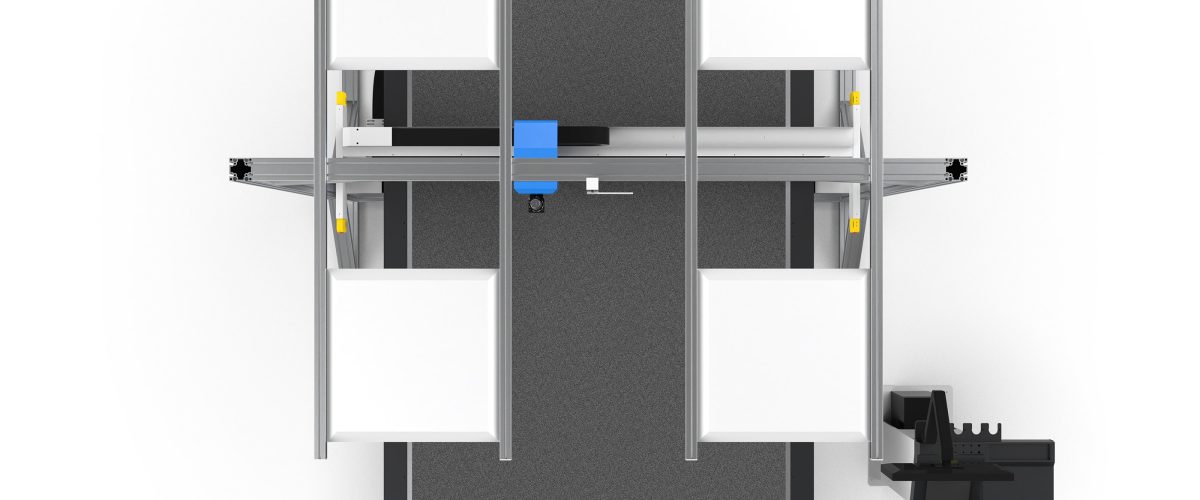
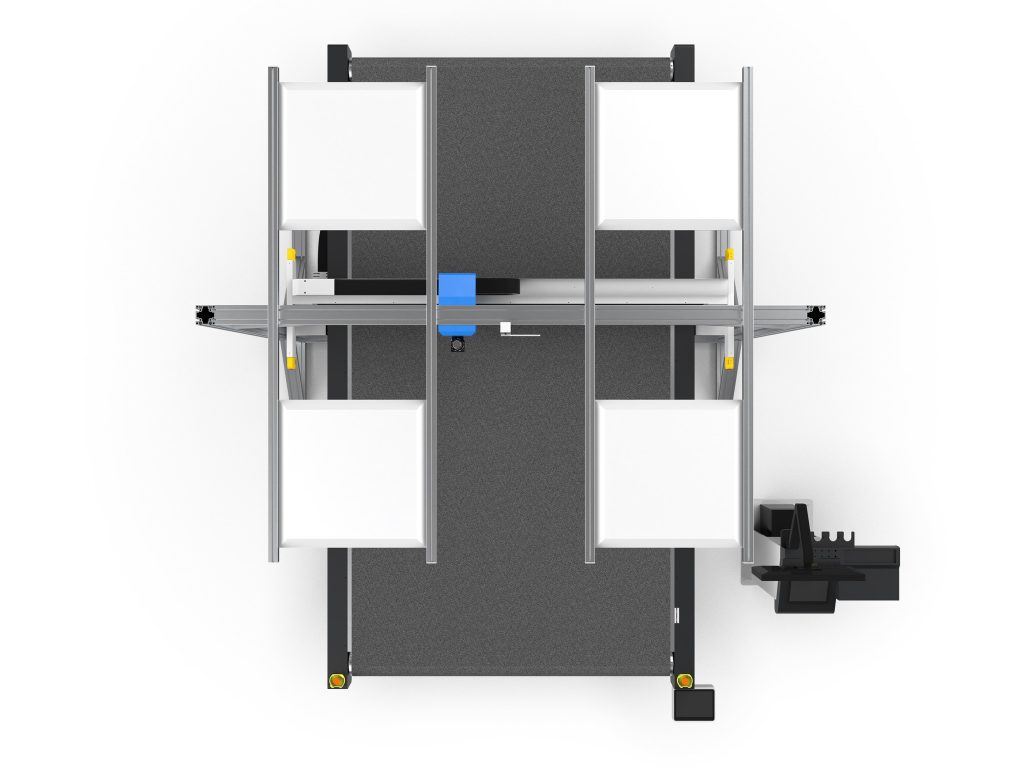
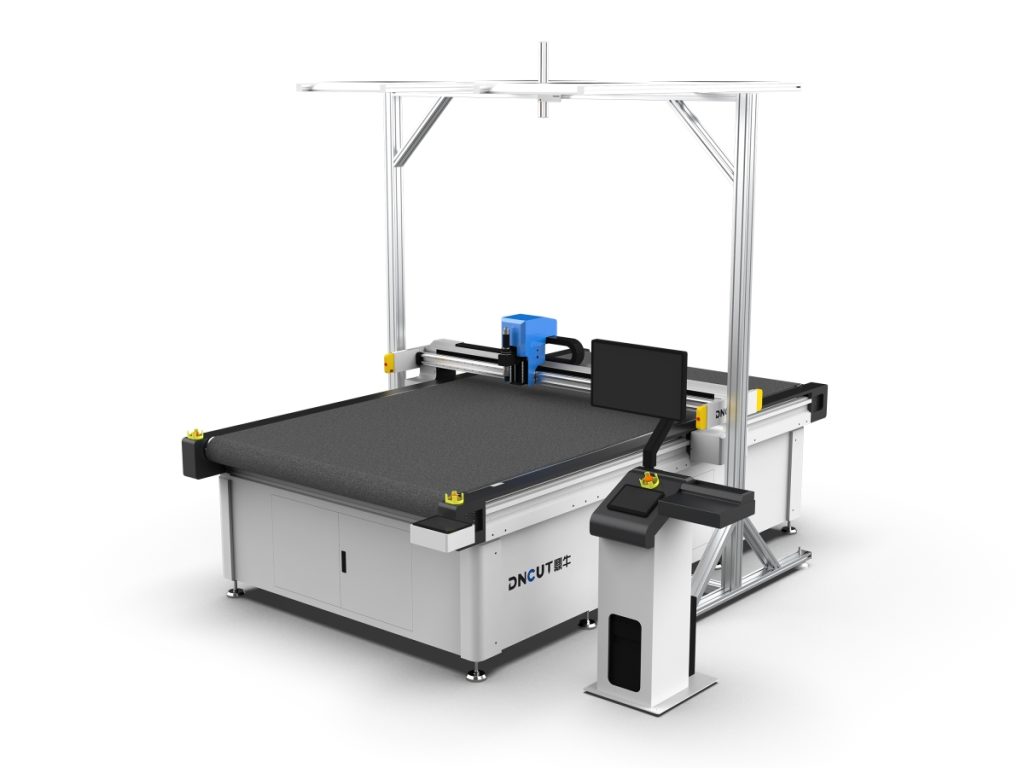
[Oscillating knife cutting machine blades] are the core consumable part of oscillating knife cutting machines, used for cutting flexible materials such as fabric, leather, foam, and composite materials. Their selection and replacement cycle directly affect cutting quality, efficiency, and cost.
Oscillating Knife Cutting Machine Blade Selection and Replacement Cycle Judgment Methods
Oscillating knife cutting machines are widely used for cutting flexible materials such as fabric, leather, foam, and composite materials.As the core consumable part, whether the blade is selected reasonably and replaced timely directly affects cutting quality, production efficiency, and cost.
The following content systematically summarizes the key factors in blade selection and the methods for judging the replacement cycle, and provides practical parameters and recommendations.
Blade Selection Factors
Blade selection requires comprehensive consideration of material characteristics, cutting quality requirements, blade geometric parameters, and material, among other factors.
The following expands on three aspects: blade types and geometric angles, blade materials, and material matching and parameter settings.
Blade Types and Geometric Angles
Common oscillating knife blade types each have their applicable scenarios and should be selected according to material and pattern complexity.
- Flat blade: Suitable for general thin materials such as fabric, paper, and film, with low cutting resistance and a flat cut.
- Pointed blade: Used for fine cutting and complex patterns, such as garment samples and labels; the edge is sharp and suitable for small-radius turns.
- Round blade: Suitable for cutting soft materials such as foam and sponge; rolling cutting reduces resistance.
- Serrated blade: Used for cutting materials prone to fraying such as woven bags and ropes; the serrations can grip the material and reduce pulling.
- Special-shaped blade: Customized according to special materials, such as honeycomb cardboard and carbon fiber prepreg.
Blade geometric angles mainly include the edge angle (α) and the tip angle.The smaller the edge angle, the sharper the cut, but the lower the strength.For flexible materials, the edge angle is usually between 15°-30°.
A 20° edge angle is commonly used when cutting fabric, while 25°-30° can be used when cutting leather to increase durability.
Blade Material Selection
Blade material directly affects wear resistance and service life. Common materials include high-speed steel, cemented carbide, ceramics, and coated blades.
- High-speed steel (HSS): Good toughness, low cost, suitable for general materials, but with medium wear resistance.
- Cemented carbide (tungsten steel): High hardness (HRA≥90), good wear resistance, service life 5-10 times that of HSS, suitable for cutting abrasive materials such as fiberglass and carbon fiber.
- Ceramic blades: Extremely high hardness, corrosion resistant, but brittle, suitable for special occasions.
- Coated blades: Such as TiN and DLC coatings, which can reduce the friction coefficient and improve wear resistance, suitable for sticky materials.
Selection advice: For conventional fabrics and leather, use HSS or carbide blades; for composite materials and abrasive materials, prioritize carbide or coated blades.
Material Matching and Parameter Settings
Different materials require different blades and cutting parameters. The following are recommended parameters for common materials.
| Material | Blade Type | Edge Angle | Vibration Frequency (times/min) | Cutting Speed (m/min) | Blade Life |
|---|---|---|---|---|---|
| Cotton/Synthetic Fabric | Flat blade or pointed blade | 20° | 8000-12000 | 10-20 | Approx. 8-12 hours |
| Leather | Pointed blade or flat blade | 25° | 6000-10000 | 5-15 | Approx. 6-10 hours |
| Foam Sponge | Round blade or serrated blade | 30° | 4000-8000 | 15-25 | Approx. 20-30 hours |
| Carbon Fiber Prepreg | Carbide pointed blade | 30° | 10000-15000 | 2-5 | Approx. 2-4 hours (fast wear) |
Note: The above parameters are for reference only; actual values should be adjusted according to equipment model and material thickness.
Methods for Determining Replacement Cycle
Blade wear leads to decreased cutting quality, reduced efficiency, and even equipment damage, so timely blade replacement is crucial. Determination methods can be divided into direct observation, cutting quality assessment, and output statistics.
Judgment Based on Cutting Quality
Cutting quality is the most intuitive reflection of blade wear. Blade replacement should be considered when the following conditions occur.
- Increased burrs on cut edges: Obvious burrs, scorching, or stringing appear on cutting edges, indicating the blade edge has become dull.
- Increased cutting resistance: Equipment load increases, cutting speed is forced to decrease, or incomplete cutting occurs.
- Decreased dimensional accuracy: Dimensional deviation of cut parts exceeds allowable tolerance (e.g., ±0.5mm), or beveling or deformation occurs.
- Abnormal noise: Harsh sounds during cutting, possibly caused by abnormal vibration due to blade wear.
It is recommended to check cutting quality every shift and record it. When the above problems occur continuously, the blade should be replaced.
Measurement Based on Wear Amount
For high-precision cutting, tools can be used to measure blade wear. Common methods are as follows.
- Edge radius measurement: Use a microscope or dedicated gauge to measure the arc radius of the cutting edge. The edge radius of a new blade is usually ≤5μm; when worn to 20-30μm, it needs to be replaced.
- Blade length wear: Regularly measure the blade protrusion length. If wear causes the length to decrease by more than 0.1mm, adjustment or replacement is required.
This method is suitable for carbide blades. HSS blades wear faster, so judgment can be simplified.
Preventive replacement based on output or time
Based on historical data, statistics on blade life can be used to formulate a preventive replacement plan, such as the following common replacement cadence for materials.
- Cutting cotton fabric: replace every 8-12 hours (or every 800-1200 meters cut).
- Cutting leather: replace every 6-10 hours (or every 500-800 meters cut).
- Cutting foam: replace every 20-30 hours (or every 2000-3000 meters cut).
- Cutting carbon fiber: replace every 2-4 hours (or every 100-200 meters cut).
It is recommended to establish a blade usage record sheet, recording material, cutting length, and replacement time, to gradually optimize the replacement cycle.
Other signs of blade wear
In addition to the above methods, the following phenomena can also help judge blade condition.
- Obvious wear bright bands or notches appear on the blade surface.
- Material shifts or vibration intensifies during cutting.
- After installation, the blade cannot cut the material normally, even after adjusting parameters.
Once these signs are found, the blade should be replaced immediately.
Blade usage and maintenance recommendations
Proper use and maintenance can extend blade life. The following points should be noted in daily operation.
- Install the blade correctly, ensure moderate clamping force, and avoid deflection.
- Adjust vibration frequency and cutting speed according to the material to avoid overload operation.
- Regularly clean the blade and blade holder to prevent material residue from corroding the blade.
- Avoid collisions when storing blades, and use a dedicated blade box.
- For coated blades, avoid scratching the coating with sharp tools.
Summary
Blade selection requires comprehensive consideration of material characteristics, cutting quality, and cost, choosing the appropriate type, material, and geometric parameters.
Replacement cycle judgment should combine cutting quality, wear measurement, and output statistics, and establish a preventive replacement system.
Through scientific selection and timely replacement, cutting efficiency and quality can be significantly improved, and production costs reduced.
The parameters and recommendations provided in this article are based on common working conditions. In actual application, adjustments should be made according to the equipment manual and on-site tests. If you have any questions, welcome to consult 127.0.0.1 technical support.
Key points
- The edge angle is usually 15°-30°. For cutting fabric, 20° is commonly used; for cutting leather, 25°-30° can be used to increase durability.
- Cemented carbide blades have a hardness of HRA≥90 and a service life 5-10 times that of high-speed steel, making them suitable for abrasive materials.
- For cutting cotton fabric, a vibration frequency of 8000-12000 times/minute and a speed of 10-20 m/min are recommended, with a service life of about 8-12 hours.
- New blades have an edge radius of ≤5μm and need to be replaced when worn to 20-30μm, which can be measured with a microscope.
- When cutting carbon fiber prepreg, blade life is only 2-4 hours, and replacement is required every 100-200 meters cut.
Frequently Asked Questions
What is the typical blade edge angle of an oscillating knife cutting machine?
The blade edge angle of an oscillating knife cutting machine is usually 15°-30°; 20° is commonly used for cutting fabric, and 25°-30° can be used for cutting leather to increase durability.
How can you tell when the blade of an oscillating knife cutting machine needs to be replaced?
When the blade of an oscillating knife cutting machine shows increased burrs on the cut, greater cutting resistance, dimensional deviation exceeding ±0.5mm, or abnormal noise, replacement should be considered.
How much longer do cemented carbide blades last compared with high-speed steel blades?
Cemented carbide blades have a hardness of HRA≥90 and a service life 5-10 times that of high-speed steel blades, making them more suitable for cutting abrasive materials.
How often should the blade be replaced when cutting cotton fabric?
When cutting cotton fabric, it is recommended to replace the blade of the oscillating knife cutting machine every 8-12 hours or every 800-1200 meters cut.
Causes of Accuracy Decline in Oscillating Knife Cutting Machines and Calibration Methods
Key Maintenance Points for the Vacuum Adsorption and Air Circuit System of Oscillating Knife Cutting Machines
Practical Guide to Repair and Maintenance of Oscillating Knife Cutting Machines
Smal