

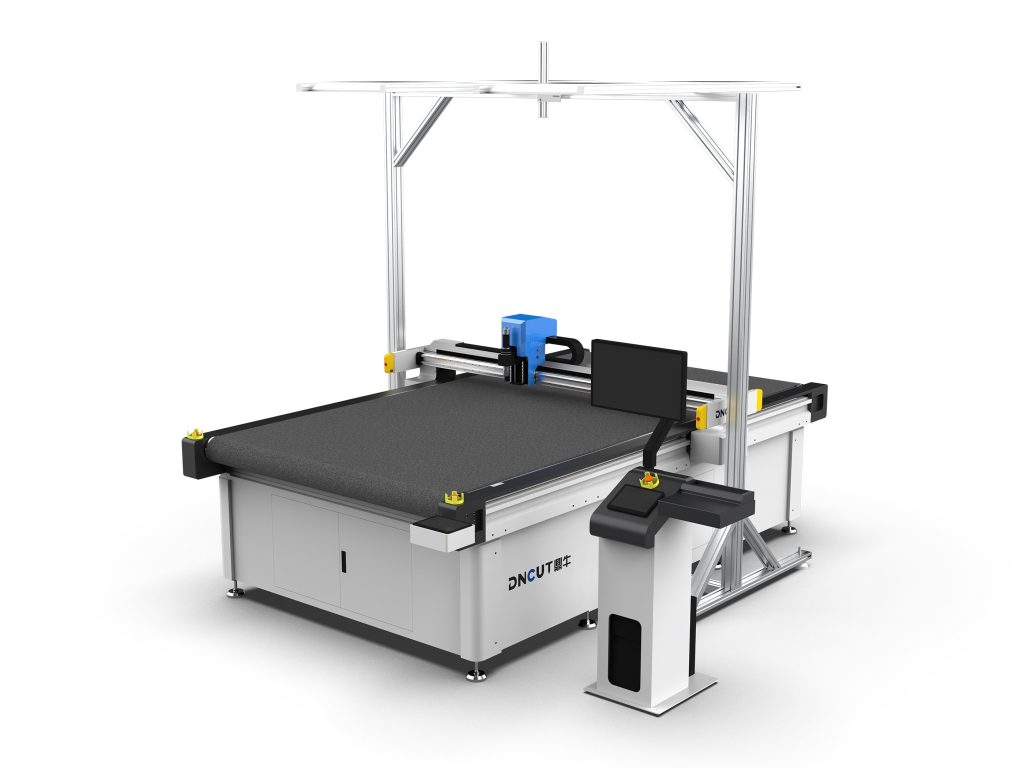
[Oscillating knife cutting machine] is a CNC device that uses high-frequency vibrating blades to cut flexible materials. The knife head is driven by a servo system, making it suitable for non-metallic materials such as EVA foam, leather, and fabric. Cutting accuracy is typically controlled within ±0.1mm.
Common Causes of Accuracy Degradation in Oscillating Knife Cutting Machines
After long-term use, decreased cutting accuracy is a common issue with oscillating knife cutting machines.Accuracy degradation typically manifests as dimensional deviation in cuts, non-perpendicular cut edges, and deteriorated repeat positioning accuracy.
According to actual maintenance data, about 70% of accuracy problems stem from worn mechanical components or improper parameter settings.The following analyzes the causes from six aspects and provides specific calibration methods.
1. Guide Rail and Slider Wear
Guide rails and sliders are the core components that ensure the motion accuracy of the cutting head.When the guide rails are insufficiently lubricated or dust enters, wear accelerates, causing increased motion clearance.Typical symptoms include wavy patterns or dimensional drift when cutting straight lines.
Inspection method: push the cutting head by hand to feel for jamming or looseness;use a dial indicator to measure the straightness of the guide rail, and the error should be less than 0.02mm/300mm.Calibration method: clean the guide rails and re-lubricate (use lithium-based grease).If the slider is severely worn (clearance greater than 0.05mm), replace the slider.
After replacement, readjust the guide rail preload to ensure there is no clearance but movement is smooth.
2. Blade Wear or Improper Installation
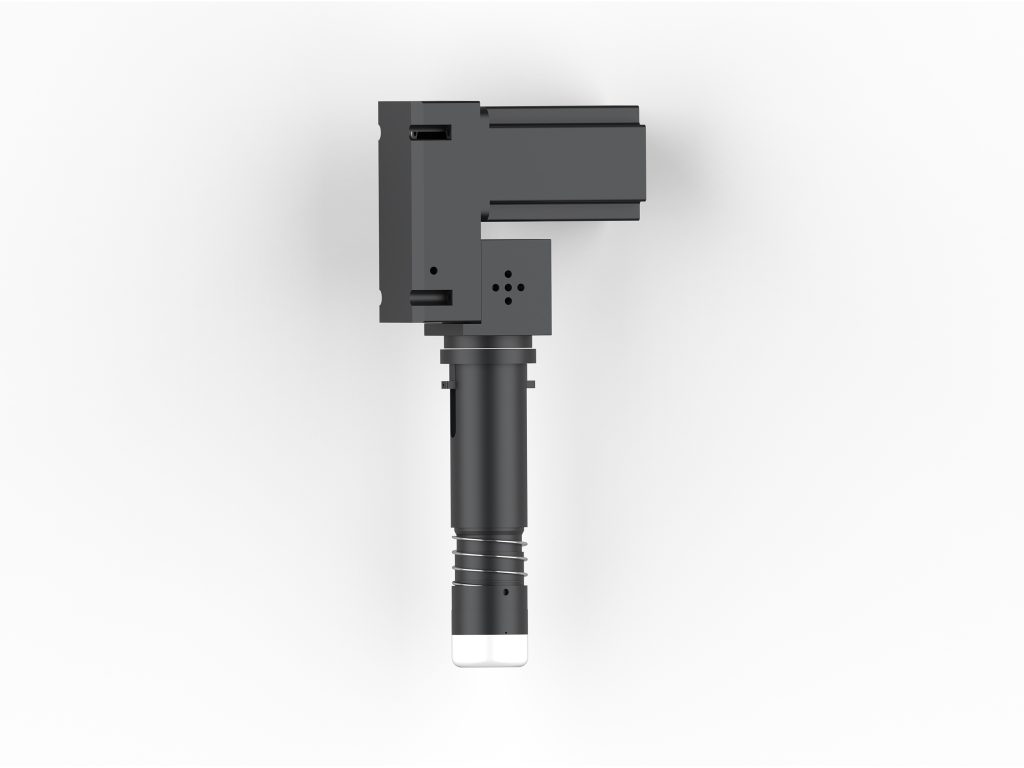
After the oscillating blade wears, cutting resistance increases, causing blade deflection and slanted cuts.In addition, if the blade is not clamped tightly during installation or there is foreign matter in the collet, accuracy degradation can also occur.Inspection method: observe whether burrs or beveled edges appear on the cut;
use a magnifying glass to check the wear amount of the blade tip, and replace if wear exceeds 0.1mm.Calibration method: when replacing the blade, clean the collet and blade seat to ensure there are no chips;use a torque wrench to tighten the collet according to the manufacturer’s specified torque (typically 2-3N·m).
After installation, use a dial indicator to measure the radial runout of the blade tip, which should be less than 0.03mm.
3. Transmission Belt or Lead Screw Clearance
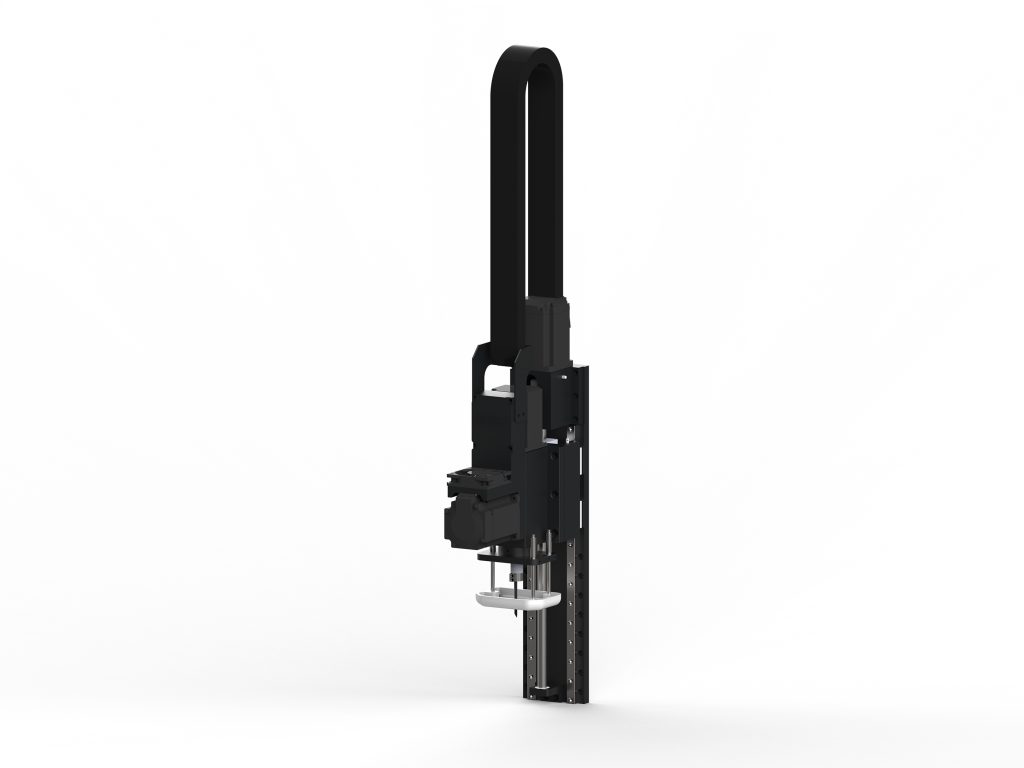
For belt-driven models, belt slack causes increased backlash;for lead screw-driven models, wear of the lead screw nut produces axial clearance.A typical manifestation is large diagonal deviation when cutting squares.Inspection method: use a dial indicator against the cutting head, manually move it forward and backward, and read the clearance value;adjust if greater than 0.05mm.
Calibration method: for belt drives, adjust the tension pulley so that belt sag is 5-10mm;for lead screw drives, adjust the nut preload or replace the ball screw.After adjustment, backlash compensation is required;set the compensation value in the control system parameters (typically 0.01-0.05mm).
4. Servo Motor and Encoder Issues
Servo motor encoder contamination or damage can cause incorrect position feedback, leading to inaccurate positioning.In addition, looseness of the coupling between the motor and the lead screw can also produce errors.Inspection method: observe whether the motor runs with abnormal noise;use diagnostic software to check whether the encoder signal is stable.
Calibration method: clean the encoder (using anhydrous alcohol), and replace it if damaged;check whether the coupling screws are tightened, and replace the flexible coupling if necessary.After replacement, servo parameter auto-tuning must be performed again.
5. Improper setting of cutting parameters
A mismatch among parameters such as vibration frequency, cutting speed, and knife penetration depth will reduce cutting accuracy.For example, if the vibration frequency is too high, the blade will heat up and deform;if the frequency is too low, the cutting resistance will be high.
Inspection method: compare with the process parameter table to confirm whether the current parameters are within the recommended range.Calibration method: perform test cuts and adjust the parameters step by step.
Taking the cutting of 5 mm thick EVA foam as an example, the recommended vibration frequency is 12,000-15,000 times/min, the cutting speed is 200-300 mm/s, and the knife penetration depth is 0.5-1 mm.Find the best combination through test cuts and record it in the process library.
6. Uneven worktable surface or insufficient suction
An uneven worktable surface will cause inconsistent clearance between the material and the table, affecting the uniformity of cutting depth.Insufficient suction will cause the material to move, resulting in dimensional deviation.Inspection method: use a straightedge and feeler gauge to check the flatness of the table surface;the error should be less than 0.1 mm/m²;
check the vacuum suction pressure, which should reach -0.06 MPa or above.Calibration method: re-mill the table surface (using a dedicated milling cutter, with a cutting depth of 0.1-0.2 mm);check whether the vacuum pipeline leaks, clean the filter screen, and increase the vacuum pump power if necessary.
Systematic calibration process
When accuracy decreases, it is recommended to perform systematic calibration according to the following steps:
- Step 1: Cleaning and inspection: Thoroughly clean the guide rails, lead screws, and blade holder, and check the wear of each component.
- Step 2: Mechanical accuracy calibration: Adjust the guide rail straightness, lead screw backlash, and blade radial runout in sequence.
- Step 3: Electrical parameter calibration: Check the servo motor encoder, perform parameter auto-tuning, and set backlash compensation.
- Step 4: Process parameter optimization: Adjust the vibration frequency, speed, and depth through test cuts, and record the optimal parameters.
- Step 5: Verification and recording: Cut a standard test pattern (such as a 100 mm×100 mm square) and measure the dimensional deviation, which should be controlled within ±0.1 mm. Record calibration data and replaced parts, and establish a maintenance file.
Preventive maintenance recommendations
To maintain long-term accuracy, it is recommended to clean and lubricate the guide rails every 500 hours, check the blade and belt every 2,000 hours, and calibrate the mechanical accuracy once every six months. At the same time, keep the ambient temperature at 20±5°C and the humidity at 40%-70% to prevent dust from entering the transmission components.
Key points
- About 70% of accuracy problems stem from mechanical component wear or improper parameter settings, so the clearance between the guide rail and slider must be checked regularly.
- The guide rail straightness error should be less than 0.02 mm/300 mm, and the slider must be replaced when the clearance is greater than 0.05 mm.
- Blades must be replaced when wear exceeds 0.1mm; after installation, the radial runout of the blade tip should be less than 0.03mm.
- The drive belt sag should be adjusted to 5-10mm, and the screw reverse backlash compensation value is typically 0.01-0.05mm.
- For cutting 5mm thick EVA foam, a recommended vibration frequency of 12000-15000 times/minute and a speed of 200-300mm/s.
- The flatness error of the worktable surface should be less than 0.1mm/m², and the vacuum adsorption pressure must reach above -0.06MPa.
Common Questions
What are the common signs of accuracy degradation in an oscillating knife cutting machine?
Accuracy degradation in an oscillating knife cutting machine typically manifests as cutting dimension deviation, non-perpendicular cut edges, deteriorated repeat positioning accuracy, and wavy patterns or dimension drift when cutting straight lines.
How do I check whether the guide rails of an oscillating knife cutting machine need calibration?
Push the cutting head by hand to feel for jamming or looseness, and use a dial indicator to measure the straightness of the guide rails; the error should be less than 0.02mm/300mm. If exceeded, clean and lubricate or replace the slider.
What should be noted when installing the oscillating blade?
When installing the oscillating blade, clean the collet and blade seat to ensure there are no chips, use a torque wrench to tighten the collet at 2-3N·m, and after installation the radial runout of the blade tip should be less than 0.03mm.
What are the recommended parameters for cutting 5mm thick EVA foam?
For cutting 5mm thick EVA foam, the recommended vibration frequency is 12000-15000 times/minute, cutting speed 200-300mm/s, and cutting depth 0.5-1mm; the combination should be optimized through trial cuts.
What is the preventive maintenance cycle for an oscillating knife cutting machine?
For an oscillating knife cutting machine, it is recommended to clean and lubricate the guide rails every 500 hours, inspect blades and belts every 2000 hours, calibrate mechanical accuracy once every six months, and maintain an ambient temperature of 20±5℃.