
Industry Pain Points and Equipment Selection for Rubber Gasket Cutting
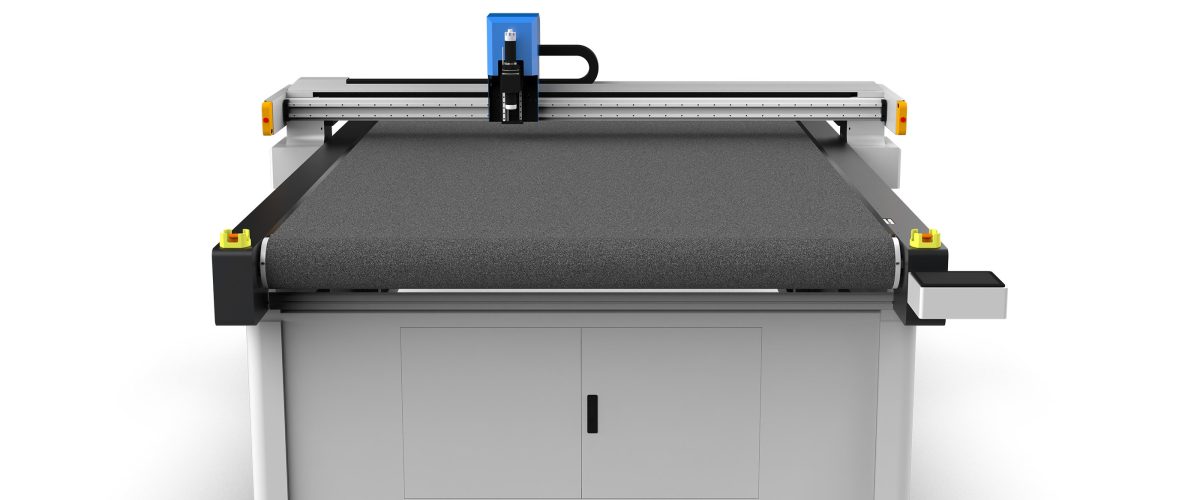
Rubber gaskets are widely used in automotive, electronics, pipeline sealing, and other fields, with materials including nitrile rubber (NBR), silicone (VMQ), fluororubber (FKM), ethylene propylene diene monomer (EPDM), etc. Traditional die-cutting methods require mold making, which has long lead times and high costs, and is uneconomical for small-batch, multi-variety orders. The oscillating knife cutting machine performs cold cutting through a high-frequency oscillating blade, requires no molds, and cuts directly according to CAD data, making it the preferred solution for rubber gasket processing.
However, rubber materials have characteristics such as high elasticity, low hardness, and easy deformation, and problems such as blade adhesion, burrs at the cut, and dimensional deviation are likely to occur during cutting. Improper selection can lead to low efficiency and a low yield rate. This article provides practical guidance from aspects such as equipment parameters, process points, and common issues.
Key Performance Parameters of Rubber Gasket Cutting Machines
When purchasing equipment, special attention should be paid to the following parameters to ensure they meet the processing requirements of rubber gaskets.
1. Cutting Accuracy and Repeat Positioning Accuracy
Rubber gaskets usually require dimensional tolerances within ±0.1 mm, and high-precision applications need to reach ±0.05 mm. The repeat positioning accuracy of the equipment should be ≤0.02 mm to ensure batch consistency. Models using servo motors + precision lead screw transmission are superior to stepper motors.
2. Vibration Frequency and Stroke
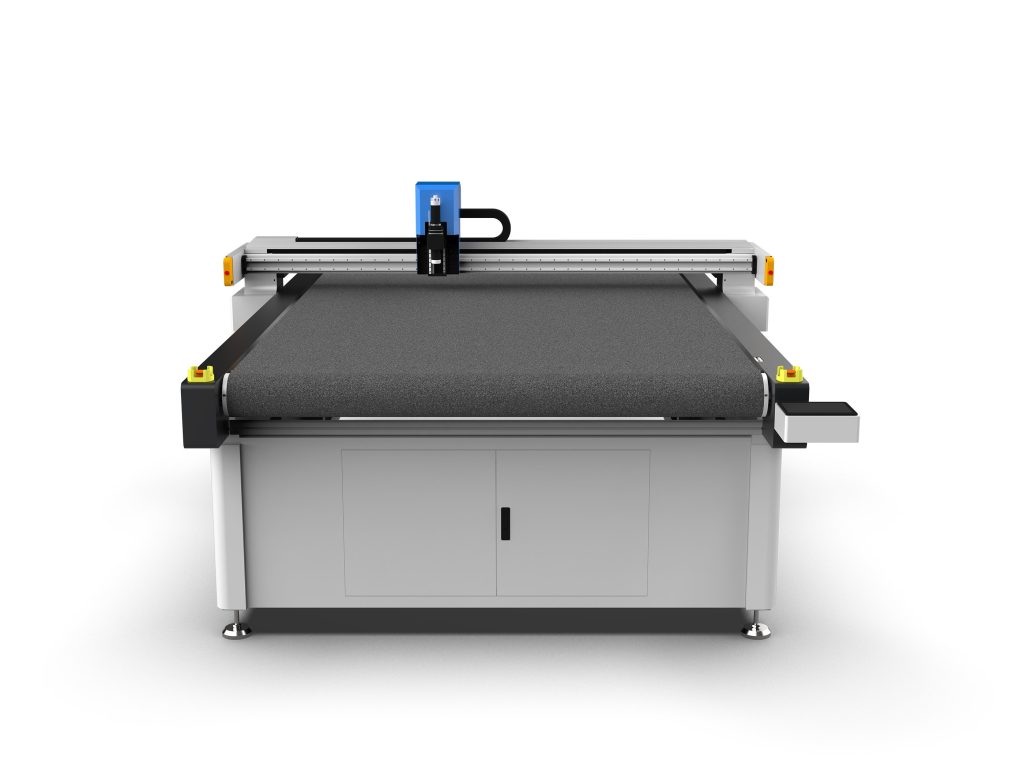
The oscillating knife cuts through high-frequency up-and-down vibration, with a frequency usually of 1000-3000 times/min and an adjustable stroke (0.5-5 mm). When cutting rubber, a frequency of 2000-2500 times/min and a stroke of 1-2 mm are recommended. Too low a frequency will lead to high cutting resistance and rough cuts; too high a frequency may cause material melting (for certain rubbers).
3. Blade Type and Material
For rubber, commonly used blades include:
- Oscillating pointed knife: Suitable for thinner rubber gaskets (thickness ≤3 mm), with fine cuts.
- Oscillating round knife: Suitable for thick rubber (3-10 mm), with low cutting resistance, but limited inner corner radius.
- Pneumatic knife: Used for high-hardness rubber or composite materials, with large cutting force.
Cemented carbide (tungsten steel) is recommended for blade material due to its good wear resistance and long life. When cutting silicone, coated blades (such as Teflon coating) are recommended to reduce adhesion.
4. Cutting Speed and Acceleration
The cutting speed for rubber should not be too fast and is generally controlled at 50-200 mm/s. Too fast a speed will cause tearing at the cut and out-of-tolerance dimensions. The equipment should have circular interpolation and corner deceleration functions to ensure quality at sharp corners. Acceleration is recommended to be ≥500 mm/s² to improve efficiency.
5. Vacuum Table and Vacuum Zoning
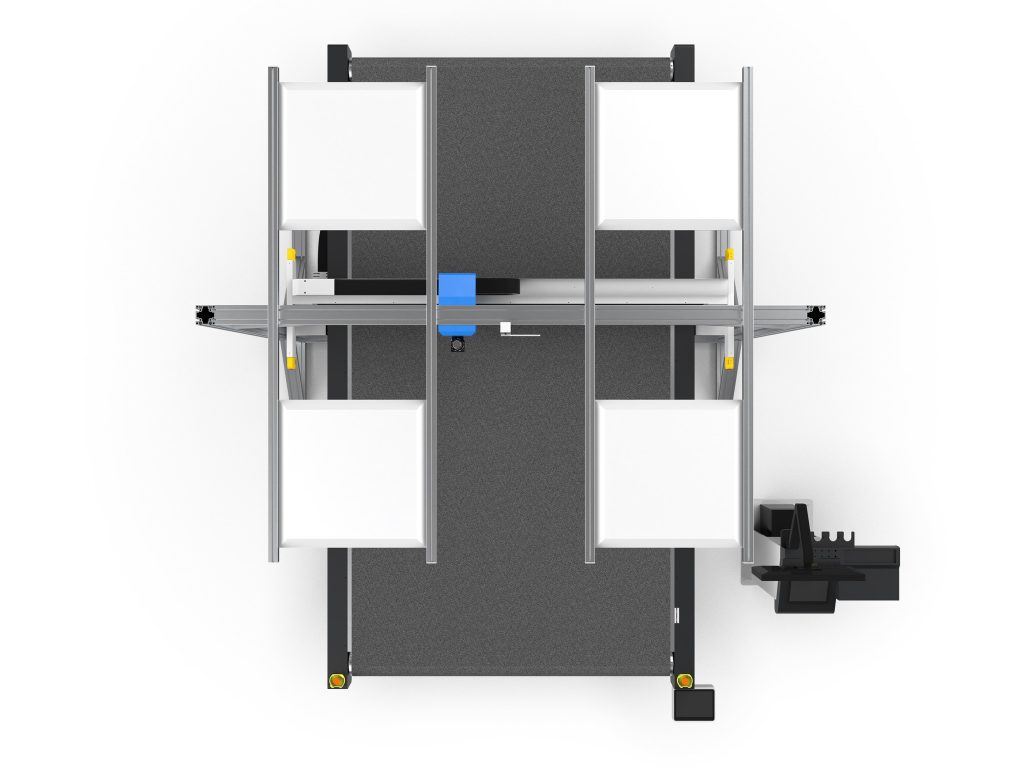
Rubber materials are soft and need to be firmly fixed during cutting. A vacuum adsorption table is essential equipment, with an adsorption force of ≥-80 kPa. For small-sized gaskets, zoned adsorption is recommended, turning on the vacuum only in the cutting area to avoid material deformation. The table surface should be flat and high in hardness (such as anodized aluminum alloy) to prevent scratches.
6. Tool Cooling and Anti-Adhesion Measures
When cutting certain rubbers (such as unvulcanized rubber), the blade is prone to adhesion. A tool holder with air-blow cooling can be selected, or minimal lubrication (such as silicone oil spray) can be applied. Some high-end models are equipped with ultrasonic knives, which reduce friction through high-frequency vibration and are suitable for highly sticky materials.
Recommended Process Parameters for Rubber Gasket Cutting
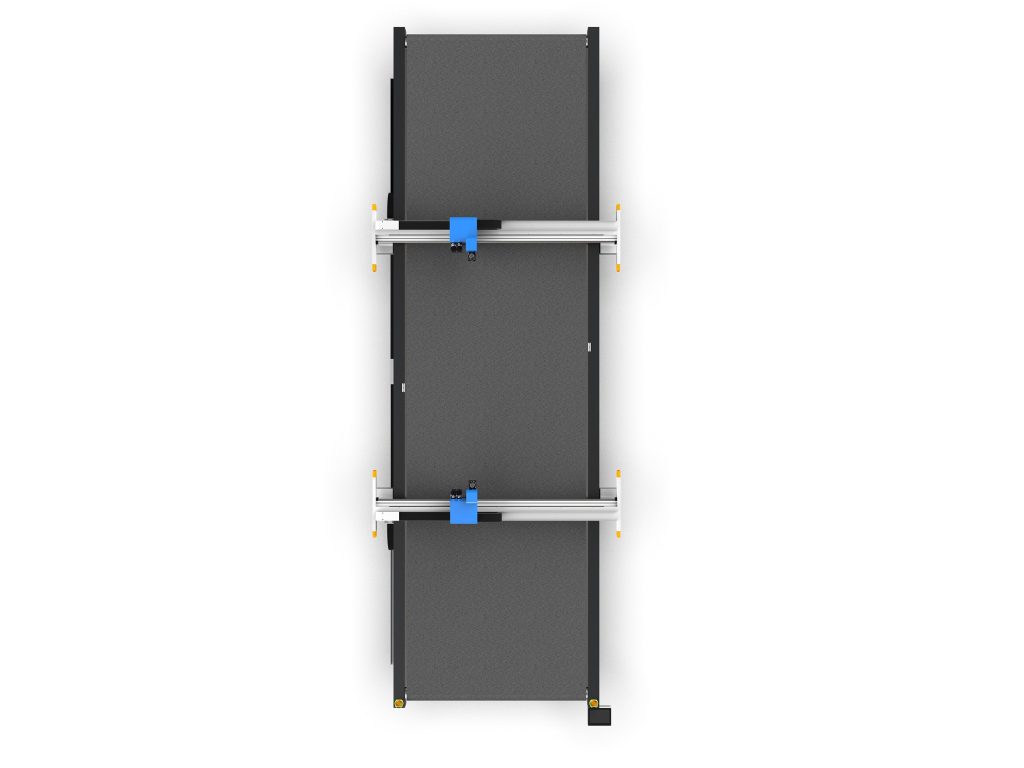
The following parameters are based on oscillating knife cutting of common rubber materials (hardness 50-80 Shore A, thickness 1-5 mm) for reference.
- Vibration frequency: 2000-2500 times/min
- Vibration stroke: 1.0-1.5 mm
- Cutting speed: 80-150 mm/s (straight sections), reduced to 30-50 mm/s at corners
- Blade extension length: 0.5-1 mm more than the material thickness
- Vacuum adsorption: -70 to -90 kPa
- Blade angle: pointed knife 15°-20° (thin materials), round knife has no angle
Actual parameters need to be fine-tuned according to material hardness, thickness, and equipment performance. It is recommended to perform trial cutting first, measure dimensions with a projector or image measuring instrument, and optimize gradually.
Common Cutting Problems and Solutions
Problem 1: Burrs or Tearing at the Cut
Cause: Blunt blade, too low vibration frequency, too fast cutting speed, material not pressed tightly.
Solution: Replace the blade; increase the vibration frequency to 2500 times/min; reduce the cutting speed to 80 mm/s; check whether the vacuum adsorption is effective and add pressure rollers.
Problem 2: Blade Adhesion to Rubber
Cause: High raw rubber content in the rubber, increased blade temperature, no cooling.
Solution: Use coated blades; turn on air-blow cooling; reduce the vibration frequency to reduce frictional heat; apply talcum powder to the blade surface (temporary measure).
Problem 3: Dimensional Deviation Out of Tolerance
Cause: Material rebound, tool compensation not set, uneven table.
Solution: Add tool radius compensation in CAD (usually 0.1-0.2 mm); ensure table flatness ≤0.1 mm/m; for highly elastic rubber, appropriately reduce the cutting speed to reduce material deformation.
Problem 4: Deformation in Small Hole Cutting
Cause: Hole diameter smaller than blade width, insufficient adsorption force.
Solution: Use a narrower blade (such as 0.6 mm wide); adopt spiral plunging; increase local vacuum adsorption; for holes with diameter <2 mm, it is recommended to use laser or punching instead.
Equipment Maintenance and Care Points
Regular maintenance can extend equipment life and ensure cutting accuracy.
- Daily: Clean the table and tool holder, check blade wear (observe the cutting edge with a magnifying glass), and clean the vacuum adsorption holes.
- Weekly: Check the lubrication of the transmission belt/lead screw, clean the guide rails, and calibrate the origin.
- Monthly: Check the carbon brushes of the vibration motor (if any), test the adsorption force, and verify cutting accuracy (cut a standard circle for testing).
- Blade management: Establish blade life records. Typically, the life of a cemented carbide blade when cutting rubber is 8-12 hours (continuous operation); replace it promptly when worn.
Selection Recommendations and Summary
When purchasing a rubber gasket cutting machine, priority should be given to the following configurations:
- Servo drive + precision lead screw, repeat positioning accuracy ≤0.02 mm;
- Adjustable vibration frequency range of 1000-3000 times/min;
- Vacuum adsorption table with zoning control;
- Support for tool radius compensation and circular arc deceleration;
- Optional air-blow cooling or ultrasonic knife.
For rubber sheets with a thickness exceeding 10 mm, high-pressure water jet or laser cutting is recommended; for high-precision small holes, combined processes can be considered. The oscillating knife cutting machine has significant advantages in the production of small- and medium-batch, multi-variety rubber gaskets. Reasonable selection and process optimization can achieve an accuracy of ±0.1 mm, with efficiency improved by more than 50% compared with die cutting.
Before actual purchase, be sure to provide material samples to the equipment supplier for trial cutting to verify cut quality and dimensional accuracy. At the same time, consider equipment scalability, such as whether it supports subsequent installation of CCD visual positioning and automatic tool changing functions.