
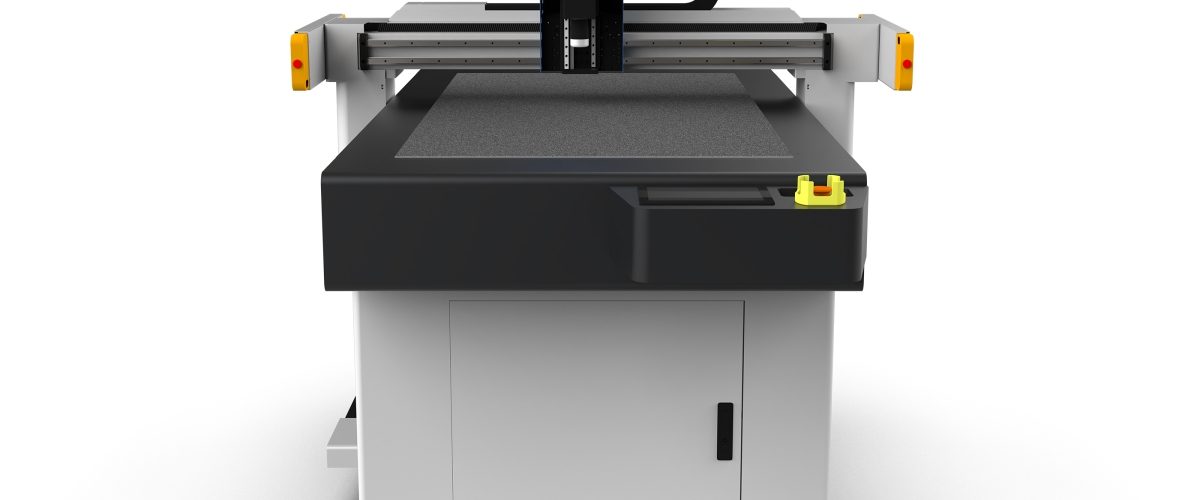
Prepreg Cutting Machine: Core Equipment for Precision Processing of Composite Materials
Prepreg is a sheet or tape material made by impregnating reinforcing materials such as carbon fiber and glass fiber with a resin matrix. It is widely used in aerospace, wind turbine blades, automotive lightweighting, and other fields. The prepreg cutting machine is CNC equipment specially designed for cutting prepreg. Through processes such as oscillating knife, ultrasonic knife, or laser, it cuts prepreg into precise shapes. Compared with general cutting equipment, prepreg cutting machines need to solve challenges such as high material tackiness, easy delamination, and temperature sensitivity, ensuring clean cutting edges, no burrs, and no fiber damage.
Key Technical Parameters of Prepreg Cutting Machines
When purchasing a prepreg cutting machine, the following parameters require special attention, as they directly determine cutting quality and production efficiency.
1. Cutting Accuracy and Repeat Positioning Accuracy
Cutting accuracy is generally based on an industry benchmark of ±0.1 mm, while high-end equipment can reach ±0.05 mm. Repeat positioning accuracy affects consistency in mass production and should be ≤0.05 mm. For aerospace-grade prepreg, accuracy requirements are even stricter, and it is necessary to ensure that the cutting path fully matches the CAD model.
2. Cutting Speed and Acceleration
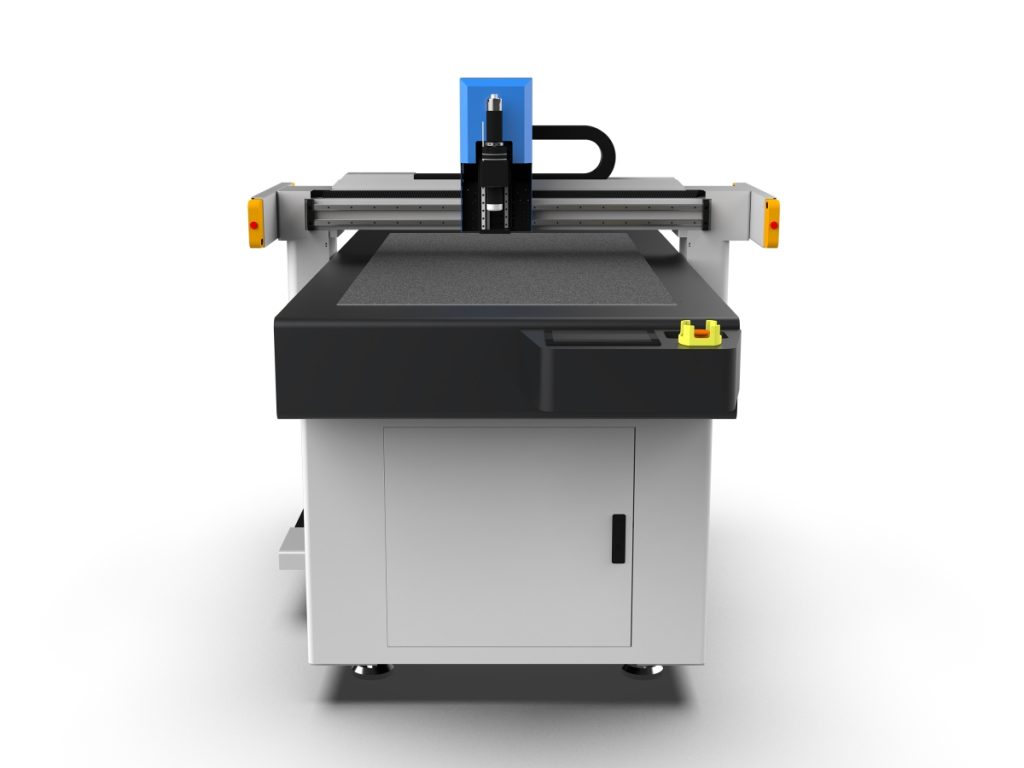
Cutting speed needs to be adjusted according to material thickness and knife type. When using an oscillating knife to cut prepreg, the speed is generally 100-300 mm/s; an ultrasonic knife can reach over 500 mm/s. Acceleration affects cutting quality at corners, and high acceleration (≥1000 mm/s²) can reduce material pulling during start and stop. In actual production, it is necessary to balance speed and quality to avoid edge delamination caused by excessive speed.
3. Knife Types and Applicability
- Oscillating knife: Cuts through high-frequency oscillation (thousands of times per minute), suitable for prepreg with a thickness of 0.1-5 mm, with a smooth cut and no heat effect.
- Ultrasonic knife: Uses ultrasonic vibration to reduce friction, suitable for highly tacky prepreg, with high cutting speed and good edge quality.
- Laser knife: Non-contact cutting with high precision, but it may produce a heat-affected zone, leading to resin curing or fiber damage, so it must be selected carefully.
For most prepreg, oscillating knives and ultrasonic knives are the first choice, while laser knives are only suitable for specific thin-layer materials.
4. Working Table and Vacuum Adsorption
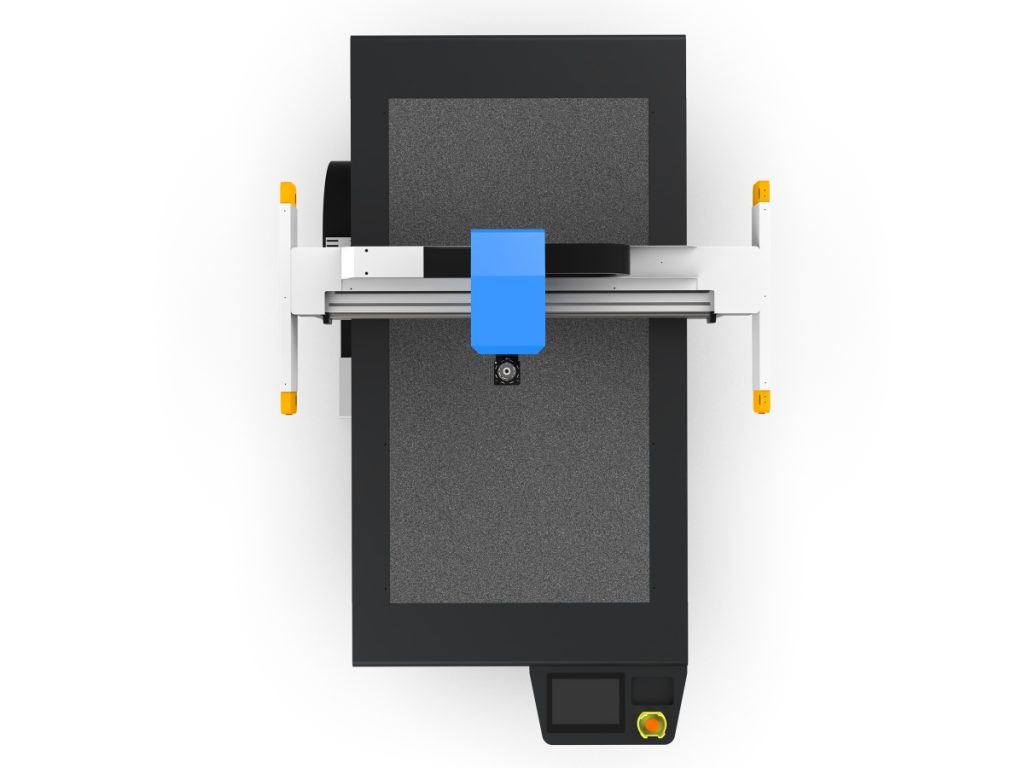
The working table size needs to match the prepreg width. Common specifications include 1.6 m × 3 m, 2 m × 4 m, etc. The vacuum adsorption system ensures that the material remains fixed during cutting, and the adsorption force should be adjustable to avoid crushing the material. Zoned adsorption function can independently control different areas, improving flexibility.
5. Control System and Software
Modern prepreg cutting machines mostly use CNC control systems and support import of formats such as DXF and HPGL. The software should have nesting optimization functions to improve material utilization. Some high-end equipment integrates visual recognition systems that can automatically identify material edges and defects to achieve intelligent cutting.
Selection Points for Prepreg Cutting Machines
Selection requires comprehensive consideration of material characteristics, production scale, budget, and other factors. The following are key considerations.
Matching Material Characteristics
Different prepreg vary greatly in resin content, fiber type, and thickness. For example, carbon fiber prepreg has high hardness and requires wear-resistant knives; glass fiber prepreg easily generates dust and requires dust removal devices. Highly tacky prepreg (such as epoxy resin systems) should use ultrasonic knives to reduce material sticking to the knife.
Production Scale and Degree of Automation
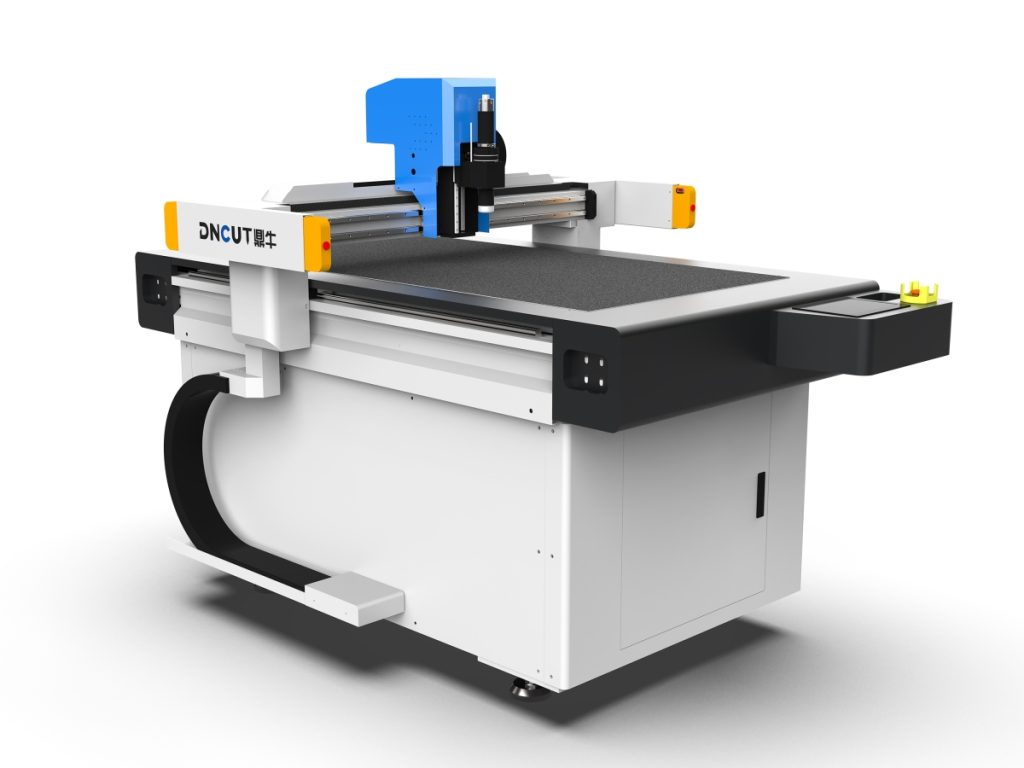
For small-batch, multi-variety production, manual loading and semi-automatic cutting machines can be selected; for mass production, automatic loading, multi-layer cutting, and automatic sorting systems should be considered. Multi-layer cutting can cut dozens of layers of prepreg at one time, significantly improving efficiency, but it is necessary to ensure no slippage between layers.
Environmental Control and Safety
Prepreg is sensitive to temperature and humidity. The cutting workshop usually needs to be controlled at a temperature of 20±2°C and humidity of 50±5%RH. The cutting machine should have good sealing to prevent dust contamination. At the same time, the equipment must comply with safety standards, such as emergency stop buttons and light curtain protection.
Maintenance and After-Sales Service
Oscillating knives and ultrasonic knives are wearing parts and need regular replacement. When choosing a supplier, its service network and spare parts supply capability should be examined. Software upgrades and training support are also guarantees for long-term use.
Operation and Maintenance Practices for Prepreg Cutting Machines
Correct operation and maintenance can extend equipment life and ensure cutting quality.
Operating Procedure
- Material preparation: After taking prepreg out of cold storage, it needs to be warmed up in a constant-temperature workshop to avoid condensation affecting cutting. The warming time is determined by the thickness of the roll material, generally 2-4 hours.
- Equipment inspection: Check knife wear, clean the table, and confirm that vacuum adsorption is normal.
- Parameter setting: Set cutting speed, oscillation frequency, knife pressure, and other parameters according to material type and thickness. For the first cut, it is recommended to test-cut a small sample and adjust to the optimal state.
- Cutting process monitoring: Observe cutting edge quality. If burrs or delamination occur, adjust parameters or replace the knife in time.
- Unloading and identification: After cutting is completed, identify and store according to layup sequence to avoid confusion.
Daily Maintenance
- Knife maintenance: Regularly check the edge of oscillating knife blades, and clean resin residue from ultrasonic knife heads. It is recommended to replace blades every 500-1000 meters of cutting, depending on the material.
- Vacuum system: Regularly clean the filter screen, check pipeline sealing, and ensure stable adsorption force.
- Guide rails and transmission: Clean guide rails weekly and add lubricating oil, and check belt tension.
- Software updates: Install control system patches in a timely manner and optimize cutting path algorithms.
Common Problems and Solutions
- Burrs on cutting edges: May be caused by knife wear or too slow speed; replace the knife or increase speed.
- Material delamination: Usually caused by excessive knife pressure or improper oscillation frequency; reduce knife pressure or adjust frequency.
- Cutting size deviation: Check guide rail accuracy and timing belt tension, and calibrate if necessary.
- Insufficient vacuum adsorption: Clean the filter screen and check whether the sealing strip is aged.
Technology Development Trends
With the expansion of composite material applications, prepreg cutting machines are developing toward intelligence and flexibility. For example, automatic defect detection integrated with machine vision, AI-based cutting parameter optimization, and modular knife systems adaptable to multiple materials. In addition, environmentally friendly cutting technologies (such as low-temperature cutting) are also under development to reduce dust and energy consumption.
In short, the prepreg cutting machine is key equipment in composite material manufacturing. Correct selection, meticulous operation, and regular maintenance are the foundation for ensuring production efficiency and product quality. Enterprises should choose equipment with mature technology and comprehensive service according to their own needs, and establish standardized operating procedures.