
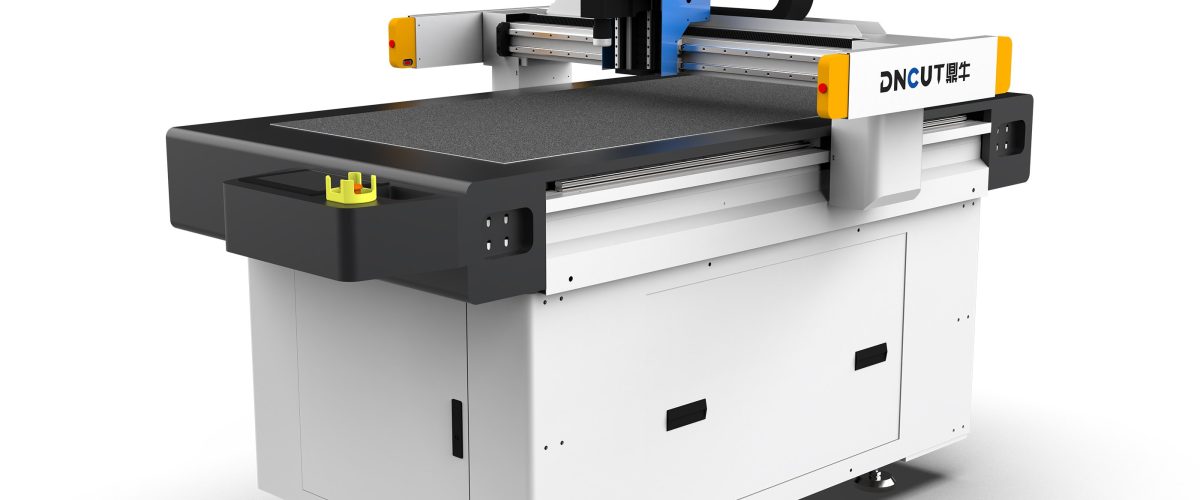
Packaging Box Sample Cutting Machine: A Full-Process Analysis from Selection to Efficient Application
In the packaging and printing industry, the sampling stage directly affects order closing speed and customer satisfaction. Traditional manual sample cutting relies on die-cutting blades and manual engraving; a complex packaging box sample often takes 2-3 hours, and precision is difficult to guarantee. The packaging box sample cutting machine (also known as a box-type sampling machine or flatbed cutting machine) achieves fast, precise sample production through digital control and has become key equipment for packaging companies to enhance competitiveness. Starting from practical application, this article systematically explains equipment selection, operating parameters, common problems, and maintenance points.
I. Core Types and Applicable Scenarios of Packaging Box Sample Cutting Machines
According to cutting principles and structure, mainstream equipment is divided into three categories:
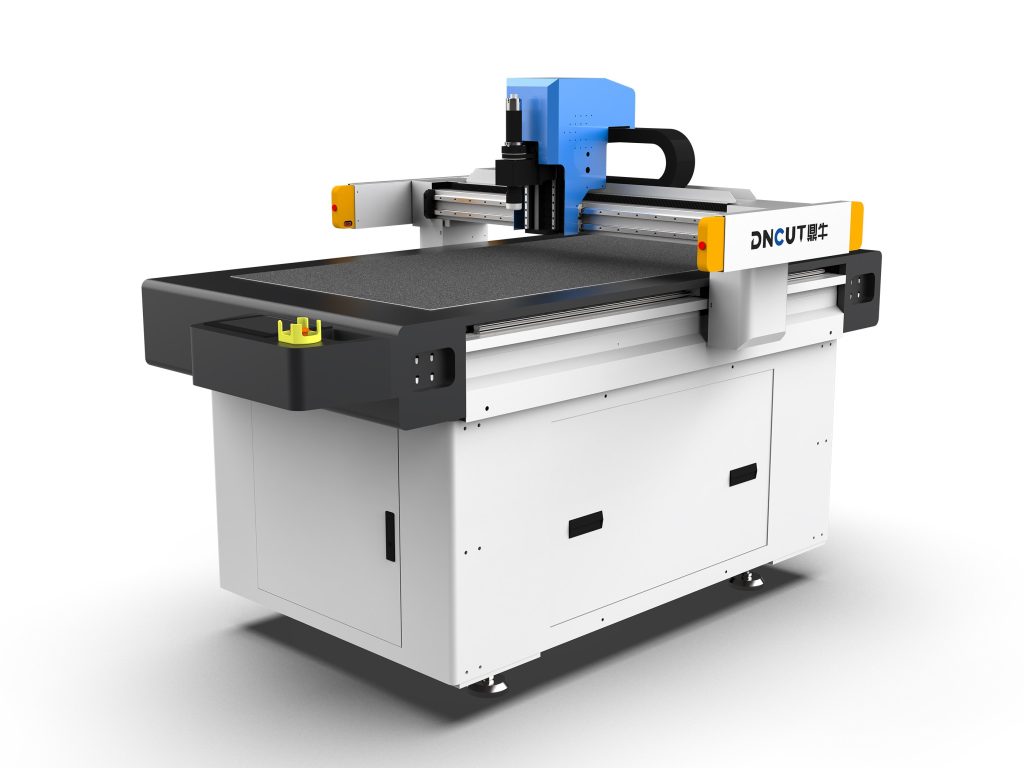
- Oscillating knife cutting machine: The blade vibrates at high frequency (usually 8000-15000 times/min), suitable for corrugated paper, cardstock, and gray board paper. Cutting thickness can reach 15mm (gray board), with good edge verticality, making it the main machine type for packaging box sampling.
- Laser cutting machine: Suitable for precision cutting of thin cardstock (≤2mm), with a fine cutting kerf (0.1-0.2mm), but edges show carbonization and yellowing, and cutting efficiency for gray board paper is low; mostly used for premium box liners.
- Rotary knife cutting machine: Cuts through rotating blades, suitable for flexible materials such as PET and PP film, but tends to produce burrs when cutting hard paperboard.
For packaging box sampling, the oscillating knife cutting machine is the first choice. Its advantages include: it can cut a variety of materials (cardstock, corrugated paper, gray board, PVC, adhesive paper), complete creasing, dashed lines, and kiss-cutting processes without changing tools, and its software is compatible with mainstream box design files (such as ArtiosCAD and AutoCAD).
II. Interpretation of Key Parameters and Selection Recommendations
When purchasing, focus on the following parameters to avoid being misled by vague advertising:
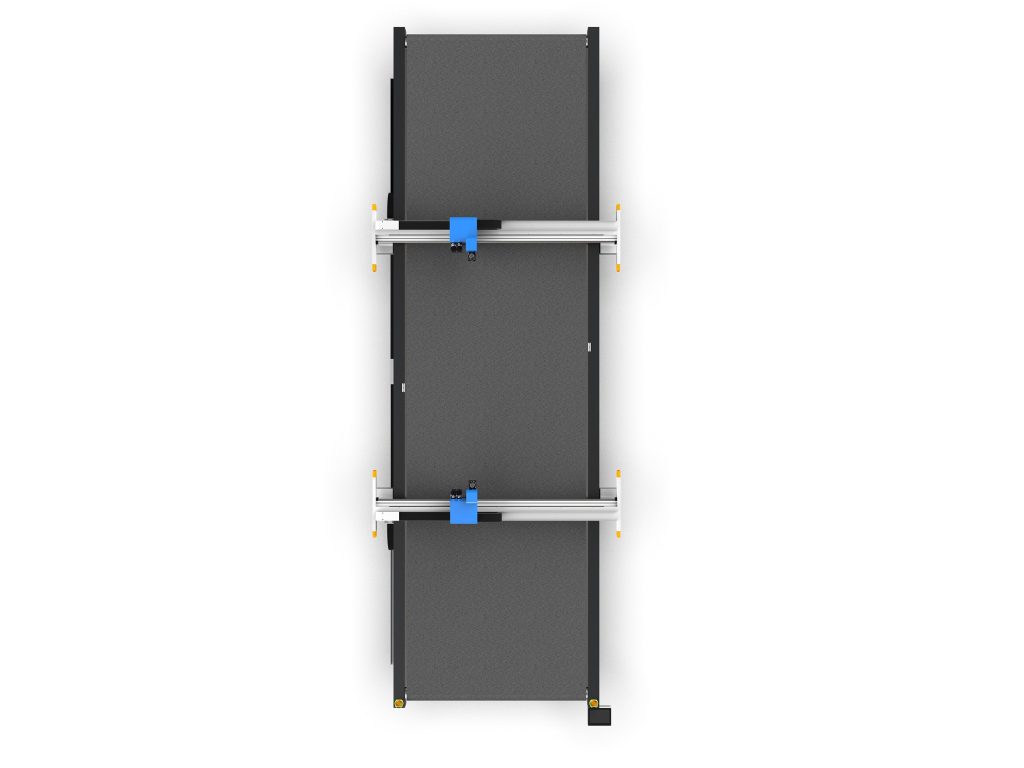
- Effective cutting area: Common specifications include 600×400mm, 900×600mm, and 1200×800mm. It is recommended to choose ≥900×600mm, which can cover A3 format and most packaging box flat layouts. If large display boxes are often made, choose 1300×1000mm or above.
- Cutting precision: Repeat positioning accuracy should be ≤0.05mm, and actual cutting precision should be ≤0.1mm. Insufficient precision will cause crease line offset and skewed box bodies after folding.
- Cutting speed: Idle travel speed can reach over 1000mm/s, but actual cutting speed is affected by the material. Corrugated paper is usually 300-500mm/s, and gray board paper 200-300mm/s. Note: equipment claiming “high speed” but with low acceleration does not actually achieve high efficiency.
- Tool configuration: At minimum, equipped with an oscillating knife, creasing wheel, dashed-line knife, and kiss-cutting knife. High-end models have automatic tool change systems (such as 6 stations), reducing manual intervention.
- Vacuum adsorption: Adsorption force ≥-60kPa to ensure thin paper does not shift. For corrugated paper, zoned adsorption is needed to save energy.
- Software functions: Must support direct import of DXF, AI, and PDF, and have the ability to automatically identify cutting lines, crease lines, and dashed-line layers. Some software can automatically generate box types (parametric design), greatly improving efficiency.
Selection recommendations: For small and medium-sized packaging factories or design studios, prioritize 900×600mm oscillating knife models, with a budget of about 80,000-150,000 RMB; for large enterprises or high-frequency sampling scenarios, choose 1300×1000mm models with automatic tool change and CCD vision positioning, with a budget of 200,000-400,000 RMB.
III. Operating Techniques: How to Ensure Sampling Quality and Efficiency
1. File Processing and Path Optimization
Design files need to be layered by color: cutting lines (red), crease lines (blue), dashed lines (green), and kiss-cutting (yellow). After importing into the software, check whether lines are closed and overlapping. Use the “path optimization” function to reduce idle travel, which can improve efficiency by more than 20%. For corrugated paper, cutting lines should be 0.2-0.3mm shorter than crease lines to avoid paper surface bursting during folding.
2. Tool and Parameter Settings
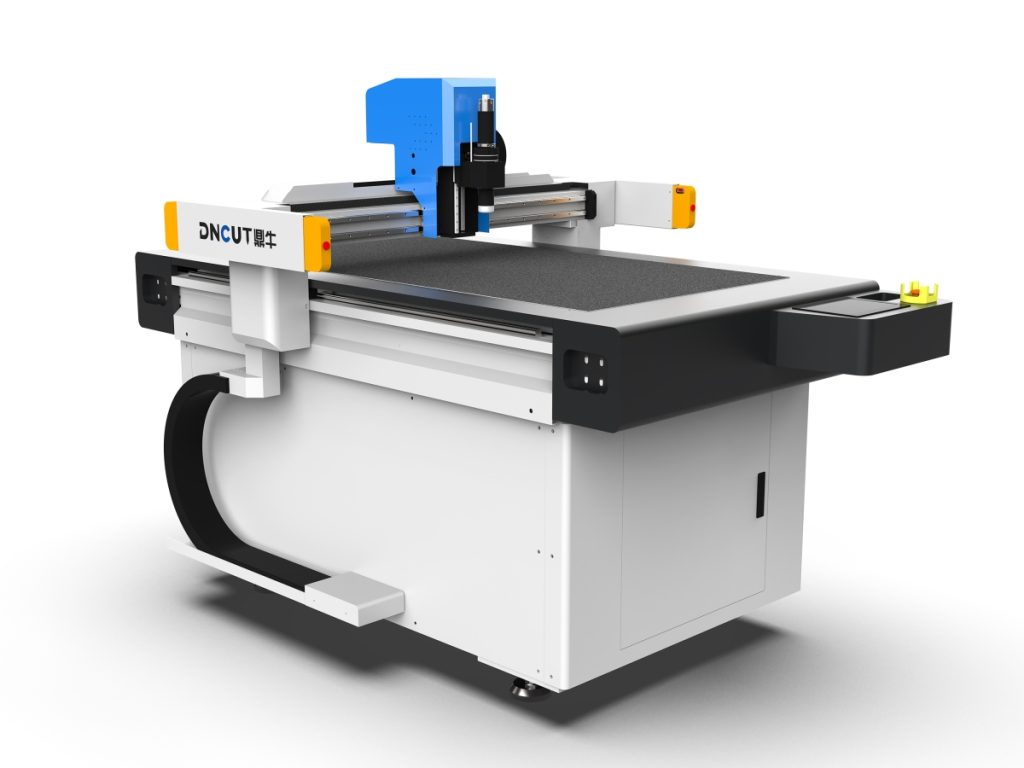
Oscillating knife cutting cardstock: blade tip angle 30°, vibration frequency 10000 times/min, cutting depth 0.5mm (0.1mm beyond paper thickness), speed 400mm/s. Cutting gray board paper: blade tip angle 45°, frequency 12000 times/min, depth 1.2mm (paper thickness 1.0mm), speed 250mm/s. Creasing: creasing wheel pressure 0.3-0.5MPa, speed 500mm/s, crease line width 1.0-1.5mm (adjusted according to paper thickness).
3. Material Fixation and Adsorption
Thin paper (≤0.5mm) requires full-area adsorption and a layer of breathable film (such as imported American adsorption film) to prevent paper surface wrinkling. For corrugated paper, adjust adsorption force to -40kPa; too much can crush the corrugation. For small-sized samples, masking tape can be used to assist in fixing the edges.
4. First-Article Inspection and Batch Consistency
After the first article is completed, use a vernier caliper to measure key dimensions (such as box length, width, and height); the error should be ≤0.2mm. Folding test: fold 180° at the crease line with no cracks. If burrs appear, check whether the blade is worn (usually the blade needs to be replaced after cutting 200-300 sheets of cardstock).
IV. Common Problems and Solutions
- Rough cutting edges: Blade wear or vibration frequency too low. Replace the blade and increase frequency to above 12000 times/min.
- Cracking at crease lines during folding: Creasing pressure too high or creasing wheel too narrow. Reduce pressure to 0.3MPa and replace with a 1.5mm wide creasing wheel. For gray board paper, perform kiss-cutting first and then creasing.
- Material displacement: Insufficient adsorption force or dust on the paper surface. Clean the adsorption table, check the vacuum pump seal, and add adsorption zones if necessary.
- Incomplete cutting: Insufficient cutting depth or blade tip angle too large. Increase depth by 0.1mm and use a 30° blade tip.
- Software recognition errors: Non-standard line colors or confused layers. Use RGB standard colors uniformly and merge overlapping lines in CAD.
V. Maintenance and Consumables Management
Before starting the machine every day, check whether the blade is loose, clean the guide rail, and apply lithium-based grease. Every week, clean debris from the vacuum adsorption table and check the air pipes for damage. Every month, calibrate the origin sensor and tool offset once (cut a cross line with a standard test file, measure the deviation, and compensate).
In terms of consumables: the service life of an oscillating blade is about 200-500 sheets (depending on the material), and the service life of a creasing wheel is about 1000 creases. It is recommended to keep 2-3 sets of blades in stock and record replacement times. Replace the cutting mat (felt pad) every 3-6 months; otherwise, it will affect adsorption performance and cutting depth consistency.
VI. Return on Investment Analysis
Taking an oscillating knife sample cutting machine costing 100,000 RMB as an example, it can complete 30-50 packaging box samples per day (including file processing and cutting), while manual sample cutting only completes 5-8. Calculated at 50-100 RMB per sample, daily income is 1500-5000 RMB; after deducting labor and consumables, the investment payback period is about 3-6 months. More importantly, rapid sampling can significantly increase customer order conversion rates and reduce rework losses caused by sample errors.
Summary: The selection of a packaging box sample cutting machine must closely match material types, precision requirements, and production capacity needs. In operation, pay attention to file layering, parameter matching, and first-article inspection; combined with regular maintenance, efficient and precise sampling can be achieved. For packaging companies, this equipment is not only a tool but also a powerful means to shorten delivery cycles and win orders.