
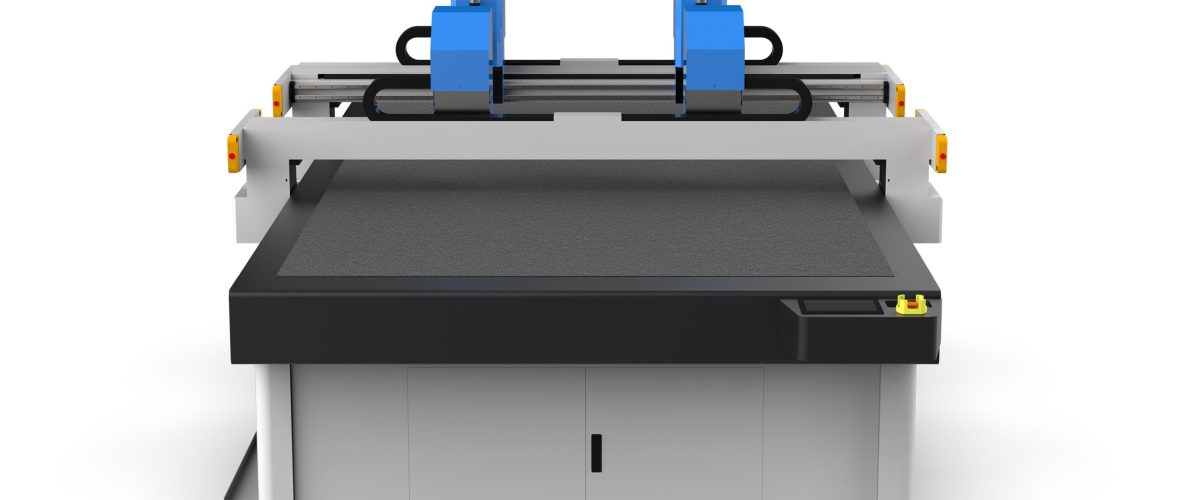
Fiber Cutting Machine: A Complete Guide from Selection to Efficient Use
Fiber materials (such as carbon fiber, glass fiber, aramid, etc.) are increasingly widely used in aerospace, automotive, sports equipment, and other fields, and their cutting processing has extremely high requirements for precision and efficiency. Oscillating knife cutting machines (fiber cutting machines) have become mainstream equipment for fiber material cutting due to advantages such as no thermal effect, neat cuts, and multi-layer cutting capability. Starting from practical applications, this article systematically summarizes the selection points, key parameters, operating techniques, and maintenance methods of fiber cutting machines, providing a reference for your production.
I. Core Advantages and Application Scenarios of Fiber Cutting Machines
Compared with laser cutting and waterjet cutting, oscillating knife cutting machines have unique advantages in fiber material processing:
- No thermal damage: Laser cutting can burn and carbonize fiber edges, affecting material performance; the oscillating knife is cold cutting, with flat cuts and no burning.
- Efficient multi-layer cutting: It can cut multiple layers of fiber cloth at one time (usually 5-20 layers, depending on material thickness), greatly improving production efficiency.
- Wide material adaptability: Suitable for carbon fiber prepreg, glass fiber cloth, aramid cloth, ultra-high molecular weight polyethylene (UHMWPE), etc.
- High precision: With CCD visual positioning, cutting precision can reach ±0.1mm, meeting the requirements of high-end fields such as aerospace.
Typical application scenarios include: cutting of aerospace composite components, cutting of automotive interior and exterior fiber parts, prepreg cutting for sports equipment (such as bicycle frames and rackets), glass fiber cloth cutting for wind blades, etc.
II. Key Selection Parameters and Configuration Recommendations
1. Cutting Head Types and Tool Selection
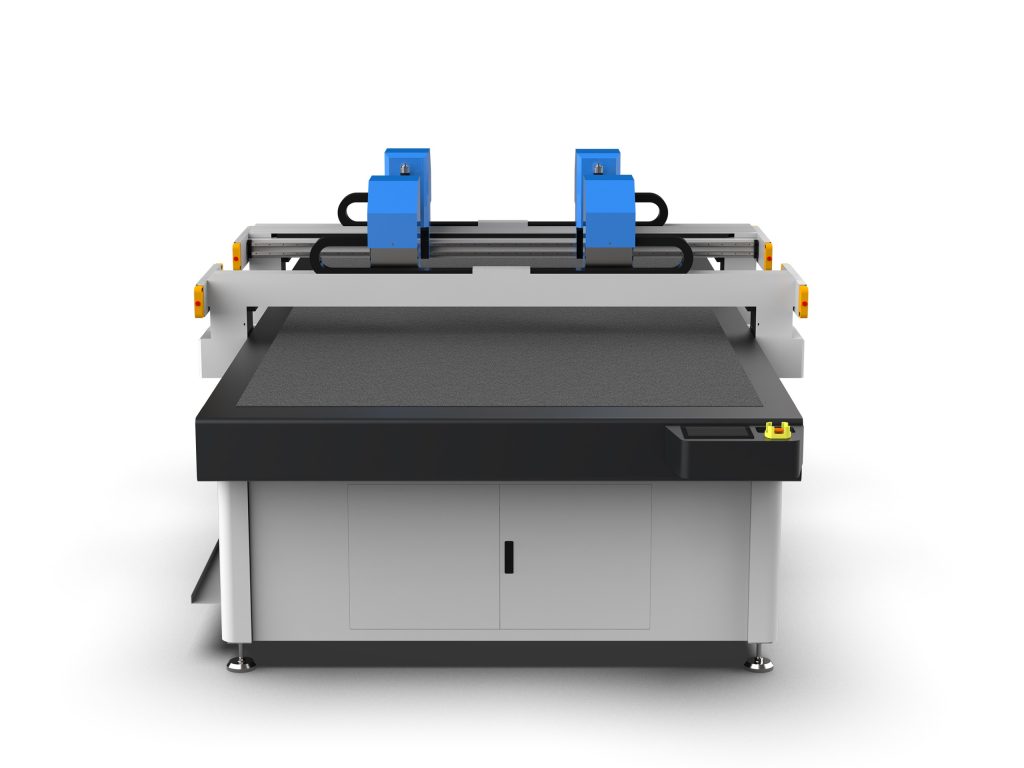
Fiber cutting machines are often equipped with multiple cutting heads:
- Oscillating knife: Suitable for most fiber materials, achieving cutting through high-frequency up-and-down vibration (usually 3000-6000 times per minute), with good cut quality.
- Round knife: Suitable for cutting thicker and harder fiber materials, such as glass fiber laminates.
- Drag knife: Used for cutting thin materials or proofing, with low cost but lower efficiency.
- Punching knife: Used for drilling or marking.
It is recommended to choose an automatic tool change system to adapt to mixed production of different materials. Tool materials are recommended to be carbide or ceramic coating for better wear resistance.
2. Cutting Precision and Repeat Positioning Accuracy
Precision is the core indicator of fiber cutting machines. Usually, cutting precision of ±0.1mm and repeat positioning accuracy of ±0.05mm are required. Factors affecting precision include:
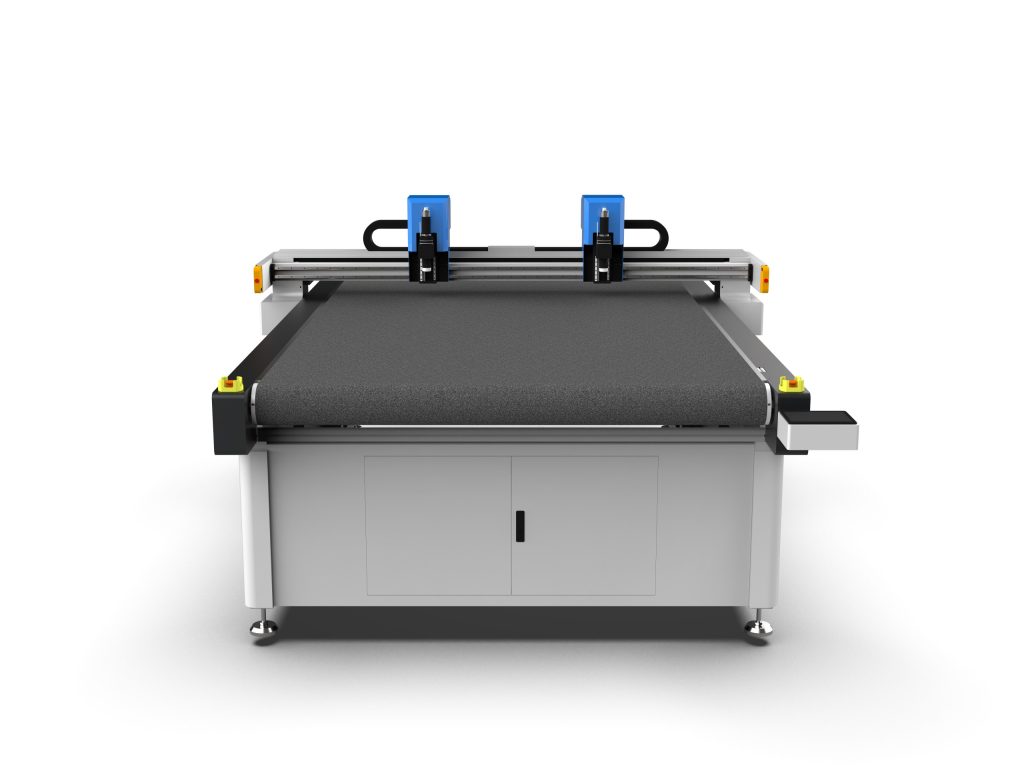
- Mechanical structure: Adopt gantry structure and ground-grade rack and pinion transmission to ensure long-term stability.
- Control system: Servo motor + high-resolution encoder, closed-loop control.
- Table flatness: The vacuum adsorption table must ensure flatness within ±0.2mm.
3. Vacuum Adsorption System
Fiber materials are mostly soft fabrics and must be firmly fixed during cutting. The vacuum adsorption system needs to have:
- Zone control: Divide the table into multiple vacuum zones and open them independently according to the cutting area, saving energy and providing stronger adsorption force.
- High negative pressure fan: The vacuum degree needs to reach above -0.08MPa to ensure thin materials do not shift.
- Breathable pad: Use breathable felt or microporous plate to distribute adsorption force evenly.
4. Visual Recognition and Automatic Nesting
For fiber materials with patterns or requiring aligned cutting (such as prepreg with markings), the CCD vision system can automatically identify contours and compensate for deformation, improving material utilization. It is recommended to choose a camera with a resolution of more than 5 million pixels, paired with a dedicated light source.
5. Software and Automation
The cutting machine should be equipped with intelligent nesting software, support import of DXF, PLT, and other formats, automatically optimize nesting paths, and reduce idle travel. It should also support barcode/RFID recognition to achieve production data traceability.
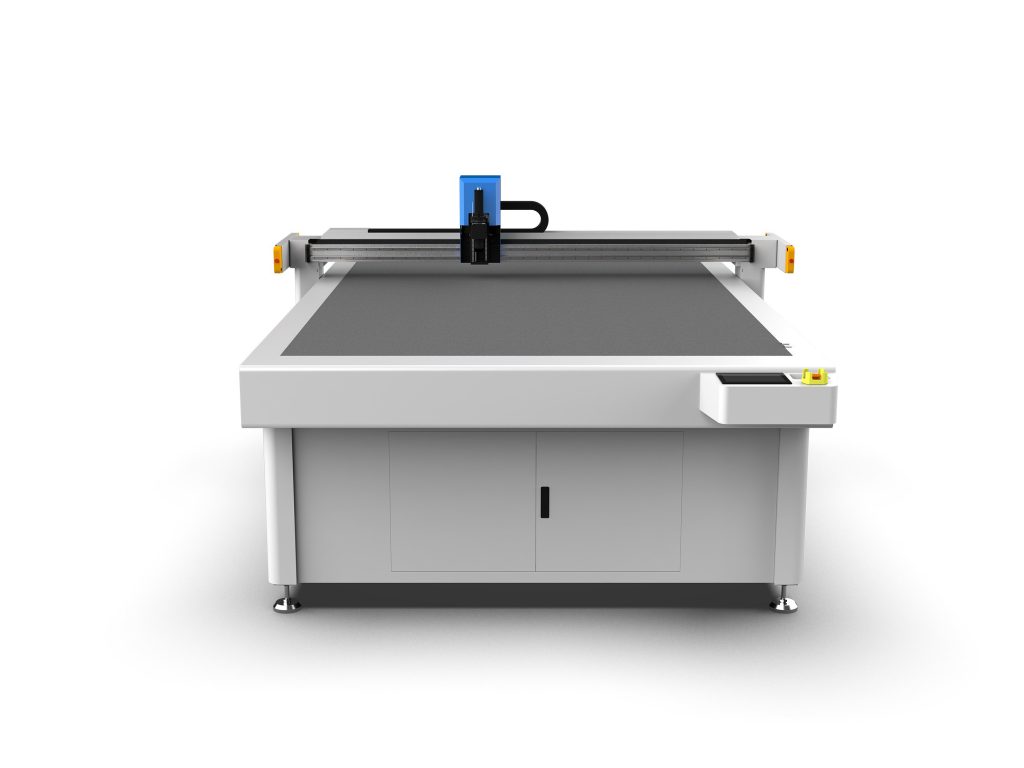
III. Operating Techniques and Efficiency Improvement
1. Material Pretreatment and Layup
Fiber cloth needs to be laid flat before cutting to avoid wrinkles. During multi-layer cutting, use thin adhesive film or electrostatic adsorption between layers to prevent interlayer sliding. After layup, use a roller to compact and remove air.
2. Cutting Parameter Optimization
Different fiber materials require adjustment of cutting speed and tool frequency:
- Carbon fiber prepreg (0.2mm thick): Recommended cutting speed 30-50m/min, oscillation frequency 4000 times/min.
- Glass fiber cloth (0.5mm thick): Cutting speed 20-30m/min, oscillation frequency 3500 times/min.
- Aramid cloth (0.3mm thick): Cutting speed 25-40m/min, oscillation frequency 4500 times/min.
Actual parameters need to be fine-tuned according to material resin content, temperature, and humidity. It is recommended to trial cut small samples first and observe cut quality (no burrs, no delamination) before mass production.
3. Tool Life Management
Establish tool wear records and check blade wear after every certain cutting length (for example, every 500 meters for carbon fiber). Replace or sharpen in time after wear to avoid decline in cut quality. The life of carbide tools is usually 1.5 times that of ceramic knives.
4. Common Problems and Countermeasures
- Burrs on cuts: Check whether the tool is sharp and whether the oscillation frequency is sufficient; appropriately reduce cutting speed.
- Material shifting: Check whether the vacuum adsorption force is sufficient and whether the zones are opened correctly; add a breathable pad.
- Incomplete cutting: Increase tool down pressure or replace with a sharper tool; check table flatness.
IV. Maintenance and Safety Specifications
1. Daily Maintenance
- Clean the table, guide rails, and racks every shift to remove fiber dust.
- Check whether the vacuum pipeline leaks every week and clean the filter.
- Lubricate the guide rails and lead screws every month and check belt tension.
- Calibrate the verticality of the cutting head and table flatness every quarter.
2. Safety Precautions
- Do not put hands into the cutting area during operation; the equipment must be equipped with safety light curtains and emergency stop buttons.
- When cutting carbon fiber, wear a dust mask to avoid inhaling fiber dust.
- Regularly check electrical wiring to prevent short circuits.
V. Conclusion
The selection of a fiber cutting machine needs to comprehensively consider material characteristics, production capacity requirements, and precision requirements. Reasonable configuration and correct operation and maintenance can significantly improve cutting quality and efficiency. It is recommended to provide material samples for trial cutting before procurement to verify the actual performance of the equipment. If you need further technical consultation, please feel free to contact our engineering team.