
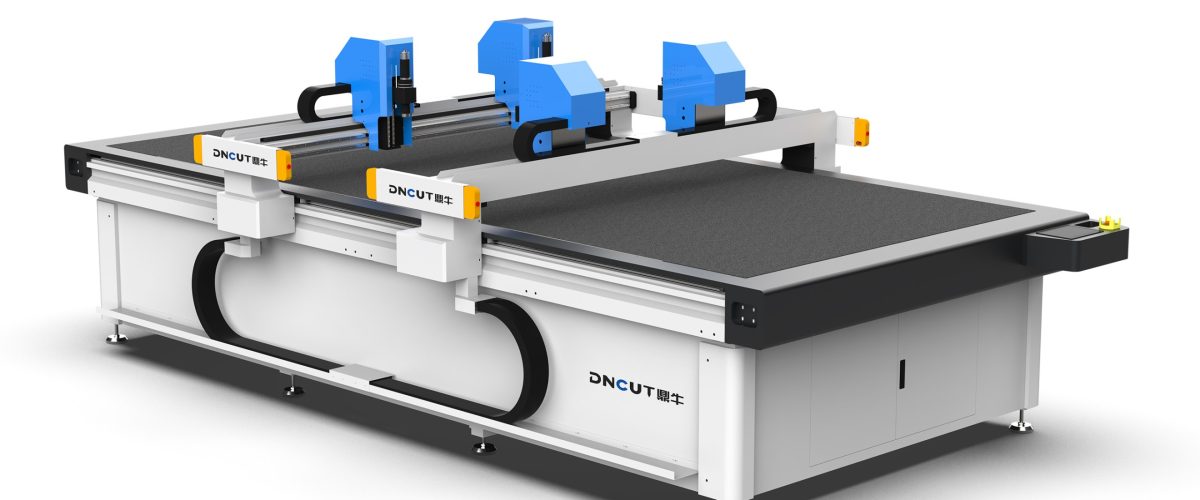
Shoe Pattern Cutting Machine: Core Equipment for Intelligent Cutting in the Footwear Industry
In the footwear industry, shoe pattern cutting is a key process that determines product quality and production efficiency. Traditional manual cutting relies on cutting dies, which suffers from slow pattern changes, large material waste, and unstable precision. The shoe pattern cutting machine (also known as shoe pattern cutting machine, CNC shoe pattern cutting machine) uses computer control, high-precision transmission, and specialized blades to achieve automated cutting of components such as uppers, soles, and linings, and has become standard equipment for modern footwear manufacturers. This article provides a complete practical guide covering technical principles, selection parameters, operating techniques, and maintenance.
I. Working Principle and Core Components of the Shoe Pattern Cutting Machine
Shoe pattern cutting machines are CNC flexible material cutting equipment, typically using an oscillating knife, circular knife, or laser as the cutting tool. The workflow is: import CAD shoe pattern design files → optimize with nesting software → generate paths via the control system → execute cutting with the cutting head. Core components include:
- Cutting head: Oscillating knife (frequency up to thousands of times per minute) is suitable for leather and fabric; circular knife is suitable for thick materials; laser is suitable for fine hollowing, but edge charring needs to be considered.
- Transmission system: Servo motor + precision rack/belt, repeat positioning accuracy is usually ±0.1mm, and high-end models can reach ±0.05mm.
- Vacuum adsorption platform: Vacuum adsorption secures materials, and zone control adapts to shoe patterns of different sizes.
- Control system: Supports HPGL, DXF, PLT and other formats, with seamless integration with mainstream shoe pattern design software (such as Shoemaster, Romans CAD).
II. Key Selection Parameters: Deriving Equipment Configuration from Production Capacity
When purchasing a shoe pattern cutting machine, you should not only look at the price; you need to match parameters according to your own product type, material characteristics, and order structure. The following are five core dimensions:
1. Cutting working area
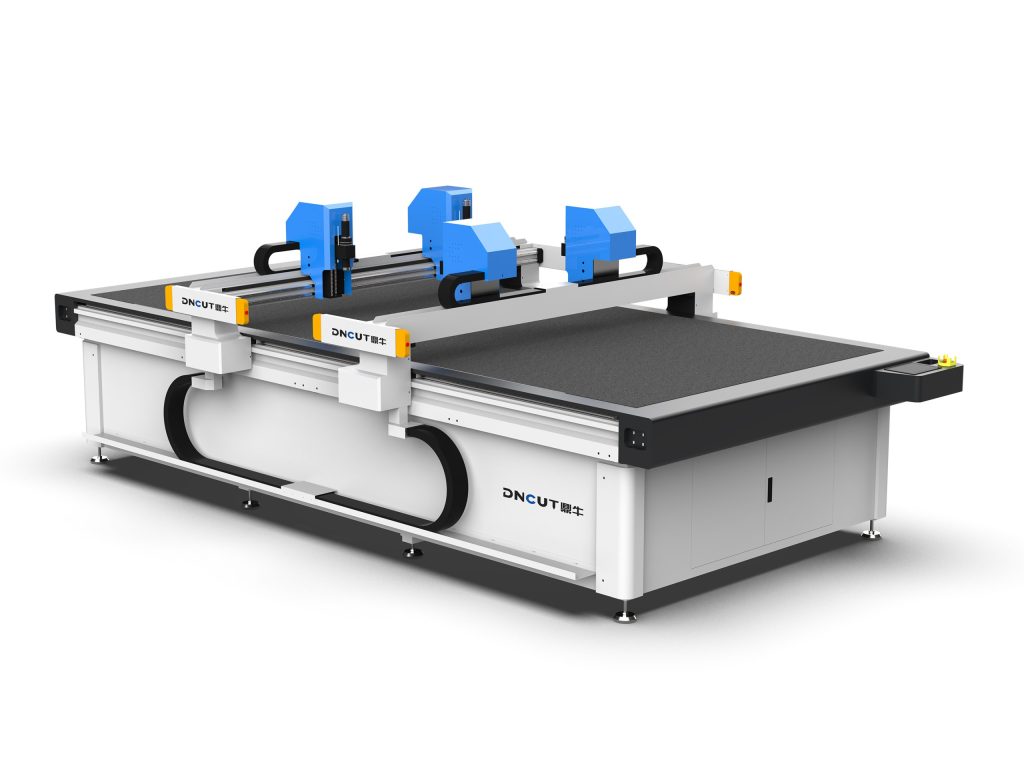
Common working areas include 1600mm×2500mm, 1800mm×3000mm, etc. If the main production is athletic shoe uppers, the single-panel layout size is usually within 1200mm×800mm, and choosing 1600mm×2500mm is sufficient for multi-panel nesting. If whole cowhide cutting is involved, a working area of ≥1800mm×3000mm is recommended to reduce splicing.
2. Cutting Accuracy and Repeat Positioning Accuracy
Shoe patterns have high precision requirements, especially at the upper splicing areas, where the error should be controlled within ±0.2mm. The repeat positioning accuracy of the equipment is recommended to be ≤±0.1mm. Note: precision is affected by tool wear, suction force, and material tension, and requires regular calibration.
3. Cutting speed and acceleration
The actual cutting speed is affected by material thickness and pattern complexity. Taking 2mm thick PU leather as an example, the oscillating knife cutting speed is about 300-600mm/s; acceleration affects efficiency at corners, and it is recommended to choose a model with acceleration ≥1000mm/s² to avoid frequent deceleration.
4. Tool configuration and quick-change system
Shoe pattern cutting often involves a variety of materials (leather, mesh, EVA, TPU), requiring the configuration of oscillating knife, circular knife, punching knife, V-groove knife, etc. Prioritize automatic tool change systems (tool magazine capacity ≥8) to reduce manual intervention. Common tool diameters are φ1.5mm, φ2mm, and φ3mm; select according to the details of the shoe pattern.
5. Software and nesting capability
Nesting software directly affects material utilization. Excellent software should support automatic nesting, common-edge cutting, and intelligent avoidance of defects. In actual cases, optimized nesting can improve leather utilization by 5%-15%. Also check whether the software supports integration with the factory MES system to enable order-driven production.
III. Operating Techniques: Practical Methods to Improve Cutting Quality and Efficiency
1. Material Fixing and Adsorption Force Adjustment
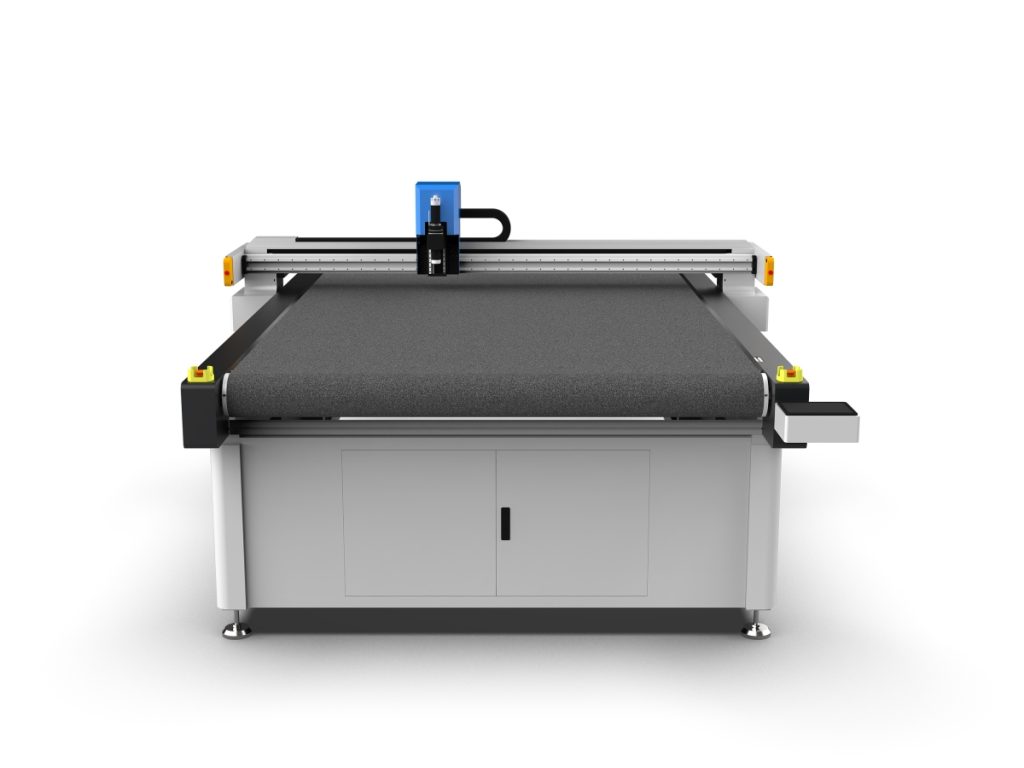
Insufficient vacuum adsorption force will cause material displacement, while excessive force may deform thin materials. Recommendations: adsorption pressure for leather -0.6~-0.8bar; mesh fabric -0.4~-0.6bar; EVA foam -0.8~-0.9bar. For zoned adsorption, only activate the areas with material, which saves energy and enhances adsorption force.
2. Tool Selection and Parameter Matching
- oscillating knife: suitable for leather, fabric, and foam, cutting speed 300-800mm/s, vibration frequency adjusted according to material thickness (high frequency for thin materials, low frequency for thick materials).
- Round knife: Suitable for thick EVA and rubber; requires cooling air to prevent sticking.
- Punching knife: Used for eyelet holes and ventilation holes, with hole diameter accuracy of ±0.05mm.
Note: When cutting leather, the knife tip should be sharp; check for wear every 200-300 meters of cutting and replace in time.
3. Path optimization and common-edge cutting
Enable common-edge cutting in the nesting software to reduce repetitive paths and improve efficiency by 10%-20%. For symmetrical shoe patterns, use the mirror function to cut programming time in half. The cutting sequence should follow “inside first, outside later; small first, large later” to avoid deformation caused by material stress release.
4. Common problems and solutions
- Rough cutting edges: Check tool wear, reduce cutting speed, increase vibration frequency.
- Material displacement: Increase suction force, add hold-down wheels, reduce cutting speed.
- Corner overcut: Adjust acceleration, enable corner deceleration function, reduce tool diameter.
IV. Maintenance: The Key to Extending Equipment Life
Shoe pattern cutting machines are precision equipment, and daily maintenance directly affects cutting accuracy and failure rates. The following schedule is recommended:
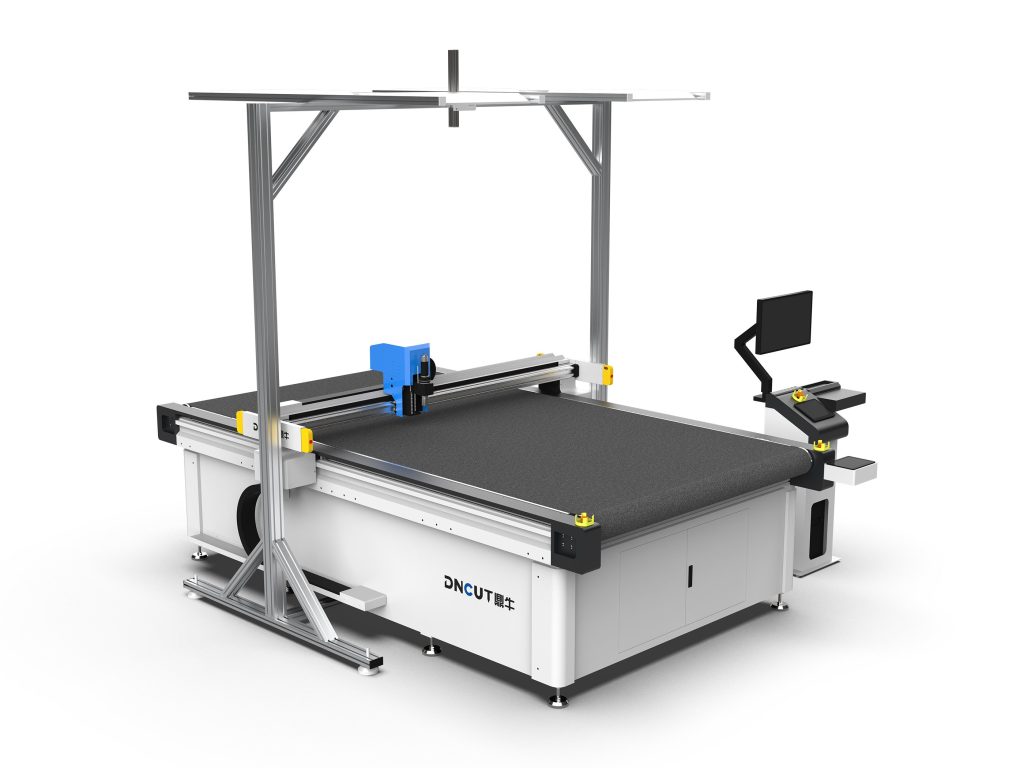
- Daily: Clean the table surface, check whether the vacuum adsorption pipeline is blocked, and clear debris from the knife.
- Weekly: Check guide rail lubrication (use lithium-based grease), clean dust from the control cabinet, and verify knife installation accuracy.
- Monthly: Check belt/rack tension, calibrate the origin, and test repeat positioning accuracy (use a dial indicator).
- Quarterly: Replace worn knives, inspect servo motor cables, and back up system parameters.
Special note: Dust generated when cutting leather can easily clog the suction holes. It is recommended to use a vacuum cleaner to clean the felt on the table every shift. If the equipment is not used for a long time, power it on and run it for 10 minutes every week to prevent capacitor aging.
V. Investment return analysis: when is it worth introducing a shoe pattern cutting machine
Take a medium-sized shoe factory as an example, with a daily output of 500 pairs, and each shoe upper requires 6 parts to be cut. Traditional die cutting requires 2 workers, with a pattern change time of about 30 minutes per change and a material utilization rate of about 75%. After introducing the shoe pattern cutting machine, the pattern change time is reduced to 5 minutes, the material utilization rate is increased to 85%, and 1 worker is saved per shift. The equipment investment is about 150,000-300,000 yuan (depending on the working area and configuration). Calculated at an annual output of 150,000 pairs, the material savings and labor savings can recover the cost within 12-18 months. If the orders are small-batch and multi-variety, the payback period is even shorter.
Recommendation: In the initial stage, leasing or installment payment can be chosen to reduce risk; prioritize brands with local service capabilities to ensure after-sales response time ≤24 hours.
VI. Conclusion
A shoe pattern cutting machine is not a simple cutting tool, but a digital node connecting design and production. When selecting a model, comprehensively consider the working area, accuracy, speed, knives, and software; during operation, focus on material fixation, parameter matching, and path optimization; for maintenance, adhere to daily upkeep. For footwear companies pursuing flexible manufacturing and rapid response, a reasonably configured shoe pattern cutting machine can recover its investment within 12-18 months and continuously improve product consistency and material utilization. It is recommended to bring actual material samples to the equipment manufacturer for trial cutting before purchase to verify cutting quality and efficiency, and then make a decision.