
Digital Printing Cutting Machine: A Complete Guide from Selection to Process Control
Digital printing technology has been widely used in clothing, home textiles, advertising materials and other fields, and cutting, as a downstream process, directly affects finished product quality and production efficiency. Traditional manual cutting or ordinary cutting beds are difficult to meet the high-precision requirements and diverse patterns of digital printing fabrics, so digital printing cutting machines have emerged. This article provides practical technical guidance from four aspects: equipment selection, key parameters, process control and common problems.
I. Core Types and Selection Points of Digital Printing Cutting Machines
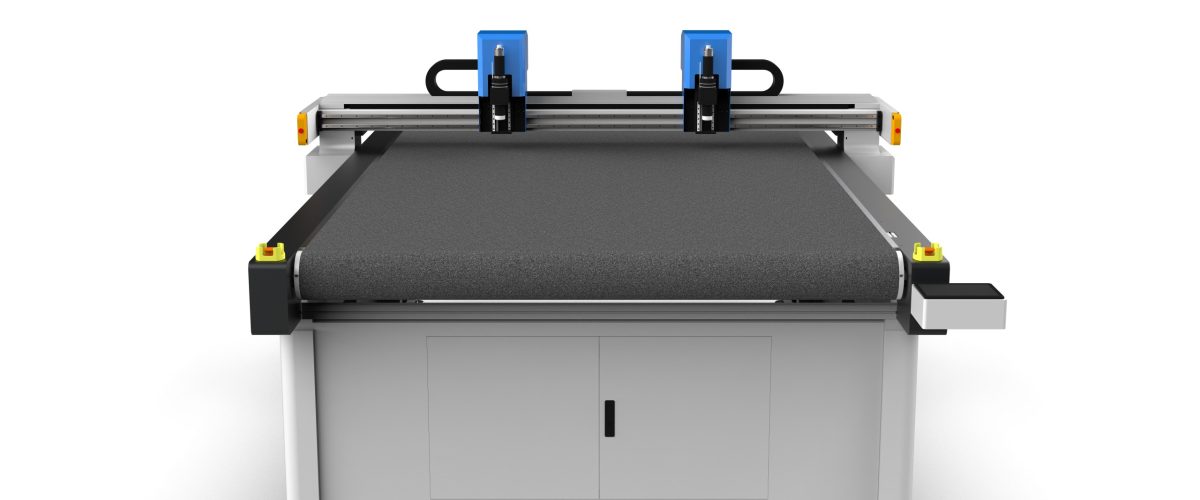
Digital printing cutting machines are mainly divided into two categories: laser cutting machines and oscillating knife cutting machines. Laser cutting machines use high-energy laser beams to melt or vaporize materials, and are suitable for chemical fiber fabrics, films, etc. The cutting edge is automatically sealed, but smoke and burnt edges are produced, and the effect on natural fibers (cotton, linen) is poor. Oscillating knife cutting machines perform cold cutting through high-frequency vibrating blades, and are suitable for almost all flexible materials, including cotton, linen, silk, wool, leather, composite materials, etc., with no burnt edges and no smoke, making them the mainstream choice for digital printing fabrics.
The following factors need to be considered during selection:
- Material type: Natural fibers such as cotton and linen are preferably cut with an oscillating knife; chemical fiber fabrics can be considered for laser, but the acceptability of burnt edges needs to be evaluated; coated or composite materials are recommended to use an oscillating knife.
- Cutting accuracy: Digital printing patterns have high requirements for registration accuracy, usually within ±0.1mm. Oscillating knife cutting machines can achieve repeat positioning accuracy of ±0.05mm through servo control and high-precision guide rails.
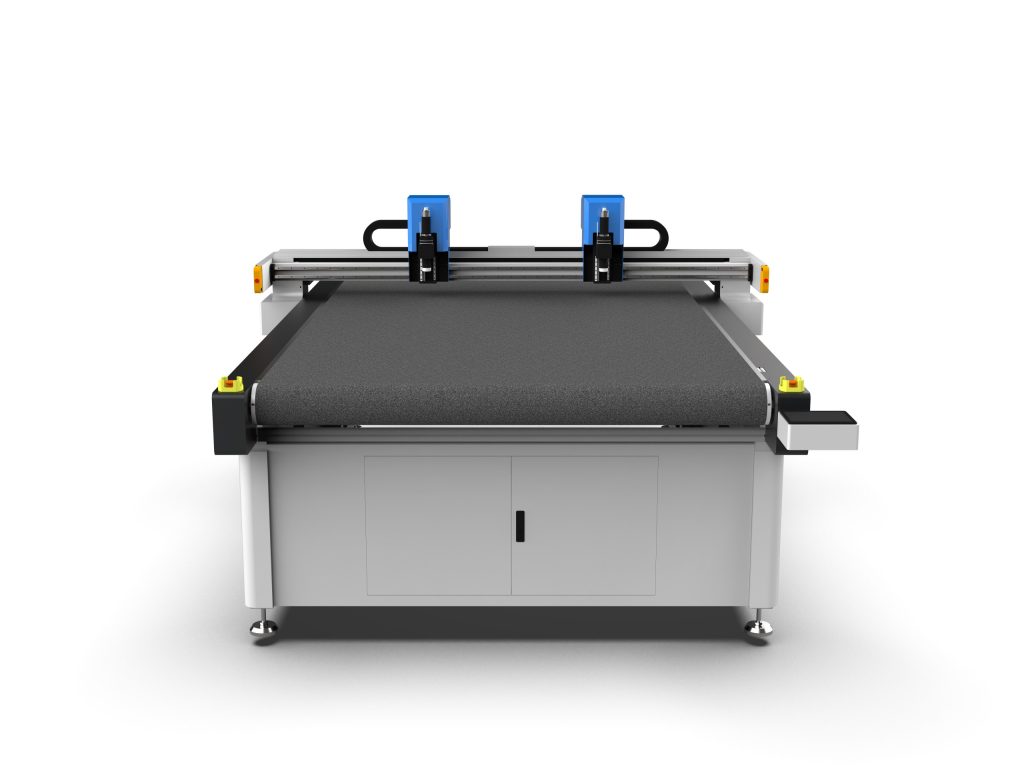
- Production efficiency: Choose single-head or multi-head cutting according to capacity requirements. The cutting speed of a single-head oscillating knife can reach 60-120m/min (depending on material thickness), and multi-head can increase it exponentially.
- Degree of automation: Functions such as automatic feeding, automatic nesting, and visual recognition registration can significantly reduce manual intervention and are suitable for mass production.
- Software compatibility: The equipment should support mainstream CAD formats (DXF, PLT, AI, etc.) and be able to seamlessly connect with the RIP software of digital printing machines to achieve the same data source for printing and cutting.
II. Interpretation of Key Performance Parameters
When purchasing a digital printing cutting machine, the following parameters require special attention:
1. Cutting Accuracy and Repeat Positioning Accuracy
Cutting accuracy refers to the deviation between the actual cutting path and the designed path, usually required to be ±0.1mm; repeat positioning accuracy refers to the deviation of returning to the same position multiple times, and should be ≤±0.05mm. High precision is the basis for ensuring accurate registration of printed patterns.
2. Maximum Cutting Speed and Acceleration
Cutting speed affects efficiency, but it needs to match material characteristics. For example, when cutting cotton cloth with a thickness of 2mm, the oscillating knife speed can be set to 80m/min; when cutting 10mm plush fabric, the speed needs to be reduced below 30m/min to avoid incomplete cutting. Acceleration affects accuracy at corners, and high acceleration (such as above 1g) can reduce efficiency loss caused by deceleration.
3. Cutting Thickness
The maximum cutting thickness of oscillating knife cutting machines is usually 20-50mm (depending on material compressibility), while laser cutting machines generally do not exceed 10mm. It is necessary to choose according to the thickest material and leave a margin.
4. Working Table Size
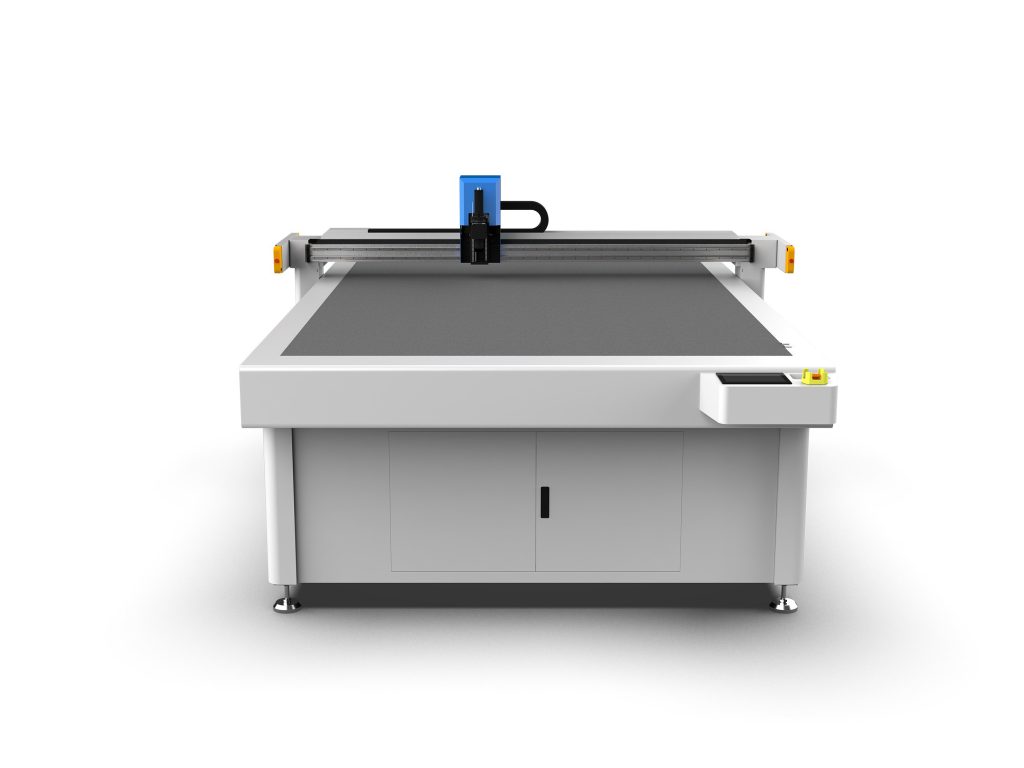
Common table widths are 1.6m, 2.0m, and 2.5m, and the length can be customized. It needs to match the fabric width and nesting method. For example, for fabric with a width of 1.8m, it is recommended to choose a 2.0m table to leave an edge for vacuum adsorption.
5. Vacuum Adsorption System
Vacuum adsorption ensures that the fabric does not shift during cutting. The adsorption force is usually expressed as vacuum degree, requiring ≥-0.06MPa. For highly breathable fabrics (such as knitted fabrics), zone-controlled adsorption or a cover film is required.
6. Visual Recognition System
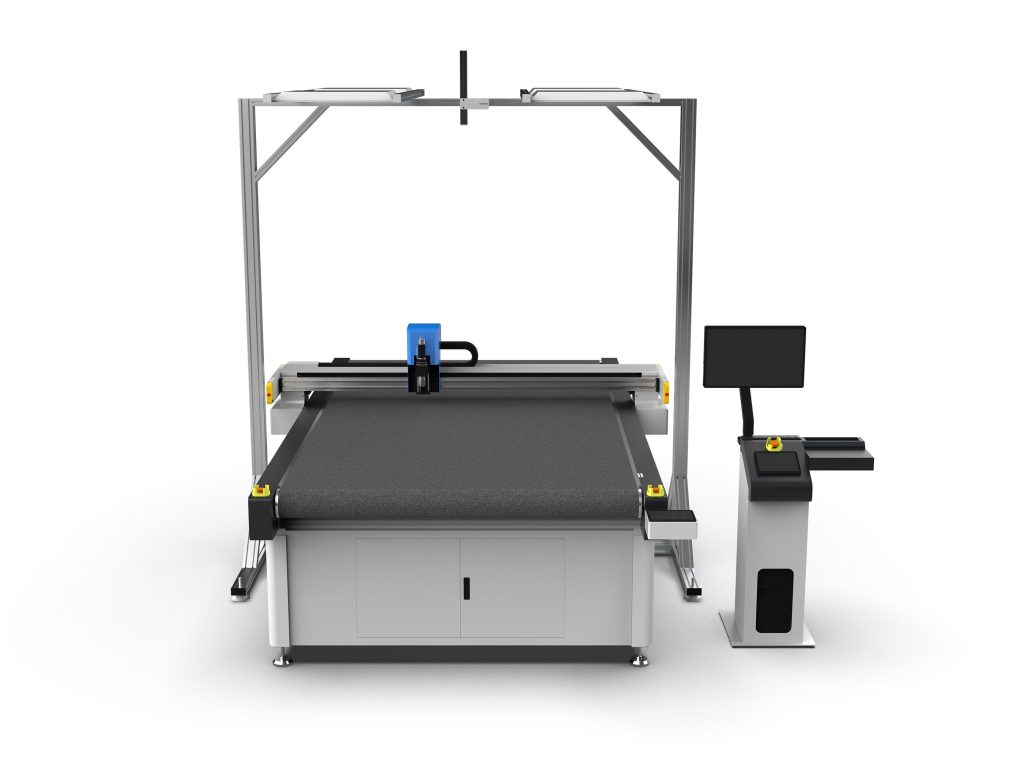
For products with high requirements for printed pattern registration (such as positioned printed T-shirts), a CCD visual recognition system is required to automatically compensate for deformation by identifying marker points on the fabric, with registration accuracy up to ±0.2mm.
III. Key Points of Process Control
Correct equipment selection is only the first step; process control determines the final quality. The following points need to be strictly implemented in production:
1. Fabric Pretreatment
Digital printing fabrics need to be fully shrunk and set before cutting, especially natural fibers such as cotton and linen. It is recommended to lay the fabric flat in a constant-temperature and constant-humidity environment (temperature 20±2℃, humidity 65±5%) 24 hours before cutting to make the moisture content uniform and reduce deformation after cutting. For elastic fabrics, pre-shrinking treatment can be carried out.
2. Nesting and Path Optimization
Use professional nesting software (such as Optitex, Lectra, etc.) for automatic nesting to improve fabric utilization. The cutting path should follow the principle of “inside first, then outside; small first, then large” to reduce fabric movement. For cut pieces with high pattern registration requirements, registration marks need to be added during nesting.
3. Tool Selection and Maintenance
Common blade types for oscillating knives include: pointed knife (suitable for fine patterns), round knife (suitable for long straight cutting), serrated knife (suitable for coated fabrics to prevent slipping). Worn blades will cause fuzzing on the cutting edge and dimensional deviation, so regular inspection is required. It is recommended to replace the blade every 800-1000 meters of cutting or when fuzzing occurs. At the same time, regularly clean the knife holder and guide rail to ensure stable vibration frequency.
4. Parameter Settings
Adjust vibration frequency, cutting speed, knife penetration depth and vacuum adsorption force according to the material. For example:
- Cotton cloth (thickness 0.5mm): vibration frequency 18,000 times/min, speed 60m/min, knife penetration depth 0.8mm, vacuum degree -0.05MPa.
- Polyester fabric (thickness 1mm): vibration frequency 20,000 times/min, speed 80m/min, knife penetration depth 1.2mm, vacuum degree -0.06MPa.
- Leather (thickness 2mm): vibration frequency 15,000 times/min, speed 40m/min, knife penetration depth 2.5mm, vacuum degree -0.07MPa.
The above parameters need to be fine-tuned according to actual equipment and materials. It is recommended to cut samples first to confirm the effect.
5. Post-Cutting Treatment
After cutting is completed, the cut pieces should be removed in time to avoid deformation caused by long-term adsorption. For fabrics prone to fraying (such as silk), anti-fraying liquid can be applied to the cutting edge or hot cutting technology can be used. Cut pieces should be stored by number to prevent confusion.
IV. Common Problems and Solutions
In actual production, digital printing cutting machines may encounter the following problems:
1. Fuzzing or Fraying on the Cutting Edge
Causes: blunt blade, too low vibration frequency, too fast cutting speed. Solutions: replace the blade, increase the vibration frequency (for example, from 15,000 times/min to 18,000 times/min), and reduce the cutting speed by 10%-20%.
2. Dimensional Deviation of Cut Pieces
Causes: insufficient fabric shrinkage, insufficient vacuum adsorption force, tool path compensation not set. Solutions: strengthen fabric pretreatment, check the vacuum pump and sealing strip, and set tool radius compensation in the software (usually 0.1-0.2mm).
3. Inaccurate Pattern Registration
Causes: visual recognition system not calibrated, fabric deformation, nesting mark error. Solutions: calibrate the camera regularly, add registration mark points on the fabric, and use software for deformation compensation.
4. Incomplete Cutting or Damage to the Bottom Belt
Causes: improper knife penetration depth setting, worn bottom belt. Solutions: adjust the knife penetration depth (usually material thickness +0.1-0.2mm), and regularly check and replace the bottom belt (recommended every 3-6 months or according to wear conditions).
V. Maintenance and Safety Specifications
To ensure long-term stable operation of the equipment, a daily maintenance system needs to be established:
- Daily: clean the table, check whether the blade is loose, and remove debris from the vacuum adsorption holes.
- Weekly: check the lubrication of the guide rail and add special lubricating grease; clean the visual lens.
- Monthly: check the tension of the transmission belt and calibrate cutting accuracy; test whether the vacuum degree meets the standard.
- Quarterly: replace severely worn blades and bottom belts; thoroughly clean dust in the electrical cabinet.
In terms of safety, the equipment must be well grounded, hands are prohibited from entering the cutting area during operation, and laser models need to be equipped with an exhaust system and protective glasses must be worn.
Conclusion
Digital printing cutting machines are key equipment for improving production efficiency and product quality. During selection, material characteristics, accuracy requirements and capacity need to be comprehensively considered, and during use, attention should be paid to process parameter optimization and daily maintenance. Through scientific selection and fine process control, equipment performance can be fully utilized, losses can be reduced, and efficient and high-quality production can be achieved.