
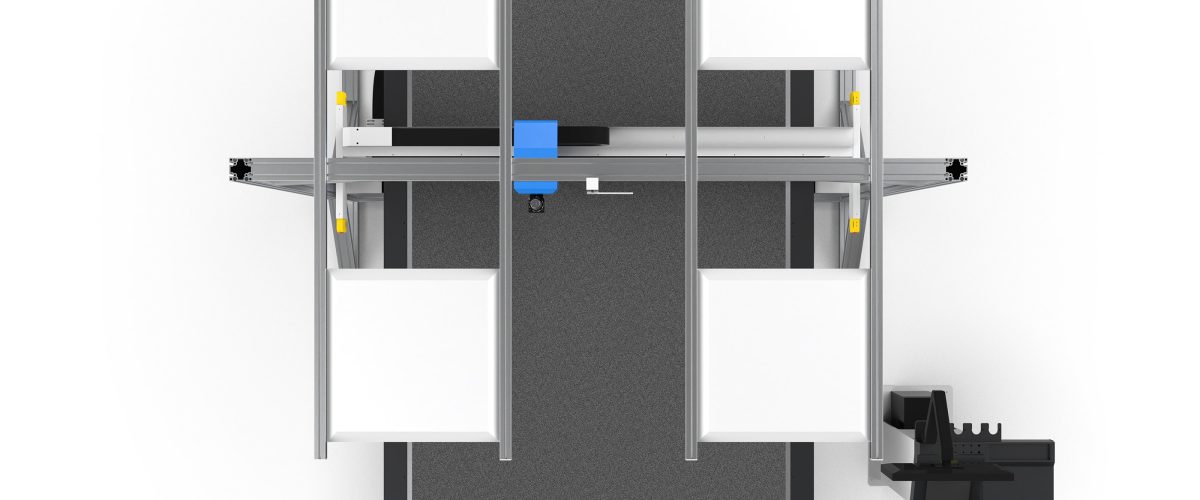
Leather Proofing Machine: A Complete Guide from Selection to Efficient Proofing
In the leather goods industry, proofing is a key link between design and mass production. Whether for luggage, footwear, automotive interiors, or furniture, a precise leather proofing machine can quickly verify design feasibility and shorten the development cycle. However, faced with a wide variety of equipment on the market, how do you choose a leather proofing machine that suits your needs? This article starts from practical applications and provides specific parameter recommendations and operation points.
I. Core Types of Leather Proofing Machines and Applicable Scenarios
Leather proofing machines are mainly divided into three types: laser proofing machines, blade cutting proofing machines, and oscillating knife proofing machines. Each type has its advantages and disadvantages, and the choice must be combined with material characteristics, proofing accuracy, and production requirements.
1. Laser Proofing Machine
The laser proofing machine uses a high-energy laser beam to cut or engrave leather. Its advantages are fast cutting speed (up to 10-20 m/min) and automatic edge sealing, making it suitable for natural leather and some synthetic leather. However, laser cutting produces burnt edges and odor, may damage certain coated leathers, and the equipment cost is relatively high (usually above 100,000 yuan). It is suitable for occasions where edge sealing is required and the material is laser-resistant.
2. Blade Cutting Proofing Machine
The blade cutting proofing machine cuts materials through the reciprocating motion of a mechanical blade, suitable for leather with a thickness of 0.5-5 mm. Its advantages are flat cuts and no thermal effect, and it can cut a variety of materials (including coated synthetic leather). However, blades wear quickly and need regular replacement, and the cutting speed is relatively slow (about 5-10 m/min). The equipment price is moderate (30,000-80,000 yuan), suitable for small and medium batch proofing.
3. Oscillating Knife Proofing Machine
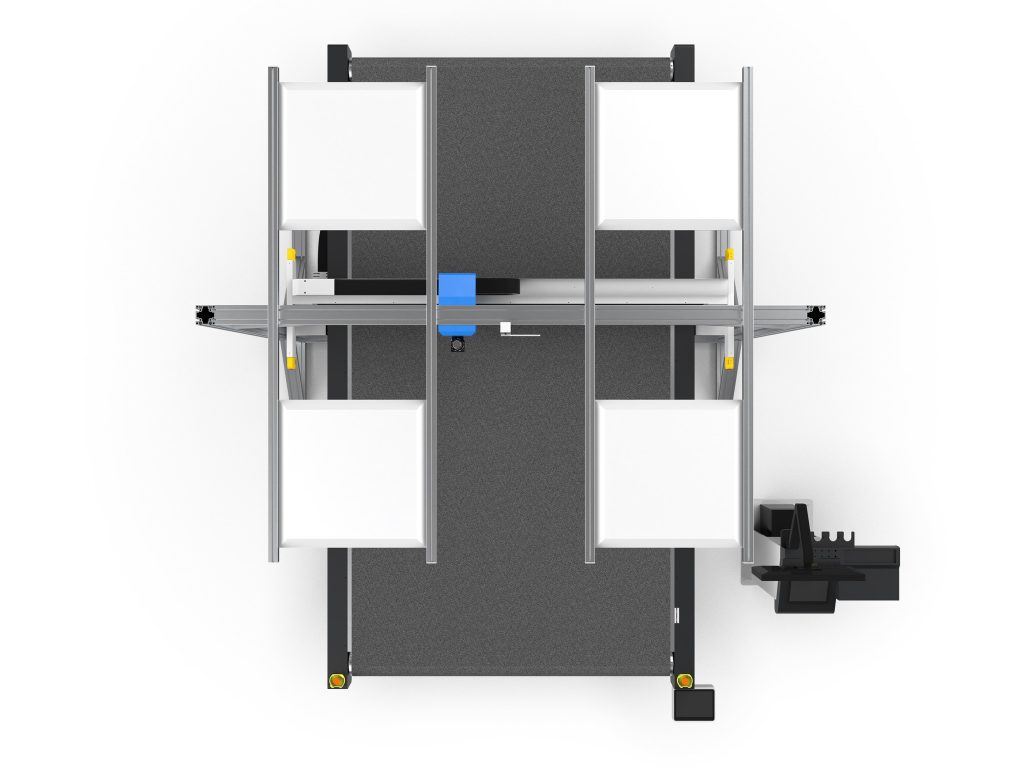
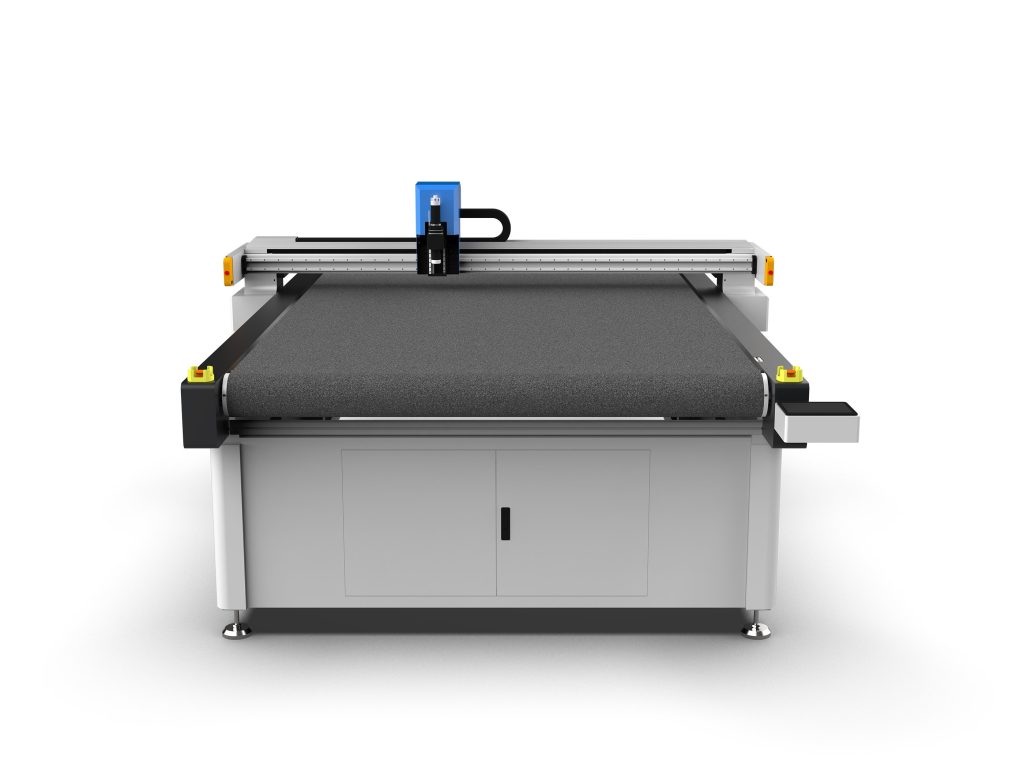
The oscillating knife proofing machine is the mainstream choice for leather proofing in recent years. The blade cuts with high-frequency oscillation (thousands of times per minute), reducing material deformation, and the cutting accuracy can reach ±0.1 mm. It is suitable for various natural leathers, artificial leathers, microfiber, etc., especially for complex contours and fine patterns. The equipment price range is wide (50,000-200,000 yuan), depending on the working area, power, and degree of automation. For proofing needs requiring high precision and multi-material adaptability, the oscillating knife is the first choice.
II. Interpretation of Key Parameters: How to Understand Equipment Specifications
When purchasing a leather proofing machine, the following parameters directly affect proofing quality and efficiency and require special attention:
- Cutting working area: Common working areas are 600×900 mm, 900×1200 mm, 1200×1600 mm, etc. Choose according to the leather size usually proofed, and it is recommended to leave a margin. For example, footwear proofing usually requires 900×1200 mm or more.
- Cutting accuracy: ±0.1 mm is preferred, at least ±0.2 mm. Insufficient accuracy will cause splicing misalignment and affect sample quality.
- Cutting speed: Oscillating knives are usually adjustable from 0-30 m/min, and the actual effective speed is affected by material thickness and pattern complexity. Do not blindly pursue high speed; stability is more important.
- Blade type: Oscillating knives include single-edge, double-edge, round knife, and other types, chosen according to different leather thicknesses and hardness. For example, cutting thick cowhide (above 2 mm) recommends a double-edge blade, while thin sheepskin uses a single-edge blade.
- Vacuum adsorption power: The vacuum adsorption table ensures material fixation, and the power is usually 1.5-3 kW. Insufficient adsorption force will cause material displacement and affect accuracy.
- Control system: The mainstream is servo motor + motion control card, supporting HPGL, DXF, and other formats. Check whether it is compatible with common CAD software (such as AutoCAD, CorelDRAW).
- Compatibility: Does it support roll materials and sheet materials? Can pen plotting, punching, and other functions be added? These extensibilities can improve equipment utilization.
III. Operation Process and Practical Tips
A correct operation process can significantly improve proofing efficiency and quality. The following are standard steps and precautions:
1. File Preparation
Convert the design draft into vector format (DXF or HPGL), ensuring lines are closed and non-overlapping. For leather, the grain direction must be considered, and the direction should be marked during layout. It is recommended to draw at 1:1 in CAD and check dimensional accuracy.
2. Material Fixation
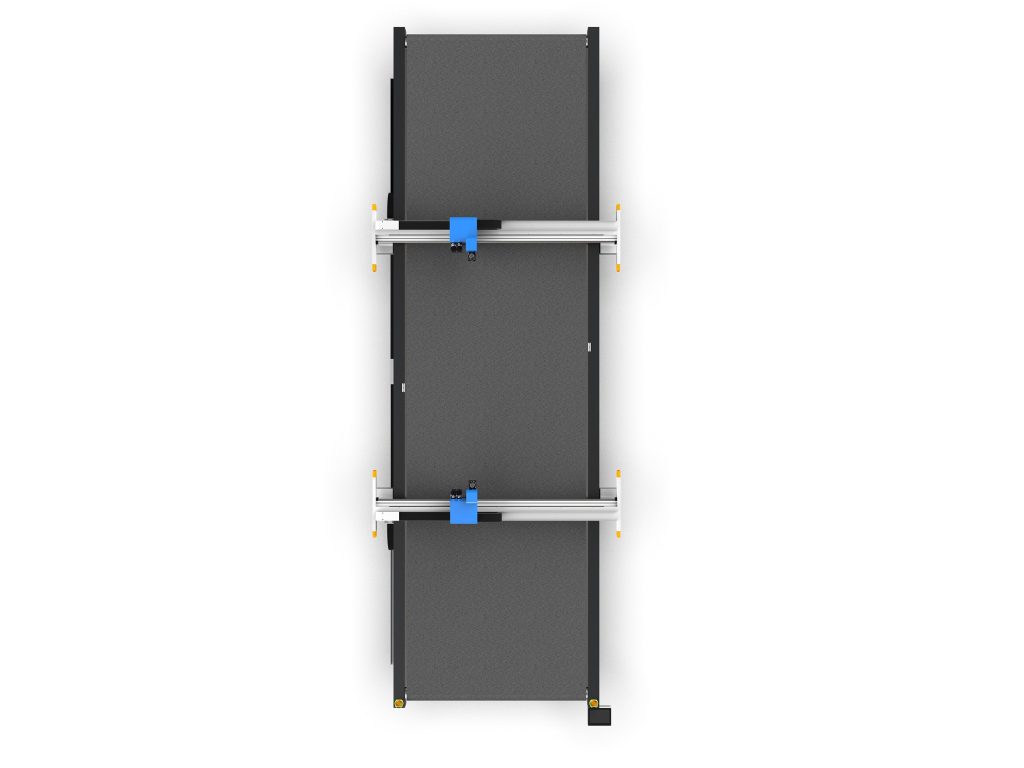
Lay the leather flat on the cutting table and turn on vacuum adsorption. For roll materials, use a feeding rack to maintain uniform tension. Note: If the back of the leather has fuzz, a thin paper or film can be covered to prevent uneven adsorption force.
3. Parameter Settings
Adjust cutting parameters according to the leather type. The following are reference values (taking an oscillating knife as an example):
- Natural cowhide (thickness 1.5 mm): blade frequency 18,000 times/min, cutting speed 15 m/min, cutting depth 1.8 mm.
- Synthetic leather (thickness 0.8 mm): blade frequency 20,000 times/min, cutting speed 20 m/min, cutting depth 1.0 mm.
- Microfiber leather (thickness 1.2 mm): blade frequency 16,000 times/min, cutting speed 12 m/min, cutting depth 1.5 mm.
For the first proofing, it is recommended to test-cut a small sample, observe the cut quality, and then adjust the parameters.
4. Cutting and Inspection
Start cutting and observe whether the operation is stable. After cutting is completed, check whether the cut is smooth and the dimensions are accurate. If there are burrs, reduce the cutting speed or replace the blade.
5. Post-Processing
Remove the sample and clean the table. For parts that need splicing, check the edge fit. Record the parameters for this run to facilitate subsequent repeated proofing.
IV. Common Problems and Solutions
The following problems are often encountered during leather proofing, and corresponding measures can be referred to:
- Burrs or burnt edges on the cut: For laser proofing machines, reduce power and increase speed; for oscillating knives, check whether the blade is worn or reduce the cutting speed.
- Material displacement: Check whether vacuum adsorption is turned on and whether the adsorption power is sufficient; for porous materials, cover with a film to increase adsorption effect.
- Dimensional deviation: Check whether the file scale is correct, whether the drive belt is loose, or perform equipment calibration.
- Short blade life: Choose a suitable blade material (such as carbide) according to the material, and regularly clean adhesive residue on the blade.
V. Maintenance and Care Points
Regular maintenance can extend equipment life and ensure proofing accuracy:
- Clean the table and guide rails daily to remove leather scraps.
- Check blade wear weekly and replace in time.
- Lubricate guide rails and lead screws monthly, and check belt tension.
- Calibrate equipment accuracy quarterly, using a standard circle or square to test cutting dimensions.
VI. Summary of Selection Recommendations
When choosing a leather proofing machine, it is recommended to decide according to the following priorities:
- If the proofing materials are mainly natural leather and edge sealing is required, a laser proofing machine can be considered, but material adaptability must be tested.
- If high precision and multi-material adaptability are pursued, the oscillating knife proofing machine is the best choice, with focus on working area, accuracy, and adsorption power.
- If the budget is limited and the proofing volume is small, the blade cutting proofing machine can meet basic needs.
Regardless of which equipment is chosen, it is recommended to conduct on-site test cutting of commonly used leather to verify the actual effect. At the same time, consider the equipment supplier’s technical support and training services to ensure quick start-up.
Reasonable selection and standardized operation of leather proofing machines can significantly improve proofing efficiency and reduce development costs. I hope this guide can provide practical help for your decision-making.