
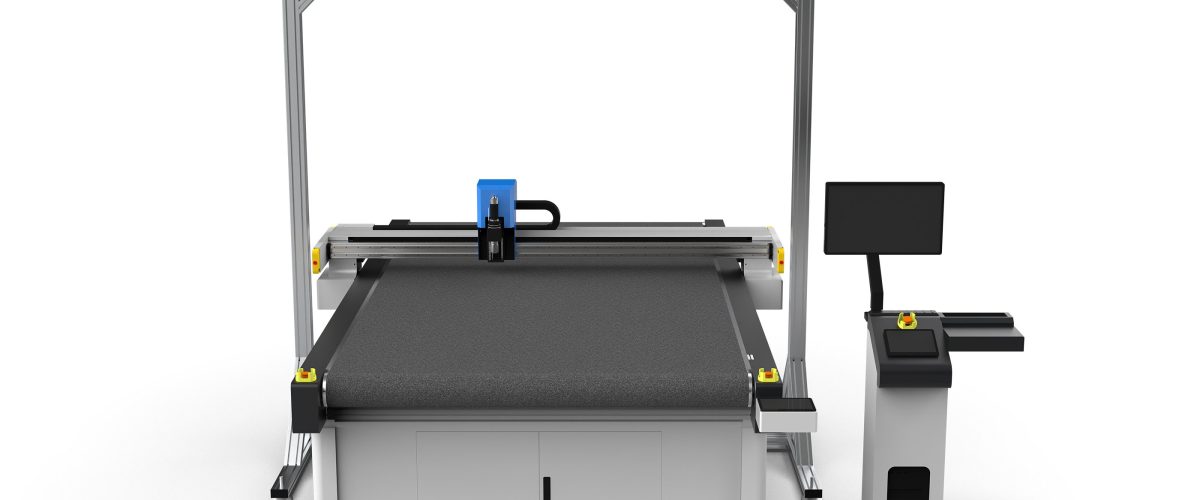
Canvas Cutting Machine: A Complete Guide from Selection to Efficient Production
Canvas is a high-strength woven fabric, usually made of cotton, linen, or synthetic fibers, with a weight range generally between 200-600g/m² and a thickness of 0.5-2mm. Due to its wear resistance and tear resistance, canvas is widely used in tents, backpacks, sails, industrial covers, and other fields. However, the high strength and thickness of canvas also bring challenges to cutting processing: traditional manual cutting has low efficiency and poor precision, while ordinary laser cutting easily burns the edges. Therefore, choosing the right canvas cutting machine is crucial.
Common Types of Canvas Cutting Machines
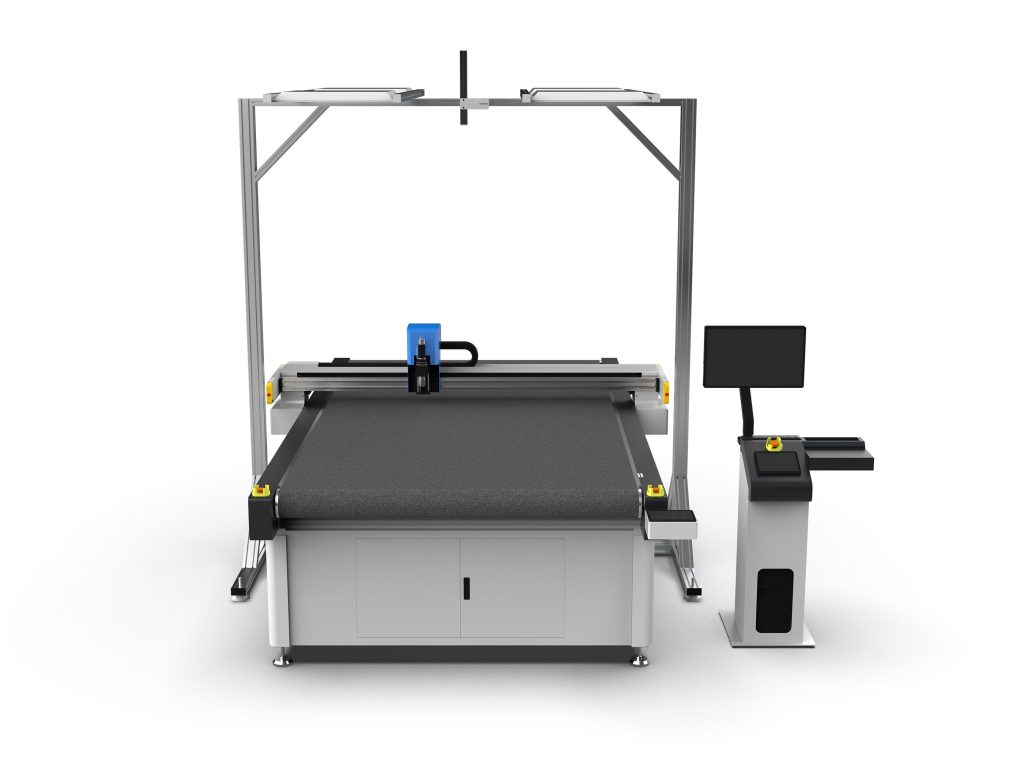
1. CNC Oscillating Knife Cutting Machine
This is currently the mainstream equipment for canvas cutting. It performs cold cutting through a high-frequency vibrating blade (vibration frequency can reach 3000-8000 times per minute), producing no heat-affected zone, with neat edges and no burning. It is suitable for cutting multi-layer canvas (usually 1-10 layers, depending on material thickness and machine power). Cutting accuracy can reach ±0.1mm, with repeat positioning accuracy of ±0.05mm. Typical configurations include:
- Cutting working area: 1600mm×2500mm to 3000mm×6000mm (customizable)
- Blade types: straight blade, round blade, pointed blade (selected according to pattern complexity)
- Control system: servo motor drive, supports direct import of CAD/CAM software
- Adsorption system: vacuum adsorption table to ensure the material does not shift during cutting
2. Laser Cutting Machine
Laser cutting is fast and suitable for fine cutting of thin canvas (<1mm), but it has the problems of edge carbonization and yellowing, and the effect on multi-layer cutting is poor. For canvas products requiring no burn marks (such as high-end backpacks and tents), laser cutting is generally not recommended. If laser must be used, it is recommended to choose a CO2 laser (power 80-150W) and use auxiliary gas (such as nitrogen) to reduce oxidation.
3. Ultrasonic Cutting Machine
It uses ultrasonic vibration (frequency 20-40kHz) for cutting, and the edges are automatically sealed, suitable for synthetic fiber canvas (such as polyester canvas). The cutting speed is relatively slow, but there is no dust, making it suitable for clean workshops. The equipment cost is relatively high, and it is usually used in high-end fields such as medical and filtration materials.
4. Mechanical Die Cutting Machine
It is suitable for large-volume canvas cutting of simple shapes, such as rectangular and circular gaskets. The mold cost is low, but the flexibility is poor, and it is not suitable for complex patterns. The punching force is usually 10-30 tons, and multiple layers of canvas can be punched at one time.
How to Choose a Suitable Canvas Cutting Machine
Selection requires comprehensive consideration of material characteristics, production batch, precision requirements, and budget. The following is a comparison of key parameters:
- Material thickness and number of layers: Single-layer thin canvas (0.5mm) can use laser or low-power oscillating knife; multi-layer thick canvas (>1mm, more than 5 layers) must use a high-power oscillating knife (such as a servo motor above 200W).
- Cutting precision: The apparel and luggage industries usually require within ±0.5mm, which the oscillating knife can meet; industrial canvas (such as cover cloth) has lower precision requirements, and ±1mm is sufficient.
- Production efficiency: The cutting speed of the oscillating knife can reach 10-30m/min (depending on pattern complexity), and the laser cutting speed can reach 20-50m/min, but laser cutting requires consideration of subsequent edge cleaning time.
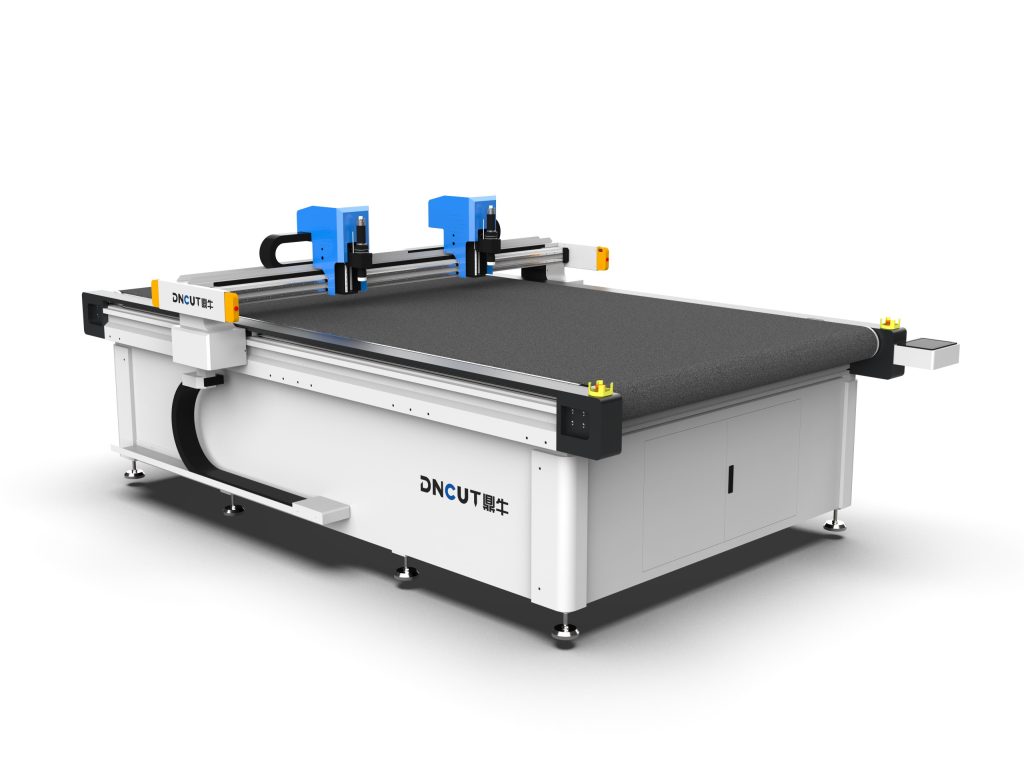
- Degree of automation: Functions such as automatic feeding systems, multi-tool head switching, and visual recognition positioning can significantly improve efficiency, but will increase costs. It is recommended to consider automated configurations when daily output exceeds 500 pieces.
- Dust and environmental protection: Oscillating knife cutting produces a small amount of fiber dust, requiring dust extraction equipment; laser cutting produces smoke and dust, requiring an exhaust purification system.
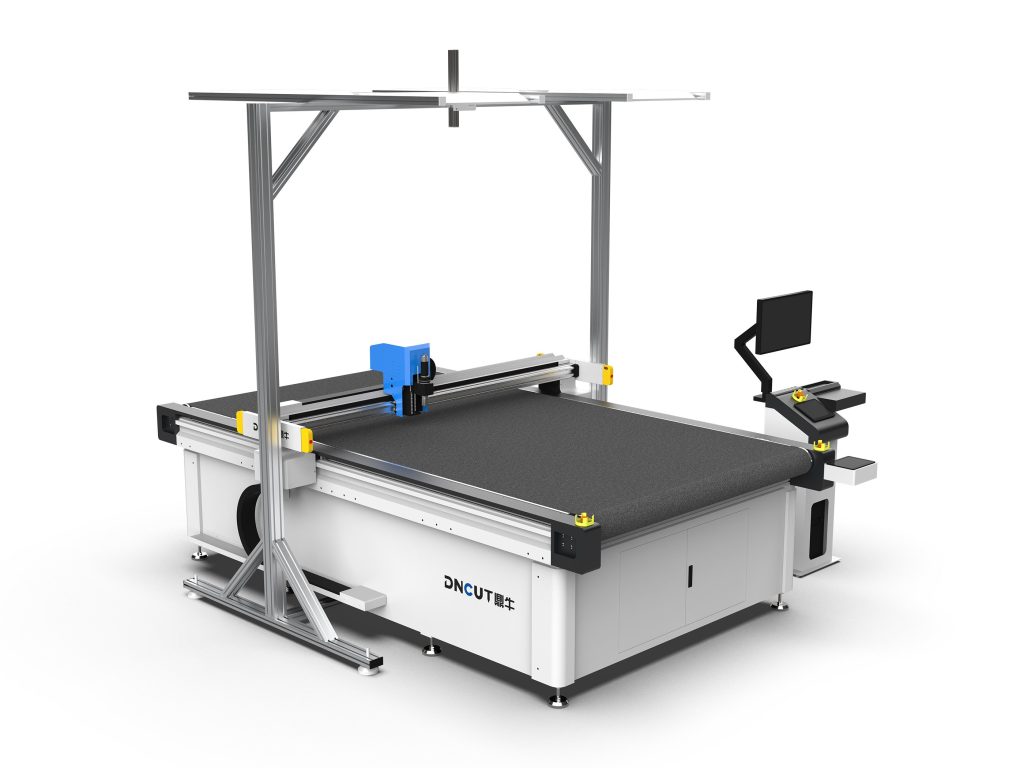
Typical configuration recommendation: For small and medium-sized canvas product factories (daily output 200-500 pieces), choose an oscillating knife cutting machine with a 1600mm×2500mm working area, equipped with a vacuum adsorption table and automatic feeding rack, power 3-5kW, price about 80,000-150,000 RMB. For large factories, dual-tool-head or dual-station models can be selected, with a working area of 3000mm×6000mm, price 200,000-400,000 RMB.
Canvas Cutting Operating Techniques and Parameter Settings
1. Blade Selection and Replacement
For cutting canvas, it is recommended to use a straight blade (thickness 0.6-1.0mm) or a round blade (diameter 30-50mm). Straight blades are suitable for straight lines and simple curves, and round blades are suitable for complex contours. Blades should be replaced promptly after wear, usually once every 500-1000 meters of canvas cutting (depending on material abrasiveness). Worn blades will cause fuzzing on cutting edges and dimensional deviation.
2. Cutting Parameter Optimization
- Vibration frequency: Use high frequency (6000-8000 times/min) for thin canvas (<0.8mm), and low frequency (3000-4000 times/min) for thick canvas to increase cutting force.
- Feed speed: Straight-line cutting can be fast (20-30m/min), and curves and corners need to be slowed down (5-10m/min) to ensure precision.
- Tool down-pressure amount: Usually set to 1.1-1.2 times the material thickness; too large will accelerate blade wear, and too small will result in incomplete cutting.
- Vacuum adsorption pressure: Adjust according to material air permeability. Canvas generally requires a negative pressure of -0.06 to -0.08MPa to ensure the material is flat and fixed.
3. Material Fixing and Layout
Canvas roll material needs to be unrolled and left to stand for 24 hours to release internal stress and avoid deformation after cutting. During layout, try to rotate the pattern to align with the warp and weft directions of the canvas to reduce the effect of skew. For multi-layer cutting, separate each layer with thin paper to prevent adhesion. Use CAD software for automatic layout, and material utilization can be increased by 5-15%.
4. Common Problems and Solutions
- Edge fuzzing: Blade dulling or vibration frequency too low; replace the blade or increase the frequency.
- Incomplete cutting: Increase the down-pressure amount or reduce the feed speed, and check whether the vacuum adsorption has failed.
- Dimensional deviation: Check the tool compensation settings (usually 0.1-0.2mm compensation is required), and ensure the material does not slip.
- Dust accumulation: Regularly clean the dust extraction device, and check once per shift.
Maintenance and Care Points
The daily maintenance of the canvas cutting machine directly affects equipment life and cutting quality. It is recommended to implement the following plan:
- Daily: Clean fiber dust on the table and blades, and check whether the vacuum adsorption pipeline is blocked.
- Weekly: Check blade wear, lubricate guide rails and lead screws (use lithium-based grease), and check belt tension.
- Monthly: Calibrate tool compensation parameters, check the temperature of servo motors and drivers, and clean dust in the electrical control cabinet.
- Quarterly: Replace worn blade collets, check air circuit sealing, and back up control system parameters.
In addition, fiber dust generated when cutting canvas easily accumulates on guide rails and transmission components. It is recommended to install protective covers and blow them with compressed air every shift. For high-dust environments, consider upgrading to a fully enclosed model.
Summary
The selection of a canvas cutting machine needs to focus on material thickness, number of layers, precision, and output. With advantages such as cold cutting, high precision, and adaptability to multiple layers, the CNC oscillating knife cutting machine has become the first choice for canvas processing. Reasonable setting of cutting parameters and regular equipment maintenance can significantly improve cutting quality and production efficiency. When purchasing, it is recommended to bring actual canvas samples for trial cutting to verify the equipment’s performance at maximum thickness and minimum pattern, so as to ensure return on investment.