
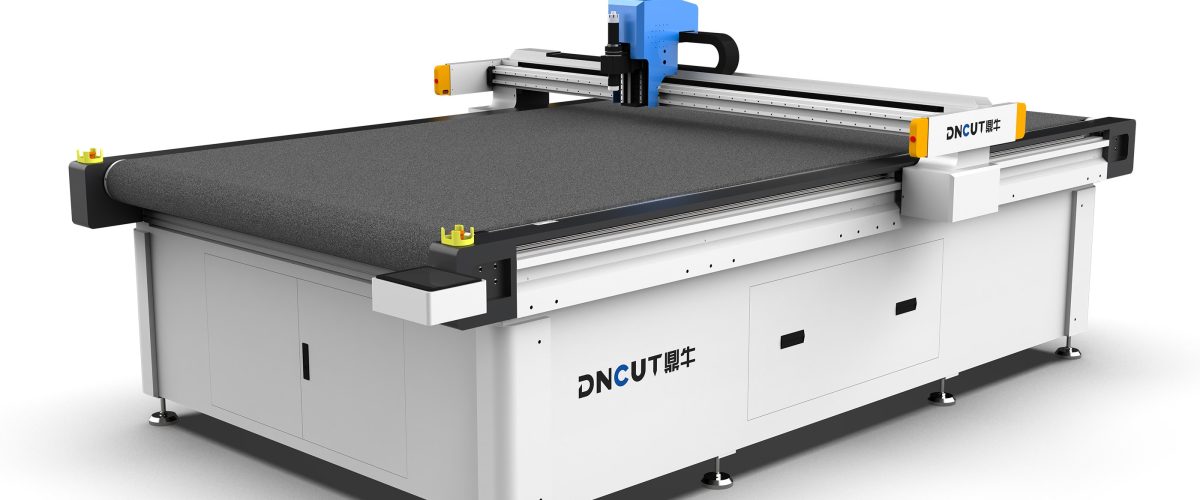
Garment Fabric Cutting Machine: From Selection to Efficient Application
In garment manufacturing, cutting is a key process that determines finished product quality and cost. Traditional manual cutting relies on skilled workers but faces pain points such as low efficiency, large precision fluctuations, and excessive fabric waste. Garment fabric cutting machines (also known as automatic cutting machines) achieve precise and rapid cutting of multiple layers of fabric through digital control and high-frequency oscillating knives. This article provides a practical implementation guide from three dimensions: technical parameters, selection logic, and operating key points.
I. Core Working Principle and Machine Type Classification
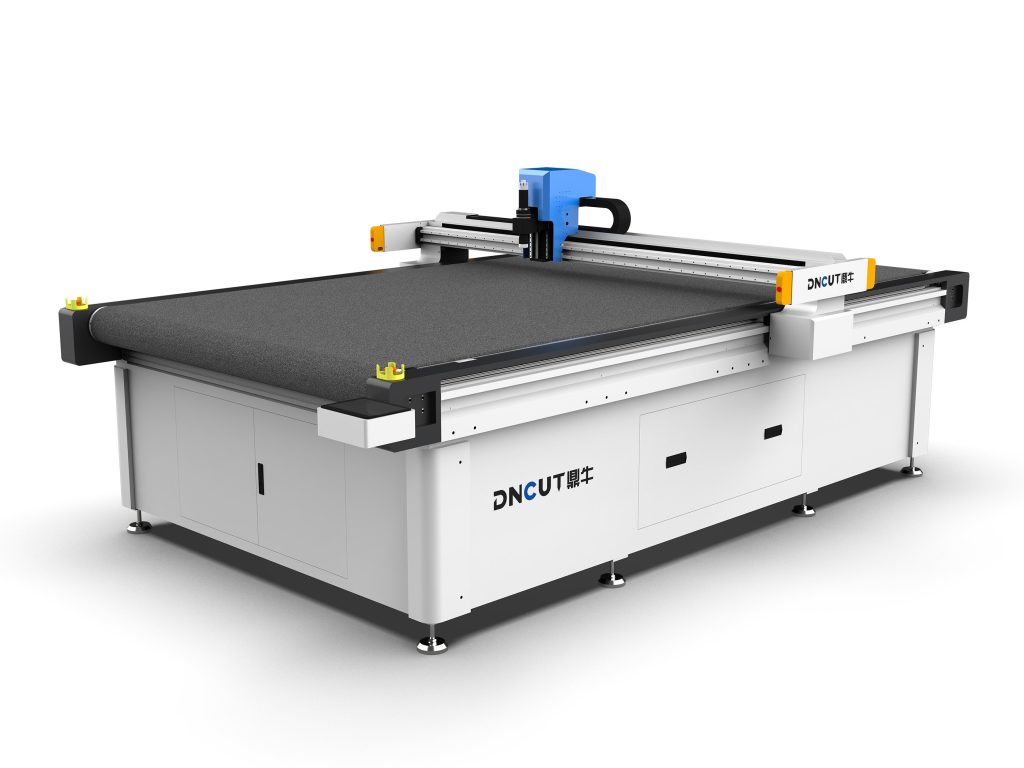
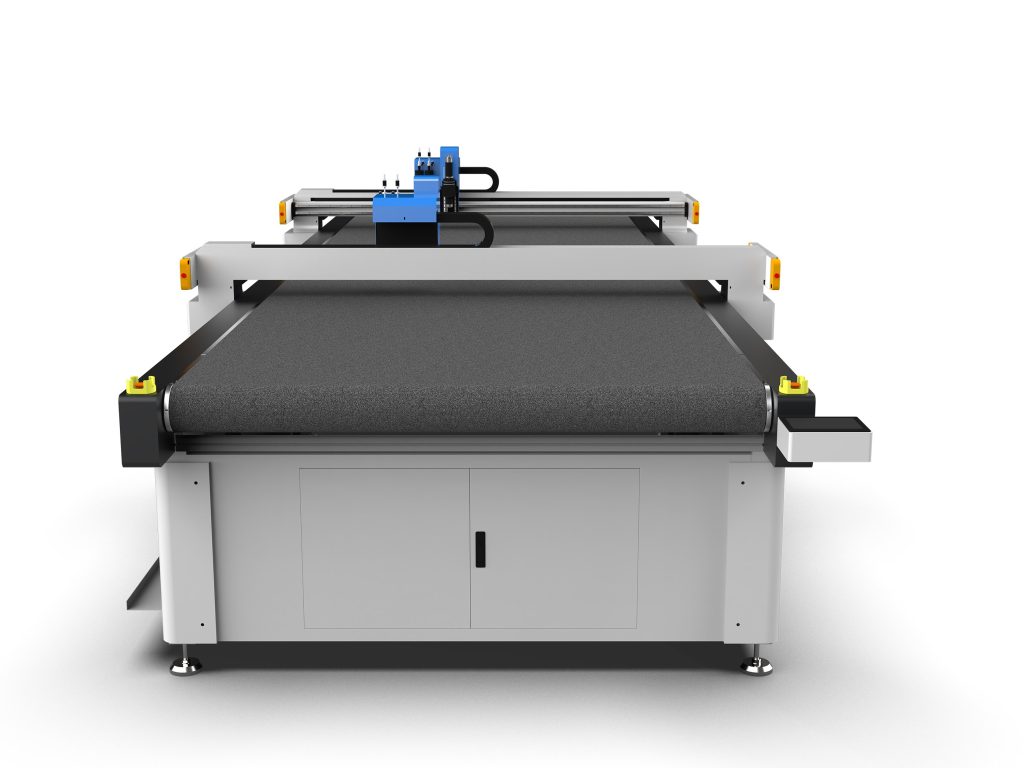
Garment fabric cutting machines mainly adopt oscillating knife cutting technology: the blade vibrates up and down at high frequency thousands of times per minute, while X/Y-axis servo motors drive the cutting head to move and cut the fabric along a preset path. According to the cutting head structure, they can be divided into two categories:
- Single-layer cutting machine: Suitable for sample garment production, small-batch customization, and highly elastic or easily deformed fabrics (such as knits and lace). Cutting speed can reach 1.2 m/s, with precision of ±0.1 mm.
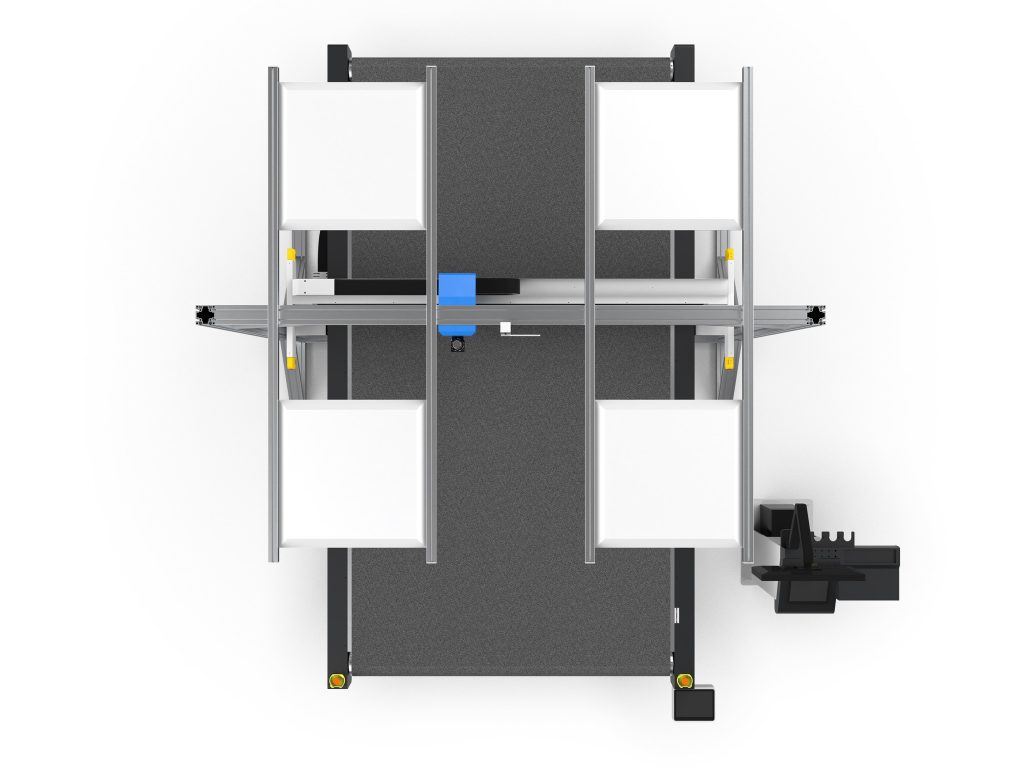
- Multi-layer cutting machine: Equipped with a vacuum adsorption table and capable of cutting 5-15 layers of fabric at once (depending on material thickness). Typical configuration: cutting height 80-120 mm, vacuum pump power 7.5-11 kW.
In addition, some models integrate punching, marking, and V-groove cutting functions to meet special process requirements for denim, suits, and other applications.
II. Interpretation of Key Parameters and Selection Recommendations
1. Cutting Precision and Repeat Positioning Accuracy
Precision directly determines cut-piece consistency. The cutting precision of garment fabric cutting machines is usually specified as ±0.1~±0.3 mm, and the repeat positioning accuracy is ±0.05 mm. For lightweight and thin fabrics such as silk and chiffon, it is recommended to choose high-precision models within ±0.1 mm; for heavy fabrics such as denim and canvas, the requirement can be relaxed to ±0.2 mm.
2. Maximum Cutting Speed and Acceleration
Speed affects productivity but must match fabric characteristics. For example, when cutting knit fabrics, excessive speed can cause edge melting or stretching. Recommended actual effective cutting speeds:
- Woven fabrics (shirts, suits): 0.8-1.0 m/s
- Knit fabrics (T-shirts, sportswear): 0.5-0.7 m/s
- Technical fabrics (coated, composite materials): 0.4-0.6 m/s
The acceleration parameter (such as 1.5 G) determines response capability at corners. High acceleration can reduce deceleration pauses and improve cutting efficiency for complex contours.
3. Vacuum Adsorption System
During multi-layer cutting, vacuum adsorption must be used to secure the fabric. When selecting, pay attention to vacuum pump flow rate (m³/h) and table sealing performance. For highly breathable knit fabrics, it is recommended to use a vacuum pump with a flow rate of ≥250 m³/h, together with zoned adsorption control, to prevent fabric displacement.
4. Tool and Blade Selection
Different fabrics require different blades:
- Pointed blade: General-purpose type, suitable for woven and knit fabrics.
- Round-tip blade: Prevents snagging during cutting, suitable for silk and lace.
- Serrated blade: Used for coated fabric and leather to reduce melted edges.
Carbide or ceramic-coated blade materials are recommended, which can increase service life by more than 30%.
5. Software and Data Interfaces
Modern cutting machines need to be compatible with mainstream CAD software (such as Gerber, Lectra, Optitex) and support DXF, PLT, and ISO formats. Check whether they have an automatic nesting optimization function, which can save 5%-10% of fabric usage.
III. Practical Key Points for Operation and Maintenance
1. Fabric Pretreatment
Before cutting, ensure the fabric is flat and wrinkle-free. For elastic fabrics, pre-shrinking treatment and 24-hour resting are recommended to avoid dimensional deviation caused by shrinkage after cutting. During multi-layer cutting, use thin paper between fabric layers to prevent adsorption adhesion.
2. Parameter Setting Techniques
Taking the cutting of 10 layers of cotton shirt fabric as an example:
- Vibration frequency: 3000-4000 times/minute
- Cutting speed: 0.9 m/s
- Tool downforce: 0.5 mm (excessive force accelerates blade wear)
- Vacuum adsorption pressure: -0.06 MPa
It is recommended to perform a trial cut with 1-2 layers first, check edge quality, and then gradually increase the number of layers.
3. Common Problems and Countermeasures
- Rough edges: Check blade sharpness, or reduce cutting speed by 10%.
- Cut-piece dimensional deviation: Calibrate the X/Y-axis drive belt tension and check whether vacuum adsorption is uniform.
- Fabric displacement: Increase vacuum pump flow rate or use zoned adsorption; if necessary, place breathable pad paper under the fabric.
4. Daily Maintenance
Clean the cutting head and guide rails daily, check vacuum pipeline sealing weekly, and lubricate linear guide rails monthly. Blades are recommended to be replaced every 200-300 cutting hours (adjusted according to fabric abrasiveness).
IV. Return on Investment and Selection Decision
A mid-range multi-layer garment fabric cutting machine (cutting height 80 mm, precision ±0.15 mm) has a market price of approximately RMB 150,000-250,000. Based on a daily output of 5,000 shirt cut pieces, compared with manual cutting, it can save 3-4 workers and increase fabric utilization by 8%, usually recovering the investment in 12-18 months. When selecting, prioritize suppliers with local service capabilities to ensure blade supply and technical support response time within 24 hours.
Conclusion
A garment fabric cutting machine is not simply a “machine replacing people,” but rather a way to achieve stable output of cutting quality through parameterized control. Starting from fabric characteristics, match precision, speed, and adsorption system, and then supplement with standardized daily operations to truly unleash equipment performance. It is recommended to provide actual fabric samples for trial cutting before purchase to verify the equipment’s performance under real production conditions.