
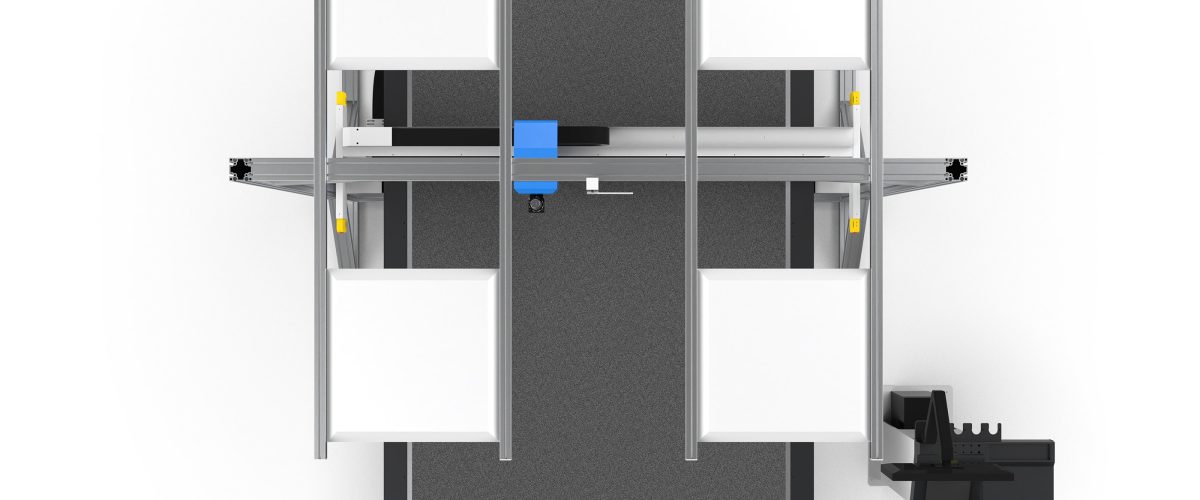
Handbag Cutting Machine: Key Equipment for Improving Production Efficiency
In the luggage and handbag manufacturing industry, the cutting process directly affects product quality and production efficiency. Traditional manual cutting relies on skilled workers and suffers from unstable precision, large material waste, and low production efficiency. Handbag cutting machines (usually oscillating knife cutting machines) use CNC systems and high-frequency oscillating knife heads to achieve precise cutting of flexible materials such as leather, PU, fabric, and mesh. This article focuses on equipment selection, core parameters, operating techniques, and maintenance, providing practical and actionable guidance.
Core Types and Working Principles of Handbag Cutting Machines
The mainstream bag cutting machines currently on the market are oscillating knife cutting machines. Their working principle is: the blade vibrates up and down at a high frequency of thousands of times per minute, driven by X/Y-axis servo motors, to cut materials according to preset patterns. According to the knife head configuration and functions, they can be divided into the following categories:
- Single-head oscillating knife cutting machine: simple structure, suitable for small-batch, multi-variety production, lower price, but limited efficiency.
- Multi-head oscillating knife cutting machine: equipped with multiple knife heads working simultaneously, suitable for large-batch orders, efficiency can be increased by 2-4 times, but the equipment cost is higher.
- Cutting machine with automatic feeding system: Integrated with a roll feeding device, it enables continuous cutting and is suitable for batch processing of roll materials (such as PU and mesh fabric).
- Projection positioning cutting machine: Equipped with a projector, it projects cutting patterns onto the material surface, facilitating pattern matching, grid alignment, or the use of leftover materials, and is suitable for high-end handbags and customized production.
In addition, some models can be optionally equipped with functional modules such as punching, scoring, and V-grooving to meet various process requirements in handbag production.
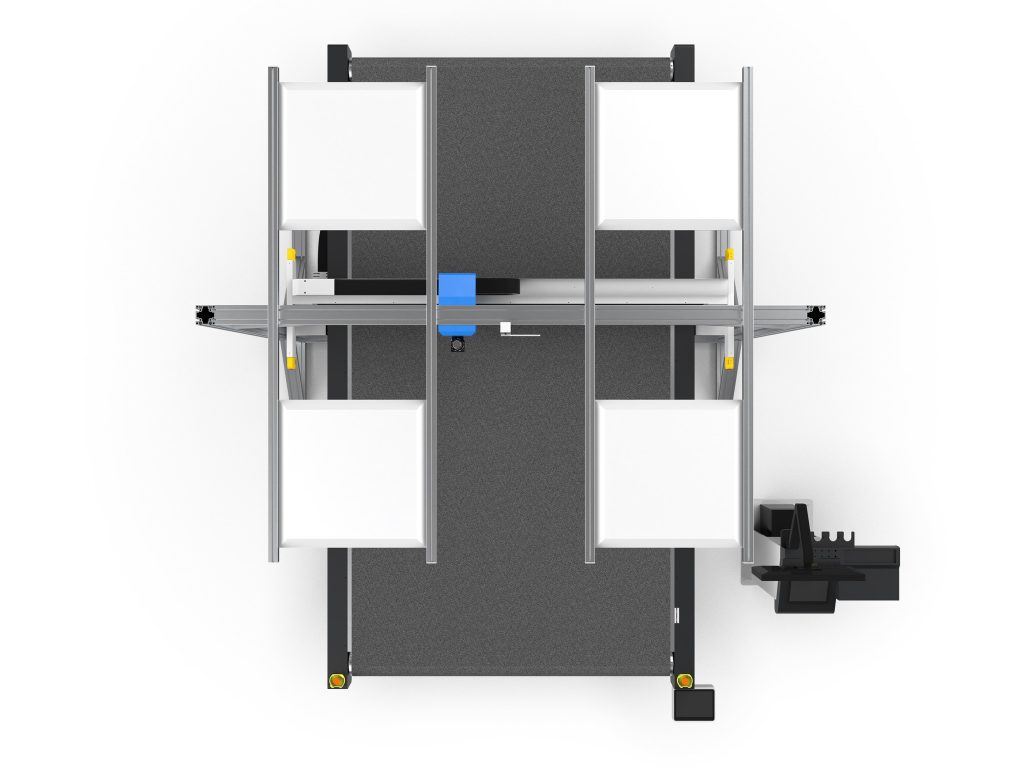
Key parameters for choosing a handbag cutting machine
When purchasing, pay particular attention to the following technical parameters to ensure the equipment meets production requirements:
1. Cutting accuracy and repeat positioning accuracy
Cutting accuracy is usually expressed in ±mm; high-precision models can reach ±0.1mm, while standard models are ±0.2-0.5mm. Handbag components have high requirements for dimensional consistency, so it is recommended to choose equipment with accuracy within ±0.2mm. Repeat positioning accuracy affects the consistency of mass production and should be no less than ±0.05mm.
2. Cutting speed and acceleration
Cutting speed directly affects production efficiency. The maximum cutting speed of an oscillating knife cutting machine is typically 1000-2000mm/s, with acceleration of 5000-10000mm/s². However, the actual cutting speed is affected by material thickness and pattern complexity. For the 1-3mm thick leather commonly used in handbags, it is recommended to choose a model with a speed of no less than 1200mm/s.
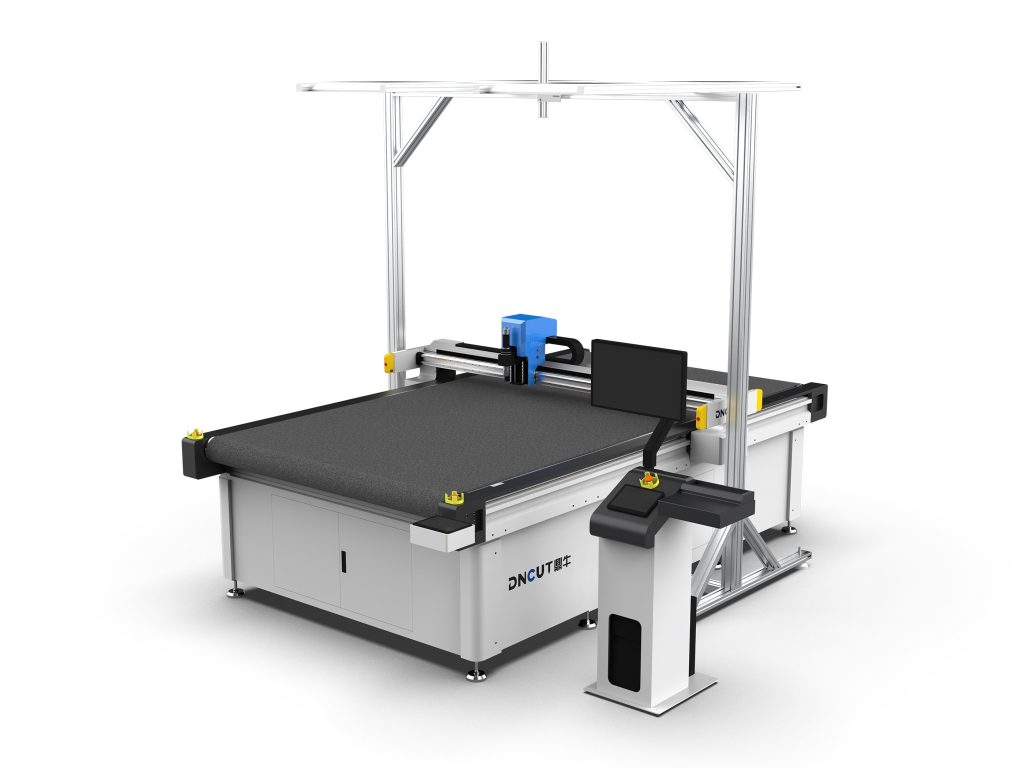
3. Effective cutting area
Based on the dimensions of common handbag components, the selection of working area should take material size and layout efficiency into account. Common working areas include 1600mm×2500mm, 1700mm×2200mm, etc. If rolled materials are used, a model with a feeding device should be selected, and the working area width should match the roll width (common widths: 1400mm, 1600mm).
4. Knife head configuration and power
The power of an oscillating knife head is usually 200W-500W; the higher the power, the greater the cutting thickness capability. Handbag materials are generally thin, so 200W-300W is sufficient. If thicker leather (such as 3mm or more) needs to be cut, it is recommended to choose 400W or above. Also pay attention to the cooling method of the knife head; an air-cooled knife head can extend continuous working time.
5. Control system and software compatibility
Mainstream control systems support formats such as DXF, PLT, and AI, and should ensure compatibility with common CAD software (such as AutoCAD and CorelDRAW). Some machines support automatic nesting software, which can optimize material utilization and reduce waste.
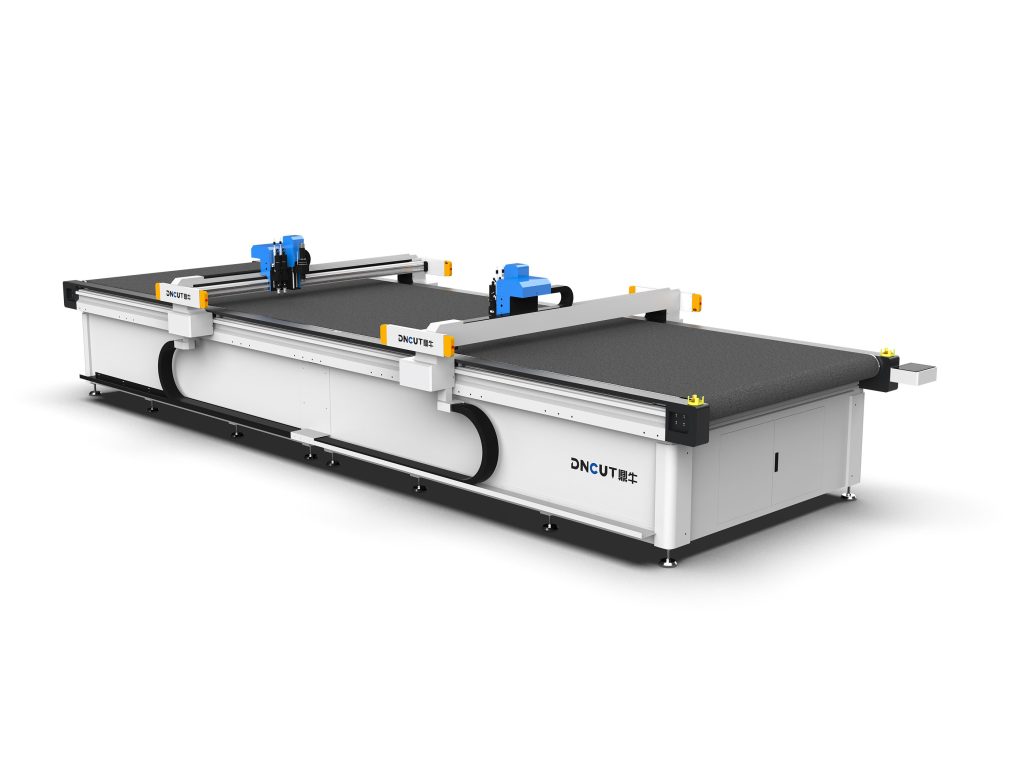
6. Table surface material and adsorption method
The table surface is usually made of felt or PVC material, with vacuum adsorption to secure the material. The adsorption force needs to be selected according to the air permeability of the material; for breathable materials such as mesh fabric, a high-negative-pressure adsorption system is required. The flatness of the table surface affects the consistency of cutting depth and should be checked regularly.
Operating Techniques and Efficiency Improvement Methods
Correct operating habits can significantly improve cutting quality and efficiency:
- Material Fixation: Ensure the material is flatly adsorbed onto the table surface to avoid wrinkles that cause uneven cutting depth. For rolled materials, when using a feeding device, the tension needs to be adjusted to prevent material stretching and deformation.
- Blade selection and replacement: Select the blade angle (e.g., 45°, 60°) according to the material type. For cutting leather, it is recommended to use a sharp blade and regularly check for wear. Generally, the blade needs to be checked after 8 hours of continuous operation, and replaced promptly once worn.
- Parameter optimization: Adjust the oscillation frequency, cutting speed, and cutting depth for different materials. For example, when cutting 1.5mm PU, set the oscillation frequency to 8000-10000 times/minute, the speed to 1200mm/s, and the cutting depth slightly greater than the material thickness (e.g., 1.6mm).
- Layout optimization: Use automatic layout software to rotate and nest parts, which can improve material utilization by 5%-15%. For directional materials (such as grained leather), pay attention to maintaining consistent layout orientation.
- Multi-layer cutting: For thin materials (such as lining), multiple layers can be stacked for cutting, but ensure the layers are firmly secured and the total thickness does not exceed the equipment’s capacity (usually ≤5mm).
Daily maintenance and common problem handling
Regular maintenance can extend equipment life and reduce downtime:
- Daily cleaning: Clear debris from the table, check the knife head for material entanglement, and clean the guide rails and racks.
- Weekly inspection: Check belt tension and screw tightness, and lubricate the guide rails (use lithium-based grease).
- Monthly maintenance: Check the vacuum pump filter, clean or replace it; check electrical connections to ensure they are not loose.
- Common issues: Incomplete cutting (check blade wear, cutting depth, and suction force); rough cutting edges (reduce cutting speed and replace the blade); dimensional deviation (check belt tension and calibrate the origin).
Summary
The selection of a bag cutting machine requires comprehensive consideration of accuracy, speed, working area, knife head power, and software compatibility. In actual use, by optimizing parameters, reasonable layout, and regular maintenance, the equipment’s performance can be fully utilized to improve the efficiency and quality of bag production. It is recommended to bring typical materials for trial cutting before purchase to verify the actual performance of the equipment.