
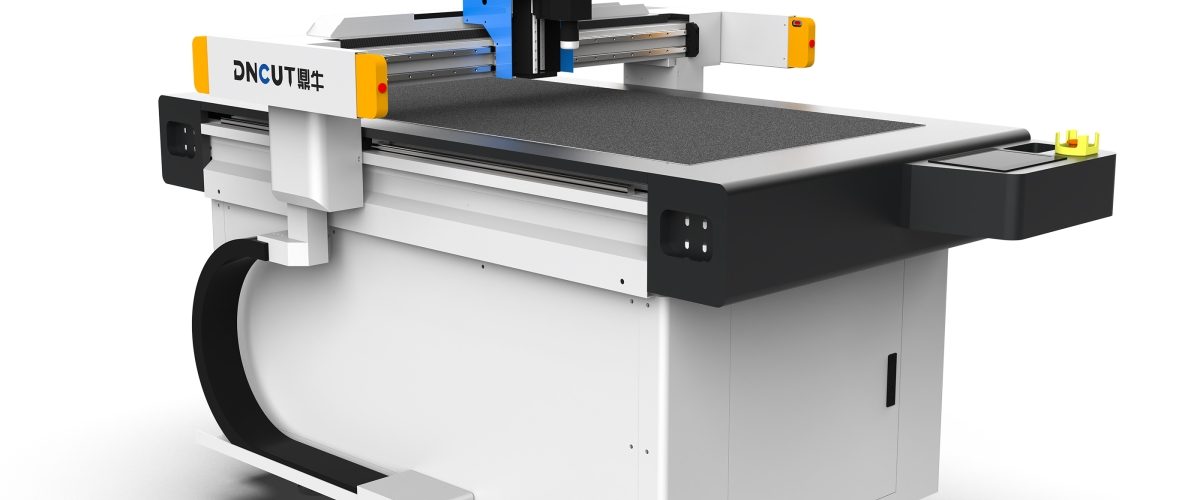
Prepreg Cutting Machine: Core Equipment for Precision Processing of Composite Materials
Prepreg is a sheet or tape material made by impregnating reinforcing materials such as carbon fiber and glass fiber with a resin matrix, and is widely used in aerospace, wind turbine blades, automotive lightweighting, and other fields. The prepreg cutting machine is CNC equipment specially designed for cutting prepreg, using processes such as oscillating knife, ultrasonic knife, or laser to cut prepreg into precise shapes. Compared with general-purpose cutting equipment, prepreg cutting machines need to solve challenges such as high material tackiness, easy delamination, and temperature sensitivity, ensuring clean cutting edges, no burrs, and no fiber damage.
Key Technical Parameters of Prepreg Cutting Machines
When purchasing a prepreg cutting machine, special attention should be paid to the following parameters, as they directly determine cutting quality and production efficiency.
1. Cutting accuracy and repeat positioning accuracy
Cutting accuracy is typically based on an industry benchmark of ±0.1mm, while high-end equipment can reach ±0.05mm. Repeat positioning accuracy affects the consistency of mass production and should be ≤0.05mm. For aerospace-grade prepreg, the accuracy requirements are even stricter, and it is necessary to ensure that the cutting path fully matches the CAD model.
2. Cutting Speed and Acceleration
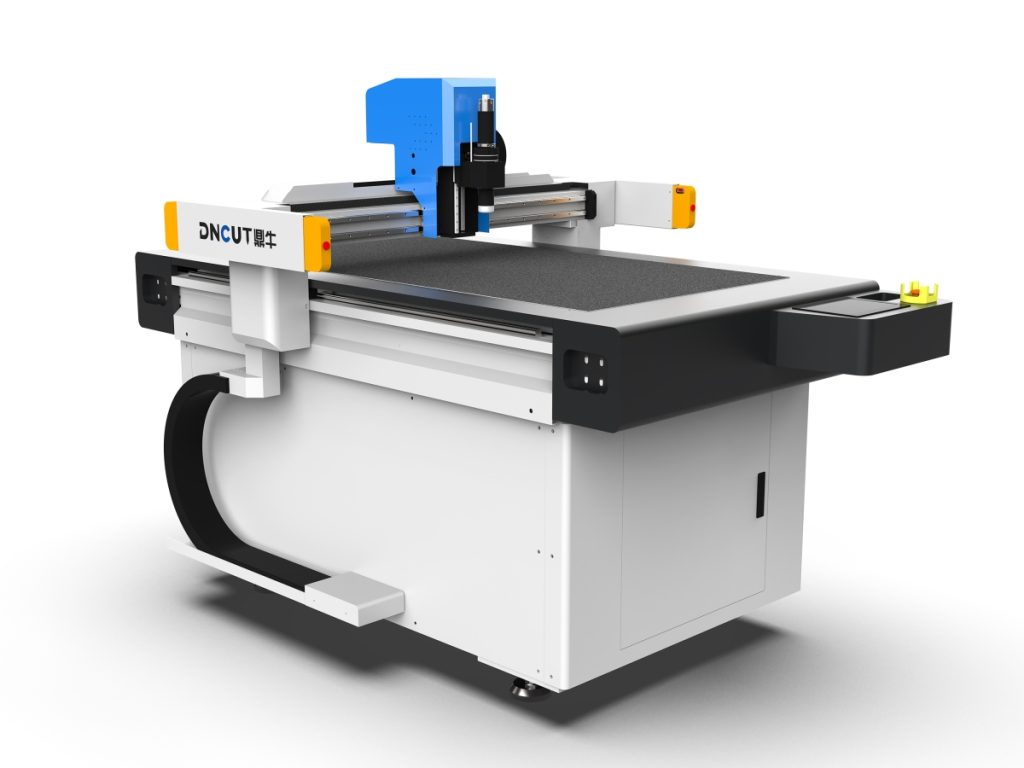
Cutting speed needs to be adjusted according to material thickness and knife type. When the oscillating knife cuts prepreg, the speed is generally 100-300mm/s; the ultrasonic knife can reach over 500mm/s. Acceleration affects cutting quality at corners; high acceleration (≥1000mm/s²) can reduce material pulling during start and stop. In actual production, it is necessary to balance speed and quality to avoid edge delamination caused by excessive speed.
3. Knife Types and Applicability
- Oscillating knife: cuts through high-frequency vibration (thousands of times per minute), suitable for prepreg with a thickness of 0.1-5mm, with a flat cut and no heat effect.
- Ultrasonic knife: Uses ultrasonic vibration to reduce friction, suitable for highly sticky prepreg, with high cutting speed and good edge quality.
- Laser knife: Non-contact cutting with high precision, but may produce a heat-affected zone, causing resin curing or fiber damage, and must be selected with caution.
For most prepregs, the oscillating knife and ultrasonic knife are the first choice; the laser knife is only suitable for specific thin-layer materials.
4. Worktable and Vacuum Adsorption
The worktable surface dimensions must match the prepreg width; common specifications are 1.6m×3m, 2m×4m, etc. The vacuum adsorption system ensures the material remains fixed during the cutting process, and the adsorption force should be adjustable to avoid crushing the material. The zoned adsorption function allows independent control of different areas, improving flexibility.
5. Control System and Software
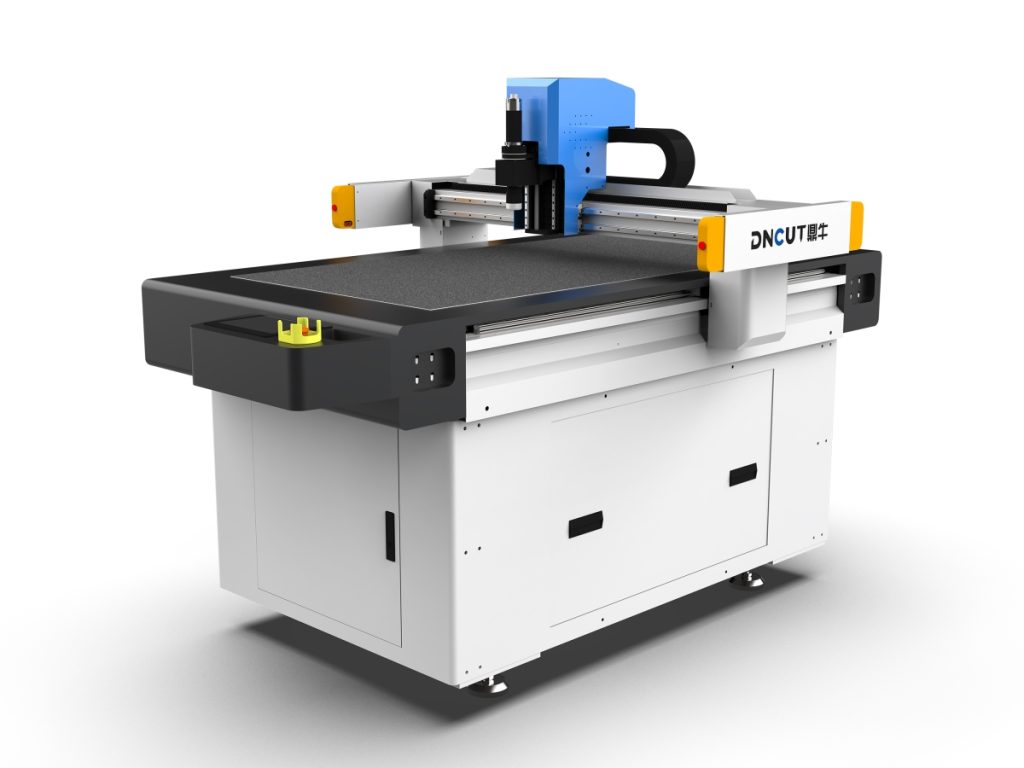
Modern prepreg cutting machines mostly use CNC control systems and support import of formats such as DXF and HPGL. The software should have nesting optimization functions to improve material utilization. Some high-end equipment integrates a visual recognition system, which can automatically identify material edges and defects to achieve intelligent cutting.
Key Points for Selecting a Prepreg Cutting Machine
Selection requires comprehensive consideration of factors such as material characteristics, production scale, and budget. The following are key considerations.
Matching Material Characteristics
Different prepregs vary greatly in resin content, fiber type, and thickness. For example, carbon fiber prepreg has high hardness and requires wear-resistant blades; glass fiber prepreg easily generates dust and requires a dust removal device. Prepreg with strong tackiness (such as epoxy resin systems) should use an ultrasonic knife to reduce material sticking to the blade.
Production scale and degree of automation
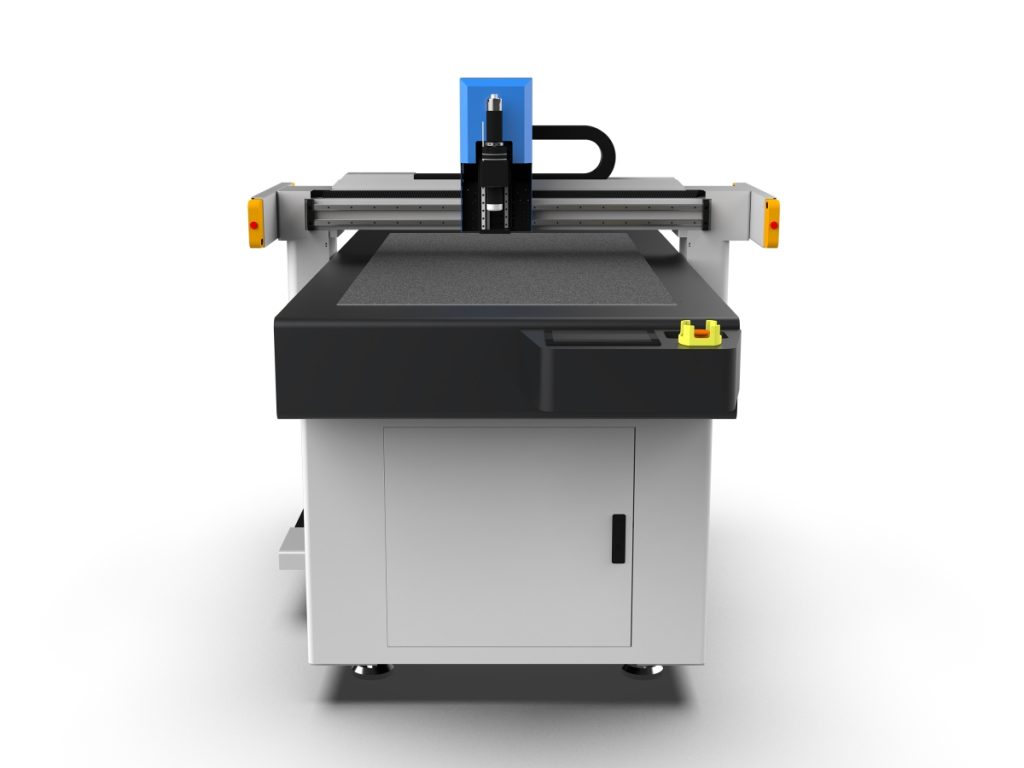
For small-batch, multi-variety production, manual feeding and semi-automatic cutting machines can be selected; for large-scale production, automatic feeding, multi-layer cutting, and automatic sorting systems should be considered. Multi-layer cutting can cut dozens of layers of prepreg at a time, significantly improving efficiency, but it is necessary to ensure there is no slippage between layers.
Environmental control and safety
Prepreg is sensitive to temperature and humidity, and the cutting workshop usually needs to be controlled at a temperature of 20±2°C and a humidity of 50±5%RH. The cutting machine should have good sealing to prevent dust contamination. At the same time, the equipment must comply with safety standards, such as emergency stop buttons, light curtain protection, etc.
Maintenance and after-sales service
Oscillating knives and ultrasonic knives are wearing parts and need to be replaced regularly. When selecting a supplier, you should examine its service network and spare parts supply capability. Software upgrades and training support are also guarantees for long-term use.
Operation and Maintenance Practices of Prepreg Cutting Machines
Correct operation and maintenance can extend equipment life and ensure cutting quality.
Operating Procedure
- Material Preparation: After the prepreg is taken out of the cold storage, it needs to be warmed up in a constant-temperature workshop to avoid condensation affecting cutting. The warming time is determined according to the thickness of the roll material, generally 2-4 hours.
- Equipment Inspection: Check the tool wear condition, clean the table, and confirm that the vacuum adsorption is normal.
- Parameter settings: Set cutting speed, oscillation frequency, knife pressure and other parameters according to material type and thickness. For the first cut, it is recommended to test-cut a small sample and adjust to the optimal state.
- Cutting process monitoring: Observe the quality of the cut edge. If burrs or delamination occur, adjust parameters or replace the knife in time.
- Unloading and labeling: After cutting is completed, label and store according to the layup sequence to avoid confusion.
Daily maintenance
- Tool maintenance: Regularly check the cutting edge of the oscillating knife blade, and clean resin residue from the ultrasonic knife head. It is recommended to replace the blade every 500-1000 meters of cutting, depending on the material.
- Vacuum system: Regularly clean the filter screen, check the sealing of the pipelines, and ensure stable suction power.
- Guide rails and transmission: Clean the guide rails and apply lubricating oil every week, and check the belt tension.
- Software updates: Install control system patches in a timely manner and optimize the cutting path algorithm.
Common problems and solutions
- Burrs on cutting edge: May be caused by worn knife or speed too slow; replace the knife or increase speed.
- Material delamination: Usually caused by excessive knife pressure or improper vibration frequency; reduce knife pressure or adjust frequency.
- Cutting dimension deviation: Check guide rail accuracy and timing belt tension; calibrate if necessary.
- Insufficient vacuum adsorption: Clean the filter screen and check whether the sealing strip is aged.
Technology Development Trends
As the application fields of composite materials expand, prepreg cutting machines are developing toward greater intelligence and flexibility. For example, automated defect detection integrated with machine vision, AI-based optimization of cutting parameters, and modular tool systems adaptable to multiple materials. In addition, environmentally friendly cutting technologies (such as low-temperature cutting) are also under development to reduce dust and energy consumption.
In summary, the prepreg cutting machine is a key piece of equipment in composite material manufacturing, and proper model selection, meticulous operation, and regular maintenance are the foundation for ensuring production efficiency and product quality. Enterprises should choose equipment with mature technology and comprehensive service according to their own needs, and establish standardized operating procedures.