
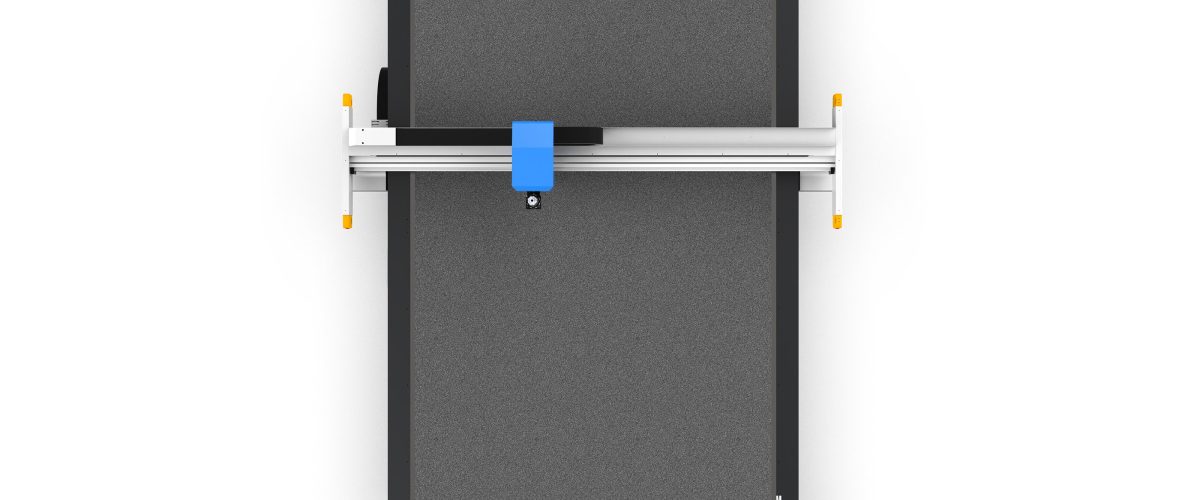
Carbon Fiber Cutting Machine: A Complete Guide from Selection to Efficient Production
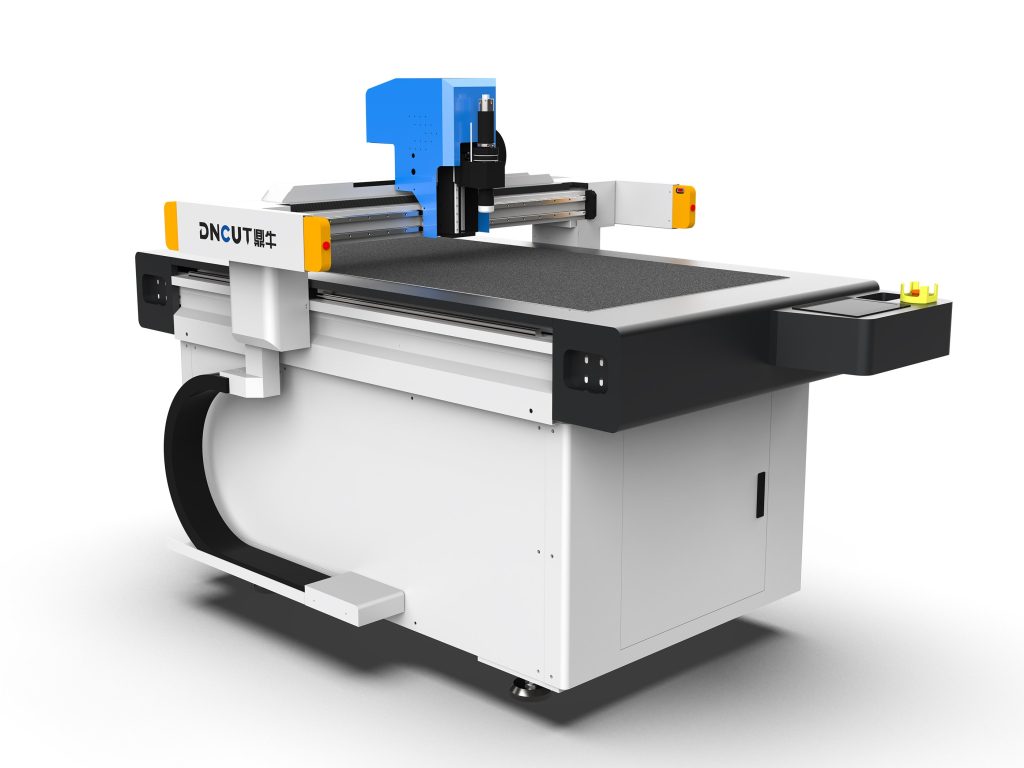
Carbon fiber composites are increasingly widely used in aerospace, automotive, sports equipment and other fields due to their lightweight and high-strength characteristics. However, the cutting and processing of carbon fiber faces many challenges: heavy dust, fast tool wear, and high cutting precision requirements. The carbon fiber cutting machine (i.e., CNC oscillating knife cutting machine) has become the mainstream processing equipment for carbon fiber prepreg, cured panels, fabrics and other materials, thanks to its cold cutting, no heat-affected zone, and high precision. This article focuses on the selection parameters, operating points and maintenance strategies of carbon fiber cutting machines, providing practical references that can be implemented.
I. Analysis of Core Technical Parameters of Carbon Fiber Cutting Machines
When purchasing a carbon fiber cutting machine, the following parameters directly determine cutting capability and production efficiency, and need to be comprehensively evaluated in combination with your own material characteristics and production capacity requirements.
1. Cutting head type and amplitude
Carbon fiber cutting machines are typically equipped with an oscillating knife (also called a vibrating knife) or a drag knife. For prepreg or fabric with a thickness of ≤5mm, a high-frequency, low-amplitude oscillating knife (amplitude 0.5-1.5mm, frequency 8000-12000 strokes/min) can reduce material delamination and burrs; for cured panels with a thickness of 5-15mm, a large-amplitude (2-3mm) or pneumatic knife should be selected. Some high-end models support quick-change cutting heads to accommodate different processes.
2. Positioning accuracy and repeat positioning accuracy
Carbon fiber parts often have strict contour tolerances, so it is recommended to choose equipment with positioning accuracy ≤±0.1mm and repeat positioning accuracy ≤±0.05mm. A structure using servo motors + precision reducers + linear guides can ensure long-term stability. For scenarios requiring multi-layer cutting (such as prepreg stacking), repeat positioning accuracy is particularly critical; otherwise, interlayer misalignment will cause parts to be scrapped.
3. Worktable and vacuum adsorption system
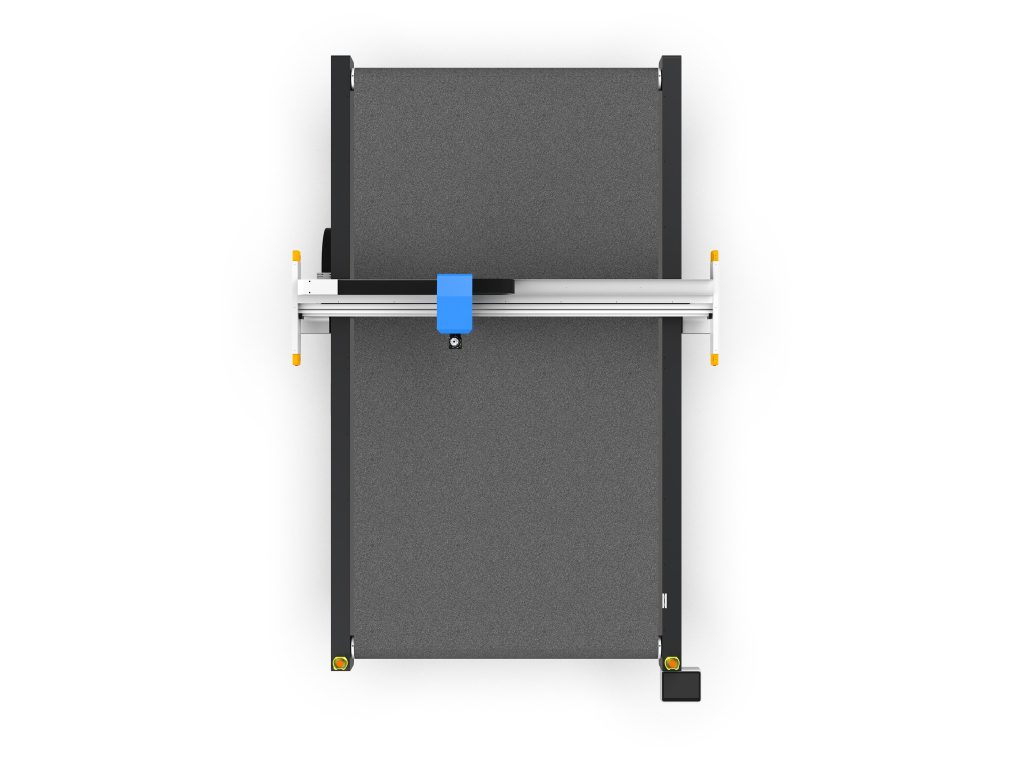
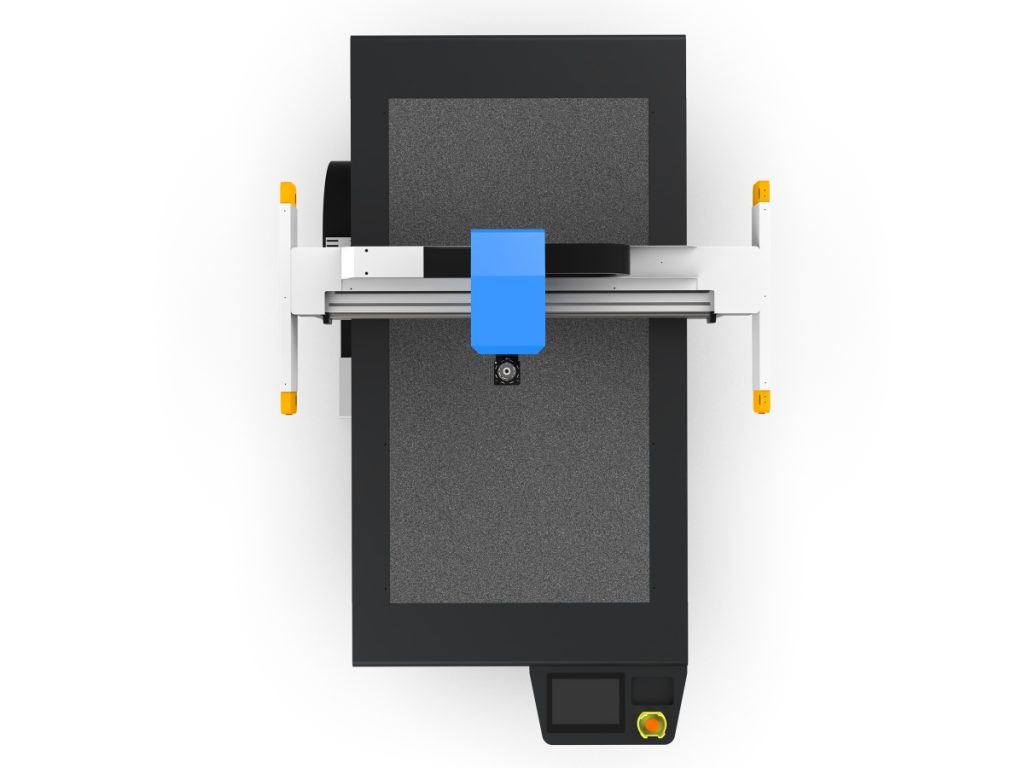
The table size must be determined based on the maximum workpiece size; common specifications are 1600mm×2500mm and 2000mm×3000mm. Carbon fiber cutting generates a large amount of dust, so a partitioned vacuum adsorption system must be equipped, with an adsorption force of ≥20kPa to ensure the material does not shift during cutting. The table felt needs to be replaced regularly to prevent dust from embedding and affecting the adsorption effect.
4. Cutting speed and acceleration
Cutting speed is affected by material thickness, tool type, and pattern complexity. For 1mm-thick carbon fiber prepreg, the oscillating knife cutting speed can reach 30-50m/min; for 5mm-thick cured board, the speed drops to 5-10m/min. Acceleration is recommended to be ≥1g to reduce idle travel time and improve overall efficiency. However, note that excessive acceleration may cause table vibration and affect cutting quality.
5. Dust extraction system
Carbon fiber dust is conductive and tends to float in the air, so a high-efficiency dust extraction device must be equipped. It is recommended to choose a model with a follow-up dust hood, with the suction inlet as close as possible to the cutting point, air volume ≥2000m³/h, and filtration accuracy ≤5μm. Poor dust extraction not only harms health, but also causes dust to accumulate on the guide rails and racks, accelerating equipment wear.
II. Operating Techniques and Process Optimization for Carbon Fiber Cutting Machines
Correct operating methods and process parameter settings can significantly improve cutting quality and tool life.
1. Tool Selection and Replacement Cycle
For cutting carbon fiber prepreg, it is recommended to use a carbide oscillating knife with a blade edge angle of 30°-45° for higher sharpness; for cutting cured plates, a diamond-coated tool is selected, which improves wear resistance by 3-5 times. As the tool wears, the cutting force increases, which can cause burrs and delamination on the material edges. It is recommended to inspect the blade edge every 200-300 meters (prepreg) or 50-80 meters (cured plate) of cutting, and replace it promptly. The degree of wear can be judged by listening to the cutting sound or observing the chip morphology.
2. Cutting Parameter Matching
Take 1mm thick carbon fiber prepreg as an example: oscillation frequency 10000 times/min, amplitude 1mm, feed speed 40m/min, vacuum adsorption pressure 25kPa. For 3mm thick cured board: frequency 8000 times/min, amplitude 2mm, feed speed 8m/min, layered cutting is recommended (1-1.5mm per layer) to avoid edge chipping caused by a single full-depth cut. Actual parameters need to be fine-tuned according to the material’s resin content and fiber orientation; trial cutting is recommended first.
3. Layout and Path Optimization
Use CAD/CAM software for intelligent nesting to improve material utilization. For carbon fiber fabrics, pay attention to the influence of warp and weft direction on cutting quality, and try to make the cutting path at a certain angle (such as 15°-30°) to the fiber direction to reduce fiber pulling. Using common-edge cutting and bridge connection can reduce idle travel and improve efficiency. For small holes and sharp corners, the feed speed can be reduced to 50%-70% of the normal value, and arc transition can be used.
4. Interlayer control for multi-layer cutting
When cutting multi-layer prepreg, layers tend to slide. In addition to increasing the vacuum adsorption force, the following measures can be taken: spray a small amount of water or special adhesive between layers; use a spiked pressure plate; reduce cutting speed to reduce lateral force. It is generally recommended that a single stack not exceed 10 layers (prepreg), and that each layer have a consistent thickness.
III. Key Points for Maintenance and Care of Carbon Fiber Cutting Machines
Carbon fiber dust is conductive and abrasive, so regular maintenance is key to ensuring equipment lifespan and precision.
1. Daily Cleaning
After each shift, use a vacuum cleaner to remove dust from the table surface, guide rails, racks, and knife head area. Never use compressed air to blow off dust, to prevent dust from entering the electrical cabinet. Check whether the vacuum lines are clogged and clean the dust collection box.
2. Weekly Inspection
Check the air gap of the knife head oscillation mechanism (typically 0.05-0.1mm); if too large, it may cause unstable amplitude; check the timing belt tension; if too loose, it will cause positioning deviation; clean the linear guide rails and apply special lubricating grease (such as lithium-based grease), but avoid excessive grease that attracts dust.
3. Monthly Maintenance
Check the vacuum pump filter, clean or replace the filter element; check the electrical cabinet cooling fan, remove accumulated dust; calibrate the machine origin and parallelism, use a dial indicator to check the table flatness (error ≤0.1mm/m). For high-precision processing, it is recommended to perform a laser interferometer accuracy test once per quarter.
4. Tool Management
Establish a tool life record, recording the cutting length and material type of each tool. Worn tools can be downgraded for rough cutting or non-critical areas. Use a dedicated tool box when storing tools to avoid damaging the cutting edges.
IV. Common Problems and Solutions
- Burrs or delamination on the cutting edge: Check whether the tool is worn, reduce the feed speed, increase the oscillation frequency, and ensure sufficient vacuum suction.
- Decreased cutting accuracy: Check guide rail lubrication and timing belt tension, calibrate the origin, and clean dust accumulation on the rack.
- Severe dust dispersion: Check whether the dust hood is positioned at the cutting point, whether the dust extraction airflow is sufficient, and whether the piping has air leaks.
- Abnormal noise from the knife head: Check whether the bearings of the oscillating mechanism are damaged, whether the air gap is too large, or whether the fastening screws are loose.
V. Selection Recommendations and Summary
The selection of a carbon fiber cutting machine should be based on material type, thickness range, precision requirements, and capacity planning. For users mainly cutting prepreg, priority should be given to the high-frequency oscillating knife and dust removal system; for cured plate processing, focus should be on a rigid table and a large-amplitude knife head. It is recommended to provide material samples for trial cutting before purchase to verify the actual cutting performance of the equipment. In daily use, strictly implementing cleaning and maintenance plans can extend equipment life by more than 30%. Through proper knife management and process parameter optimization, the carbon fiber cutting machine can consistently achieve high-quality, high-efficiency cutting production.