
1. Characteristics of Cotton Materials and Cutting Challenges
As a natural fiber, cotton is widely used in apparel, home textiles, medical, and industrial fields. Its cutting quality is affected by fiber length, density, moisture content, and thickness. Common cotton materials include pure cotton fabric, cotton felt, cotton batting, cotton yarn, and cotton composites. The main cutting challenges are:
- Loose fibers prone to stringing: Cotton batting and cotton felt have a fluffy structure, and mechanical blades easily snag fibers, resulting in rough cuts.
- Heat sensitivity: Laser cutting easily scorches edges, producing yellow edges and odors, making it unsuitable for light-colored or high-cleanliness products.
- Large thickness variation: From 0.1mm cotton fabric to 50mm cotton batting, the equipment needs wide-range pressure adjustment.
- Moisture content influence: Cotton fibers soften after absorbing moisture, increasing cutting resistance and causing sticking to the blade.
Therefore, cotton cutting equipment must be designed for these characteristics, rather than simply modifying a general-purpose cutting machine.
II. Mainstream Cotton Cutting Equipment Types and Application Scenarios
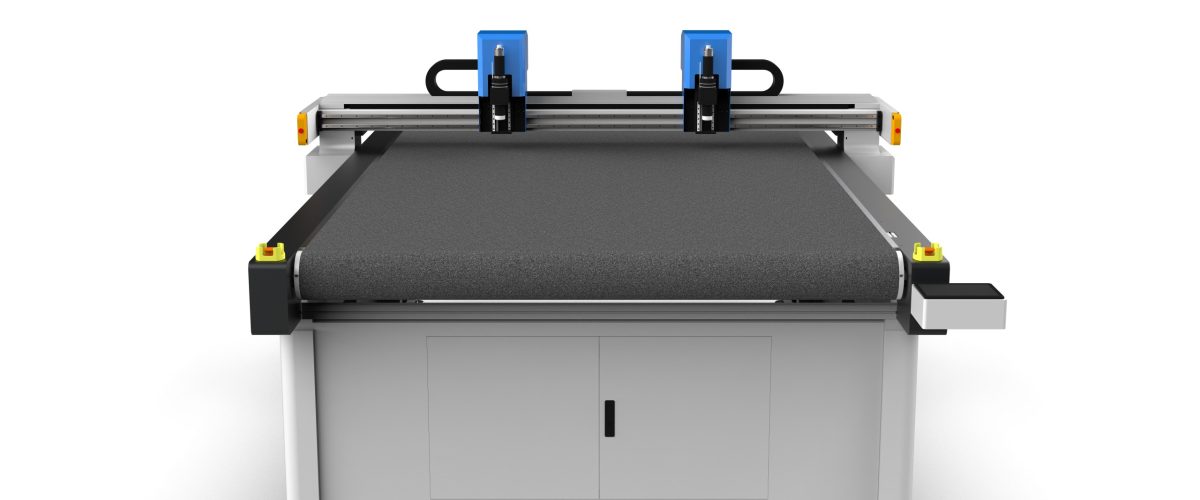
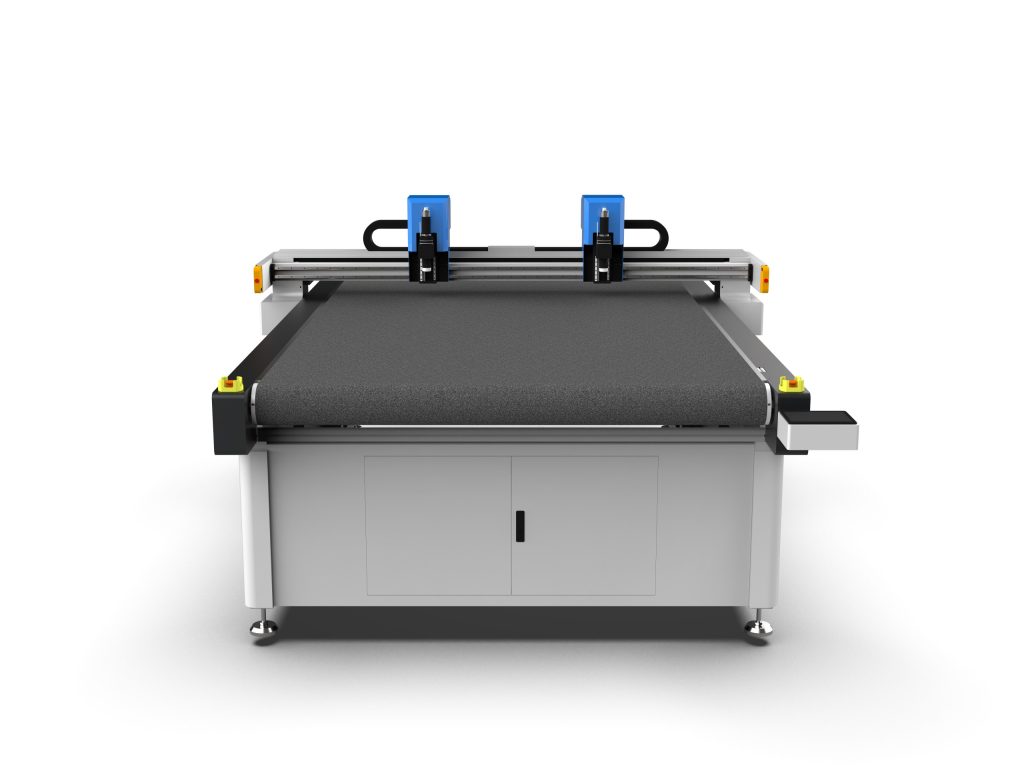
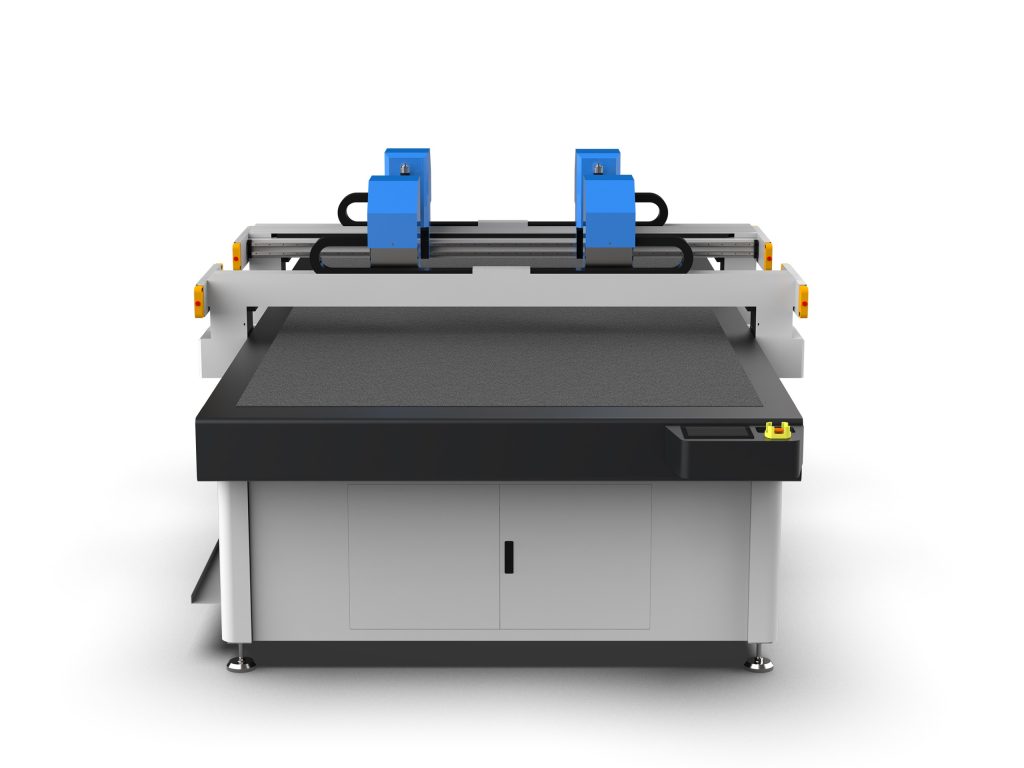
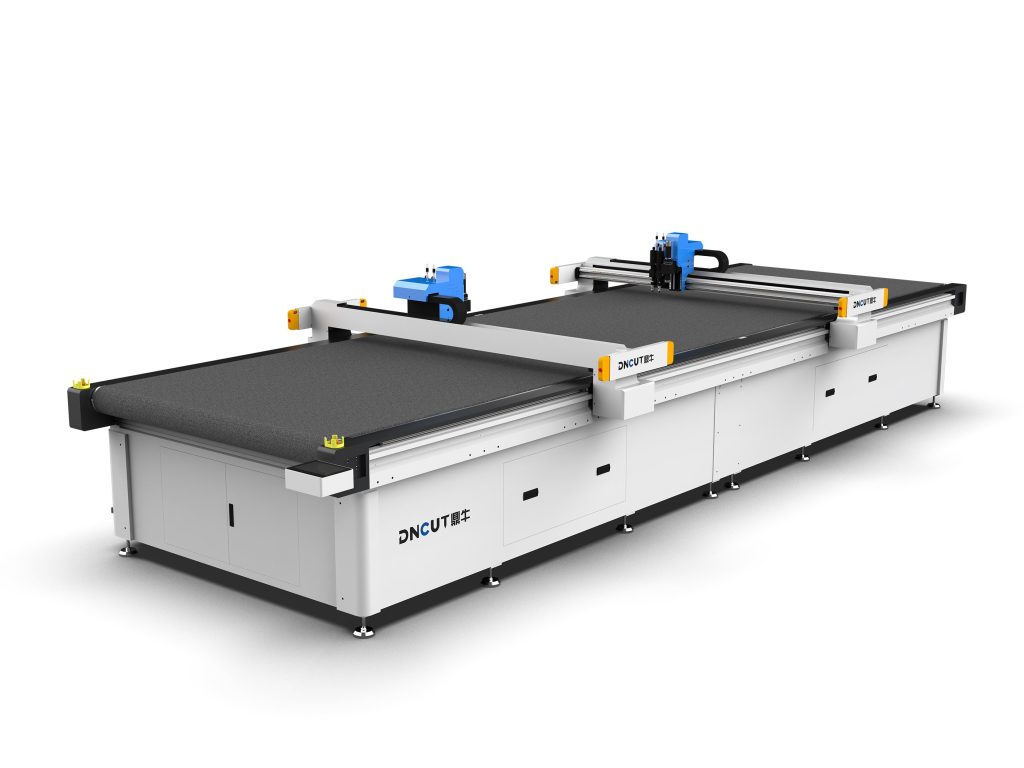
1. CNC Oscillating Knife Cutting Machine
It uses a high-speed up-and-down oscillating blade (frequency typically 800-3000 times/minute), combined with a vacuum adsorption platform to secure the material. Suitable for cutting 0.5-30mm cotton fabric, cotton felt, and cotton composite board. The cutting speed can reach 1200mm/s, with accuracy of ±0.1mm. Advantages: no thermal effect, smooth cut, capable of multi-layer cutting (depending on thickness). Disadvantages: for ultra-thick cotton batting (>50mm), special extended blades are required, and blades wear relatively quickly.
2. Laser Cutting Machine
CO2 laser (power 60-150W) can cut thin cotton fabric at extremely high speed (up to 10m/min), but the edges become carbonized and yellowed, requiring subsequent processing. It is only recommended for dark-colored cotton fabric or internal structural parts where edge color is not a concern. Not suitable for cotton batting, cotton felt (flammable), and medical cotton products (cleanliness requirements).
3. Ultrasonic cutting machine
It uses high-frequency vibration (20-40kHz) to heat the blade (50-80°C), sealing the edges while cutting to prevent fibers from fraying. Suitable for cutting cotton non-woven fabric and cotton blend fabrics, with smooth burr-free cuts. However, the speed is relatively slow (200-500mm/s), and the equipment cost is relatively high.
4. Rotary Knife Cutting Machine
Traditional mechanical cutting is suitable for large-volume straight-line cutting, such as cotton fabric roll slitting. The precision is relatively low (±0.5mm), but the efficiency is high and maintenance is simple. It is mostly used for cutting beds in garment factories.
5. Waterjet cutting machine
Ultra-high-pressure water flow (200-400MPa) plus abrasive can cut thick cotton felt (50-100mm) with no heat-affected zone, but the speed is slow, the cost is high, and cotton materials need to be dried after absorbing water. It is suitable for special industrial cotton products.
Selection recommendations: choose laser or circular knife for thin cotton fabric mass production; choose oscillating knife for medium-thick cotton felt and cotton composite materials; choose ultrasonic for high-cleanliness medical cotton; choose waterjet or extended-blade oscillating knife for ultra-thick cotton batting.
III. Core Parameter Analysis and Selection Calculation
1. Cutting thickness and blade length
The cutting thickness of an oscillating knife depends on the blade length and oscillation amplitude. Conventional blade lengths are 25-50mm, and the cuttable thickness is ≤ blade length × 0.8. For example, a 50mm blade can cut a maximum thickness of 40mm. If you need to cut 50mm cotton wadding, you should choose a 75mm extended blade and reduce the oscillation frequency to below 800 times/minute to prevent the blade from bending.
2. Cutting Speed and Feed Rate
Speed needs to match material density. Pure cotton fabric (100g/m²) can be set to 800-1200mm/s; cotton felt (300g/m²) is recommended at 400-600mm/s; cotton batting (density 0.1g/cm³) is recommended at 200-300mm/s. Excessive speed will cause slanted cuts or fiber tearing. Calculation formula: feed rate = material thickness × coefficient (cotton fabric coefficient 1.5, cotton felt 1.2, cotton batting 0.8), unit mm/s.
3. Vibration Frequency
The higher the frequency, the finer the cut, but blade heating and wear intensify. For cutting thin cotton fabric, 2000-3000 times/minute can be selected; for medium-thick cotton felt, 1200-1800 times/minute; for thick cotton batting, 800-1200 times/minute. It is recommended to equip variable frequency adjustment to adjust in real time according to the material.
4. Vacuum adsorption pressure
Cotton materials have strong air permeability and require sufficient negative pressure for fixation. Usually a vacuum degree of ≥-0.06MPa is required, and the adsorption platform needs zone control to prevent small pieces from moving. For fluffy cotton batting, a layer of PE film can be covered to assist adsorption.
5. Precision and repeat positioning
The cutting accuracy for cotton products is usually required to be within ±0.2mm. The equipment should be equipped with servo motors and linear guides, with a repeat positioning accuracy of ±0.05mm. For multi-layer cutting (such as 10 layers of cotton fabric), it is necessary to ensure no slippage between layers; models with pressure rollers can be selected.
IV. Process Key Points and Common Problem Solutions
1. Layered Cutting and Fixation
When cutting multi-layer cotton fabric, layers are prone to misalignment. Recommendations: use a vacuum adsorption platform and cover the material with a breathable film; or use nailing or clamping methods. The cutting sequence should proceed from the inside outward to reduce material deformation.
2. Cut Edge Burr Control
Cotton fibers fray easily; use serrated blades or ultrasonic edge sealing. For the oscillating knife, increasing the vibration frequency and reducing the feed rate can improve cut quality. If fraying persists, add a thermal edge-sealing step (hot air or ultrasonic).
3. Blade Wear and Replacement
Cotton fibers contain natural waxes and tend to stick to the blade. It is recommended to clean the blade every 2-4 hours (wipe with alcohol) and inspect the cutting edge every shift. When cutting resistance increases noticeably or the cut edge shows stringing, the blade needs to be replaced. The service life of carbide blades is about 3-5 times that of high-speed steel, but the cost is higher.
4. Static Electricity and Dust
Cutting cotton lint generates dust and static electricity, so a dust extraction device (with the suction inlet close to the cutter head) and an ion blower to eliminate static electricity are required. Dust accumulation affects guide rail accuracy, so clean daily.
5. Moisture Content Control
The moisture content of cotton material should be controlled at 8%-10%. Too high will cause blade sticking and mildew during cutting, while too low makes the fibers brittle and prone to breaking. It is recommended to install temperature and humidity control in the cutting workshop (temperature 20±2℃, humidity 55±5%).
V. Maintenance and Safety Specifications
1. Daily Maintenance
- Clean the blade and guide rails every shift, and check air pressure and vacuum level.
- Lubricate the linear guide rails and lead screws weekly, and check belt tension.
- Calibrate cutting accuracy monthly (test with a standard circle), and check electrical connections.
- Replace worn blades and vacuum suction pads quarterly.
2. Safe Operation
- The equipment must be grounded to prevent static electricity buildup.
- Install light curtains or safety doors in the cutting area; never reach hands in during operation.
- Wear cut-resistant gloves when replacing blades, and use dedicated tools.
- Laser cutting machines must be equipped with an exhaust system to avoid harmful gases generated by burning cotton fibers.
3. Troubleshooting
- Slanted cut: Check whether the blade is bent or the vibration frequency is too low.
- Material movement: Check whether the vacuum level is insufficient or the suction area is not covered.
- Blade breakage: Check whether the feed speed is too high or there are hard objects in the material.
- Burnt cut (laser): Reduce power or increase cutting speed.
VI. Selection Decision Checklist
Before purchasing cotton cutting equipment, please confirm the following information:
- Material type (cotton fabric/cotton felt/cotton batting/composite material) and maximum thickness.
- Daily production requirement (meters/hour or pieces/hour).
- Cutting accuracy requirement (±0.1mm or ±0.5mm).
- Whether multi-layer cutting is required and the number of layers.
- Workshop environment (temperature and humidity, dust, power supply).
- Budget range (oscillating knife models approximately 80,000-200,000 RMB, laser approximately 50,000-150,000 RMB, ultrasonic approximately 150,000-300,000 RMB).
It is recommended to bring actual material samples to the equipment manufacturer for trial cutting to verify cut quality, speed and stability. At the same time, evaluate the manufacturer’s after-sales service capability to ensure timely supply of consumables such as blades.