
What Is a Carton Sample Maker?
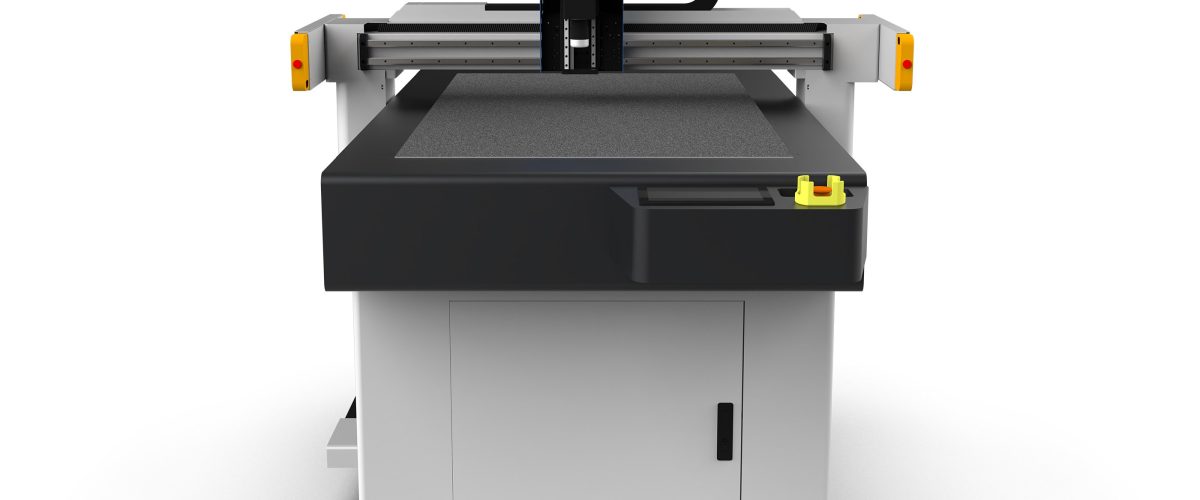
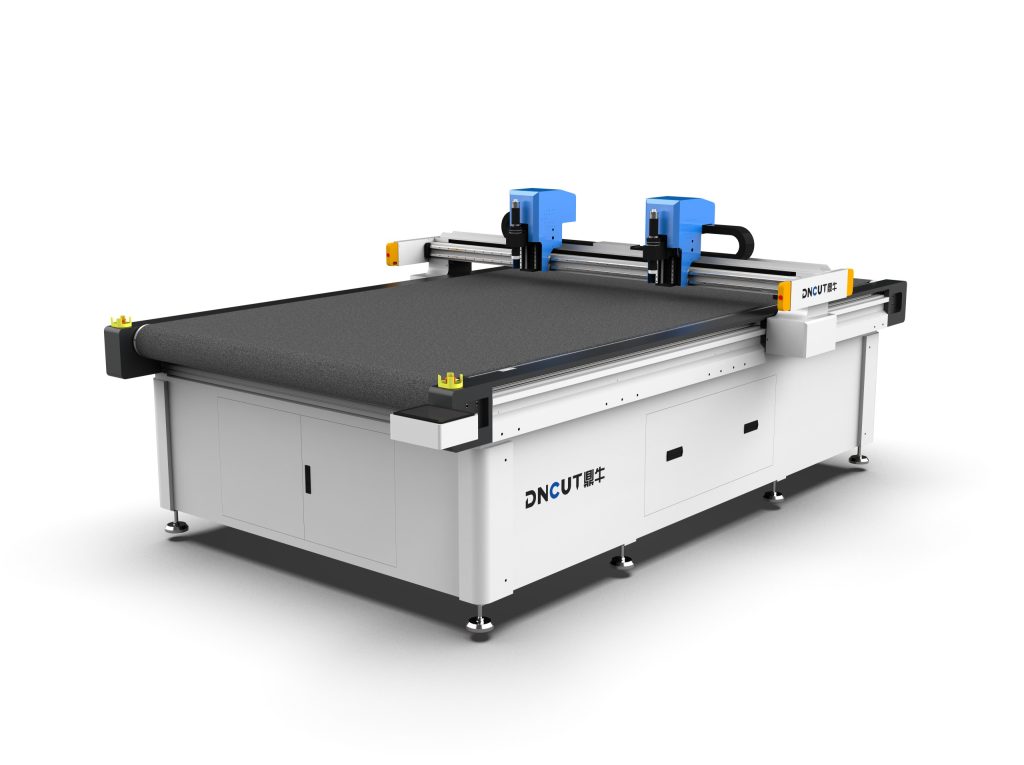
A carton sample maker (also known as a carton proofing machine or sample cutting machine) is a CNC device used in the packaging industry for quickly producing carton and box samples or small-batch production. It uses computer-controlled cutting heads (such as an oscillating knife, drag knife, creasing wheel, etc.) to perform cutting, creasing, drawing, and other processes on materials such as cardboard, corrugated board, and cardstock, replacing traditional manual sample making and greatly improving sample precision and production efficiency.
Compared with laser cutting machines, the sample maker uses physical blade cutting with no burnt edges, making it more suitable for paper products that are temperature-sensitive or need to retain the material’s original color. At the same time, it can integrate creasing, V-grooving, drawing, and other functions, achieving multiple uses in one machine.
Core Working Principles and Key Components
1. Motion Control System
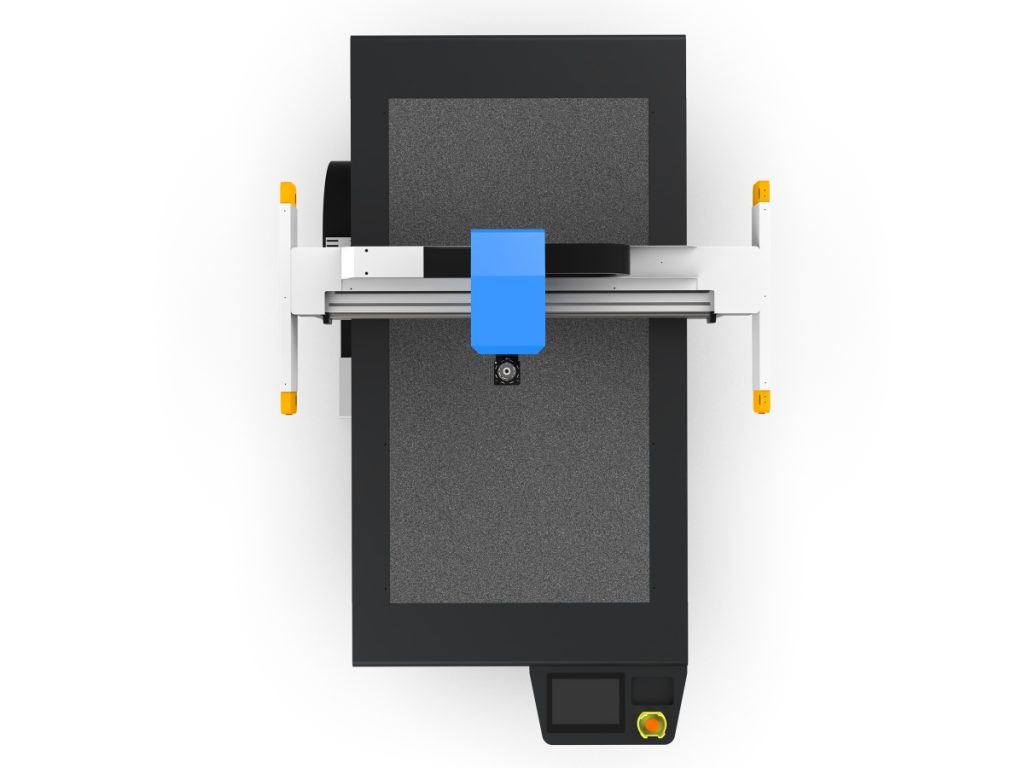
The sample maker usually adopts a gantry structure, with the X/Y axes driven by servo motors, and repeat positioning accuracy can reach ±0.05 mm. High-precision linear guides and rack-and-pinion transmission ensure long-term stability. Some high-end models are equipped with a CCD vision positioning system, which can automatically identify registration marks on the material and compensate for material deformation or position deviation.
2. Cutting Tool Heads
Different tools can be selected according to material thickness and type:
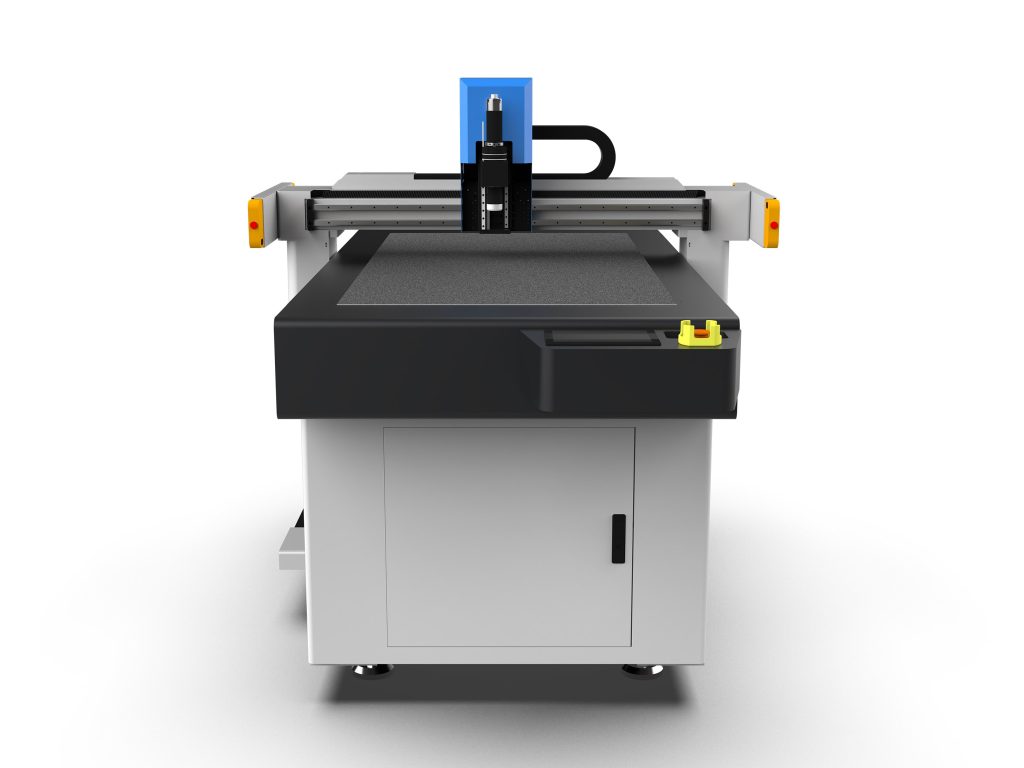
- Oscillating knife: Suitable for medium-thick materials such as corrugated board and honeycomb board, with a cutting thickness of up to 20 mm and good cut-edge verticality.
- Drag knife: Used for thin cardstock and white cardstock, with fast cutting speed and smooth edges.
- Creasing wheel: Used to create crease lines, with adjustable pressure to avoid cracking of the cardboard.
- Drawing pen: Used to mark dimensions, patterns, or text.
- V-groove knife: Used to create 45° or 90° V-shaped grooves for easy bending and forming.
3. Vacuum Adsorption Table
The table adopts multi-zone vacuum adsorption to ensure the material remains fixed during cutting. The adsorption force is adjustable to avoid deformation of thin paper. The table material is mostly aluminum alloy or honeycomb board, balancing flatness and lightweight design.
Selection Points: How to Choose a Suitable Sample Maker
1. Processing Size and Material Range
Choose the table specification according to common order sizes; for example, 1300 mm × 2500 mm can cover most carton samples. Confirm the maximum cutting thickness of the equipment (usually corrugated board ≤15 mm, cardstock ≤2 mm) and material types (cardboard, gray board, honeycomb paper, foam, etc.).
2. Precision and Speed
Repeat positioning accuracy should be ≤0.1 mm, and cutting speed is recommended to be ≥800 mm/s (depending on the material). High-speed models can improve small-batch production efficiency, but rigidity and cost need to be balanced.
3. Tool Configuration and Automation
The automatic tool-changing function of multiple tool heads can reduce manual tool-changing time and is suitable for complex samples. CCD vision positioning and automatic feeding systems can further improve automation, but they need to be weighed against budget and output.
4. Software Compatibility
Ensure the equipment supports common design file formats (such as AI, DXF, PLT, PDF) and is equipped with dedicated sample-making software that can automatically generate crease lines and cutting paths and optimize layout to reduce material waste.
5. Brand and After-Sales Service
Choose manufacturers with technical support and pay attention to warranty periods, spare parts supply, and training services. Domestic brands such as dncut provide cost-effective solutions, while imported brands have high precision but are expensive.
Operating Techniques and Common Problem Solving
1. Material Fixation and Adsorption
Before cutting, ensure the material is flat and the vacuum adsorption force is moderate. For warped cardboard, press it flat with a heavy object first or increase the adsorption zones. For thin paper, it is recommended to reduce the adsorption force to avoid deformation.
2. Tool Selection and Parameter Settings
Adjust the blade tip extension length according to material thickness (usually 0.5–1 mm beyond the material thickness). The frequency and amplitude of the oscillating knife affect cutting quality; for corrugated board, high frequency and low amplitude are suitable to reduce burrs. Creasing pressure needs to be adjusted according to the cardboard grammage to avoid cutting through or making the crease too shallow.
3. Path Optimization and Layout
Use the software’s automatic layout function to nest and arrange multiple samples to improve material utilization. The cutting path should follow the principle of inside first and outside later, and small first and large later, to avoid material displacement.
4. Common Problems and Countermeasures
- Rough cutting edges: Check blade wear, adjust cutting speed, or replace the oscillating knife.
- Cracking at crease lines: Reduce creasing pressure, or switch to a round creasing wheel, and pre-crease if necessary.
- Material displacement: Increase vacuum adsorption force or use tape to assist fixation.
- Precision deviation: Calibrate the servo system and check guide rail lubrication and belt tension.
Maintenance and Safety Specifications
Clean the table and guide rails daily, check blade wear and vacuum lines weekly, and lubricate transmission components monthly. Wear protective gloves during operation and avoid contact with moving parts. The equipment should be well grounded to prevent static interference.
Application Scenarios and Benefit Analysis
Sample makers are widely used in carton factories, printing factories, design companies, etc., for quickly verifying structural designs, producing customer samples, and small-batch production. Compared with manual sample making, efficiency is increased by 5–10 times, precision is improved, and material waste is reduced. Based on an average of 20 samples per day, the equipment investment can be recovered in about 6–12 months.
Conclusion
The carton sample maker is a practical tool for packaging companies to enhance competitiveness. When selecting a model, material, precision, automation requirements, and budget need to be comprehensively considered. During operation, attention should be paid to parameter optimization and maintenance to maximize benefits. With the development of CNC technology, sample makers are evolving toward higher precision and greater intelligence, bringing more possibilities to the packaging industry.