
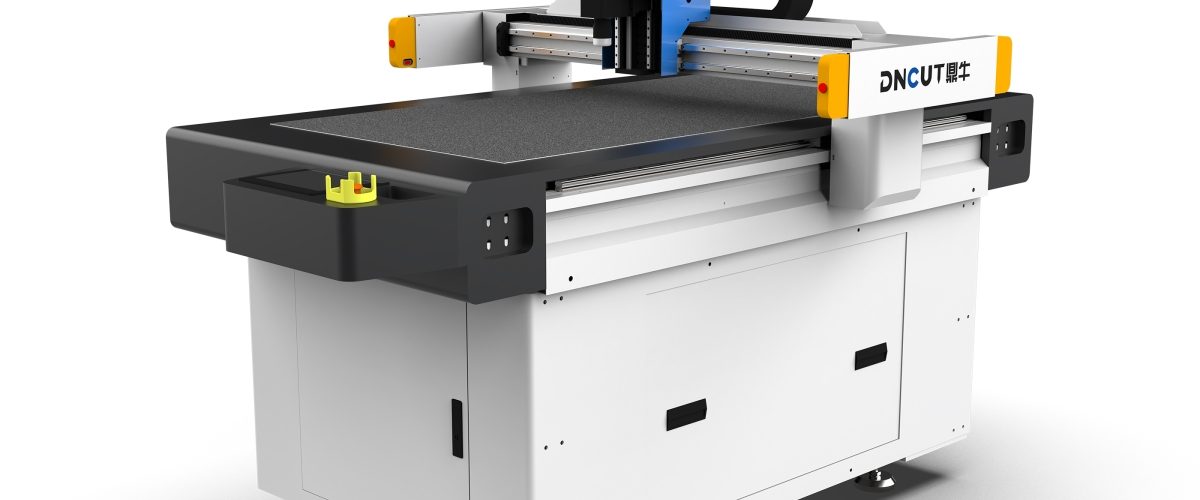
Fabric Sample Cutting Machine: A Complete Guide from Selection to Efficient Use
In industries such as apparel, home textiles, and automotive interiors, the fabric sample cutting machine is key equipment connecting design and mass production. Through methods such as oscillating knife, laser, or circular knife, it quickly converts CAD designs into physical samples, directly affecting the sampling cycle, material utilization rate, and final product quality. Based on actual production scenarios, this article systematically reviews the core parameters, selection logic, operating standards, and maintenance points of fabric sample cutting machines, providing practical reference for equipment procurement and daily use.
I. Core Types and Applicable Scenarios of Fabric Sample Cutting Machines
According to cutting principles, mainstream fabric sample cutting machines are divided into three categories: oscillating knife sample cutting machines, laser sample cutting machines, and circular knife sample cutting machines. Different types differ significantly in precision, speed, and material adaptability, so business characteristics must be clarified before selection.
1. Oscillating Knife Sample Cutting Machine
The oscillating knife cuts materials through high-frequency up-and-down vibration (frequency usually 8000-20000 times/minute); the blade does not rotate, and it has good adaptability to multi-layer fabrics and composite materials. The maximum cutting thickness can reach 50mm (depending on material), with cutting precision of ±0.1mm. It is suitable for scenarios requiring multi-layer cutting, such as apparel, sofas, and car seat covers. The disadvantage is that cutting speed is relatively slower than laser, but there is no burning-edge risk for heat-sensitive materials (such as chemical fibers).
2. Laser Sample Cutting Machine
CO2 laser (power usually 60-150W) cuts by thermal melting, with fast speed (up to 3-5 times that of oscillating knife) and narrow kerf (0.1-0.3mm). It is suitable for single-layer or thin-layer fabric sampling, especially for complex curves and fine hollowing. However, laser cutting produces burnt edges and smoke, with obvious effects on materials containing polyester and spandex, and requires an exhaust system. In addition, laser is not suitable for cutting materials containing PVC or flame retardants (which produce toxic gases).
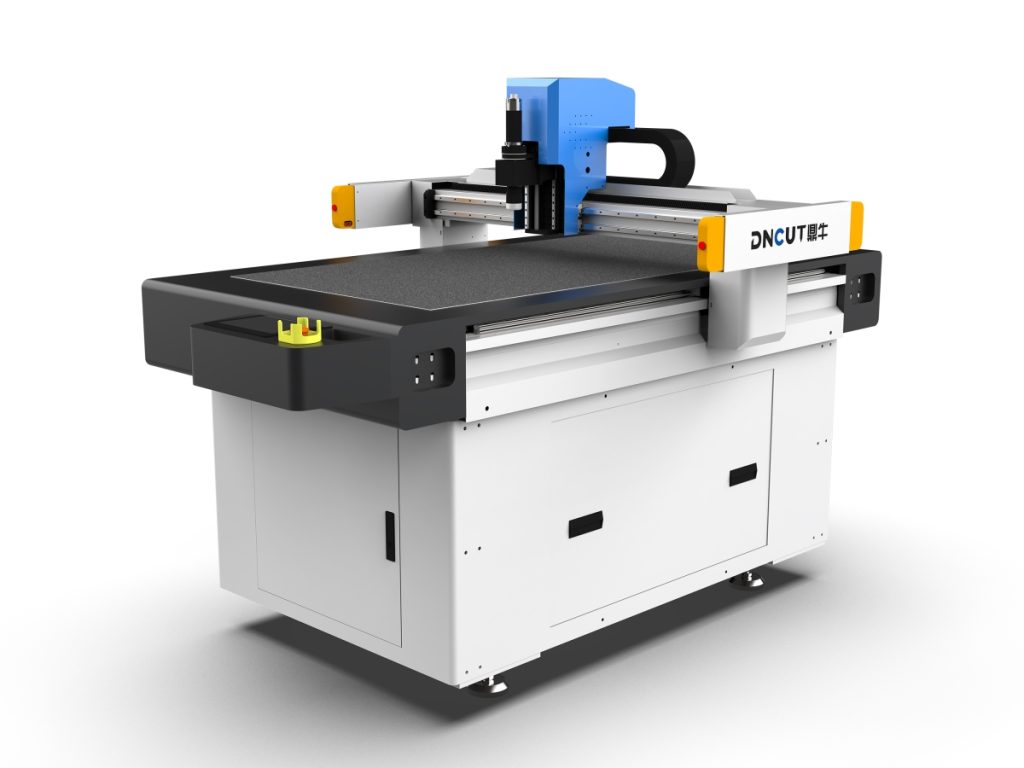
3. Circular Knife Sample Cutting Machine
The circular knife cuts through a rotating blade, with simple structure and low cost. It is suitable for single-layer or small-layer-count natural fiber fabrics such as cotton and linen. Cutting speed is medium, precision is ±0.2mm, but blades wear quickly and require frequent replacement. It is suitable for small-batch, low-precision sampling needs.
Selection advice: If sampling materials are mainly chemical fibers and blends with many layers, prioritize oscillating knife; if mainly single-layer thin materials and fine patterns, laser is more efficient; if budget is limited and precision requirements are not high, circular knife can be an entry-level choice.
II. Interpretation of Key Parameters and Selection Checklist
When purchasing a fabric sample cutting machine, the following parameters need key comparison:
- Effective cutting working area: Common specifications include 1600mm×1000mm, 2500mm×1600mm, etc. It should be selected based on the maximum sampling size plus 10% margin. For example, apparel sampling commonly uses 1600mm×1000mm, while home textiles are recommended at 2500mm×1600mm.
- Cutting precision: Oscillating knife is usually ±0.1mm, laser ±0.05mm. The higher the precision, the higher the price, but sampling precision requirements are usually lower than mass production; ±0.2mm can meet most apparel sampling needs.
- Maximum cutting speed: Oscillating knife idle speed can reach 1000mm/s, and cutting speed depends on material thickness (for example, multi-layer cotton cloth is about 200-400mm/s). Laser cutting speed can reach over 5000mm/s.
- Control system: Mainstream systems use servo motors + motion control cards, supporting formats such as HPGL, DXF, and PLT. Compatibility with existing CAD software (such as ET, Gerber, Lectra) must be confirmed.
- Vacuum adsorption system: Must be equipped for multi-layer cutting; adsorption force should be ≥0.6MPa to ensure the material does not shift during cutting.
- Automatic feeding system: Optional for continuous sampling to reduce manual intervention and improve efficiency.
In addition, attention should be paid to equipment footprint, power requirements (usually 220V/380V), noise level (oscillating knife about 75dB, laser requires additional exhaust), and the manufacturer’s after-sales response time.
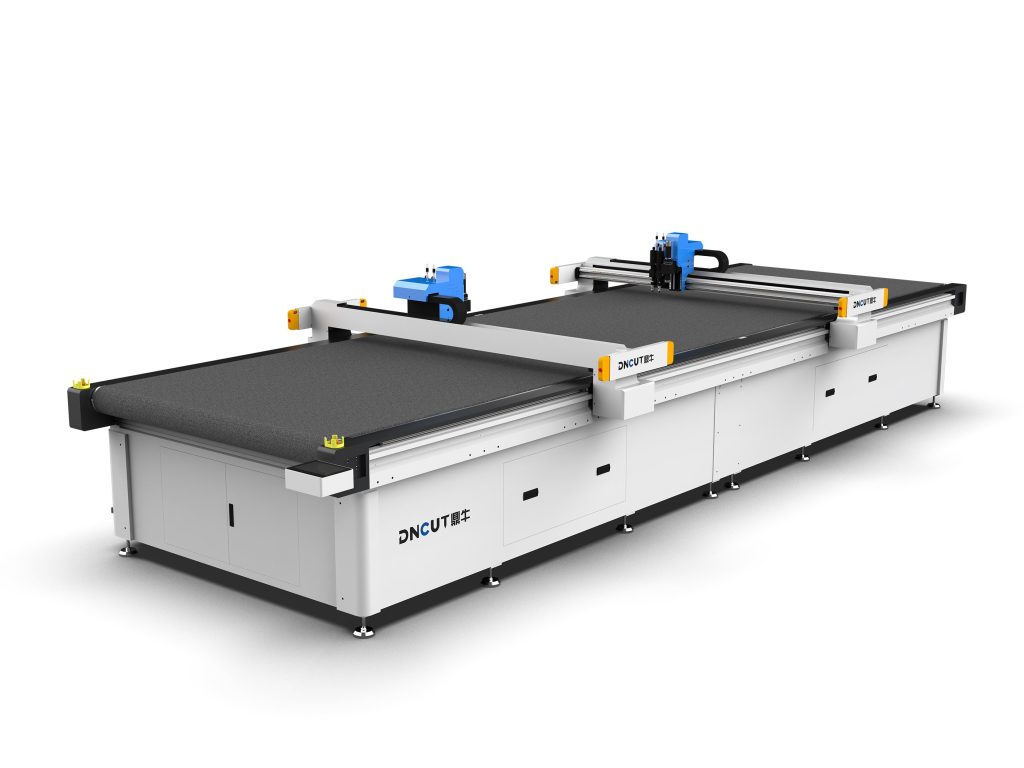
III. Operating Standards: From File Import to Finished Product Output
Standardized operating procedures can significantly reduce the reject rate. The following steps apply to oscillating knife sample cutting machines (laser models are similar, but require additional exhaust and focus adjustment).
1. File Preparation and Layout
Export CAD files as DXF or PLT format, and check whether lines are closed and whether there are duplicate lines. Use the sample cutting machine’s supporting software for layout, following the principle of “tight arrangement and sufficient kerf”:
- Kerf compensation: Oscillating knife kerf is about 0.3-0.5mm; during layout, spacing between adjacent graphics should be ≥2mm to avoid cutting interference.
- Directionality: For fabrics with grain or elasticity, the layout direction must be unified to ensure consistency between sampling and mass production.
- Marking points: Add alignment marks (such as crosshairs) at fabric edges to facilitate subsequent sewing positioning.
2. Material Fixing and Parameter Setting
Lay the fabric flat on the worktable and start vacuum adsorption. Set cutting parameters according to material type:
- Cotton cloth (single layer): Blade type is pointed knife, vibration frequency 12000 times/minute, cutting speed 400mm/s, knife pressure 0.2MPa.
- Polyester fabric (multi-layer, 5 layers): Blade type is circular knife, vibration frequency 15000 times/minute, cutting speed 250mm/s, knife pressure 0.4MPa.
- Leather (2mm thick): Blade type is oscillating knife, frequency 18000 times/minute, speed 200mm/s, knife pressure 0.5MPa.
When cutting a new material for the first time, it is recommended to first cut a 50mm×50mm square for testing, check cut-edge quality, and fine-tune parameters.
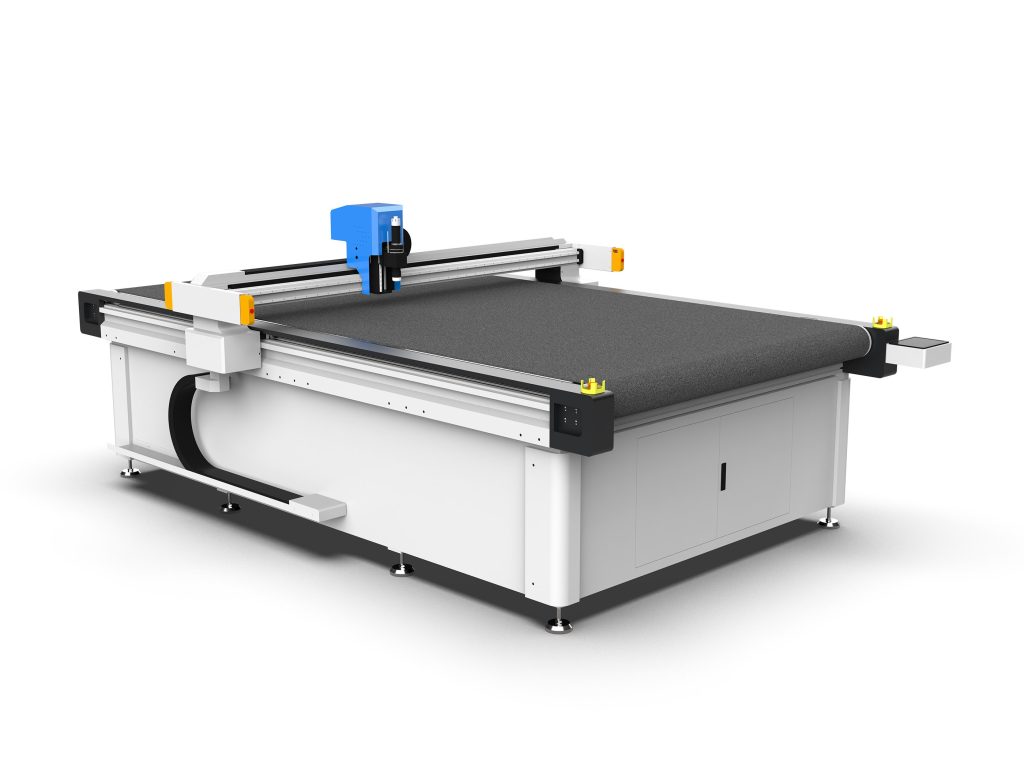
3. Cutting Process Monitoring and Material Retrieval
After starting cutting, observe whether the kerf is continuous and whether there are burrs or material displacement. If line breakage occurs, check whether the blade is worn or whether vacuum adsorption is insufficient. After cutting is completed, turn off adsorption and retrieve materials in layout order to avoid pulling deformation. For multi-layer cutting, label the layer count to prevent confusion.
IV. Common Problems and Solutions
The following problems are commonly encountered during use of fabric sample cutting machines and can be troubleshooted as follows:
- Rough cut edges: Blade wear (replace blade) or vibration frequency too low (increase to above 15000 times/minute).
- Material displacement: Insufficient vacuum adsorption force (check air circuit sealing) or fabric not compacted (pre-press with roller).
- Inconsistent cutting depth: Worktable uneven (recalibrate table surface) or unstable knife pressure (check air source pressure).
- Laser cutting burnt edges: Power too high (reduce by 10-20%) or cutting speed too slow (increase speed), and also check whether auxiliary gas (air blow) is turned on.
- Software error: File path contains Chinese or special characters (change to English path), or graphics exceed working area (re-layout).
V. Maintenance and Service Life Management
Regular maintenance can extend equipment life and maintain precision. The following plan is recommended:
- Daily: Clean the worktable surface and guide rails, check whether vacuum adsorption pipelines are damaged, and remove fiber residue on the blade.
- Weekly: Check blade wear (observe the blade edge with a magnifying glass); replace if cutting resistance increases significantly or burrs appear on cut edges. Oscillating knife blade life is usually 8-15 hours (depending on material).
- Monthly: Lubricate linear guide rails and lead screws (use lithium-based grease), calibrate the home switch, and check belt tension.
- Quarterly: Replace the vacuum pump filter, check whether electrical wiring is loose, and clean dust from the control cabinet.
Laser sample cutting machines also require monthly checks of lens cleanliness (wipe with anhydrous ethanol) and semi-annual calibration of the optical path. Cooling water (if equipped) must be replaced every 3 months to prevent algae growth.
VI. Selection Decision: Balancing Budget and Needs
The price range of fabric sample cutting machines is wide: circular knife models about 20,000-50,000 RMB, oscillating knife models 80,000-200,000 RMB (depending on working area and configuration), and laser models 50,000-150,000 RMB. The following logic is recommended for decision-making:
- Daily sampling volume <10 styles, and materials mainly cotton and linen: circular knife or entry-level oscillating knife is sufficient.
- Daily sampling volume 10-30 styles, materials include chemical fibers and multi-layer: choose mid-range oscillating knife (with vacuum adsorption and automatic feeding).
- Daily sampling volume >30 styles, and fine hollowing is required: laser model + oscillating knife combination, or high-end oscillating knife (with CCD vision alignment).
In addition, prioritize brands with local service outlets to ensure response within 24 hours in case of failure. When signing the contract, clarify the warranty period (usually 1 year) and the supply prices of wearing parts (blades, lenses).
Conclusion
Fabric sample cutting machines are not better simply because they are more expensive; the key is matching one’s own material characteristics, sampling batch, and precision requirements. By understanding cutting principles, mastering key parameters, implementing standardized operations, and performing regular maintenance, sampling efficiency and success rate can be significantly improved. It is recommended to bring actual fabric samples to the manufacturer for trial cutting before procurement, using the measured results as the basis for the final decision.