
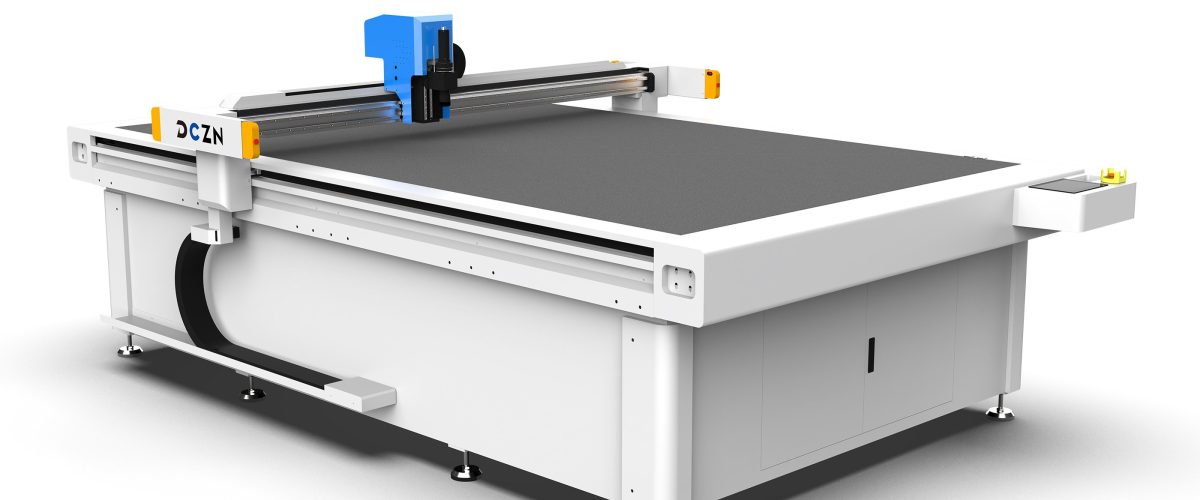
EVA Material Characteristics and Cutting Challenges
EVA (ethylene-vinyl acetate copolymer) is a closed-cell foam material with a density range typically 0.03-0.3 g/cm³ and hardness Shore C 18-70. Its soft, resilient, and easily compressible characteristics bring three major challenges to cutting: first, the material deforms easily under force, leading to reduced dimensional accuracy; second, friction heat generated during blade cutting causes local melting of EVA and blade sticking; third, the closed-cell structure tends to produce burrs or tearing at cut edges. Therefore, EVA cutting machines need to be specially designed for these characteristics.
Main Types and Selection of EVA Cutting Machines
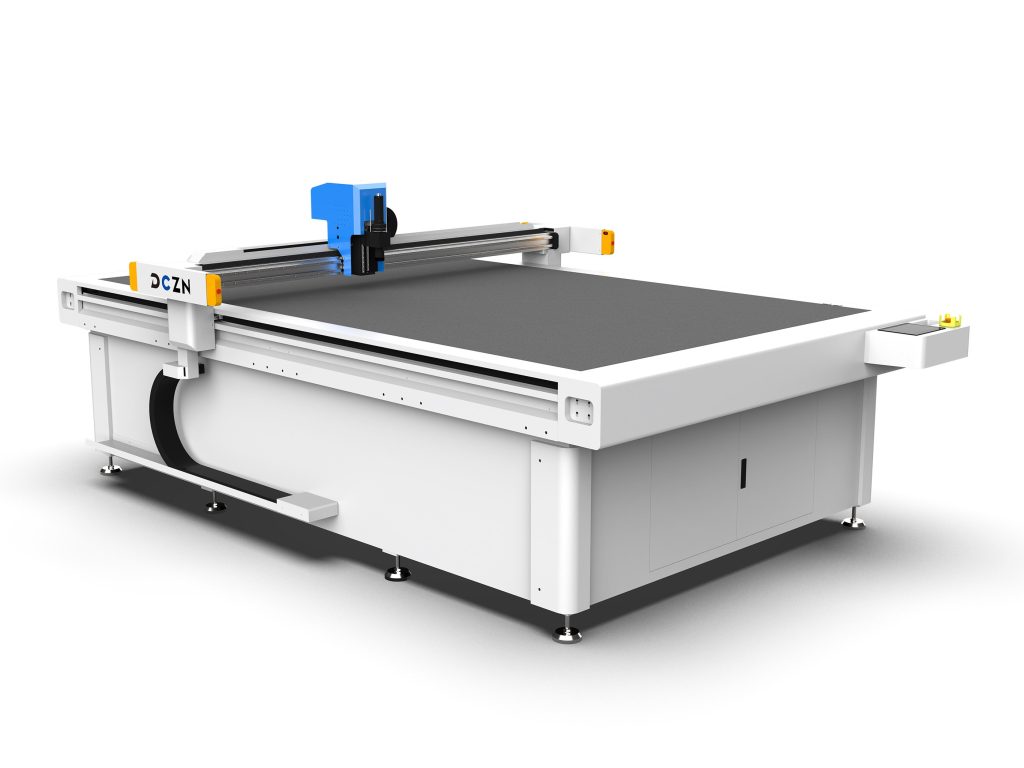
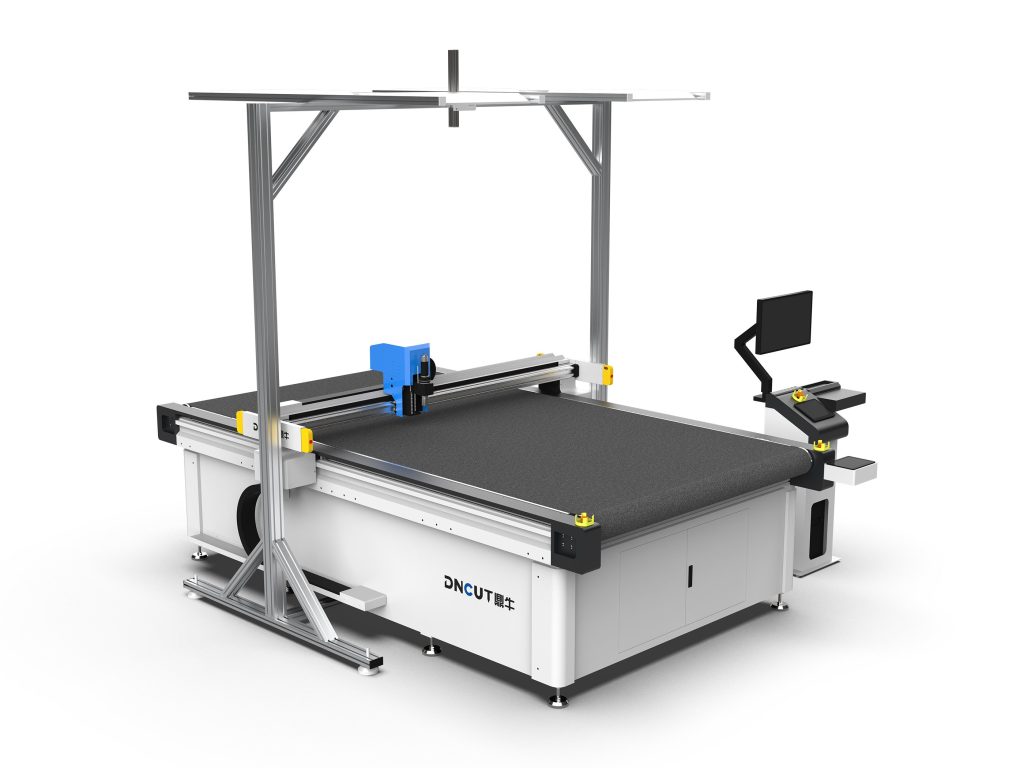
1. Oscillating Knife Cutting Machine
Uses a high-frequency oscillating (8,000-12,000 times per minute) blade for cutting, with a blade amplitude of 0.5-2 mm. Suitable for EVA sheets with thickness of 1-50 mm, with cutting speed up to 60-120 m/min. The oscillating knife applies low pressure to the material and produces flat cuts, making it the mainstream choice for EVA cutting. When selecting, pay attention to the adjustable oscillation frequency range, blade cooling system (optional air cooling), and the suction force of the vacuum adsorption platform (recommended ≥-0.08 MPa).
2. Laser Cutting Machine
Uses CO2 laser (power 60-150 W) for melt cutting, with a narrow kerf (0.1-0.3 mm) and no mechanical stress. However, laser cutting of EVA produces harmful fumes (containing acetic acid gas), requiring an efficient fume extraction and purification system. In addition, laser cutting forms a melted edge, which may affect subsequent bonding. Suitable for fine cutting of thickness ≤10 mm, with speed of about 10-30 m/min.
3. Ultrasonic Cutting Machine
Uses ultrasonic oscillation (20-40 kHz) to locally melt the material with the blade, sealing the edge while cutting to prevent edge fraying. Suitable for EVA sheets with thickness of 0.5-5 mm, with cutting speed of 5-15 m/min. Ultrasonic cutting is highly effective for multi-layer EVA composite materials, but equipment cost is relatively high.
4. Circular Knife Cutting Machine
Suitable for continuous cutting of EVA roll materials with thickness ≤5 mm, with blade speed of 200-600 rpm, combined with a tension control system. Simple structure and easy maintenance, but cut quality is average, mostly used for rough cutting or occasions with low precision requirements.
Selection recommendations: For thickness >10 mm and precision requirements within ±0.2 mm, prioritize oscillating knife; for thin sheets with fine patterns, choose laser; for edge sealing, choose ultrasonic; for large-volume roll materials, choose circular knife.
Key Process Parameter Settings
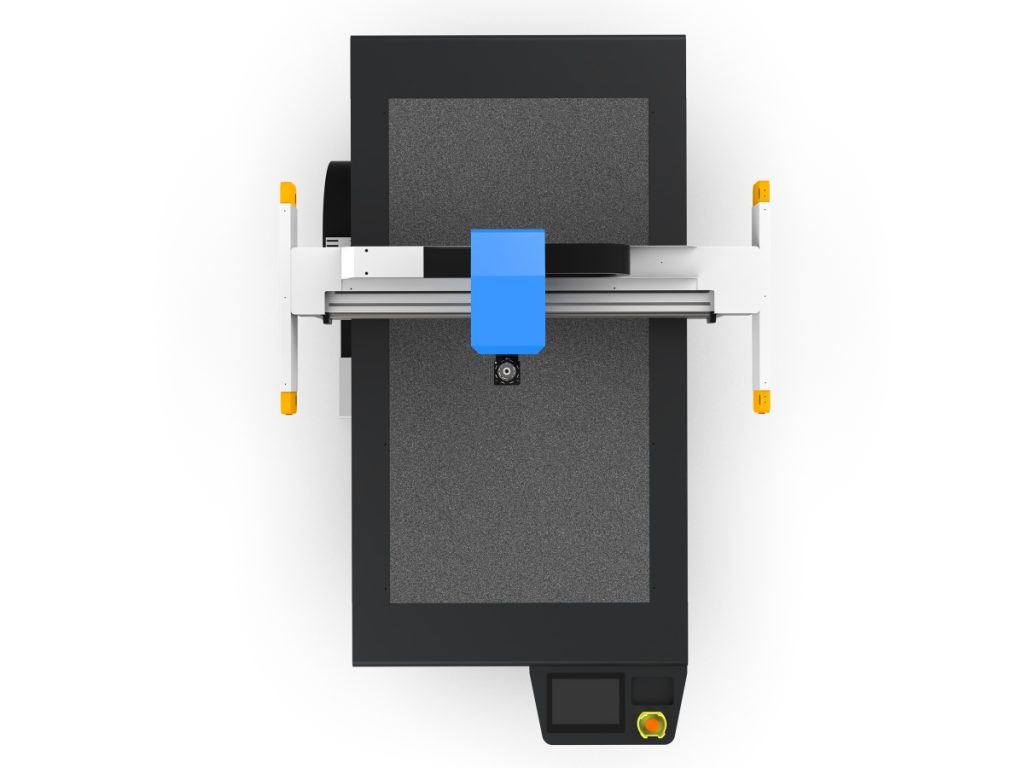
Oscillating Knife Parameters
- Oscillation frequency: Use high frequency (10,000-12,000 times/min) for thin materials (≤5 mm), and low frequency (8,000-9,000 times/min) for thick materials (>20 mm) to reduce friction heat.
- Cutting speed: Inversely proportional to thickness; 80-120 m/min can be set for below 5 mm, and 30-50 m/min is recommended for above 20 mm.
- Blade angle: Commonly 15°, 22°, and 30°. Use 15° for thin materials to reduce cutting resistance, and 30° for thick materials to ensure blade rigidity.
- Vacuum adsorption: Adjust according to material density; low-density EVA (0.05 g/cm³) requires suction force ≥-0.06 MPa, while high-density (0.2 g/cm³) can be reduced to -0.04 MPa.
Laser Parameters
- Power: For every 1 mm increase in thickness, increase power by 10-15 W, e.g., 80 W for 5 mm EVA.
- Cutting speed: Match with power; at 80 W, speed is about 15 m/min.
- Auxiliary gas: Compressed air (0.2-0.4 MPa) for blowing to reduce molten material adhesion.
Ultrasonic Parameters
- Frequency: 20 kHz for thick materials, 40 kHz for thin materials.
- Amplitude: 20-50 μm, adjusted according to thickness.
- Cutting pressure: 0.2-0.5 MPa; excessive pressure will cause material deformation.
Common Issues and Solutions
1. Burrs on Cut Edges
Causes: Blunt blade, too low oscillation frequency, excessive material moisture content. Solutions: Check blade sharpness every 8 hours and use a diamond sharpener; increase oscillation frequency by 10%-20%; dry EVA at 40°C for 2 hours before cutting to control moisture content ≤0.5%.
2. Material Sticking to Blade
Causes: Friction heat causes EVA softening (temperature >60°C). Solutions: Reduce cutting speed by 15%-30%; turn on blade air cooling (air pressure 0.1-0.2 MPa); use surface-coated blades (such as DLC coating).
3. Dimensional Accuracy Out of Tolerance
Causes: Insufficient vacuum adsorption, blade deflection, feeding mechanism slipping. Solutions: Check the sealing strip of the adsorption platform to ensure vacuum degree ≥-0.08 MPa; adjust blade clamping concentricity (runout ≤0.02 mm); cover feed rollers with rubber (Shore A50).
4. Excessive Laser Cutting Fumes
Causes: Insufficient exhaust volume, clogged filtration system. Solutions: Set exhaust volume at 200 m³/h per 100 W of power; clean filter cotton every two weeks and replace activated carbon every three months.
Maintenance Points
- Daily: Clean debris from the table, check blade wear (observe the cutting edge with a magnifying glass), lubricate guide rails (use lithium-based grease).
- Weekly: Calibrate the flatness of the vacuum adsorption platform (error ≤0.1 mm), check drive belt tension (10 mm depression is appropriate).
- Monthly: Replace oscillating blades (even if not blunt, replacement is recommended after 300 hours of continuous use), clean laser lenses (with anhydrous ethanol).
- Quarterly: Check ultrasonic transducer impedance (replace if deviation >10%), calibrate servo motor encoder.
Safety and Environmental Protection Notes
Dust generated during EVA cutting (especially fumes from laser cutting) must be purified, and dust concentration should be controlled below 1 mg/m³. Equipment must be well grounded (grounding resistance ≤4 Ω), light curtain protection installed in the oscillating knife area, and interlocked doors set up in the laser area. Operators should wear dust masks (KN95 level) and anti-static gloves.
Conclusion
The selection and process optimization of EVA cutting machines require comprehensive consideration of material thickness, precision requirements, production efficiency, and environmental safety. By reasonably selecting machine models, accurately setting parameters, and performing standardized maintenance, cutting quality and equipment life can be significantly improved. It is recommended to conduct small-sample tests before mass production to determine the optimal process window.