
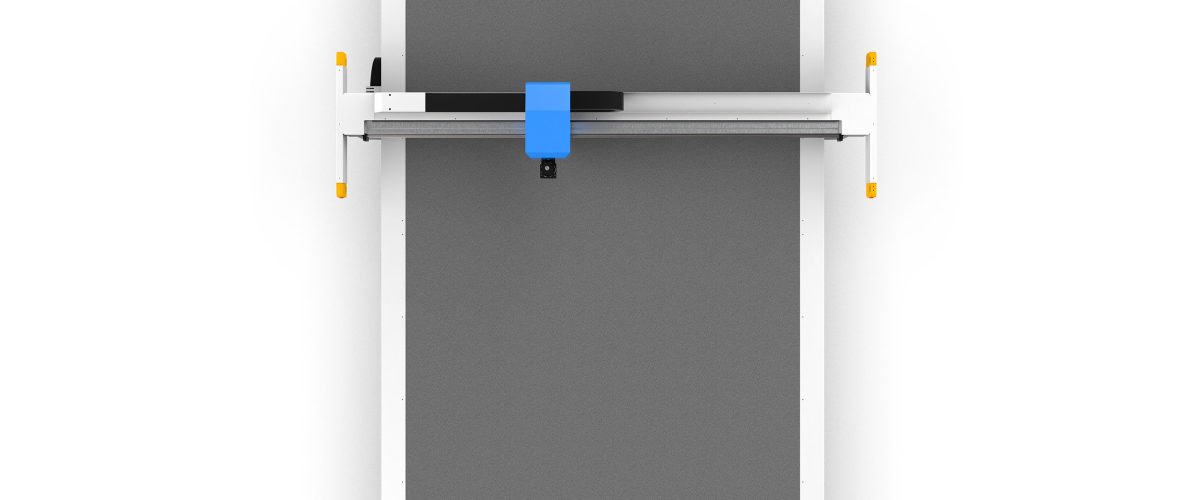
Mat Cutting Machine: The Core Equipment for Efficient and Precise Cutting
Mat materials are diverse, including rubber, PVC, EVA, nylon, polyester fiber, etc., with significant differences in thickness, hardness, and elasticity. Traditional manual cutting or simple mechanical cutting cannot guarantee precision and efficiency, while professional mat cutting machines use oscillating knife or laser technology to achieve high-precision, high-speed automated cutting. This article will delve into the types, key technical parameters, selection points, and daily maintenance of mat cutting machines, providing practical references for your production.
Main Types of Mat Cutting Machines
Based on cutting principles, mat cutting machines are mainly divided into three categories:
- Oscillating Knife Cutting Machine: Uses a high-speed up-and-down oscillating blade to cut materials, suitable for medium to high-density mats such as rubber, PVC, EVA. Cutting speed can reach 1000-3000 mm/s, precision ±0.1 mm. Blade amplitude is typically 2-5 mm, frequency 2000-5000 times/minute. Advantages include no thermal effect and smooth cuts, especially suitable for multi-layer composite materials.
- Laser Cutting Machine: Melts or vaporizes materials through a high-energy laser beam, suitable for thin mats (such as PVC printed mats). Cutting speed can exceed 10000 mm/s, precision ±0.05 mm. However, laser cutting generates smoke and burnt edges, is not suitable for halogen-containing materials like rubber, and equipment costs are higher.
- Circular Knife Cutting Machine: Uses a rotating circular blade for cutting, suitable for thinner and homogeneous materials such as EVA foam mats. Simple structure, low cost, but limited ability to cut complex shapes, with precision generally around ±0.5 mm.
For most mat production scenarios, oscillating knife cutting machines are the first choice due to their wide material adaptability and good cut quality.
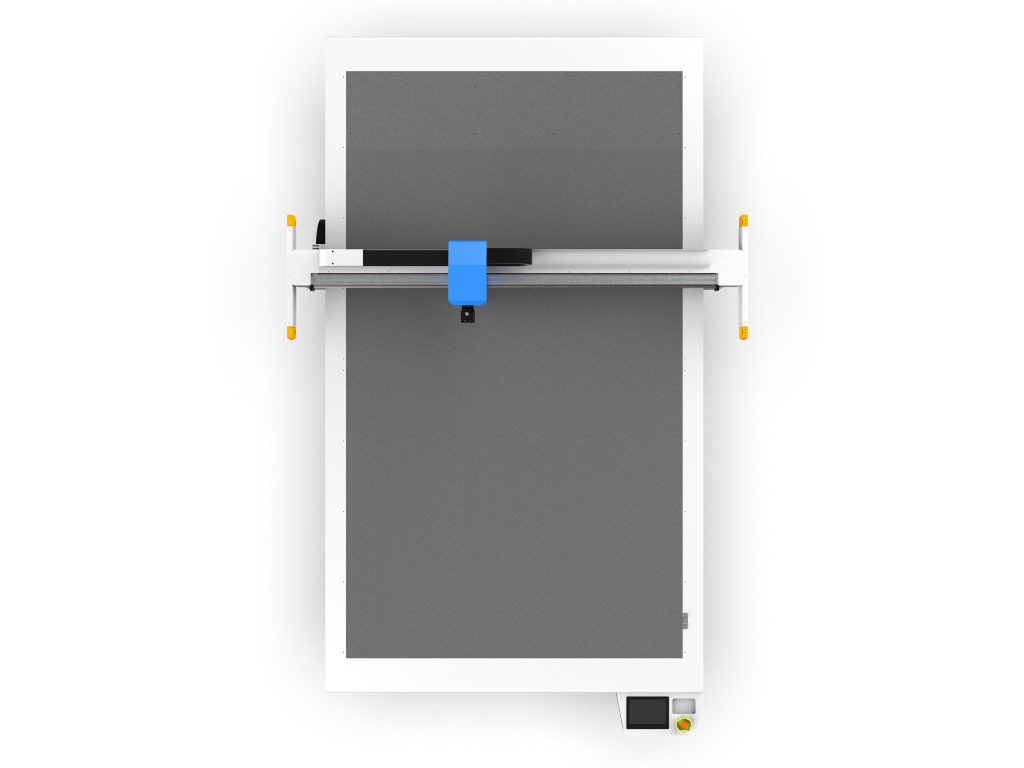
Analysis of Key Technical Parameters
When purchasing a mat cutting machine, focus on the following parameters:
- Cutting Thickness: Oscillating knife models can typically cut flexible materials of 0.5-50 mm, depending on blade length and amplitude. For example, cutting 20 mm thick rubber mats requires a configuration with 5 mm amplitude and 30 mm blade length.
- Cutting Speed: Directly affects productivity. The actual cutting speed of oscillating knife machines is influenced by material hardness and pattern complexity, generally between 500-2000 mm/s. For simple straight cuts, it can approach the upper limit; complex curves require reduced speed to ensure precision.
- Positioning Accuracy: Usually expressed as repeat positioning accuracy, high-quality models can achieve ±0.05 mm. High precision depends on servo motors and precision guide rails, especially important for mats requiring high splicing accuracy (such as puzzle mats).
- Working Area Size: Common specifications include 1600×2500 mm, 2100×3100 mm, etc. When choosing, consider the maximum size of finished mats and layout efficiency. Large working areas reduce splicing and improve material utilization.
- Control System: Mainly uses DSP or PLC control, supports CAD file import (DXF, PLT formats). Some high-end models are equipped with automatic layout software, which can optimize cutting paths and save 5%-15% of materials.
How to Choose the Right Mat Cutting Machine
Selection requires comprehensive consideration of material characteristics, production scale, precision requirements, and budget:
- Material Matching: Rubber mats are hard and highly elastic, so choose oscillating knife models with large amplitude (≥4 mm) and high frequency (≥3000 times/minute), equipped with special wavy-edge blades to reduce cutting resistance. EVA mats are softer, standard edges can be used. For PVC printed mats, if no burnt edges are required, laser cutting can be considered for higher efficiency.
- Capacity Assessment: Calculate the required speed based on daily output. For example, for a daily output of 500 mats of 1m×1m, assuming each mat has an 8-meter cutting path and the equipment operates effectively for 8 hours, the required average speed is 8000 m / (8×3600 s) ≈ 0.28 m/s = 280 mm/s. Considering preparation and material change time, it is recommended to choose a model with a speed upper limit of 1000 mm/s or more.
- Precision Requirements: Ordinary anti-slip mats require a tolerance of ±1 mm, while puzzle mats or mats with fine patterns may require ±0.2 mm. High-precision models are typically 30%-50% more expensive.
- Automation Level: Functions such as automatic feeding, automatic layout, and automatic tool change can reduce manual intervention. For large-scale standardized production, it is recommended to choose models with automatic feeding systems, which can increase efficiency by over 20%.
- Budget and After-Sales: Domestic equipment prices are about 80,000-200,000 RMB, imported equipment 300,000-800,000 RMB. Pay attention to the supply of consumables such as blades and felt, and after-sales service response time.
Operation and Maintenance Points
Correct operation and regular maintenance can extend equipment life and maintain cutting quality:
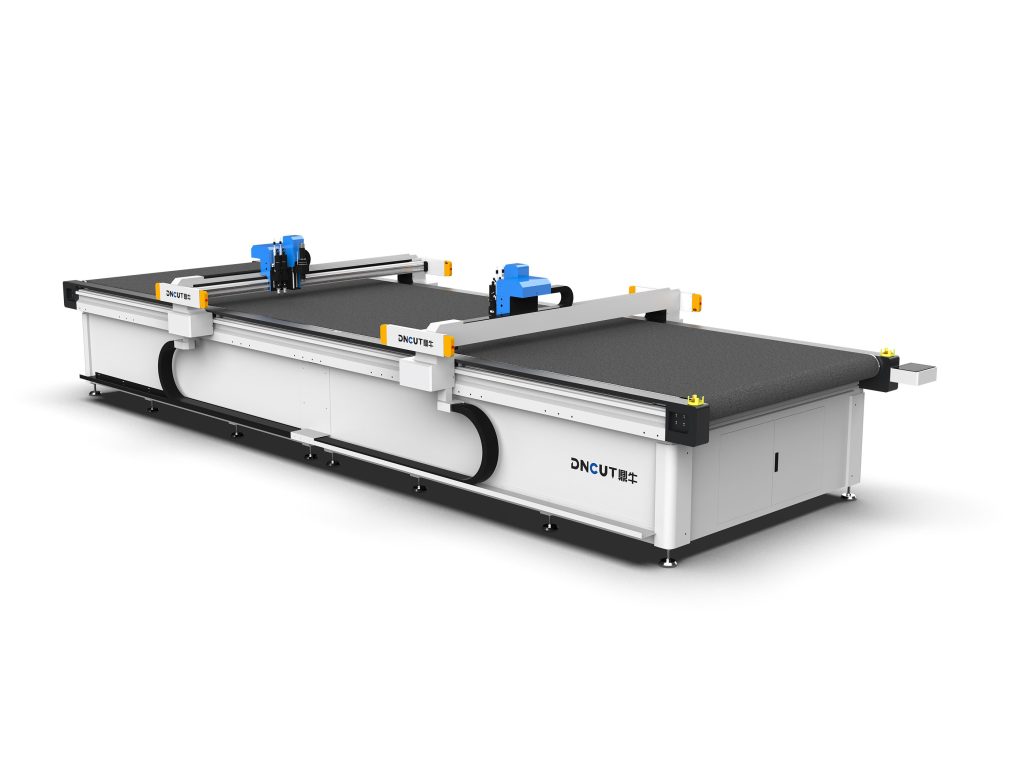
- Blade Maintenance: Oscillating blades need regular wear checks, usually requiring sharpening or replacement after cutting 500-1000 meters. Wear is faster when cutting rubber, so it is recommended to check every shift. Ensure moderate clamping force when installing blades; too loose causes cutting deviation, too tight damages the blade holder.
- Table Maintenance: The cutting table is usually covered with felt or plastic pad to protect the blade tip and create vacuum adsorption. Worn felt affects adsorption, causing material displacement. It is recommended to replace the felt every 3-6 months, or adjust according to usage frequency.
- Lubrication and Cleaning: Guide rails and lead screws need monthly cleaning and greasing. Dust generated during cutting (especially fiber mats) should be promptly removed with a vacuum cleaner to avoid entering the transmission system.
- Parameter Optimization: Adjust cutting speed, blade amplitude, and feed method for different materials. For example, when cutting thick rubber, reduce speed to 300-500 mm/s and use multi-pass layered cutting to reduce material deformation.
Common Problems and Solutions
Problem 1: Uneven Cutting Edges
Possible causes: dull blade, too small amplitude, too fast speed. Solutions: replace blade, increase amplitude to 4-5 mm, reduce cutting speed by 20%.
Problem 2: Material Displacement
Possible causes: insufficient vacuum adsorption, aged felt, warped material. Solutions: check vacuum pump pressure (should be ≥0.06 MPa), replace felt, for warped materials, use a pressure roller to flatten first.
Problem 3: Decreased Cutting Precision
Possible causes: worn guide rails, loose timing belt, servo parameter drift. Solutions: check guide rail straightness (error should be ≤0.02 mm/m), adjust timing belt tension, recalibrate servo system.
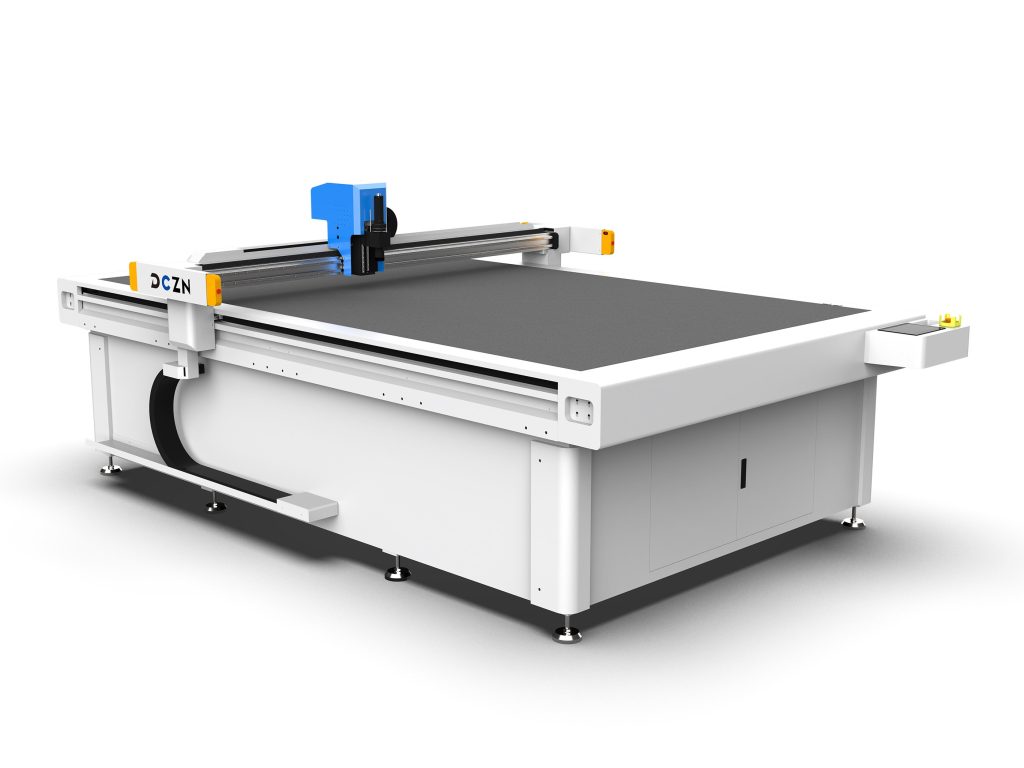
Problem 4: Blade Breakage
Possible causes: too fast cutting speed, hard impurities in material, improper blade installation. Solutions: reduce speed, install material detection device, install blade according to specifications.
Industry Trends and Outlook
As the mat industry moves towards personalization and customization, mat cutting machines are evolving towards intelligence and flexibility. Future trends include:
- Visual Recognition and Automatic Correction: Use cameras to identify material position and patterns for automatic alignment cutting, especially suitable for printed mats.
- Multi-Tool Head Collaboration: Equipped with oscillating knife, circular knife, punching head, and other tools to complete cutting, punching, creasing, and other processes in one pass.
- IoT and Remote Maintenance: Equipment networking enables remote monitoring, fault warning, and parameter optimization, reducing downtime.
- Energy Saving and Environmental Protection: Upgrades to smoke treatment systems for laser cutting, and application of low-energy oscillating knife drive technology.
Choosing a suitable mat cutting machine not only improves product quality and production efficiency but also reduces long-term operating costs. It is recommended to bring actual material samples for trial cutting before purchase and to investigate the technical support and after-sales service capabilities of the equipment supplier.