
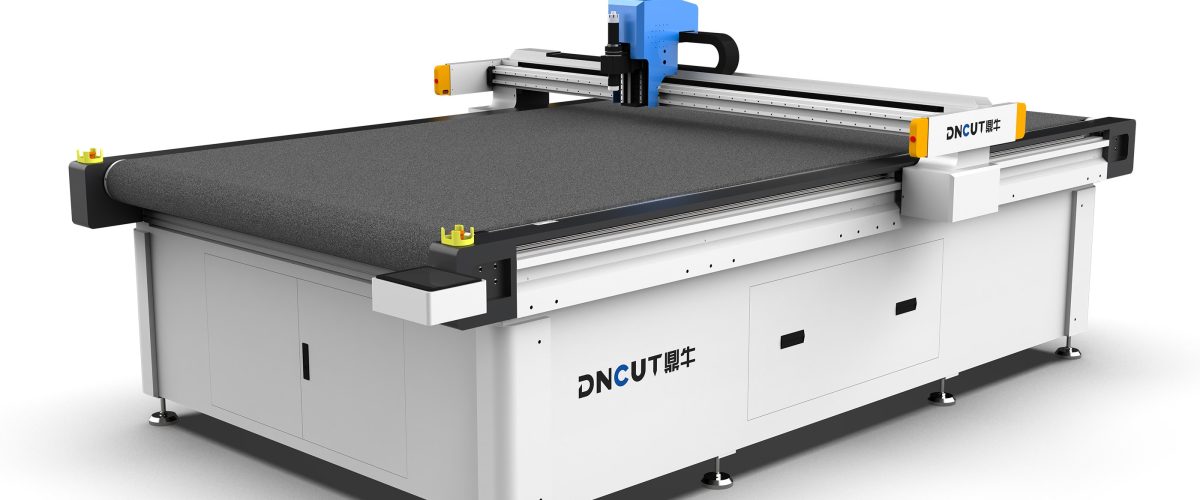
What is a film cutting machine?
A film cutting machine is a CNC cutting equipment specially used for cutting film materials (such as PET, PVC, PE, TPU, PI, optical film, protective film, etc.), and is widely used in product R&D and incoming material inspection in electronics, automotive, packaging, medical and other industries. Its core function is to precisely cut films into the required shapes according to design drawings, for dimensional verification, assembly testing, or small-batch production.
Compared with traditional manual cutting or die punching, the film cutting machine has advantages such as high precision, no need for mold making, rapid graphic modification, and adaptability to small-batch and multi-variety production. For film materials with a thickness of 0.05mm-2mm, the film cutting machine can achieve cutting accuracy within ±0.1mm, and the cut is flat and burr-free.
Main types of film cutting machines
1. Oscillating knife cutting machine
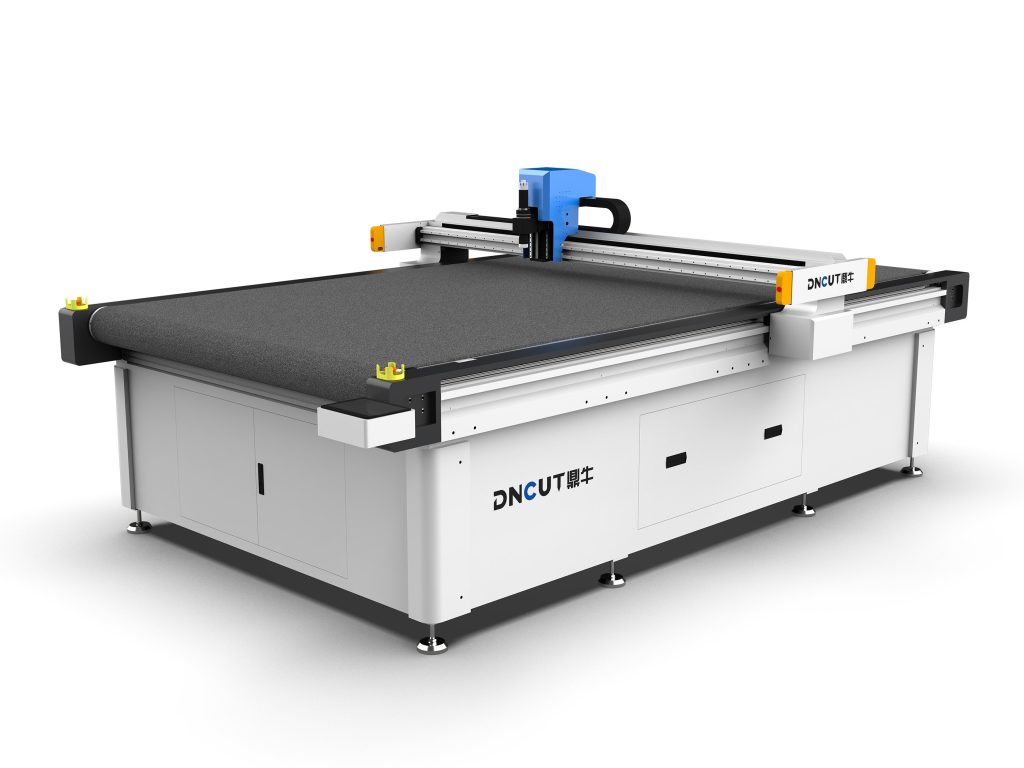
It uses a high-frequency vibrating blade (vibration frequency up to 10,000-20,000 times per minute) for cutting. The blade moves vertically up and down, applying minimal lateral force to the material, so it is particularly suitable for cutting flexible films, tapes, foam, and similar materials. The oscillating knife cutting machine can be equipped with various knife heads, such as circular knives, pointed knives, and pneumatic knives, to accommodate films of different thicknesses and adhesiveness.
2. Laser cutting machine
It uses a laser beam to melt or vaporize the material to achieve cutting, with high precision (up to ±0.05mm) and a narrow kerf, suitable for cutting thin films (usually thickness <1mm). However, laser cutting produces a heat-affected zone, which may cause carbonization or melting of the film edges, so it must be used with caution for heat-sensitive materials (such as PVC and PI). In addition, laser cutting equipment is relatively costly and requires an exhaust system.
3. Blade cutting machine (drag knife)
By dragging a sharp blade across the film surface to cut, it has a simple structure and low cost, and is suitable for cutting thinner films with lower hardness. However, drag knife cutting is prone to drag deformation on sticky materials, and the blade wears quickly and needs frequent replacement.
4. Ultrasonic cutting machine
Ultrasonic vibration (frequency 20kHz-40kHz) is used to make the blade produce high-frequency vibration. During cutting, the friction resistance is small, the cut is smooth, and there are no burrs. It is especially suitable for cutting thermoplastic films (such as PE, PP) and composite films. Ultrasonic cutting does not produce a heat-affected zone, but the equipment price is relatively high, and the cutting speed is relatively slow.
Core parameters and selection points of film sample cutting machine
Cutting accuracy
Cutting accuracy is a key indicator of film sample cutting machines, usually expressed as ±mm. For films used in the electronics industry (such as FPC cover films), the accuracy requirement can reach ±0.05mm; for general packaging films, ±0.2mm is sufficient. When selecting a model, you should choose equipment with appropriate accuracy according to the product tolerance requirements.
Cutting thickness range
Different cutting methods have different adaptability to thickness. Oscillating knife cutting machines can cut films from 0.1mm to 2mm; laser cutting machines are suitable for 0.05mm to 1mm; ultrasonic cutting machines are suitable for 0.1mm to 1.5mm. If thicker materials need to be cut (such as 3mm or more), a high-power oscillating knife or special blade head should be selected.
Worktable Dimensions
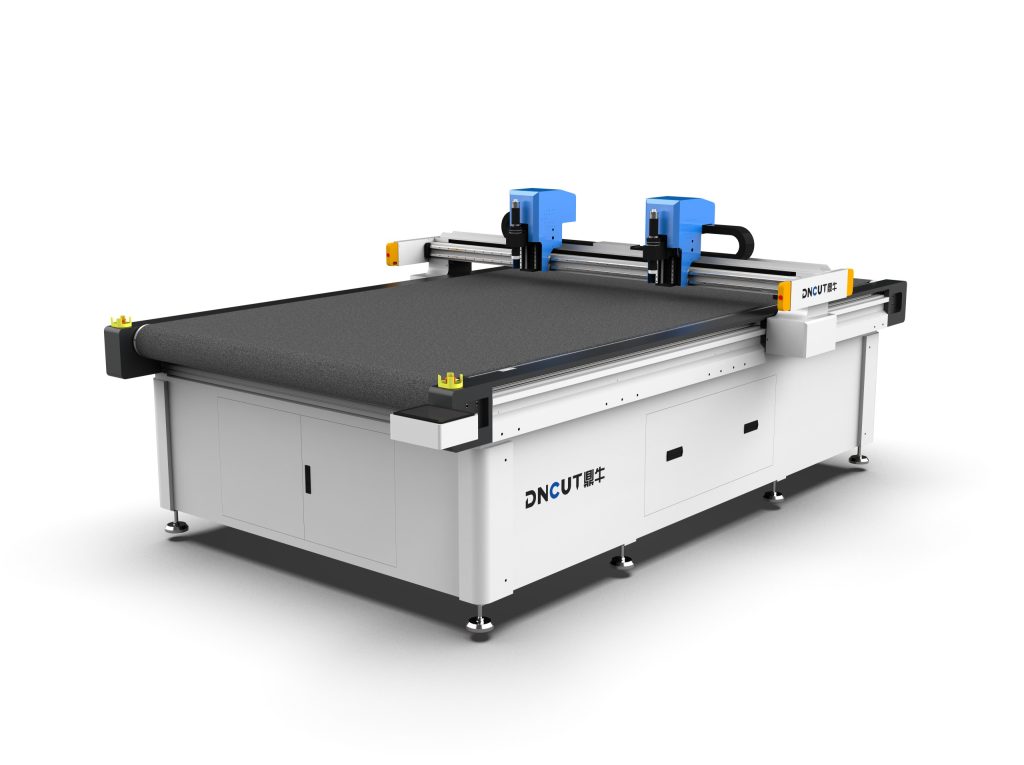
Select the worktable size according to the dimensions of the commonly used film roll or sheet material. Common table sizes include 600mm×500mm, 1000mm×800mm, 1600mm×1200mm, etc. For roll material cutting, also consider whether a feeding device is equipped.
Cutting Speed
Cutting speed affects production efficiency and is usually expressed in mm/s or m/min. The oscillating knife cutting speed can reach over 1000mm/s, and the laser cutting speed can reach 5000mm/s, but the actual speed is affected by material thickness and graphic complexity. For prototyping scenarios, speed is not the primary factor; precision and flexibility are more important.
Software and Graphic Compatibility
The film sample cutting machine should support the import of common CAD formats (such as DXF, DWG, AI, PLT), and have graphic editing, layout, and path optimization functions. Some devices also support automatic recognition of registration marks (such as cross marks and QR codes) for registration cutting, which is suitable for cutting printed films.
Adsorption and Fixation Methods
Film materials are lightweight and prone to displacement during cutting, so reliable fixation methods are required. Common methods include vacuum adsorption (through a porous tabletop or adsorption pads), electrostatic adsorption, and adhesive fixation. Vacuum adsorption is the most commonly used; it is necessary to ensure that the adsorption force is uniform and adjustable to avoid film deformation caused by excessive suction.
Film sample cutting machine selection steps
- Clarify material characteristics: Determine the film’s material, thickness, tackiness, whether it has adhesive, and whether it is already printed. For example, adhesive protective films require an anti-stick knife head or ultrasonic cutting; optical films must avoid scratches and are best cut with an oscillating knife.
- Determine precision requirements: Based on the tolerance in the product drawing, choose equipment whose cutting accuracy is better than 1/3 of the tolerance. For example, for a tolerance of ±0.1mm, choose equipment with accuracy of ±0.03mm or better.
- Assess production batch size: If prototyping is the main focus, prioritize flexibility and fast job changeover; for small-batch production, consider efficiency and degree of automation (such as automatic feeding and multi-head switching).
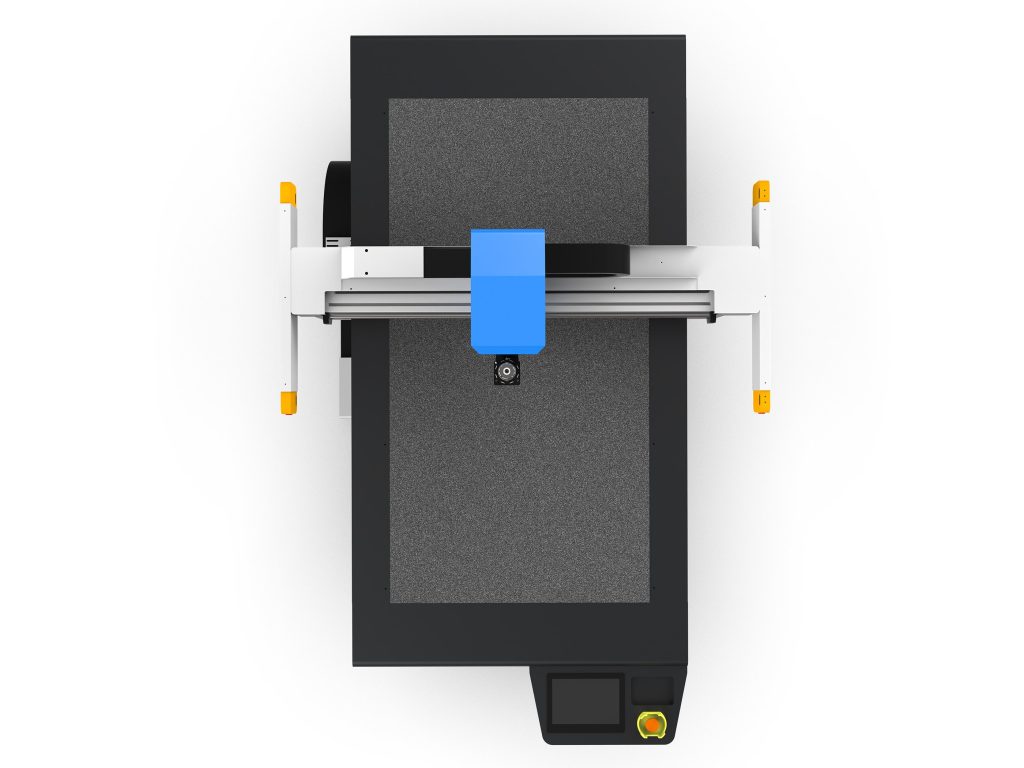
- Examine equipment rigidity: The frame structure (such as cast iron or aluminum profile) affects cutting stability. High-precision cutting requires a rigid gantry structure.
- Test the cutting results: Require the supplier to provide a sample machine test, and check cut quality (whether there are burrs, melted edges, or dragging), dimensional accuracy, and repeat positioning accuracy.
- Consider after-sales service: Choose a supplier with a local service team to ensure timely supply of consumables such as blades and vacuum pads, and guaranteed software upgrades.
Operating Tips for Film Sample Cutting Machines
Tool Selection and Installation
Select the blade angle according to film thickness and material: thin films (0.5mm) are best suited to 45° or 60° blades. During installation, ensure the blade protrusion length is appropriate (usually 1.5-2 times the material thickness); too short tends to cause incomplete cutting, while too long tends to cause breakage. For adhesive films, Teflon-coated blades can be selected to reduce blade sticking.
Cutting Parameter Settings
Oscillating knife cutting requires setting the vibration frequency, cutting speed, and knife penetration depth. For PET film, it is recommended to use a vibration frequency of 15,000 times/min, a speed of 500 mm/s, and a knife penetration depth of 0.05 mm (slightly greater than the material thickness). For soft PVC, the frequency can be reduced to 10,000 times/min and the speed to 300 mm/s to avoid material deformation. Laser cutting requires setting the power, speed, and focal length; for thin films, low power and high speed should be used to reduce thermal effects.
Film Fixation Methods
When using vacuum adsorption, ensure that the film fits flat against the table surface; bubbles can first be removed with a scraper. For small-sized samples, they can be adhered to an adsorption pad and then adsorbed as a whole. For roll materials, a feed rack can be used together with tension control to keep the film tension uniform.
Path Optimization
Set the cutting sequence properly in the cutting software, inside first and then outside, to reduce idle travel. For dense patterns, common-edge cutting can be used to reduce repeated paths. Set lead-in and lead-out lines to avoid marks at the starting point.
Common Problem Handling
- Burrs at the cut edge: Check whether the blade is worn, increase the oscillation frequency or reduce the cutting speed.
- Film displacement: Increase the vacuum adsorption force, or use double-sided tape to secure the edges.
- Incomplete cutting: Increase the blade penetration depth, check whether the blade tip is worn, or replace it with a sharper blade.
- Thermal damage (laser): Reduce power, increase speed, and increase the purge of auxiliary gas (such as nitrogen).
Maintenance and Care
Regularly clean the table and guide rails to keep the equipment clean. Check blade wear every shift and replace in time (usually replacement is required after cutting 10,000-20,000 meters). Clean the vacuum adsorption pad once a month to avoid blockage. Lubricate transmission components (such as lead screws and guide rails) with grease every quarter. Back up software parameters regularly to prevent data loss.
Summary
The film sample cutting machine is key equipment for cutting and proofing film materials. When selecting a model, material characteristics, precision requirements, batch size, and budget need to be comprehensively considered. Because of its strong adaptability and high precision, the oscillating knife cutting machine has become the first choice for most film proofing scenarios. Correct use and maintenance of the equipment can significantly improve proofing efficiency and quality. It is recommended to fully test before purchasing and to choose a supplier with technical support.