
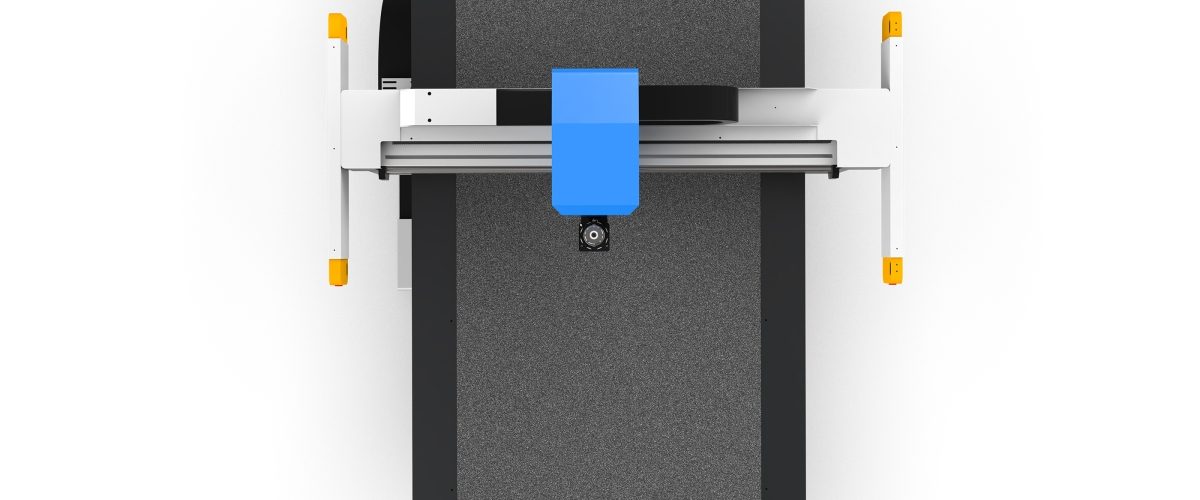
Canvas Cutting Machine: A Complete Guide from Selection to Efficient Production
Canvas is a high-density, thick woven fabric widely used in tents, backpacks, canvas shoes, truck tarpaulins, outdoor sunshades, and other fields. Due to its large thickness and tight fibers, traditional manual cutting or ordinary blade cutting has low efficiency, poor precision, and is prone to producing frayed edges. The canvas cutting machine (usually referring to an oscillating knife cutting machine or laser cutting machine) has become essential equipment for large-scale production. From a practical production perspective, this article systematically explains the selection, parameter settings, operating techniques, and maintenance points of canvas cutting machines to help you avoid common pitfalls.
I. Types of Canvas Cutting Machines and Their Application Scenarios
According to the cutting principle, canvas cutting machines are mainly divided into three categories:
- Oscillating knife cutting machine: Cuts materials with a high-frequency oscillating blade (frequency typically 10,000-20,000 strokes/minute), producing flat cuts with no frayed edges, suitable for cutting multi-layer canvas (e.g., 2-10 layers). The oscillating knife generates no heat-affected zone and will not scorch or melt canvas fibers, making it the mainstream choice for canvas cutting.
- Laser cutting machine: Uses a high-energy laser beam to melt or vaporize the material. Cutting speed is fast, but it leaves scorch marks (yellow edges) along the cut edge, with a noticeable effect on light-colored canvas. Laser cutting is better suited for single-layer thin canvas or scenarios requiring edge sealing (e.g., to prevent unraveling), but note that melting of the polyester component in canvas may produce an odor.
- Circular knife cutting machine: Cuts with a rotating circular blade, suitable for straight-line cutting of a single layer or a small number of layers, with low cost, but it cannot handle complex curves and fine patterns, and layers tend to slip during multi-layer cutting.
For most canvas product manufacturing (such as bags, tents, and tarpaulins), it is recommended to use an oscillating knife cutting machine, especially models equipped with an automatic feeding system and CCD vision positioning, which can achieve high-precision, high-efficiency continuous cutting.
II. Key Selection Parameters: More Than Just Price
When purchasing a canvas cutting machine, the following parameters directly affect performance and return on investment:
1. Cutting thickness and number of layers
The weight range of canvas is usually 200-600g/m², with a thickness of 0.5-2 mm. The cutting capacity of an oscillating knife cutting machine is expressed in “number of layers” or “total thickness”. For example, a standard oscillating knife cutting machine can cut 10 layers of 300g/m² canvas (total thickness of about 10 mm). If your orders are mainly heavy canvas (such as 600g/m² and above), you need to choose a high-power oscillating knife (power ≥1000W) and reinforced blades. Note: The “maximum cutting thickness” stated by manufacturers usually refers to a single layer of material; when cutting multiple layers, it needs to be converted proportionally.
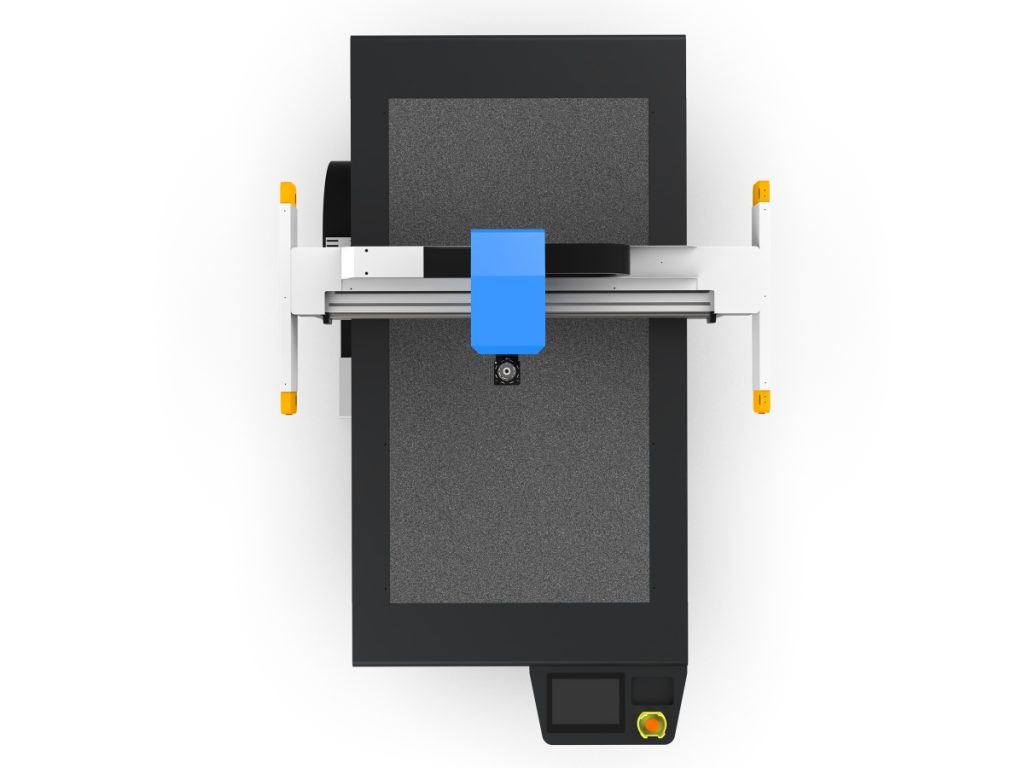
2. Effective cutting area
Choose the worktable according to your typical cut piece dimensions. Common specifications include 1600 mm×2500 mm, 2100 mm×3000 mm, etc. If the cut pieces are large (such as truck tarpaulins), it is recommended to choose a model with an automatic feeding system, which can achieve unlimited-length cutting and avoid frequent loading and unloading.
3. Cutting accuracy and repeat positioning accuracy
The accuracy requirement for canvas cutting is usually within ±0.5 mm. Pay attention to the equipment’s repeat positioning accuracy (should be ≤0.1 mm) and cutting accuracy (affected by blade wear and material fixation method). High-precision models use servo motors + rack-and-pinion transmission and are equipped with a vacuum adsorption table to ensure the material does not shift during cutting.
4. Vacuum adsorption system
Canvas has low air permeability, but multi-layer cutting still requires strong vacuum adsorption to secure the material. The recommended vacuum pump power is ≥5.5kW, and the adsorption force is ≥200mbar. Some low-end models use fan adsorption, which is noisy and provides insufficient adsorption force, causing the material to slip during cutting and resulting in non-vertical cuts.
5. Tools and tool holders
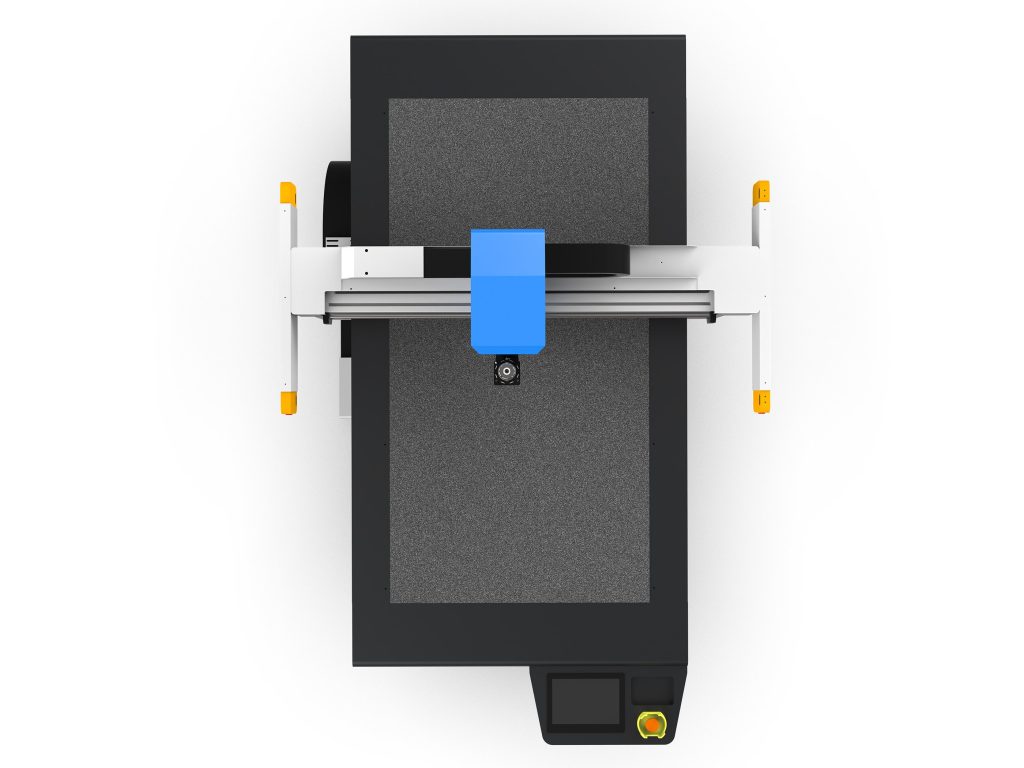
Oscillating knife blades come in different angles (such as 30°, 45°, 60°) and shapes (straight edge, serrated edge). For cutting canvas, a 45° straight-edge blade is recommended—sharp and durable. The blade holder should have an automatic lubrication system to reduce wear. In addition, check whether a cooling device (air cooling) is equipped to prevent the blade from overheating during continuous operation, which could cause the canvas edge to melt (especially polyester-containing canvas).
6. Control System and Software
Mainstream control systems support DXF, PLT, AI and other formats, and feature automatic nesting, path optimization, and breakpoint resume cutting. The operation interface should be a Chinese touchscreen for workers to get started quickly. If your orders are mainly small-batch, multi-variety, it is recommended to choose a model with projection positioning or CCD visual recognition, which can quickly align prints or patterns.
III. Operating Tips: How to Cut High-Quality Canvas Pieces
1. Material Preprocessing
Before cutting, canvas should undergo pre-shrinking treatment (if there are subsequent washing requirements) and flattening treatment. Rolled canvas needs to be unrolled and laid flat for 24 hours in advance to release internal stress and avoid deformation of cut pieces after cutting. For multi-layer cutting, thin paper or film should be placed between each layer of canvas to prevent interlayer adhesion and sliding.
2. Parameter Settings
Typical parameters for oscillating knife cutting of canvas:
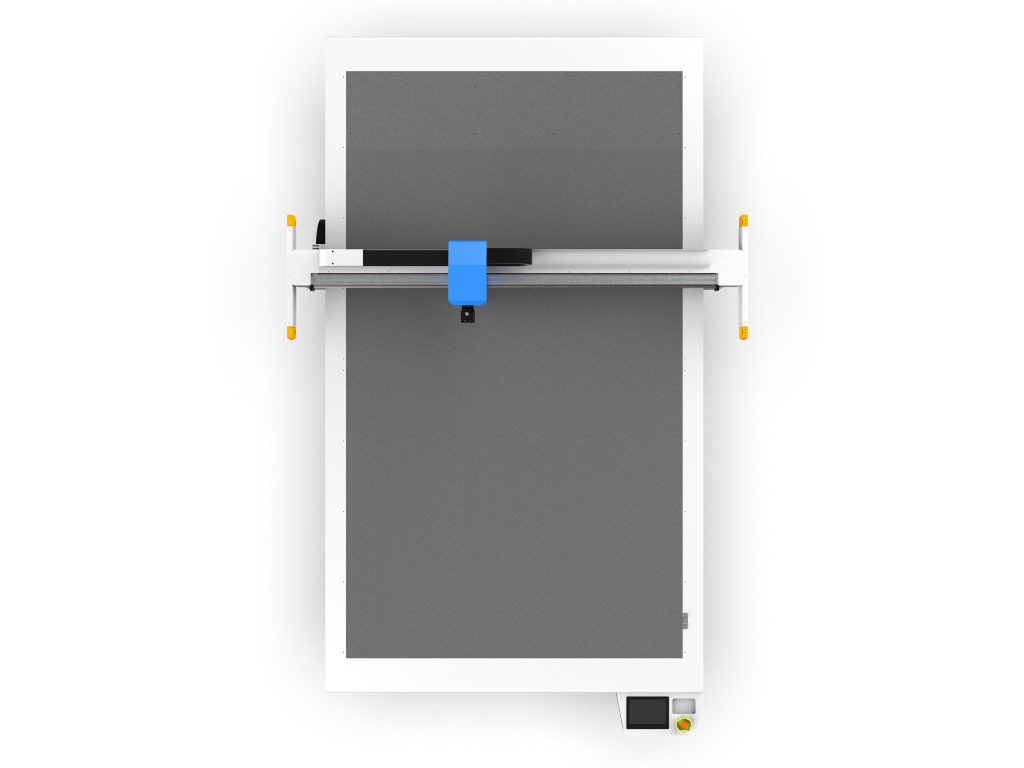
- Vibration frequency: 12000-15000 times/minute (use the lower value for thick canvas, the higher value for thin canvas)
- Cutting speed: 200-400 mm/s (adjust according to the number of layers and thickness; the more layers, the slower the speed)
- Blade downforce: 0.5-1.0 mm (ensure full cut-through without excessive penetration into the table surface)
- Vacuum adsorption: enabled, pressure adjusted according to the number of layers (increase adsorption force for multiple layers)
Note: When cutting a new material for the first time, it is recommended to test-cut a small sample first to observe the cut quality and blade wear.
3. Fixing and Layout
When using the vacuum adsorption table, ensure the canvas fully covers the adsorption area, and seal the edges with tape to prevent air leakage. During layout, place the cut pieces as close together as possible to reduce waste, but leave a cutting gap of at least 10 mm to avoid blade interference. For canvas with directionality (such as grain direction), the layout must remain consistent.
4. Common Issues and Solutions
- Rough cut edges: The blade is dull or the vibration frequency is too low. Replace the blade or increase the frequency.
- Dimension deviation of cut pieces: Material slipping or insufficient suction. Check the vacuum suction system, increase suction force, or use clamps for assistance.
- Blade breakage: Cutting speed is too fast or the blade angle is not suitable for thick materials. Reduce speed and replace with a large-angle blade (e.g., 60°).
- Burnt edges: The oscillating knife generally does not cause burning. If it occurs, check whether laser mode was mistakenly used or the blade is overheating (check the cooling system).
IV. Maintenance and Care: Extend Equipment Lifespan
Canvas cutting machines are precision equipment, and daily maintenance directly affects cutting accuracy and failure rates:
- Daily: Clean canvas debris around the table and knife holder, check whether the blade is loose or worn, and clean the vacuum suction holes.
- Weekly: Check the tension of the drive belt (if any), lubricate the guide rails and lead screws (use lithium-based grease), and clean the vacuum pump filter.
- Monthly: Calibrate cutting accuracy (using a standard test pattern), check electrical connections, and replace worn blades and carbon brushes (if any).
- Quarterly: Perform a comprehensive inspection of servo motors and drivers, clean dust from the control cabinet, and test safety devices (such as emergency stop buttons and light curtains).
Blades are consumable items; it is recommended to keep 5-10 spare blades in stock. When cut quality declines or cutting resistance increases, replace the blade promptly to avoid damaging the blade holder.
V. Return on Investment and Selection Recommendations
A mid-range domestic oscillating knife cutting machine (1600 mm×2500 mm, with vacuum adsorption) costs about 80,000-150,000 RMB, while imported brands (such as Zünd and Gerber) cost over 300,000 RMB. For small and medium-sized canvas product factories with a daily cutting volume of 500-1000 pieces, domestic equipment can already meet the demand. When selecting a model, focus on:
- Whether the manufacturer provides sample testing for canvas cutting (preferably send your material for a trial cut)
- After-sales service response time (it is recommended to choose a brand with local service outlets)
- Whether the software supports free upgrades and custom layout functions
- Whether the equipment is expandable (such as subsequently adding automatic feeding or CCD)
If your orders are mainly single-layer thick canvas and you have requirements for edge sealing, you can consider a laser cutting machine, but you need to accept the issue of yellowing edges. For most canvas processing enterprises, the oscillating knife cutting machine has obvious comprehensive advantages in accuracy, efficiency, and adaptability.
Summary: The selection of a canvas cutting machine requires comprehensive consideration of material characteristics, number of layers, precision requirements, and budget. Proper use and maintenance of the equipment can significantly improve cutting efficiency and reduce material waste. We hope the parameters and suggestions in this article can provide practical help for your production.