
Process characteristics of sheepskin cutting and equipment selection logic
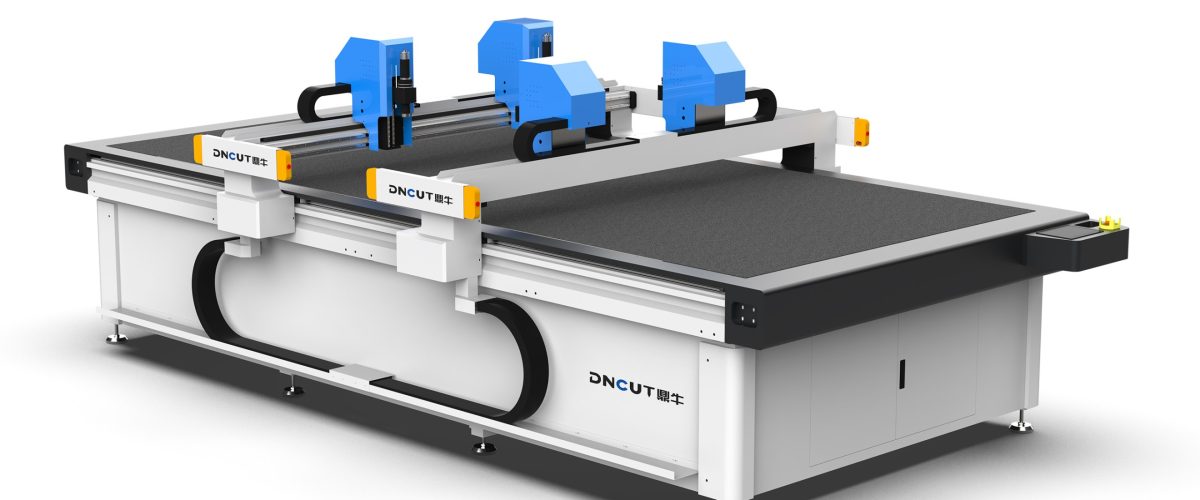
Sheepskin is a typical flexible material, usually 0.5-2.0mm thick, featuring high elongation, easily curled edges, and a high friction coefficient on the suede side. Traditional manual cutting relies on templates and scissors, resulting in low efficiency and poor consistency. CNC oscillating knife cutting machines achieve cold cutting through high-frequency vibrating blades (8,000-12,000 times per minute), with no heat-affected zone, making them particularly suitable for heat-sensitive natural materials such as sheepskin. When selecting a machine, three parameters require key attention: cutting accuracy (±0.1mm is the industry benchmark), maximum cutting thickness (≥25mm is recommended to accommodate multi-layer cutting), and effective cutting range (commonly 1600×2500mm or 2100×3100mm).
Core components: matching of the knife head and drive system
1. Blade Type Selection
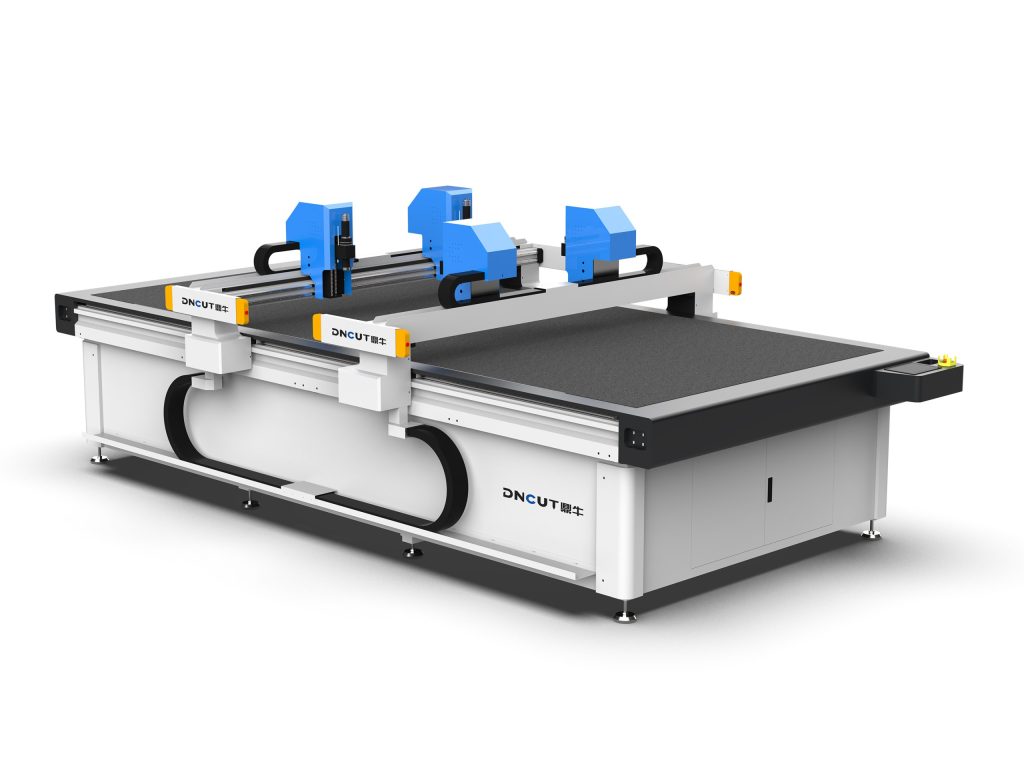
For sheepskin cutting, it is recommended to use a pointed oscillating knife (angle 15°-20°), with the blade material being carbide or high-speed steel. For sheepskin thicker than 1.5mm, a round-tip knife can be selected to reduce pulling of the fuzzy surface. When cutting sheepskin with the fuzzy side facing up, it is recommended to use a pneumatic presser foot (pressure 0.2-0.4MPa) to prevent the material from shifting as the blade vibrates up and down.
2. Transmission and Guide Rails
Models using rack-and-pinion transmission (repeat positioning accuracy ±0.05mm) are better suited to the high-precision cutting requirements of sheepskin. Avoid belt-driven models, as they are prone to elastic deformation during high-speed reciprocating motion, resulting in cutting contour deviations. The guide rail must be equipped with an automatic lubrication system to reduce wear on the track caused by sheepskin fiber dust.
Vacuum adsorption system: the key to securing sheepskin
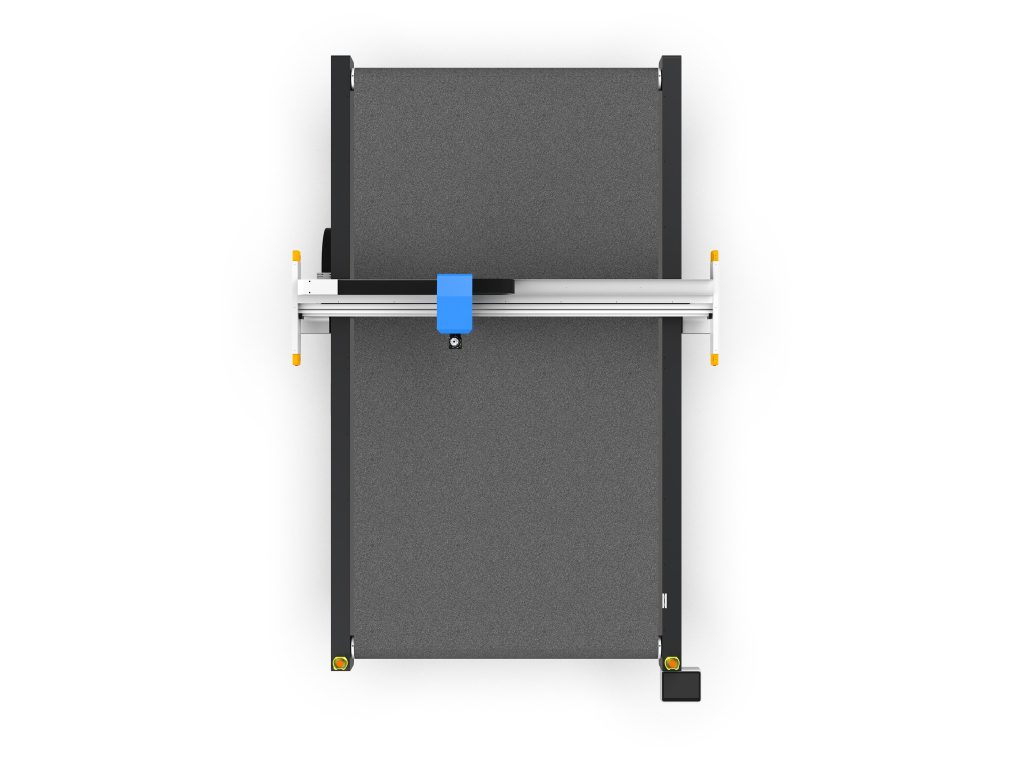
The air permeability of sheepskin varies by body part (the belly is more breathable than the back), so a zone-controlled vacuum adsorption table is required. It is recommended that the vacuum pump power be ≥5.5kW, the adsorption negative pressure ≥-0.06MPa, and that zone valves (at least 4 zones) be provided so that adsorption zones can be opened individually according to the size of the cut pieces. In actual operation, laying a breathable felt (thickness 3-5mm, air permeability 200-400L/m²·s) beneath the sheepskin can balance the adsorption force and prevent local over-adsorption from deforming the material. For ultra-thin sheepskin (<0.8mm), a layer of PVC film (thickness 0.05mm) can be laid over the breathable felt to enhance the adsorption effect.
Cutting parameter settings and process optimization
1. Basic parameter reference
- Cutting speed: For single-layer sheepskin, 800-1200mm/s is recommended; for multiple layers (3-5 layers), reduce to 400-600mm/s.
- Vibration frequency: For thin sheepskin (<1mm), use 10000-12000 times/minute; for thick sheepskin, use 8000-9000 times/minute.
- Knife pressure: Adjust according to material thickness, usually 0.3-0.6MPa, based on the criterion that the cut has no burrs and no melting.
- Overcut: Set an overcut of 0.5-1.0mm to ensure complete cutting at corners.
2. Interlayer Fixation for Multi-layer Cutting
When cutting multi-layer sheepskin, layers tend to slide against each other. It is recommended to spray a small amount of water-based temporary fixing adhesive between each layer (10-15g/m²), or use double-sided tape for spot bonding. After cutting is completed, blow the cut edge with a cold air gun (temperature ≤30℃) to reduce fiber adhesion.
Common Problems and Solutions
1. Burrs or fiber pulling at the cut edge
Cause: Blade dulling (not replaced after more than 200 hours of use) or vibration frequency too low. Countermeasure: Establish a blade life ledger and replace every 150-200 hours; increase the vibration frequency by 10%-15%.
2. Cut Part Size Deviation
Cause: Insufficient vacuum adsorption force or aged breathable felt. Solution: Check whether the vacuum pump negative pressure reaches -0.06MPa; replace the breathable felt every 3 months; calibrate the X/Y axis compensation values (typically ±0.1mm).
3. Material edge curling
Cause: Cutting speed too fast causes lateral squeezing by the blade. Solution: Reduce cutting speed to below 600mm/s; add micro-joints (0.3-0.5mm) during nesting to secure the cut piece edges, then separate manually after cutting.
Equipment Maintenance and Safety Guidelines
- Daily: Clean sheepskin fiber dust from the table surface, check blade fastening screws (torque 2.5N·m).
- Weekly: Blow clean the guide rails and racks with compressed air (0.4MPa), and apply lithium-based grease.
- Monthly: Check the sealing of the vacuum lines and replace the filter element (accuracy 5μm).
- Safety: The equipment must be grounded (resistance ≤4Ω); hands must not enter the cutting area during operation; equipped with an emergency stop button and light curtain protection (response time ≤20ms).
Selection Recommendations and Cost Analysis
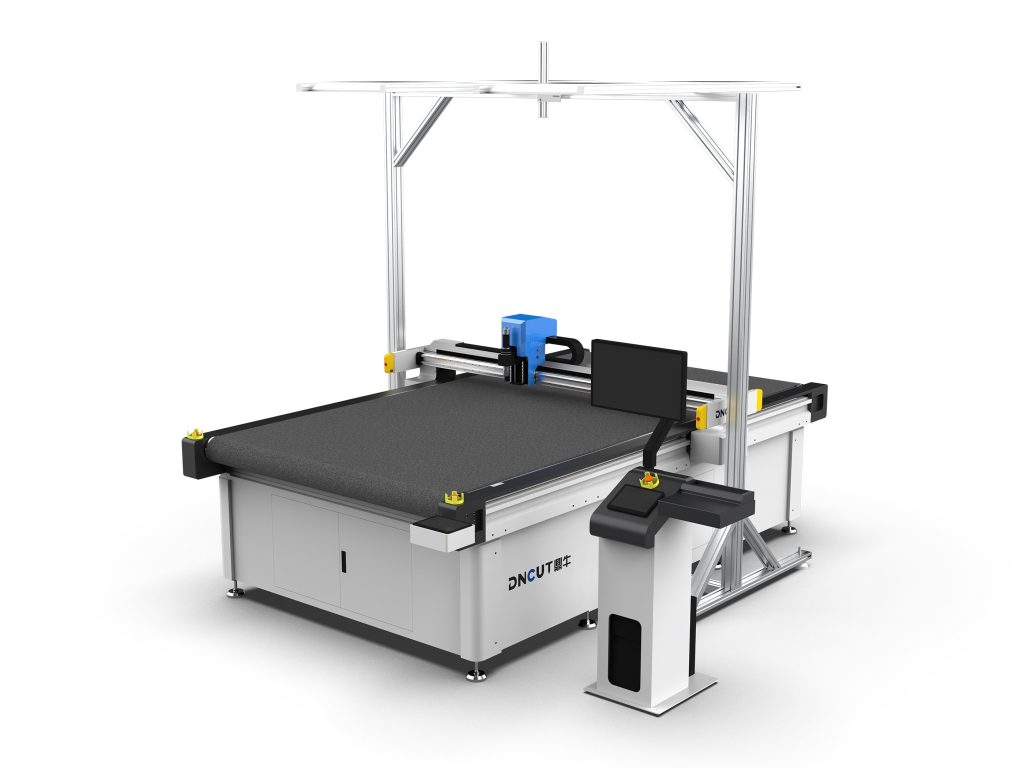
For small and medium-sized enterprises with a daily output of 500-1000 sheepskin cut pieces, the recommended configuration is: 1600×2500mm table, 5.5kW vacuum pump, rack and pinion drive, zoned adsorption oscillating knife cutting machine, with a market price of approximately 120,000-180,000 RMB. If multi-layer cutting (more than 5 layers) or large working area (2100×3100mm) is required, the budget needs to be increased to 250,000-350,000 RMB. Compared with laser cutting (charred edges, strong odor) and waterjet cutting (sheepskin absorbs water and deforms), the oscillating knife cutting machine has obvious advantages in sheepskin processing, and its operating cost is only 1/3 that of laser (the main consumable is blades, priced at 30-50 RMB/piece).
Before actual procurement, it is recommended to bring sheepskin samples (including different parts from the belly and back) to the equipment manufacturer for a test cutting, focusing on verifying: the minimum cutting circle diameter (should be ≤3mm), sharp corner cutting performance (no breakage at 30° sharp corners), and the precision stability during 4 hours of continuous operation (deviation ≤0.15mm).