
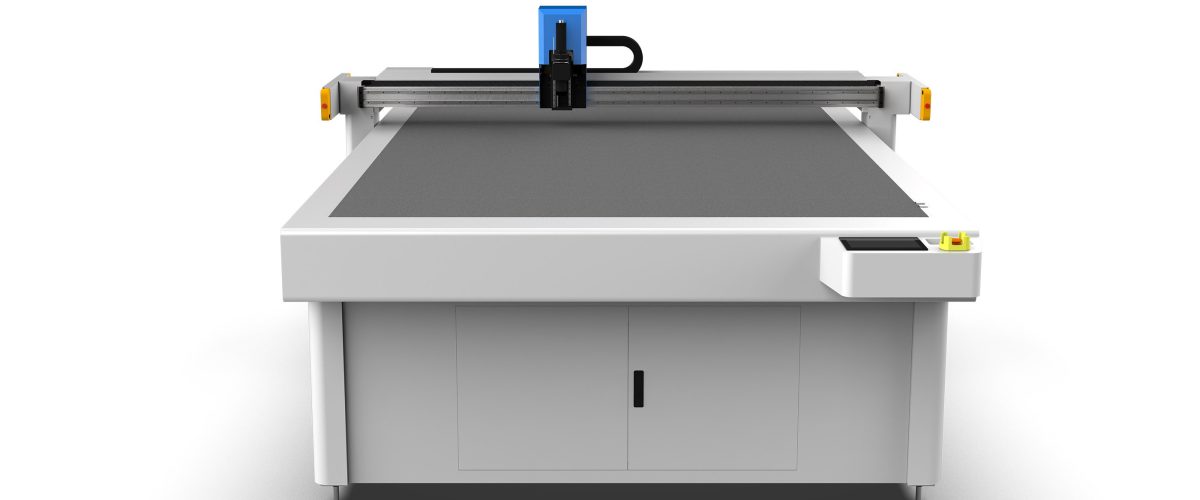
Packaging Cutting Machine: Key Equipment for Improving Packaging Efficiency
In the packaging industry, the precision and efficiency of material cutting directly affect production costs and product quality. As specialized equipment, packaging cutting machines can process various materials such as corrugated paper, cardboard, honeycomb paperboard, EPE pearl cotton, EVA foam, and more. This article provides practical guidance on equipment selection, technical parameters, operating points, and maintenance.
I. Main Types and Application Scenarios of Packaging Cutting Machines
According to the cutting principle, packaging cutting machines are mainly divided into three types:
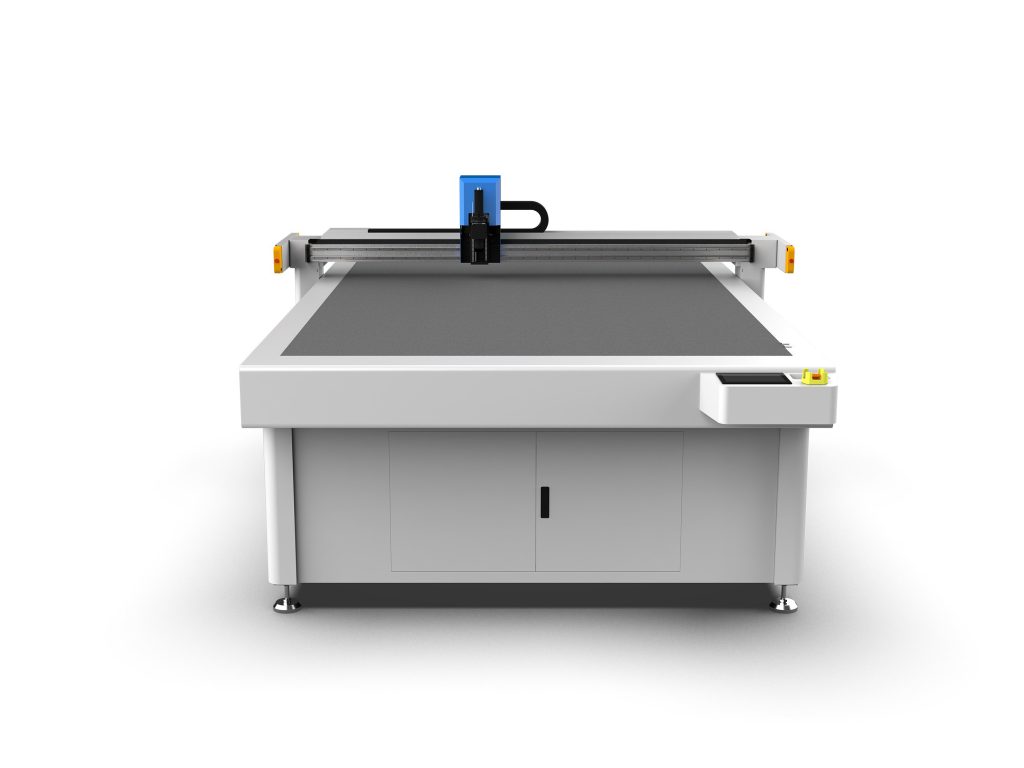
- CNC oscillating knife cutting machine: Cuts through high-frequency oscillating blades, suitable for corrugated paper, cardboard, honeycomb paperboard, etc. Cutting precision can reach ±0.1mm, and the maximum cutting thickness depends on the material, typically up to 15mm for corrugated paper and up to 50mm for honeycomb paperboard.
- Laser cutting machine: Uses a laser beam to melt or vaporize materials, suitable for thin cardboard, labels, etc. The cutting edge has carbonization marks and is not suitable for flammable materials.
- Circular knife cutting machine: Uses a rotating circular knife, suitable for large-volume, simple-shape cutting, such as cardboard slitting. It has high efficiency but poor flexibility.
For packaging enterprises, oscillating knife cutting machines have become the mainstream choice due to their strong adaptability and high precision. They are especially suitable for small-batch, multi-variety order production.
II. Interpretation of Key Parameters and Selection Recommendations
1. Cutting Precision and Repeat Positioning Accuracy
Cutting precision usually refers to the deviation between the actual cutting path and the designed path, and high-quality equipment can reach ±0.1mm. Repeat positioning accuracy affects the consistency of batch production and should be ≤0.05mm. When purchasing, pay attention to the brand and grade of servo motors and guide rails.
2. Maximum Cutting Thickness and Material Adaptability
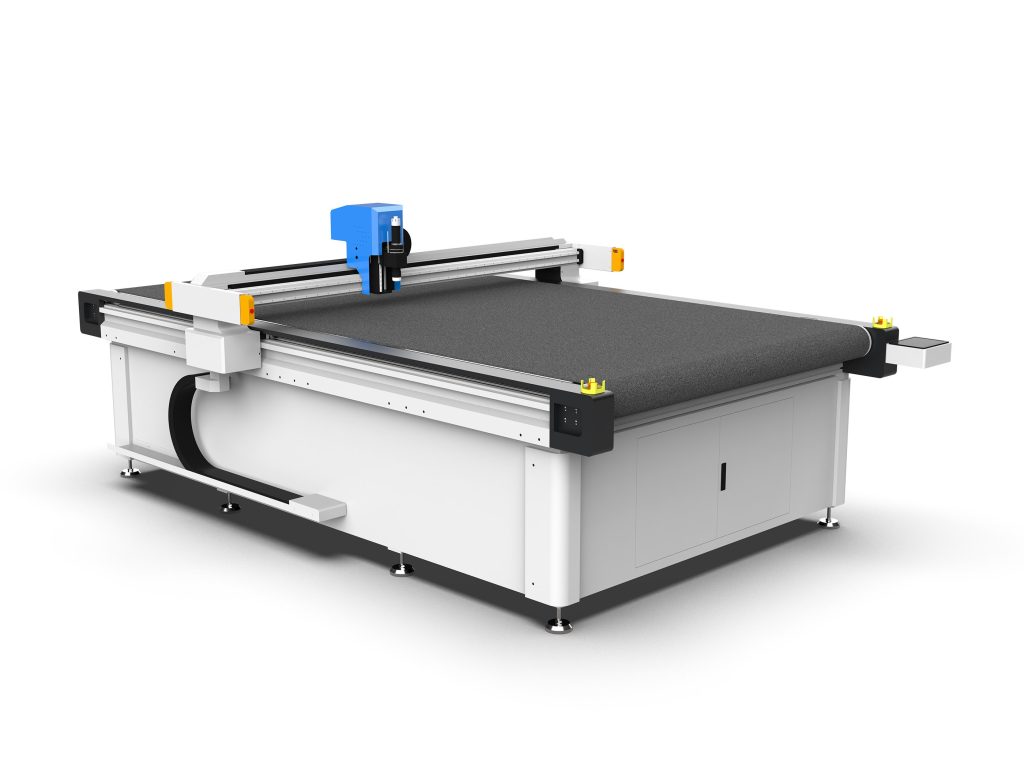
Different materials have different requirements for cutting thickness. For example, corrugated paperboard is usually 3-10mm, and honeycomb paperboard can reach 30-50mm. The nominal maximum cutting thickness of the equipment should have a margin to avoid long-term full-load operation. At the same time, confirm whether the equipment supports multiple tools (such as oscillating knife, circular knife, creasing knife, V-groove knife) to expand the application range.
3. Working Area Size and Production Efficiency
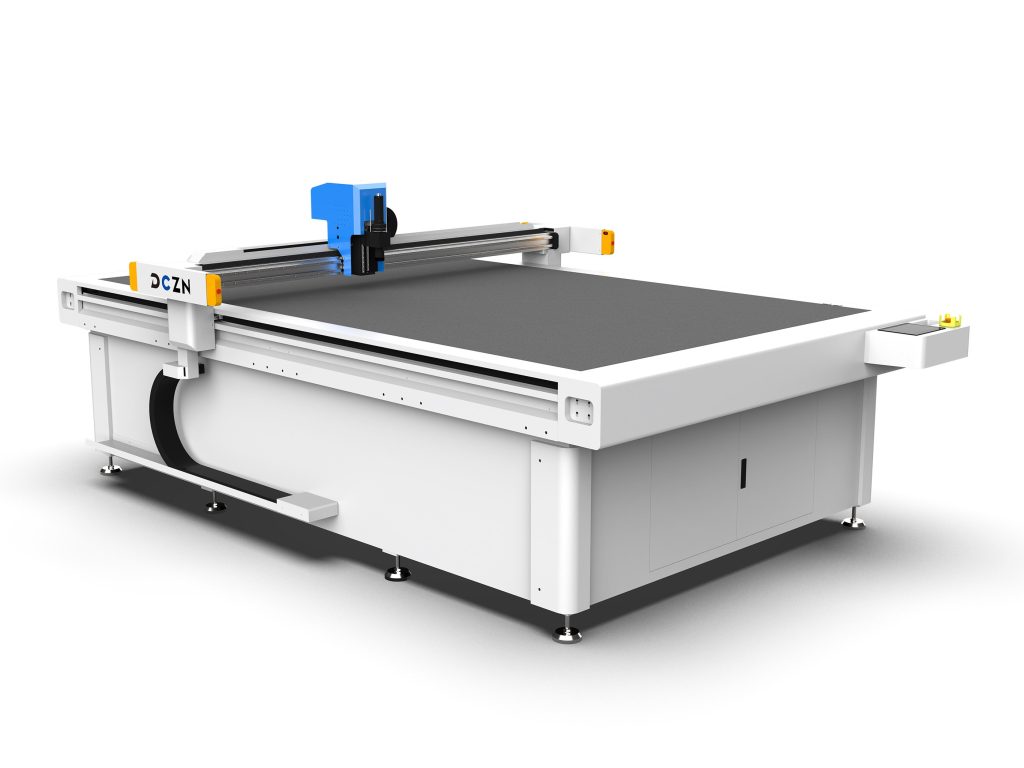
The working area size determines the maximum material format that can be processed. Common specifications include 1600mm×2500mm, 2100mm×3000mm, etc. When choosing, consider the dimensions of commonly used materials and reserve a certain operating space. In terms of production efficiency, pay attention to the idle speed and cutting speed. The idle speed is usually 50-100m/min, while the cutting speed depends on material thickness and tool type.
4. Software and Control System
The equipment should support mainstream CAD formats (DXF, DWG, AI, etc.) and have automatic nesting and path optimization functions. The operation interface should be simple and easy to use, supporting parameterized settings. Some high-end equipment also has a visual recognition system that can automatically locate marks on materials to improve alignment precision.
5. Selection Steps
- Clarify the main material types, thicknesses, and maximum dimensions.
- Determine the precision requirements (such as ±0.2mm or ±0.1mm).
- Evaluate daily output and calculate the required equipment speed.
- Consider future product expansion and choose a multi-functional tool configuration.
- Conduct on-site trial cutting to verify equipment performance.
III. Operating Techniques and Efficiency Improvement
1. Tool Selection and Parameter Settings
Oscillating knives are suitable for most cardboard. When cutting corrugated paper, it is recommended to use wavy-edge blades to reduce burrs. When cutting honeycomb paperboard, use sharp long-edge knives and reduce the oscillation frequency to avoid tearing the paper core. Cutting speed and oscillation frequency need to match: too fast will result in incomplete cutting, while too slow will affect efficiency. Generally, the cutting speed for corrugated paper can be set to 800-1200mm/s, and for honeycomb paperboard to 300-600mm/s.
2. Material Fixation and Nesting Optimization
Materials must be flat and fixed. A vacuum adsorption table is recommended to ensure no displacement during cutting. When nesting, use the software’s automatic optimization function to improve material utilization. For small-batch orders, multiple orders can be combined in nesting to reduce tool changes.
3. Common Problems and Solutions
- Rough cutting edges: Check whether the blade is worn, adjust the oscillation frequency and cutting speed, or replace with a wavy-edge blade.
- Incomplete cutting: Increase blade pressure or reduce cutting speed to ensure the material is close to the table.
- Dimensional deviation: Calibrate equipment precision, check timing belt tension, and ensure the material is firmly fixed.
IV. Maintenance and Safety Specifications
1. Daily Maintenance
- Clean the table and guide rails daily to remove paper scraps and dust.
- Check blade wear and replace in time (usually every 8-12 hours, depending on the material).
- Check the air circuit and vacuum adsorption system weekly to ensure there are no leaks.
- Lubricate the guide rails and lead screws monthly, and check the servo motor connections.
2. Safe Operation
- Do not allow hands to enter the cutting area during operation. The equipment should be equipped with safety light curtains or protective covers.
- Wear cut-resistant gloves and use special tools when replacing blades.
- Ensure the equipment is well grounded to avoid static interference.
- Regularly train operators to familiarize them with the location of the emergency stop button.
V. Industry Application Case
A packaging enterprise used an oscillating knife cutting machine to process honeycomb paperboard pallets with a material thickness of 40mm and a precision requirement of ±0.5mm. By optimizing cutting parameters (oscillation frequency 18,000 times/min, cutting speed 400mm/s) and using vacuum adsorption fixation, the yield rate increased from 85% to 98%, and the processing time per piece was shortened by 20%.
VI. Summary
The selection of a packaging cutting machine requires comprehensive consideration of materials, precision, efficiency, and scalability. During operation, attention should be paid to parameter matching and daily maintenance to maximize the value of the equipment. As the packaging industry develops toward personalization and small batches, multi-functional, high-precision CNC cutting equipment will become standard.