
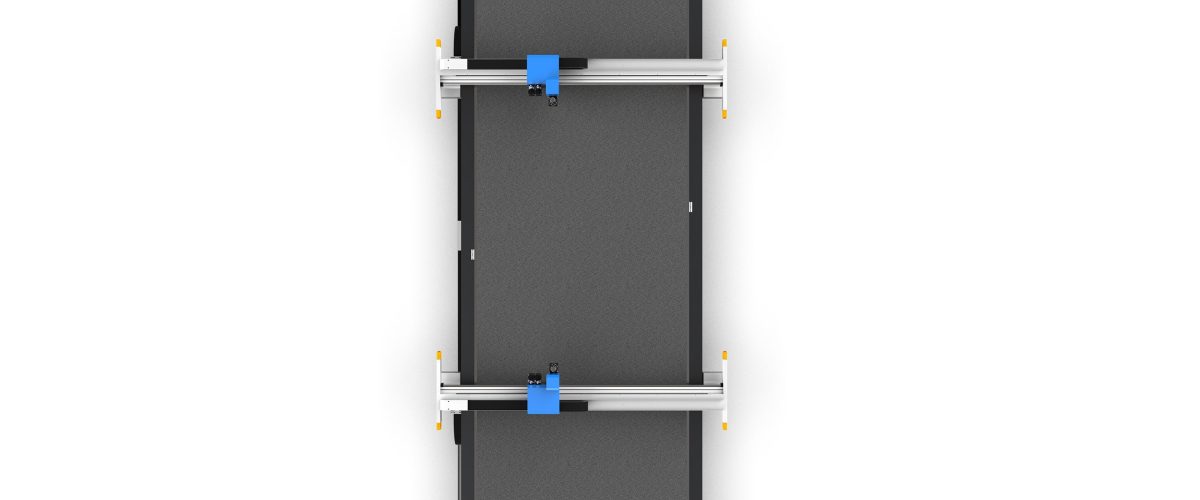
Faux Leather Cutting Machine: A Complete Guide from Selection to Efficient Production
Faux leather (PU/PVC artificial leather) is widely used in furniture, automotive interiors, luggage, apparel, and other fields. Its cutting faces unique challenges: the material slides easily, edges melt easily, and thickness tolerances are large. Traditional manual cutting is inefficient and imprecise, while CNC oscillating knife cutting machines have become the mainstream solution. From a practical production perspective, this article provides selection parameters, operating points, and maintenance strategies for faux leather cutting machines to help you make informed decisions.
I. Core Types and Application Scenarios of Faux Leather Cutting Machines
According to the cutting principle, faux leather cutting machines are mainly divided into three categories:
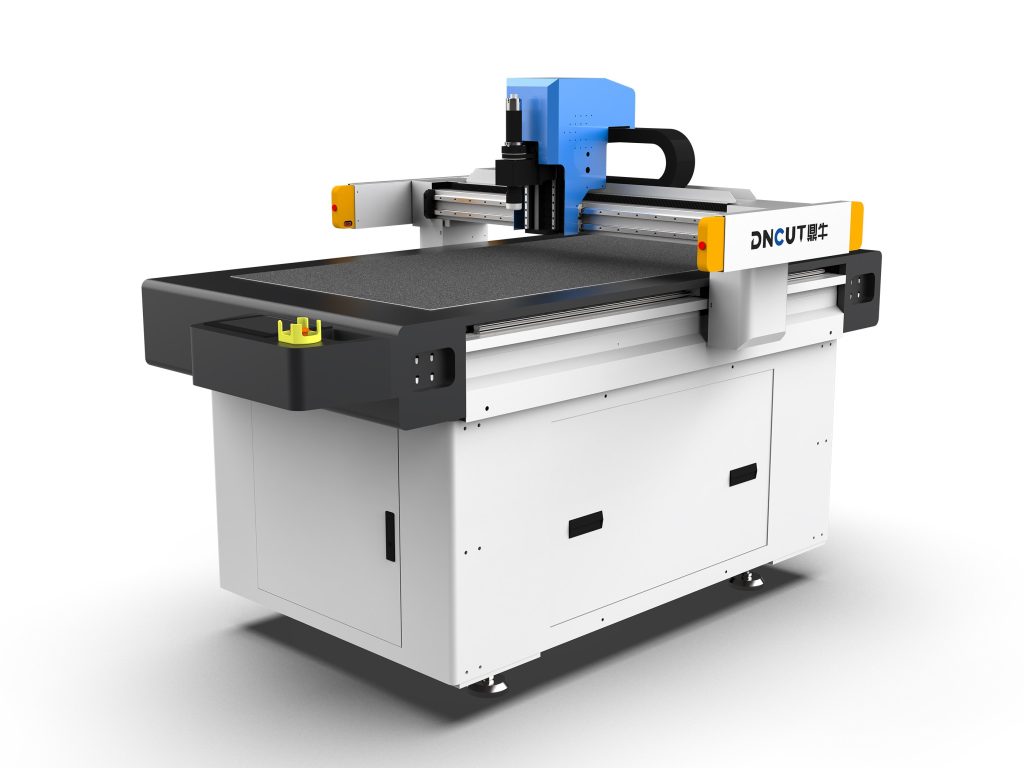
- Oscillating knife cutting machine: The blade vibrates up and down at high frequency (frequency up to 20,000 times/minute), suitable for medium-thickness faux leather (0.5-5mm), with neat cutting edges and no melting. It is the first choice for faux leather cutting.
- Round knife cutting machine: The rotating blade cuts continuously, suitable for large-batch straight-line cutting of thin faux leather (0.3-1.5mm), but has poor adaptability to complex curves.
- Laser cutting machine: Uses high-temperature laser cutting, and the edges are automatically sealed, but it produces smoke and burnt edges, and is not suitable for light-colored faux leather or faux leather requiring no odor.
For most faux leather cutting scenarios, the oscillating knife cutting machine is recommended because it balances precision, speed, and material adaptability.
II. Interpretation of Key Performance Parameters
When purchasing, the following parameters directly affect production efficiency and cutting quality:
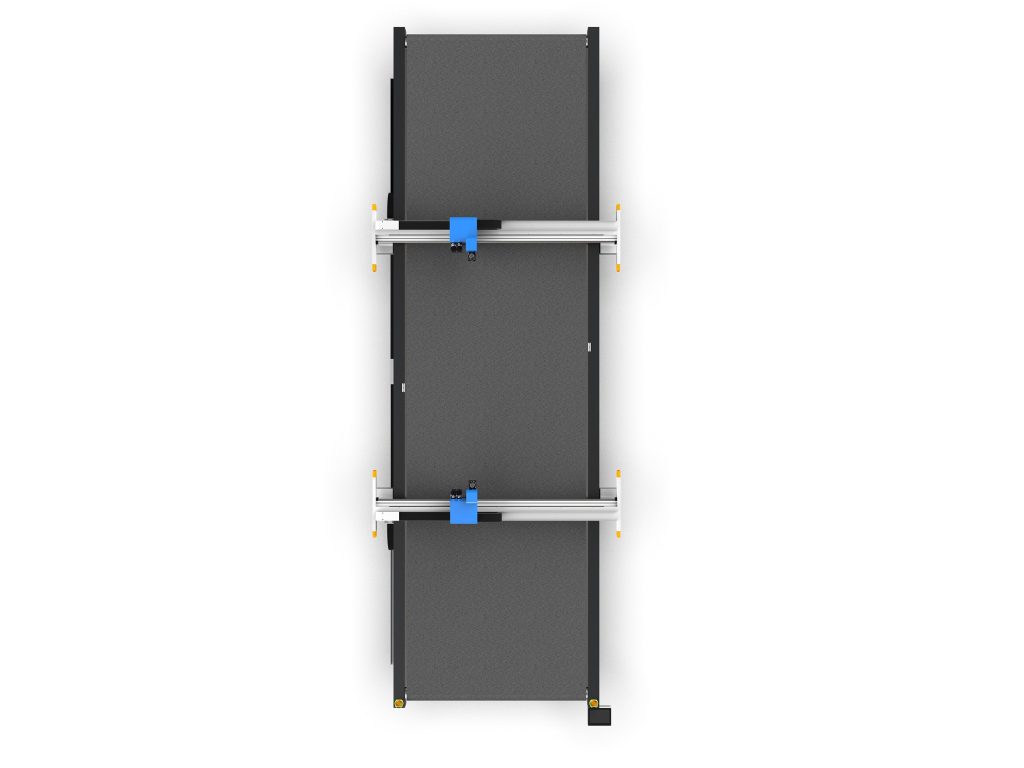
- Effective cutting working area: Common specifications include 1600mm×2500mm, 2100mm×3100mm, etc. Choose according to the maximum cut piece size and nesting efficiency; it is recommended to reserve 10%-20% margin.
- Cutting speed: The idle speed of oscillating knife models can reach 1000-1500mm/s, and the cutting speed depends on material thickness and graphic complexity, usually 200-600mm/s. Note: The nominal speed is often an ideal value; actual capacity needs to consider acceleration/deceleration and knife change time.
- Cutting accuracy: The repeat positioning accuracy should be ≤0.1mm. Actual cutting accuracy is affected by the material fixing method and blade wear, and is usually controlled within ±0.3mm.
- Blade vibration frequency: High-frequency vibration (15,000-25,000 times/minute) can reduce material pulling, especially suitable for faux leather with greater elasticity.
- Suction power: The vacuum suction table ensures material fixation, and the power is usually 5.5-11kW. For breathable faux leather, it is necessary to choose higher power or add film covering.
- Control system: Supports common formats (DXF, PLT, AI) and automatic nesting software, which can improve material utilization by 5%-15%.
III. Process Points for Faux Leather Cutting
1. Material Fixing and Suction
The surface of faux leather is smooth and easy to shift during cutting. Recommendations:
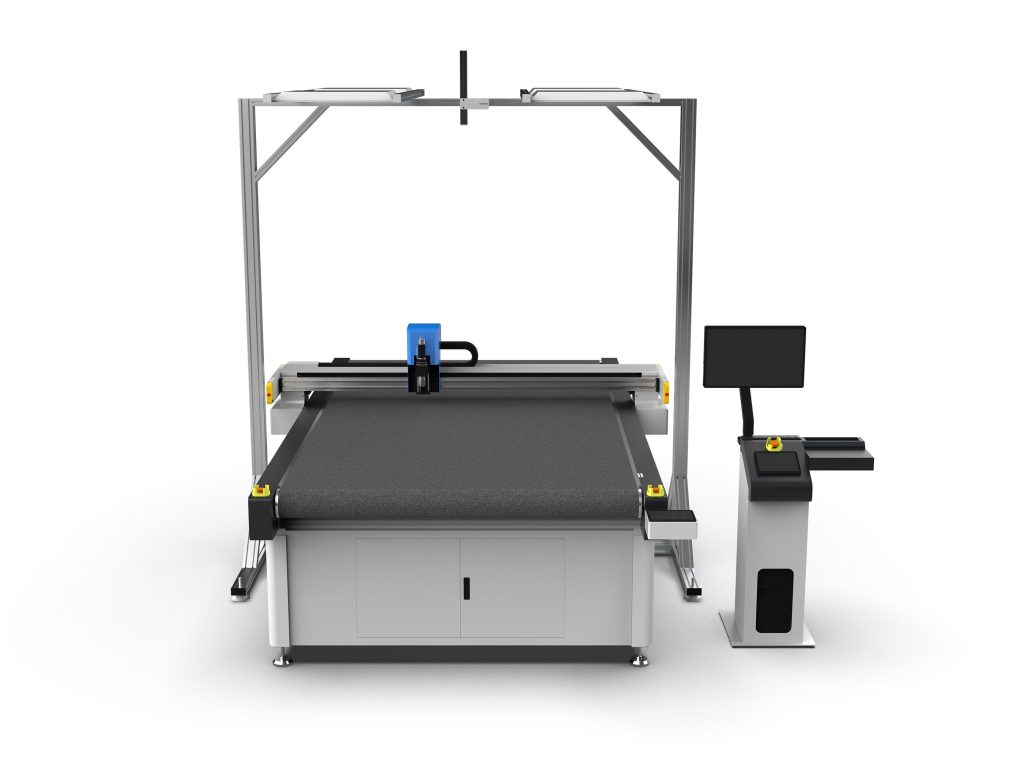
- Use a vacuum suction table and ensure the suction area fully covers the cut pieces.
- For highly breathable faux leather, cover the surface with a thin PE film to enhance suction effect.
- For multi-layer cutting, fix each layer with double-sided tape or spray adhesive, with total thickness not exceeding 20mm.
2. Blade Selection and Replacement
Common blade types for faux leather cutting:
- Oscillating knife: Suitable for most faux leather; blade angles of 30°, 45°, and 60° are available. Use 30° for thin materials and 60° for thick materials.
- Round knife: Suitable for straight-line cutting; common blade diameters are 28mm and 45mm.
- Punching knife: Used for punching or marking.
Blade wear will cause rough cutting edges. It is recommended to replace after cutting 800-1200 meters or when burrs appear. Record blade service life and establish a replacement cycle.
3. Cutting Parameter Optimization
Different faux leathers require parameter adjustments:
- Thin faux leather (0.5-1mm): Low vibration frequency (12,000-15,000 times/minute), medium-speed cutting (400-600mm/s), small blade angle (30°).
- Medium faux leather (1-3mm): Medium frequency (15,000-18,000 times/minute), medium speed (300-500mm/s), 45° blade angle.
- Thick faux leather (3-5mm): High frequency (18,000-22,000 times/minute), low speed (200-400mm/s), 60° blade angle, and enable overcut function to prevent bottom adhesion.
It is recommended to determine the optimal parameter combination through trial cutting and save it as a material recipe.
IV. Common Problems and Solutions
- Melting of cutting edges: Usually caused by blade overheating or too low vibration frequency. Check whether the blade is sharp, increase vibration frequency, and reduce feed speed.
- Material shifting: Check whether suction is sufficient, add film covering or use clamps; ensure interlayer fixation during multi-layer cutting.
- Cut piece size deviation: Check blade compensation settings and calibrate machine accuracy; ensure the material is not stretched after fixing.
- Blade breakage: Mostly caused by excessive cutting speed or mismatched blade angle; reduce speed and replace with a suitable blade.
V. Maintenance and Care Plan
Regular maintenance can extend equipment life and maintain cutting quality:
- Daily: Clean the table and guide rails, check whether the blade is loose, and clean the vacuum suction filter.
- Weekly: Check drive belt tension, lubricate linear guide rails, and clean dust from the electrical control cabinet.
- Monthly: Calibrate cutting accuracy (use standard graphics for trial cutting), check all fasteners, and replace worn blades.
- Quarterly: Comprehensively check the air circuit and vacuum system, test safety devices, and back up system parameters.
VI. Selection Recommendations and Return on Investment
When purchasing a faux leather cutting machine, it is recommended to:
- Determine the working area and speed according to the maximum cut piece size and capacity requirements, avoiding overconfiguration.
- Prefer control systems with automatic nesting and material database functions, which can significantly improve material utilization.
- Consider after-sales service response time and spare parts supply, especially blades and wearing parts.
- Require suppliers to provide trial cutting services to verify cutting results with your actual materials.
In terms of return on investment, a mid-range oscillating knife cutting machine (working area 1600mm×2500mm) costs about 150,000-250,000 RMB and can replace 3-4 cutting workers, usually recovering the cost in 6-12 months. At the same time, improved precision can reduce material waste by 5%-10%, further increasing benefits.
Summary: The selection of a faux leather cutting machine requires comprehensive consideration of material characteristics, capacity requirements, and budget. Correct use and maintenance are key to fully leveraging equipment performance. It is recommended to communicate deeply with suppliers to obtain parameter recommendations for your specific materials.