011. Core Challenges of Gasket Cutting
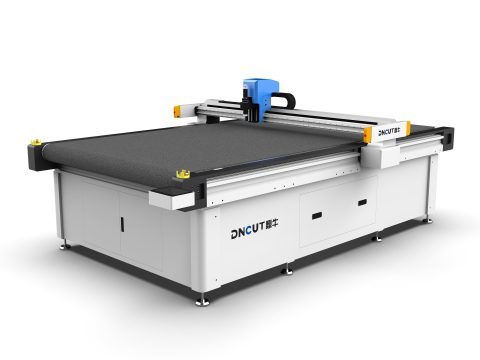
Sealing gaskets are widely used in connections such as pipes, flanges, pumps, and valves, and their cutting quality directly affects sealing performance. Gaskets of different materials face different problems during cutting: rubber sheets are prone to deformation, PTFE sheets are easily scratched, graphite composite gaskets are prone to brittle fracture, and foamed silicone is easily compressed. Traditional die cutting or manual cutting has low efficiency and poor precision, and changing specifications requires re-making the die. Using an oscillating knife cutting machine (such as the DN6 series) enables die-less cutting, reducing material stress through a high-frequency oscillating blade and ensuring a flat cut. This article provides specific cutting parameters and operating points for seven common gasket materials.
022. Material Characteristics and Blade Selection
2.1 Rubber Sheet (NR/SBR/EPDM)
Thickness is usually 1-20mm, hardness 50-80 Shore A. During cutting, it is prone to blade sticking and tensile deformation. It is recommended to use an oscillating knife (angle 15° or 20°), with an oscillation frequency set to 8000-12000 times/min and a cutting speed of 300-600mm/s. For rubber sheets with thickness >10mm, use layered cutting (each layer ≤5mm) or use a round knife (pneumatic round knife) to reduce resistance. Note: The surface of the rubber sheet must be cleaned before cutting to avoid talcum powder and other substances affecting adsorption.
2.2 Asbestos Sheet
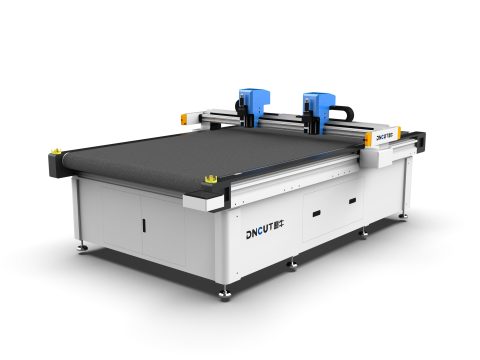
Asbestos sheet is highly brittle and tends to generate dust and edge chipping during cutting. It is recommended to use an oscillating knife together with a punching knife (for bolt holes), with an oscillation frequency of 10000-15000 times/min and a speed of 400-800mm/s. A dust collection device must be equipped to prevent asbestos fibers from dispersing. After cutting, the edges need to be cleaned with a brush. For asbestos sheets with thickness >5mm, it is recommended to reduce the speed to 300mm/s and use dual-head cutting (such as DN6-2D) to improve efficiency.
2.3 PTFE Sheet
PTFE sheet has a smooth surface and soft texture, is easily scratched, and tends to slide during cutting. It is recommended to use an oscillating knife (sharp blade, angle 10°), with an oscillation frequency of 12000-18000 times/min and a speed of 500-1000mm/s. Use vacuum adsorption to secure the material, with an adsorption force of ≥0.06MPa. For thin sheets (<1mm), stacked cutting can be used (up to 5 layers), but it is necessary to ensure there are no air bubbles between layers. After cutting PTFE sheet, there will be slight burrs on the edges, which can be quickly treated with a hot air gun (temperature 200-250℃, time 1-2 seconds).
2.4 Graphite Composite Gasket
Graphite composite gaskets are usually composed of a graphite layer combined with metal wire mesh or perforated plate, and are highly brittle and prone to delamination. It is recommended to use an oscillating knife (angle 15°), with an oscillation frequency of 8000-12000 times/min and a speed of 200-400mm/s. During cutting, it is necessary to reduce the feed speed (≤50mm/s) to avoid impact causing delamination. For gaskets with a metal skeleton, a cemented carbide blade must be used. After cutting, check whether graphite has fallen off the edges, and clean with a soft brush if necessary.
2.5 Silicone Sheet
Silicone sheet is soft and highly elastic, and is prone to compression deformation during cutting. It is recommended to use an oscillating knife (angle 20°), with an oscillation frequency of 10000-15000 times/min and a speed of 400-800mm/s. Use low adsorption force (0.04-0.05MPa) to avoid material compression. For silicone sheets with thickness >5mm, it is recommended to use a round knife or pneumatic knife and reduce the speed to 300mm/s. After cutting silicone sheet, the edges may be sticky, and a small amount of talcum powder can be sprinkled on them.
2.6 Foamed Silicone
Foamed silicone has low density (0.2-0.6g/cm³), is easy to compress, and has slow rebound. It is recommended to use an oscillating knife (sharp blade, angle 10°), with a vibration frequency of 15,000-20,000 times/min and a speed of 600-1200mm/s. Use vacuum adsorption (0.05-0.07MPa) for fixation to prevent the material from being deformed by suction. For foamed silicone with thickness >10mm, layered cutting is recommended (each layer ≤8mm). After cutting, the edges may have slight burrs, which can be quickly trimmed with a hot air gun (150-200℃).
2.7 Non-asbestos gaskets
Non-asbestos gaskets are usually made of composites such as aramid fiber and nitrile rubber. They have good toughness but are prone to fuzzing. It is recommended to use an oscillating knife (angle 15°), with a vibration frequency of 10,000-14,000 times/min and a speed of 400-700mm/s. For high-density non-asbestos gaskets (density >1.5g/cm³), the speed needs to be reduced to 300mm/s. If there are burrs on the edges after cutting, use hot air trimming (temperature 250-300℃, time 1 second).
03III. Summary Table of Cutting Parameters
The following parameters are based on measured data from the DN6 series cutting machine (oscillating knife). In actual use, fine adjustments should be made according to the material batch and equipment status.
- Rubber sheet: vibration frequency 8,000-12,000 times/min, speed 300-600mm/s, knife angle 15-20°, layering ≤5mm
- Asbestos board: vibration frequency 10,000-15,000 times/min, speed 400-800mm/s, knife angle 15°, dust collection required
- PTFE board: vibration frequency 12,000-18,000 times/min, speed 500-1000mm/s, knife angle 10°, vacuum adsorption ≥0.06MPa
- Graphite composite gasket: vibration frequency 8,000-12,000 times/min, speed 200-400mm/s, knife angle 15°, feed speed ≤50mm/s
- Silicone sheet: vibration frequency 10,000-15,000 times/min, speed 400-800mm/s, knife angle 20°, adsorption force 0.04-0.05MPa
- Foamed silicone: vibration frequency 15,000-20,000 times/min, speed 600-1200mm/s, knife angle 10°, layering ≤8mm
- Non-asbestos gasket: vibration frequency 10,000-14,000 times/min, speed 400-700mm/s, knife angle 15°, reduce speed at high density
04IV. Common Problems and Solutions
4.1 The cut is not vertical or is beveled
Cause: blade wear or vibration frequency too low. Solution: replace the blade (it is recommended to check once every 200-300 meters of cutting), and increase the vibration frequency by 10%-20%. For thick materials, use dual-head cutting (such as DN6-2D) to ensure synchronous cutting on both sides and reduce deviation.
4.2 Material edges are scorched or melted
Cause: vibration frequency too high leads to accumulation of frictional heat. Solution: reduce the vibration frequency to the lower limit of the recommended range, increase the cutting speed, or use an air cooling device (compressed air blowing to purge the blade). For PTFE board, especially pay attention to avoiding overheating.
4.3 Deformation of small holes (bolt holes)
Cause: The blade tip diameter is too large or the suction force is insufficient. Solution: Use a punching knife (diameter matched to the bolt hole), or adopt the helical plunging method (supported by the DN3 electronic auxiliary material cutting machine). Ensure the vacuum suction force is ≥0.05MPa. For areas with densely packed small holes, punch the holes first and then cut the outer contour.
4.4 Interlayer misalignment during multi-layer cutting
Cause: Insufficient friction between materials or uneven suction. Solution: Use double-sided tape or electrostatic adhesion to secure the layers, reduce the cutting speed by 20%, and use overcut (extending 0.5-1mm beyond the contour) to ensure complete cut-through.
05V. Equipment Selection Recommendations
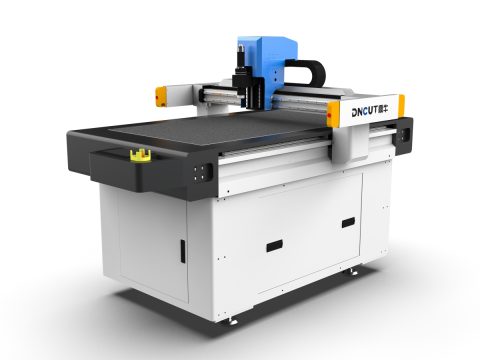
Select the appropriate equipment based on production requirements: for high-mix low-volume production (such as the DN6 general-purpose model), focus on flexibility; for small-sized gaskets such as electronic auxiliary materials (such as the DN3), focus on precision and speed; for high-volume dual-head synchronous cutting (such as the DN6-2D), focus on efficiency. It is recommended to equip an automatic tool change system and a vacuum suction platform, and to calibrate the knife pressure and vibration frequency regularly.
06VI. Maintenance and Safety
- Clean the blades and guide rails daily, and check whether the vacuum lines are blocked.
- Check the pneumatic components of the oscillating knife (such as cylinders and solenoid valves) weekly to ensure stable vibration.
- When cutting asbestos board, a dust mask must be worn and the dust collection device must be turned on.
- After cutting PTFE board, clean the blade with alcohol to prevent residue from affecting the next cut.
By properly selecting the tool head, setting parameters, and performing maintenance, gasket cutting can achieve a precision of ±0.2mm and a cut edge perpendicularity of ≤0.05mm, meeting most industrial sealing requirements.