
What Is a Fabric Cutting Machine?
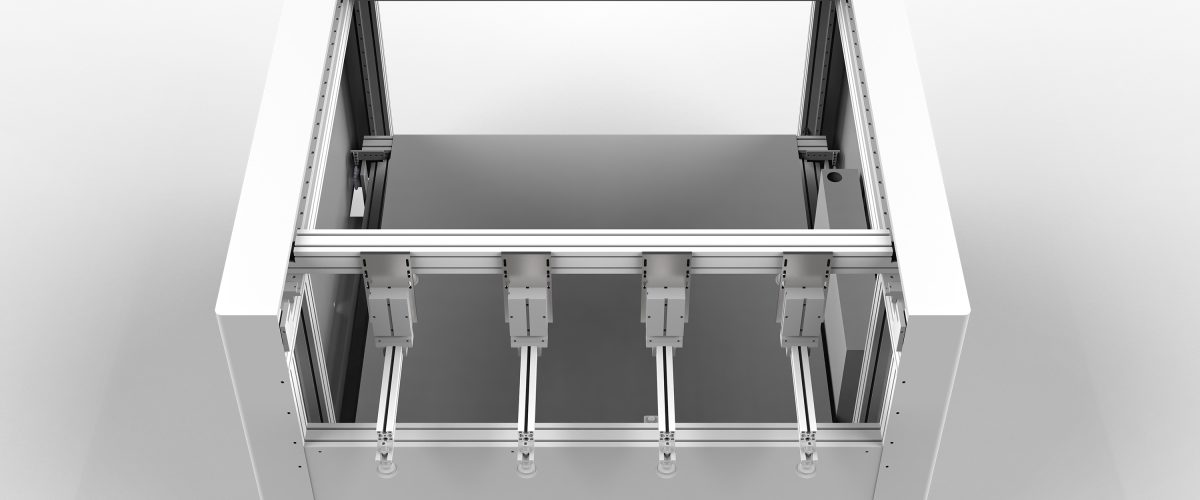
A fabric cutting machine, also known as a cloth cutting machine or oscillating knife cutting machine, is a CNC device that uses a high-frequency oscillating blade to cut textiles. Compared with traditional manual cutting or laser cutting, fabric cutting machines offer advantages such as high cutting precision, clean edges, no burning of fabric, and suitability for multi-layer cutting. They are widely used in apparel, home textiles, automotive interiors, luggage, outdoor products, and other industries.
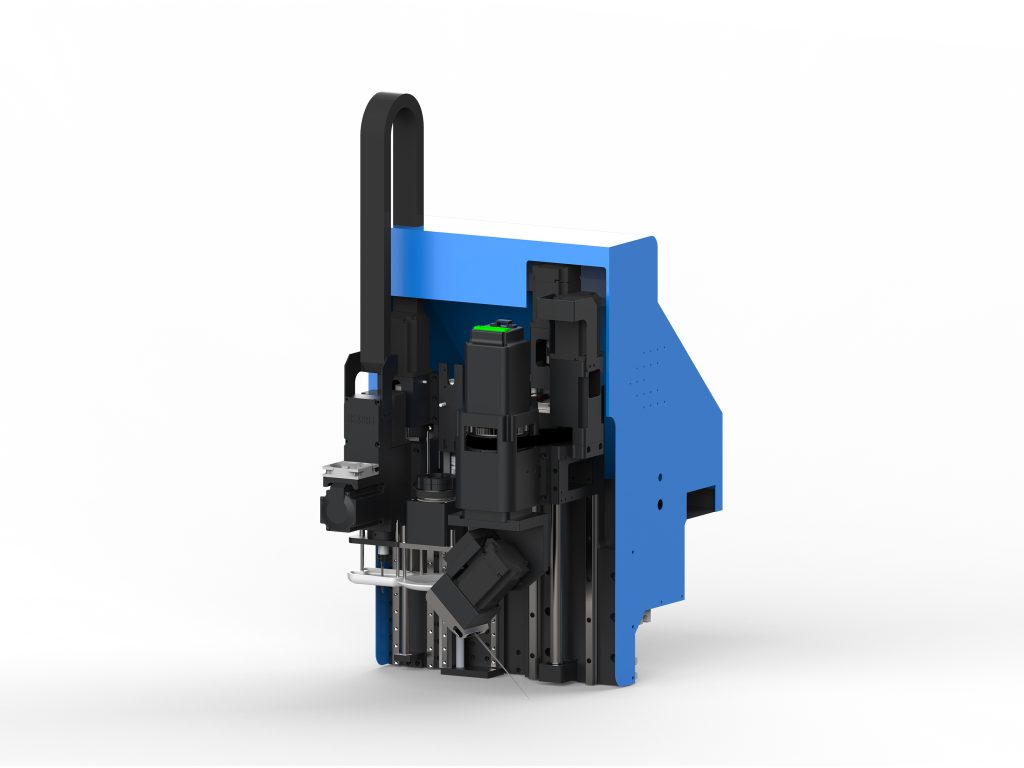
Its core principle is that a motor drives the blade to oscillate up and down at high frequency (typically 2000-8000 times/minute), while X/Y-axis servo motors drive the cutter head to move and cut along paths generated by CAD/CAM software. The blade only oscillates vertically and applies little vertical pressure to the fabric, so it can cut multiple layers without displacing the bottom layers.
Main Types of Fabric Cutting Machines
1. Flatbed Oscillating Knife Cutting Machine
It uses a fixed working table, and materials are secured by vacuum adsorption. It is suitable for cutting single-layer or a small number of layers (usually ≤10 layers) of fabric, such as sample making and small-batch production. Common working table sizes are 1600mm×2500mm, 2100mm×3000mm, etc.
2. Conveyor Belt Oscillating Knife Cutting Machine
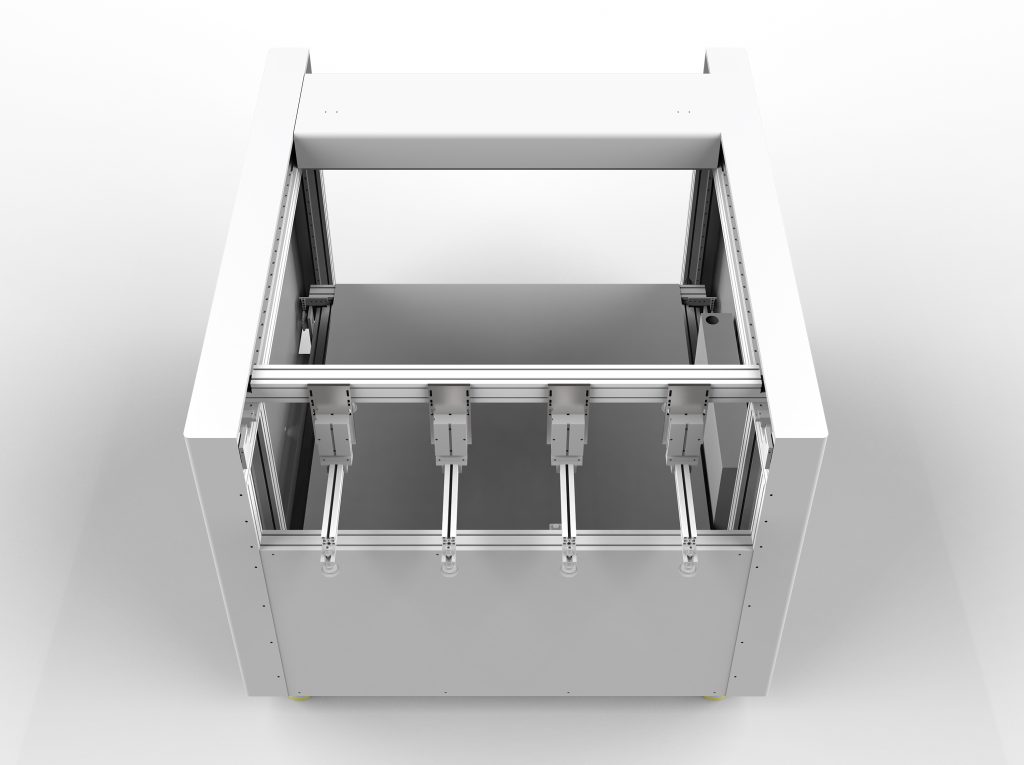
Equipped with an automatic feeding conveyor belt, it enables continuous cutting and is suitable for large-batch multi-layer cutting (up to 70 layers). The conveyor belt combined with vacuum adsorption ensures that materials do not move during cutting. It has high production efficiency and is often used in mass apparel production.
3. Gantry Oscillating Knife Cutting Machine
It adopts a gantry structure with good rigidity and is suitable for cutting large-format materials (such as home textile fabrics and advertising cloth). It can be equipped with multiple cutter heads working simultaneously to improve efficiency.
Key Selection Parameters
- Cutting thickness: Select according to the number of material layers. Generally, the maximum cutting thickness of an oscillating knife is 50-70mm (depending on material density).
- Cutting accuracy: Usually ±0.1mm to ±0.5mm; high-precision models can reach ±0.05mm.
- Maximum cutting speed: The idle travel speed can reach 1000-2000mm/s; the cutting speed depends on the material, usually 200-800mm/s.
- Blade type: Common types include straight blades, round blades, and serrated blades, selected according to the material. For example, round blades are suitable for cutting knit fabrics, and straight blades are suitable for cutting non-woven fabrics.
- Vacuum adsorption power: It affects material fixation. Generally, ≥5.5kW is required, and higher power is needed for multi-layer cutting.
- Control system: Servo control systems are mainstream, supporting DXF, PLT, and other formats and compatible with mainstream CAD software.
- Safety protection: It should be equipped with light curtain protection, emergency stop buttons, blade guards, etc.
Operating Techniques and Precautions
1. Material Preparation
Before cutting, the fabric must be laid flat to avoid wrinkles. For multi-layer cutting, air should be removed between layers as much as possible; a material press frame or vacuum adsorption pre-pressing can be used. For slippery materials, thin paper can be placed between layers or a dedicated adsorption film can be used.
2. Parameter Settings
Adjust the oscillation frequency, cutting speed, and blade penetration depth according to the material type and number of layers. For example, when cutting 10 layers of cotton fabric, the oscillation frequency can be set to 4000 times/minute and the speed to 300mm/s; when cutting 30 layers of denim, the frequency needs to be increased to 6000 times/minute, the speed reduced to 200mm/s, and the blade pressure increased.
3. Blade Selection and Replacement
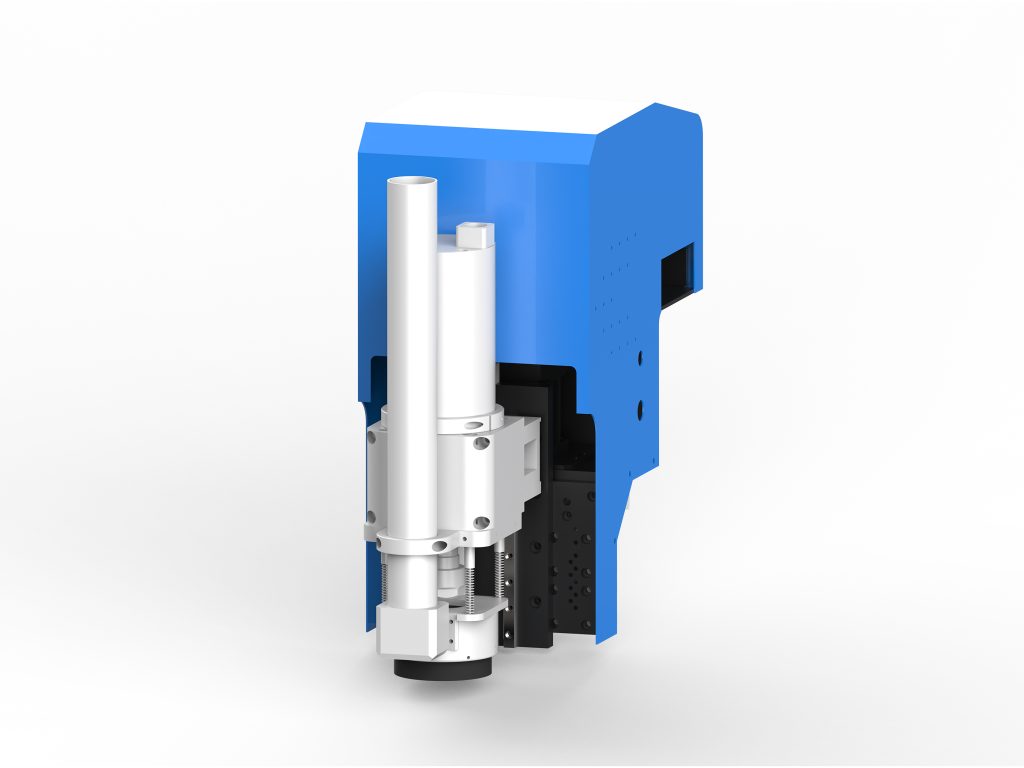
Worn blades can cause fuzzy cutting edges and adhesion between layers. It is recommended to check blade wear every 8-12 hours of cutting and replace them in time. When replacing, pay attention to the blade installation direction to ensure the cutting edge faces the correct way.
4. Vacuum Adsorption Adjustment
Adjust the vacuum degree according to material permeability. For highly permeable materials (such as mesh fabric), increase the vacuum degree or cover with film to reduce air leakage. For non-permeable materials (such as PU leather), the vacuum degree can be appropriately reduced to prevent material deformation.
5. Common Problem Handling
- Fuzzy cutting edges: Check whether the blade is sharp, reduce the cutting speed, or replace with a round blade.
- Bottom layer not cut through: Increase the blade penetration depth or increase the oscillation frequency, and check whether insufficient vacuum adsorption causes material movement.
- Cutting path deviation: Check whether the conveyor belt is off track, whether the guide rail is clean, and whether the servo motor parameters are normal.
Maintenance Points
- Daily cleaning: Clean fabric fibers and dust from the working table and guide rails to avoid affecting precision.
- Weekly inspection: Check whether the blade fixing screws are loose, whether the conveyor belt tension is appropriate, and whether there are leaks in the vacuum lines.
- Monthly lubrication: Apply grease to moving parts such as guide rails, lead screws, and gears to reduce wear.
- Quarterly calibration: Use standard calibration blocks to check cutting accuracy and adjust servo parameters if necessary.
- Annual maintenance: Replace worn conveyor belts and sealing strips, and check for aging of electrical wiring.
Application Scenarios and Benefit Analysis
Fabric cutting machines are suitable for apparel, home textiles, car seats, airbags, filter materials, composite materials, and other fields. Taking an apparel factory as an example, a conveyor belt oscillating knife cutting machine (effective cutting width 1.6m, maximum 50 layers) can cut about 200-300 garment pieces per hour, improving efficiency by 5-8 times compared with manual cutting, with high consistency of cut pieces and reducing fabric waste by about 3%-5%. The investment payback period is usually 6-12 months.
For customized apparel enterprises with small batches and multiple varieties, flatbed oscillating knife cutting machines are more flexible, with quick blade changes and parameter adjustments, making them suitable for sampling and small-batch production.
Summary
The selection of a fabric cutting machine requires comprehensive consideration of material characteristics, production batch, precision requirements, and budget. Correct operation and regular maintenance are key to ensuring long-term stable operation of the equipment. It is recommended to provide material samples for trial cutting before purchase to verify the actual cutting effect of the equipment. If you need further understanding of specific model parameters or cutting processes, please contact our technical team.