
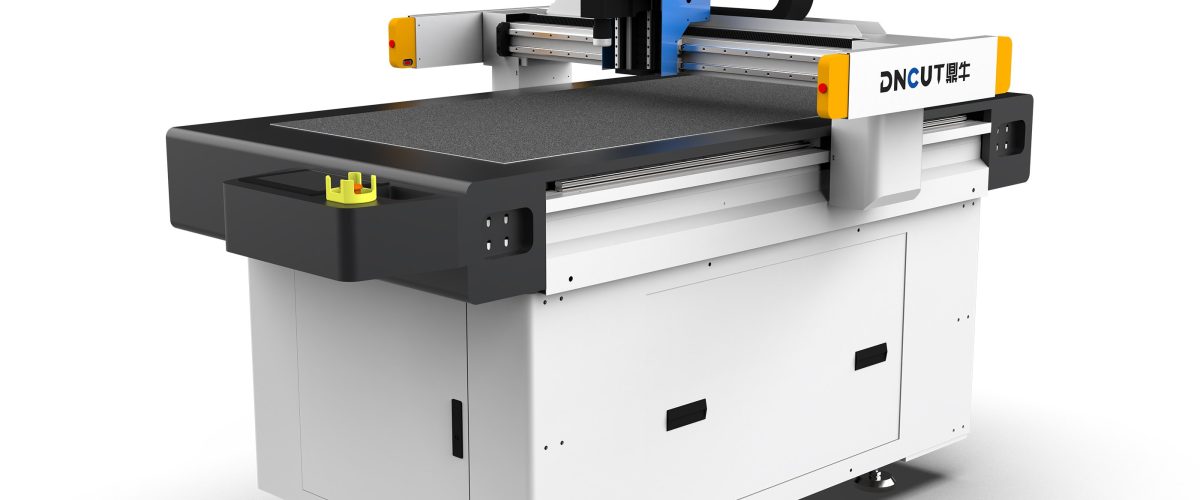
Carpet Cutting Machine: Key Equipment for Improving Carpet Processing Efficiency
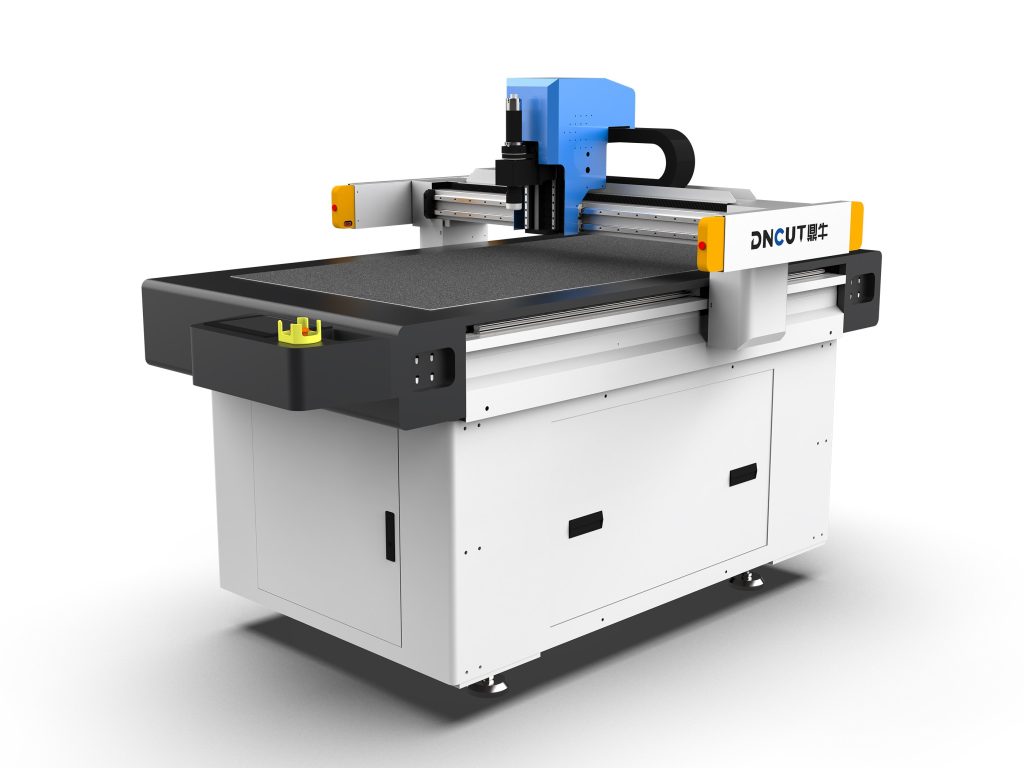
The carpet cutting machine is a CNC cutting device designed specifically for flexible materials such as carpets, widely used in industries including home carpets, commercial carpets, and car mats. Compared with traditional manual cutting, CNC carpet cutting machines have significant advantages in precision, efficiency, and material utilization. This article provides a detailed explanation of equipment selection, technical parameters, operating procedures, and maintenance.
I. Key Points for Selecting a Carpet Cutting Machine
1. Selection of Cutting Method
Carpet cutting machines mainly adopt two methods: oscillating knife cutting and laser cutting. Oscillating knife cutting is suitable for most carpet materials, especially thick carpets containing chemical fibers or wool, producing clean cut edges without burnt edges; laser cutting is more suitable for thin carpets or occasions requiring edge sealing, but attention must be paid to matching laser power with cutting speed to avoid material scorching.
2. Effective Cutting Area
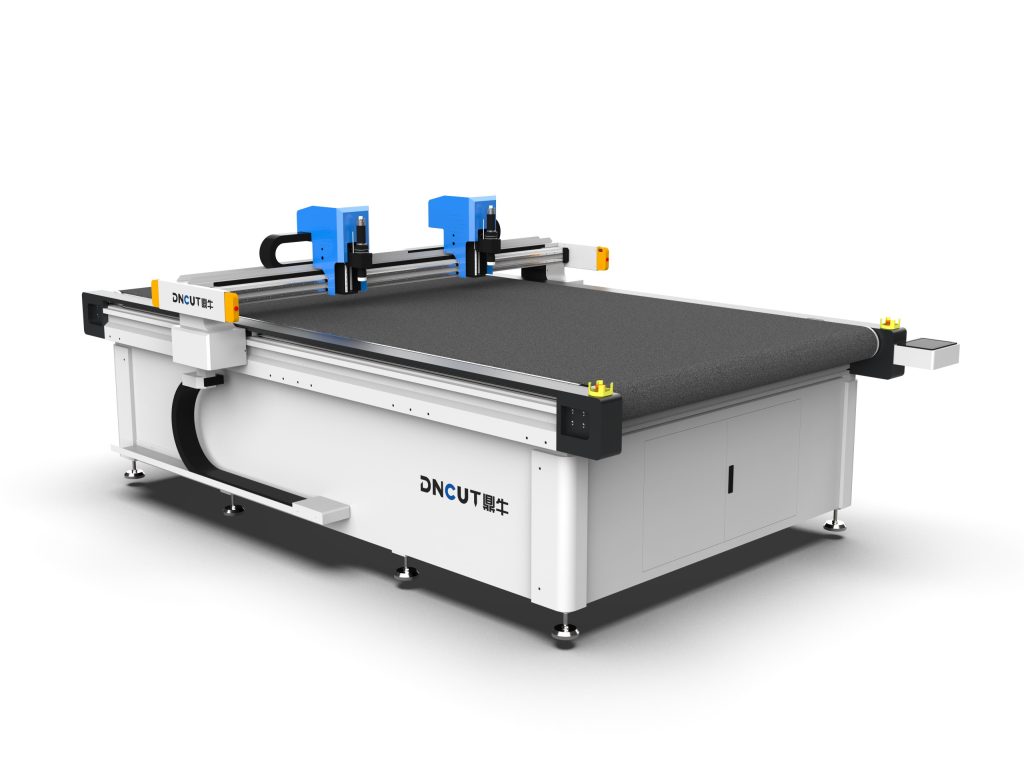
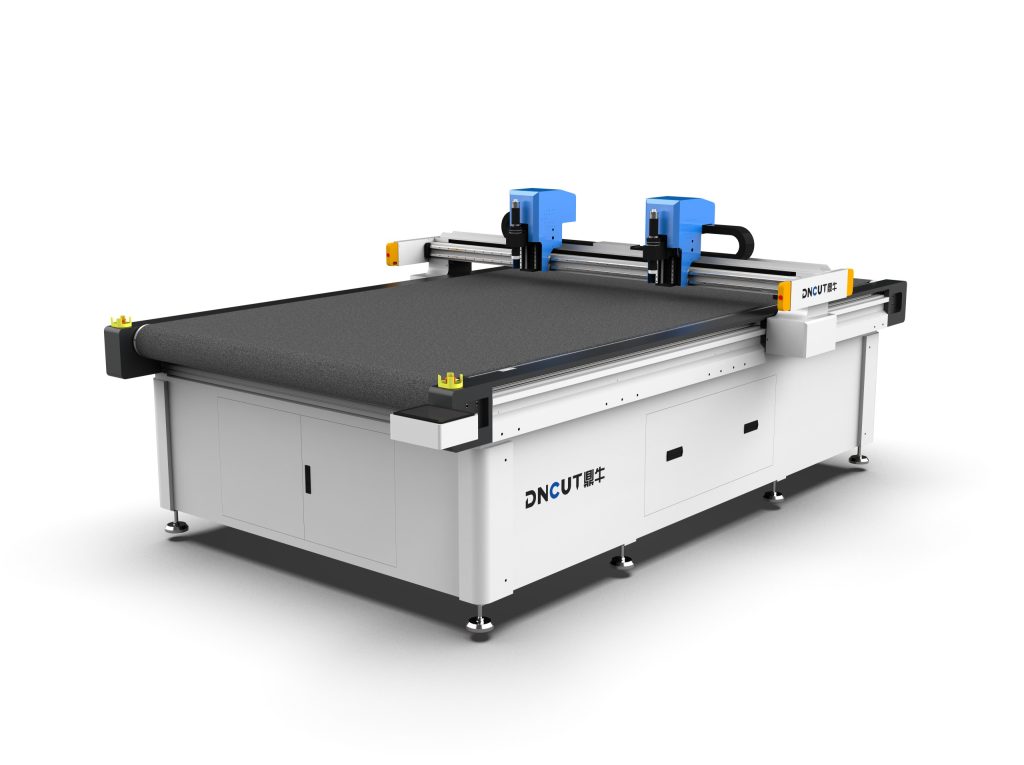
Determine the machine table size based on the width and length of commonly used carpet rolls. Common carpet roll widths are 2m and 4m, so the effective cutting width of the cutting machine should be at least 10-20cm larger than the maximum width to facilitate material fixation and cut edge processing. For mass production, it is recommended to choose models with a table size of 2.5m×6m or larger to reduce material splicing.
3. Cutting Precision and Repeat Positioning Accuracy
The cutting precision of carpet cutting machines is usually required to be within ±0.5mm, and the repeat positioning accuracy should reach ±0.1mm. High-precision equipment adopts servo motors and precision rack transmission, combined with dynamic compensation algorithms, to ensure stable operation over long periods.
4. Material Fixation Method
Carpet materials have strong air permeability, and ordinary vacuum adsorption may not be effective. It is recommended to choose a cutting machine with a partitioned vacuum adsorption system and equipped with a high-power vacuum pump (such as 7.5kW or above) to ensure the material does not shift during cutting. For particularly heavy tufted carpets, consider adding a material pressing device.
5. Software and Automation Functions
Modern carpet cutting machines should support CAD file import, automatic nesting, intelligent path optimization, and other functions to maximize material utilization. Automatic nesting software can optimize according to carpet grain direction to reduce waste. In addition, functions such as automatic tool change systems and automatic cutting depth adjustment can further improve efficiency.
II. Analysis of Key Technical Parameters
1. Cutting Speed
The speed of oscillating knife cutting carpets is generally 0-1200mm/s, depending on material thickness and density. For tufted carpets with a thickness of 10mm, it is recommended to control the cutting speed at 600-800mm/s to ensure cut quality. Laser cutting speed needs to be adjusted according to power, usually 200-500mm/s.
2. Cutting Thickness
The maximum cutting thickness of oscillating knife cutting machines can reach 50mm (depending on blade length and material compressibility), and common carpet thicknesses are between 5-20mm. When selecting equipment, ensure that the maximum cutting thickness is greater than the actual material thickness by 20% to leave a margin.
3. Positioning Accuracy
Cutting machines using rack and pinion transmission can achieve positioning accuracy of ±0.05mm and repeat positioning accuracy of ±0.02mm. For automotive carpets with high precision requirements, it is recommended to choose equipment of this level.
4. Vacuum Adsorption Power
Vacuum pump power directly affects material fixation. For breathable carpets, it is recommended that the vacuum pump power be no less than 5.5kW, and equipped with an air storage tank to stabilize negative pressure. The table vacuum degree should reach -0.6bar or above.
5. Control System
Mainstream control systems use industrial PC + motion control card, support EtherCAT bus, and have fast response speed. The software should have functions such as graphical interface, fault diagnosis, and remote upgrade.
III. Operating Procedures and Techniques
1. Material Preparation and Loading
Lay the carpet roll flat on the cutting machine table, ensuring consistent grain direction. For directional carpets (such as printed carpets), ensure all cut pieces have the same direction. Use vacuum adsorption to fix the material, check whether the edges are lifted, and use tape to assist fixation if necessary.
2. File Import and Nesting
Import CAD files into the cutting software, set the material width and grain direction, and run automatic nesting. Consider cutting path optimization during nesting to minimize idle travel. For complex patterns, manually adjust the position of cut pieces to improve utilization.
3. Cutting Parameter Settings
Set cutting speed, tool down-pressure depth, vibration frequency, and other parameters according to material type and thickness. It is recommended to perform a trial cut first, observe the cut quality, and adjust to the optimal state. For multi-layer cutting, increase the tool down-pressure depth and vacuum adsorption force.
4. Cutting Process Monitoring
After starting cutting, the operator should monitor the cutting status, paying attention to material displacement, tool wear, or incomplete cutting. If abnormalities are found, pause and adjust in time. For long-time cutting, segmented cutting can be set to avoid tool overheating.
5. Unloading and Inspection
After cutting is completed, turn off the vacuum adsorption and remove the cut pieces. Check the dimensional accuracy and cut quality of the cut pieces, and reject nonconforming products. Conduct regular sampling measurements to ensure compliance with drawing requirements.
IV. Maintenance and Common Problems
1. Daily Maintenance
- Clean the table and guide rails daily to remove carpet fibers and dust.
- Check the sealing strips of the vacuum adsorption system and replace them promptly if damaged.
- Clean entangled fibers on the tool to keep the blade sharp.
2. Regular Maintenance
- Check the lubrication of transmission gears and racks weekly, and replenish lubricating grease.
- Check electrical connections and sensors monthly to ensure stable signals.
- Calibrate equipment precision quarterly, using a laser interferometer or ballbar to detect positioning errors.
3. Common Problems and Solutions
Uneven cutting edges: May be caused by tool wear or improper vibration frequency; replace the tool or adjust the frequency.
Material displacement: Check whether the vacuum adsorption force is sufficient, clean the sealing strips, and increase the vacuum pump power.
Incomplete cutting: Increase the tool down-pressure depth or reduce the cutting speed, and check whether the blade is worn.
Equipment alarm: Check the error code; common causes are servo overload or limit trigger; reset and run again.
V. Conclusion
The selection of a carpet cutting machine requires comprehensive consideration of material characteristics, production scale, and precision requirements. Correct operation and maintenance can not only extend equipment life but also ensure consistency of cutting quality. With the development of CNC technology, carpet cutting machines are moving toward intelligence and high precision, bringing more possibilities to the carpet processing industry.