
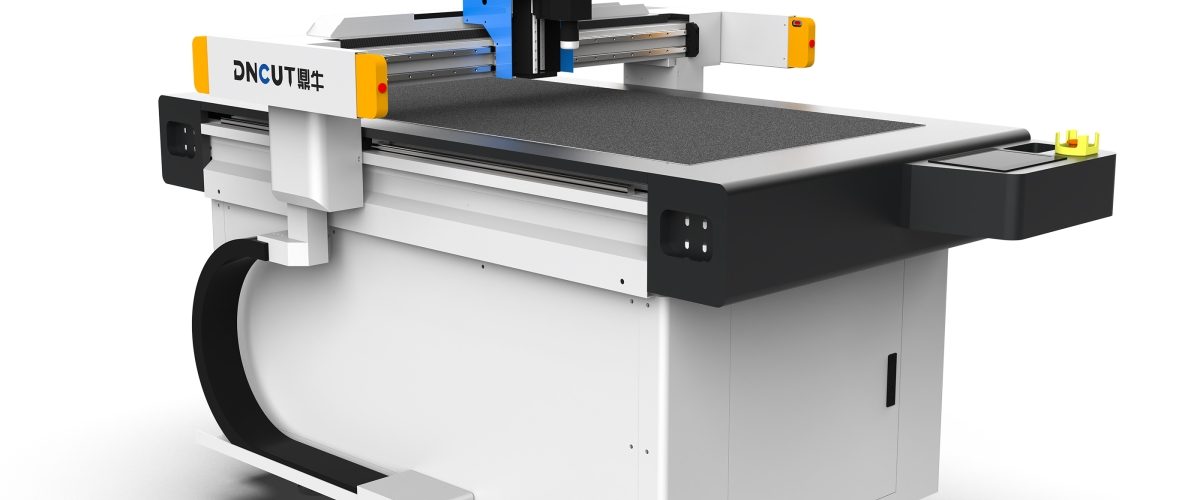
Composite Material Cutting Machine: A Practical Guide from Selection to Process
Composite materials (such as carbon fiber, glass fiber, aramid, etc.) are increasingly widely used in aerospace, automotive, wind power, and other fields, but their cutting processing faces challenges such as delamination, burrs, and rapid tool wear. Based on actual production experience, this article systematically summarizes the key selection points, process parameter settings, and common problem solutions for composite material cutting machines, providing actionable references for your production.
I. Core Selection Parameters of Composite Material Cutting Machines
1. Cutting Head Configuration
Composite material cutting machines are usually equipped with multiple cutting heads to adapt to different materials:
- Oscillating knife: Suitable for carbon fiber prepreg, glass fiber cloth, etc. The cutting frequency can reach 3000-5000 times per minute, and the amplitude is adjustable from 0.5-2 mm, effectively reducing delamination.
- Circular knife: Used for thicker honeycomb core materials or foam. The rotation speed is recommended to be 2000-4000 rpm to avoid material tearing.
- Ultrasonic knife: For tough materials such as aramid, with a frequency of 20-40 kHz, the cutting edge is smooth and burr-free.
- Laser head: Only suitable for some non-metallic composite materials, and attention must be paid to heat-affected zone control.
When selecting, the cutting head combination needs to be determined according to material type and thickness. For example, carbon fiber prepreg should preferentially use an oscillating knife, while honeycomb core materials require a circular knife or an oscillating knife in combination.
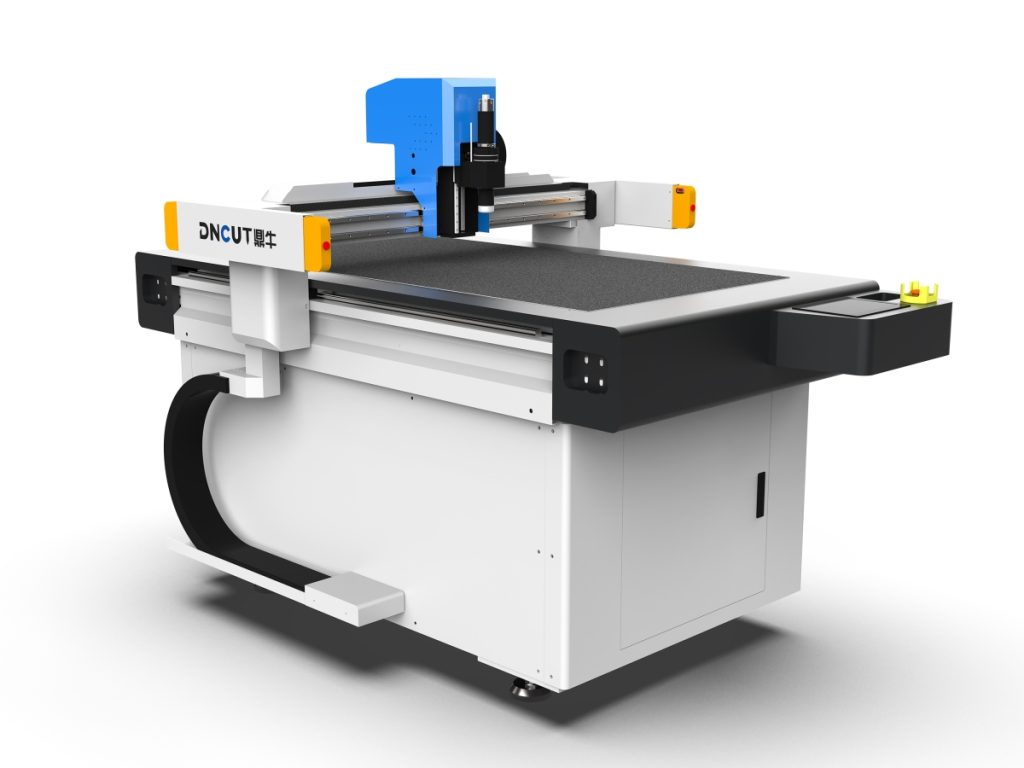
2. Platform Precision and Stability
Composite material cutting has high precision requirements. It is recommended to choose models with repeat positioning accuracy within ±0.05 mm. The platform needs to have a vacuum adsorption function, with adsorption force ≥20 kPa, ensuring that thin-layer materials do not shift during cutting. For large-sized workpieces (such as wind turbine blade webs), the platform length needs to be ≥6 m, and segmented adsorption should be used to reduce energy consumption.
3. Control System and Software
Modern cutting machines should support direct import of CAD/CAM software (such as DXF and PLT formats) and have automatic nesting functions, which can improve material utilization by 5%-15%. The control system needs to monitor tool wear in real time and have a breakpoint resume cutting function to reduce the scrap rate.
II. Optimization of Cutting Process Parameters
1. Cutting Speed and Feed
Cutting speed needs to be adjusted according to material thickness and tool type. Taking carbon fiber prepreg (thickness 0.2 mm) as an example, the oscillating knife frequency is set to 3500 times/min, and the recommended feed speed is 800-1200 mm/min. If the speed is too high, burrs will appear on the cutting edge; if too low, efficiency will decrease. Glass fiber cloth (thickness 0.5 mm) can appropriately increase the feed to 1500 mm/min, but an ultrasonic knife needs to be used in conjunction to suppress dust.
2. Tool Selection and Life Management
Tool material directly affects cutting quality. For carbon fiber materials, diamond-coated tools are recommended, with a life 5-8 times that of ordinary high-speed steel. In actual production, tool wear should be checked every 200-300 meters cut. The tool should be replaced when cutting resistance increases by 15% or edge burrs become obvious. Establishing a tool life ledger and recording the cutting meters of each tool can effectively control costs.
3. Adsorption and Fixation
Vacuum adsorption pressure needs to be adjusted according to material permeability. For highly permeable glass fiber cloth, the adsorption pressure needs to be ≥25 kPa; carbon fiber prepreg is dense, so 15-20 kPa is sufficient. For small-sized workpieces, auxiliary pressing devices can be added to prevent the material from lifting during cutting.
III. Common Problems and Solutions
1. Delamination at the Cutting Edge
Delamination is mostly caused by tool wear or improper cutting parameters. Solution: reduce the feed speed by 10%-20%, increase the oscillation frequency to 4000 times/min, and check whether the tool edge is sharp. If delamination still exists, try using an ultrasonic knife or adjusting the cutting angle (such as cutting at a 5° tilt).
2. Dust and Burrs
Glass fiber cutting generates dust, so a dust removal system needs to be equipped, with an air volume ≥2000 m³/h. Burr problems can be solved by reducing cutting speed, using sharp tools, or adding a finishing cutting pass. For aramid materials, an ultrasonic knife is the first choice and can reduce burrs by more than 90%.
3. Material Displacement
Thin-layer materials are prone to displacement during cutting, resulting in dimensional deviation. In addition to increasing adsorption force, a low-permeability film can be placed under the material to enhance the adsorption effect. For curved workpieces, conformal tooling needs to be used to ensure that the material fits closely to the platform.
IV. Key Points of Maintenance and Care
1. Daily Maintenance
Clean the guide rails and racks every shift, and check the air circuit pressure (recommended 0.6-0.8 MPa). Check the vacuum pump oil level weekly, and replace the filter every 500 hours. Tool installation requires the use of a torque wrench to ensure consistent clamping force (such as 20 N·m).
2. Precision Calibration
Use a laser interferometer or ballbar to detect positioning accuracy every month. If the deviation exceeds 0.1 mm, compensation is required. Check platform flatness every quarter, and the error should be ≤0.1 mm/m. For high-precision applications, a comprehensive calibration every six months is recommended.
3. Software Upgrade
Regularly update the cutting control software to obtain the latest material parameter library and optimization algorithms. For example, new versions of software may add cutting parameter presets for new composite materials, reducing the number of trial cuts.
V. Selection Recommendations and Cost Analysis
When purchasing a composite material cutting machine, it is necessary to comprehensively evaluate material types, production capacity requirements, and budget. For example, an enterprise producing 100,000 square meters of carbon fiber prepreg annually is recommended to choose a model equipped with dual oscillating knife heads and a vacuum adsorption platform (≥3 m×2 m), with an investment of about 800,000-1,200,000 RMB. If honeycomb core materials are involved, a circular knife module needs to be added, increasing the cost by 15%-20%. In terms of operating costs, tool consumables account for about 8%-12% of processing costs, which can be reduced to about 5% by optimizing parameters.
In short, the successful application of composite material cutting machines depends on reasonable equipment selection, fine adjustment of process parameters, and standardized maintenance management. It is recommended to conduct material trial cutting before procurement to verify the actual performance of the equipment, and to clarify technical support terms with the supplier to ensure smooth production.