
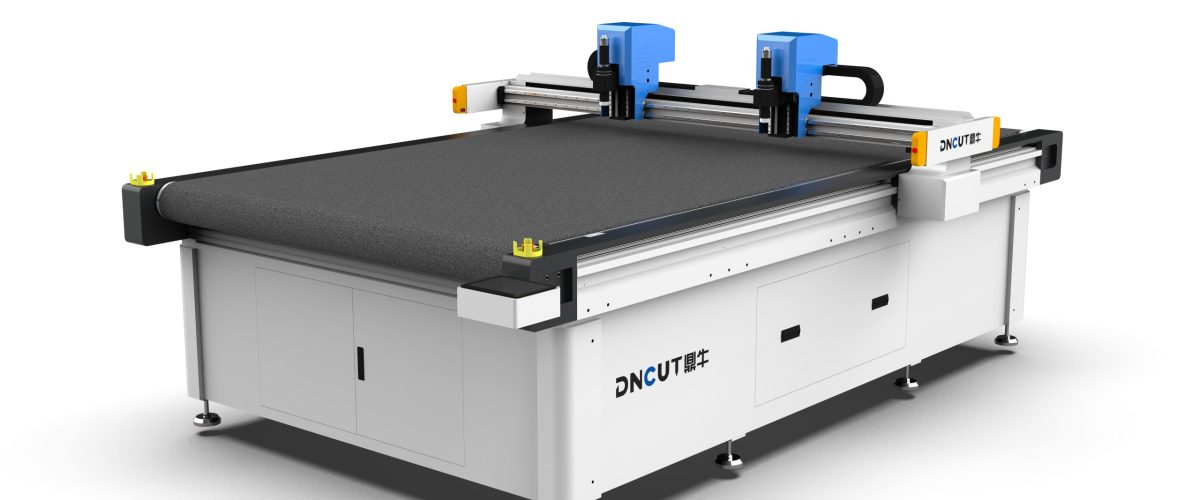
Canvas Cutting Machine: A Complete Guide from Selection to Efficient Production
Canvas is a high-density, thick woven fabric widely used in tents, backpacks, canvas shoes, truck tarps, outdoor awnings, and other fields. Due to its large thickness and tight fibers, traditional manual cutting or ordinary blade cutting has low efficiency, poor precision, and easily produces frayed edges. Canvas cutting machines (usually oscillating knife cutting machines or laser cutting machines) have become essential equipment for large-scale production. Starting from the perspective of actual production, this article systematically explains the selection, parameter settings, operating techniques, and maintenance points of canvas cutting machines to help you avoid common pitfalls.
I. Types of Canvas Cutting Machines and Applicable Scenarios
According to the cutting principle, canvas cutting machines are mainly divided into three categories:
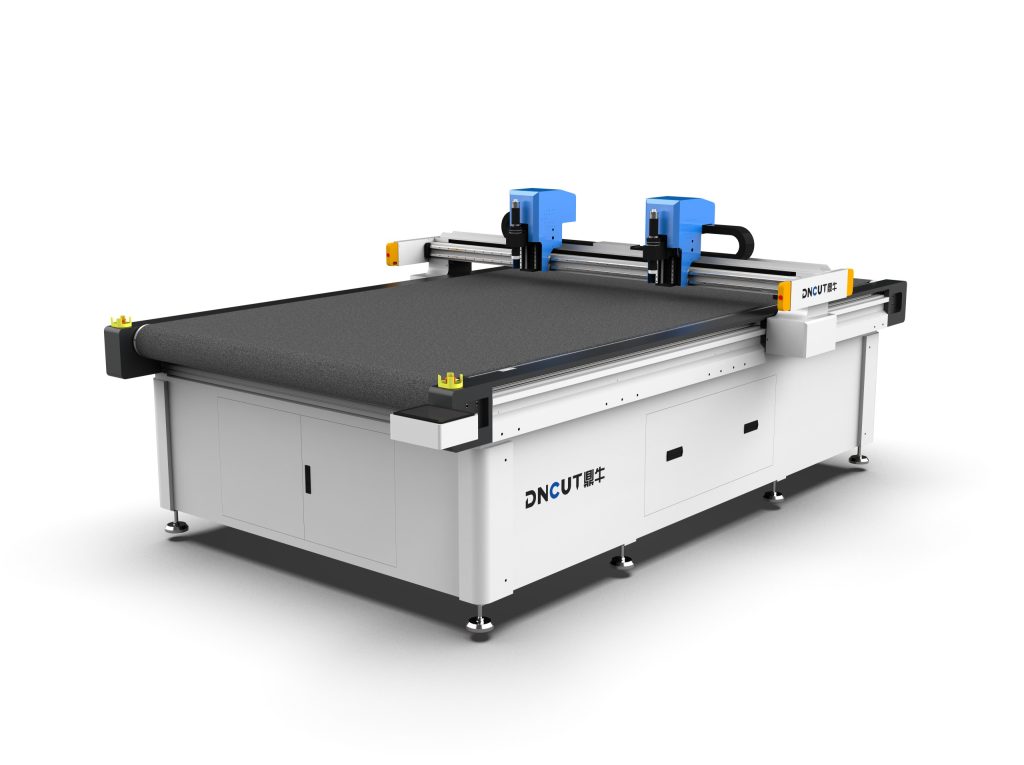
- Oscillating knife cutting machine: Cuts materials through a high-frequency vibrating blade (frequency usually 10,000-20,000 times/minute). The cut is smooth without frayed edges, suitable for cutting multi-layer canvas (such as 2-10 layers). The oscillating knife does not produce thermal effects and will not burn or melt canvas fibers, making it the mainstream choice for canvas cutting.
- Laser cutting machine: Uses a high-energy laser beam to melt or vaporize materials. The cutting speed is fast, but it produces burn marks (yellow edges) at the cut edges, and the effect on light-colored canvas is obvious. Laser cutting is more suitable for single-layer thin canvas or scenarios requiring edge sealing (such as preventing unraveling), but note that the melted polyester component in canvas may produce odors.
- Rotary knife cutting machine: Cuts through a rotating circular blade, suitable for single-layer or few-layer straight-line cutting. The cost is low, but it cannot complete complex curves and fine patterns, and layers tend to slide during multi-layer cutting.
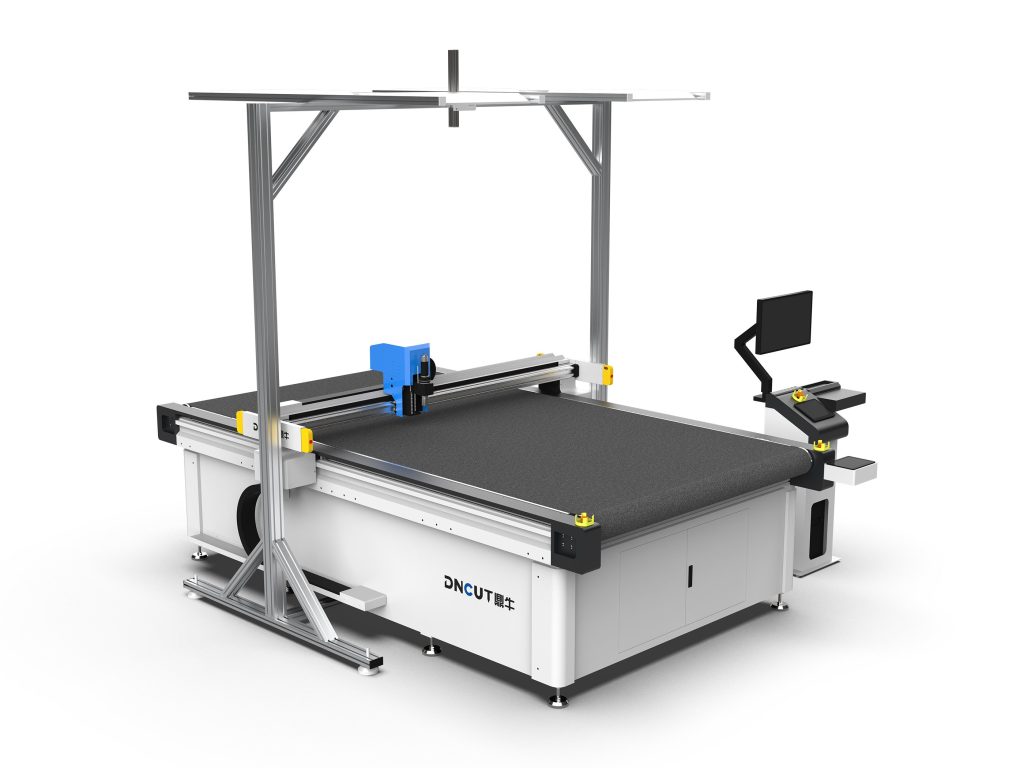
For most canvas product production (such as bags, tents, vehicle covers), it is recommended to use an oscillating knife cutting machine, especially models equipped with an automatic feeding system and CCD visual positioning, which can achieve high-precision, high-efficiency continuous cutting.
II. Key Selection Parameters: More Than Just Price
When purchasing a canvas cutting machine, the following parameters directly affect the use effect and return on investment:
1. Cutting Thickness and Number of Layers
The weight range of canvas is usually 200-600g/m², with a thickness of 0.5-2mm. The cutting capacity of an oscillating knife cutting machine is expressed in “number of layers” or “total thickness.” For example, a standard oscillating knife cutting machine can cut 10 layers of 300g/m² canvas (total thickness about 10mm). If your orders are mainly heavy canvas (such as 600g/m² and above), you need to choose a high-power oscillating knife (power ≥1000W) and reinforced blades. Note: The “maximum cutting thickness” claimed by manufacturers usually refers to single-layer material; for multi-layer cutting, it needs to be converted proportionally.
2. Effective Cutting Area
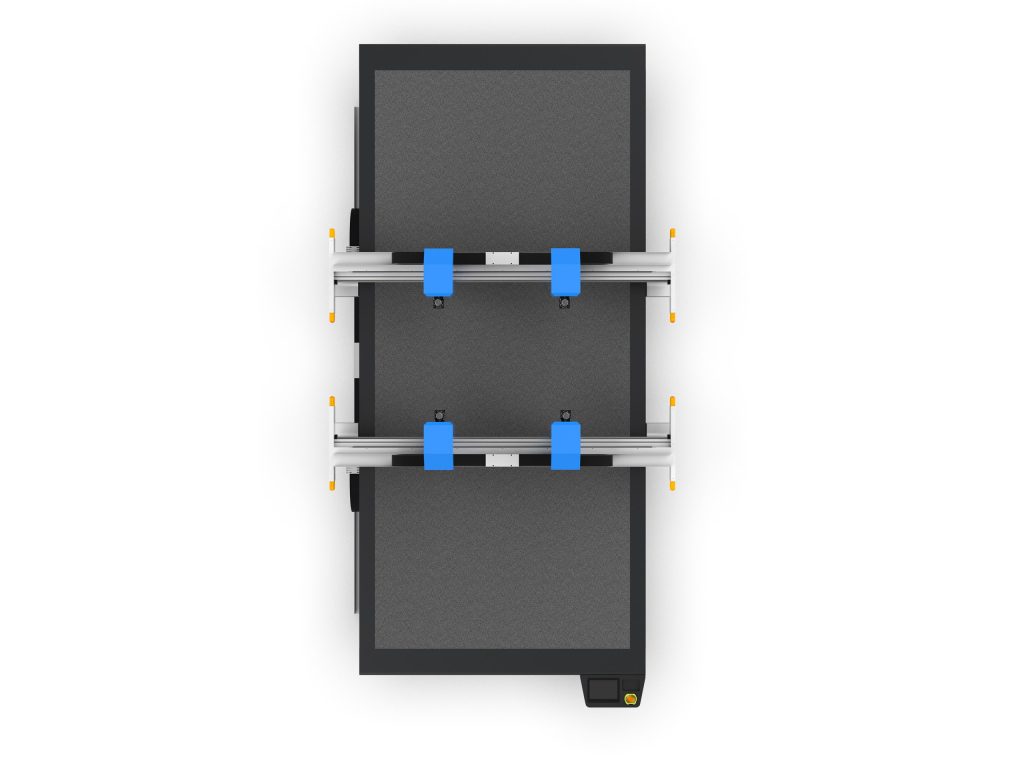
Choose the worktable according to your typical cut piece size. Common specifications include 1600mm×2500mm, 2100mm×3000mm, etc. If the cut pieces are large (such as truck tarps), it is recommended to choose a model with an automatic feeding system, which can achieve unlimited length cutting and avoid frequent loading and unloading.
3. Cutting Precision and Repeat Positioning Accuracy
The precision requirement for canvas cutting is usually within ±0.5mm. Pay attention to the equipment’s repeat positioning accuracy (should be ≤0.1mm) and cutting precision (affected by blade wear and material fixation method). High-precision models use servo motors + rack and pinion transmission and are equipped with a vacuum adsorption table to ensure the material does not shift during cutting.
4. Vacuum Adsorption System
Canvas has low air permeability, but strong vacuum adsorption is still needed to fix the material during multi-layer cutting. The vacuum pump power is recommended to be ≥5.5kW, and the adsorption force ≥200mbar. Some low-end models use fan adsorption, which is noisy and has insufficient adsorption force, causing material sliding during cutting and non-vertical cuts.
5. Blade and Blade Holder
Oscillating knife blades come in different angles (such as 30°, 45°, 60°) and shapes (straight edge, serrated edge). For cutting canvas, it is recommended to use a 45° straight-edge blade, which is sharp and durable. The blade holder should have an automatic lubrication system to reduce wear. In addition, check whether it is equipped with a cooling device (air cooling) to prevent the blade from overheating during continuous operation and causing the canvas edge to melt (especially polyester-containing canvas).
6. Control System and Software
Mainstream control systems support DXF, PLT, AI, and other formats, and have automatic nesting, path optimization, and breakpoint resume cutting functions. The operation interface should be a Chinese touch screen for workers to get started quickly. If your orders are mainly small-batch and multi-variety, it is recommended to choose a model with projection positioning or CCD visual recognition, which can quickly align prints or patterns.
III. Operating Techniques: How to Cut High-Quality Canvas Pieces
1. Material Preprocessing
Before cutting, canvas should undergo pre-shrinking treatment (if there are subsequent washing requirements) and flattening treatment. Rolled canvas needs to be unfolded and laid flat 24 hours in advance to release internal stress and avoid deformation of cut pieces after cutting. For multi-layer cutting, thin paper or film should be used to separate each layer of canvas to prevent interlayer adhesion and sliding.
2. Parameter Settings
Typical parameters for oscillating knife cutting of canvas:
- Vibration frequency: 12,000-15,000 times/minute (use lower values for thick canvas, higher values for thin canvas)
- Cutting speed: 200-400mm/s (adjust according to the number of layers and thickness; the more layers, the slower the speed)
- Blade down pressure: 0.5-1.0mm (ensure complete cutting but not excessive penetration into the table)
- Vacuum adsorption: On, pressure adjusted according to the number of layers (increase adsorption force for multiple layers)
Note: When cutting a new material for the first time, it is recommended to test-cut a small sample first and observe the cut quality and blade wear.
3. Fixation and Nesting
When using the vacuum adsorption table, ensure the canvas completely covers the adsorption area, and seal the edges with tape to prevent air leakage. During nesting, place the cut pieces as close as possible to reduce waste, but leave at least 10mm of cutting spacing to avoid blade interference. For canvas with directionality (such as grain direction), the nesting direction should be consistent.
4. Common Problems and Solutions
- Frayed cut edges: The blade is dull or the vibration frequency is too low. Replace the blade or increase the frequency.
- Cut piece size deviation: Material sliding or insufficient adsorption. Check the vacuum adsorption system, increase the adsorption force, or use clamps for assistance.
- Blade breakage: Cutting speed is too fast or the blade angle is not suitable for thick materials. Reduce the speed and replace with a large-angle blade (such as 60°).
- Edge burning: The oscillating knife generally does not burn. If it occurs, check whether the laser mode was mistakenly used or the blade is overheated (check the cooling system).
IV. Maintenance and Care: Extend Equipment Life
Canvas cutting machines are precision equipment, and daily maintenance directly affects cutting precision and failure rate:
- Daily: Clean canvas debris around the table and blade holder, check whether the blade is loose or worn, and clean the vacuum adsorption holes.
- Weekly: Check the transmission belt tension (if any), lubricate the guide rails and lead screws (use lithium-based grease), and clean the vacuum pump filter.
- Monthly: Calibrate cutting precision (using standard test patterns), check electrical connections, and replace worn blades and carbon brushes (if any).
- Quarterly: Comprehensively check servo motors and drivers, clean dust from the control cabinet, and test safety devices (such as emergency stop buttons and light curtains).
Blades are consumables; it is recommended to keep 5-10 spare blades. When cut quality declines or cutting resistance increases, replace the blade promptly to avoid damaging the blade holder.
V. Return on Investment and Selection Recommendations
A domestic mid-range oscillating knife cutting machine (1600mm×2500mm, with vacuum adsorption) costs about 80,000-150,000 RMB, while imported brands (such as Zünd, Gerber) cost more than 300,000 RMB. For small and medium-sized canvas product factories with a daily cutting volume of 500-1,000 pieces, domestic equipment can already meet the demand. Key considerations during selection:
- Whether the manufacturer provides sample testing for canvas cutting (preferably send your material for test cutting)
- After-sales service response time (it is recommended to choose a brand with local service outlets)
- Whether the software supports free upgrades and custom nesting functions
- Whether the equipment is expandable (such as subsequently adding automatic feeding or CCD)
If your orders are mainly single-layer thick canvas and require edge sealing, you can consider a laser cutting machine, but you need to accept the problem of yellowed edges. For most canvas processing enterprises, the oscillating knife cutting machine has obvious comprehensive advantages in precision, efficiency, and adaptability.
Summary: The selection of a canvas cutting machine requires comprehensive consideration of material characteristics, number of layers, precision requirements, and budget. Correct use and maintenance of the equipment can significantly improve cutting efficiency and reduce material waste. I hope the parameters and suggestions in this article can provide practical help for your production.