
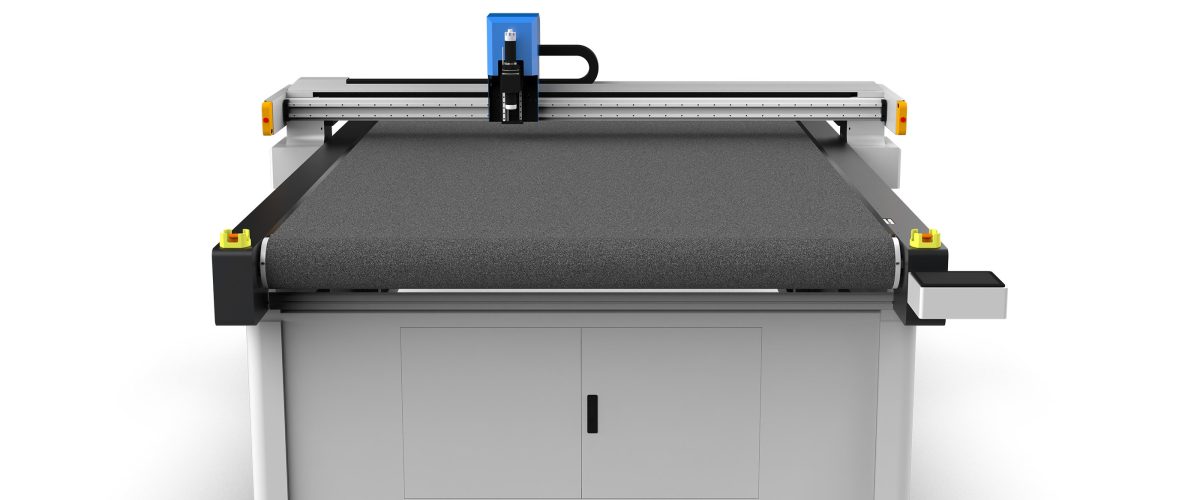
Foam cushion cutting machine: a complete guide from selection to process
Foam cushion cutting is a key process in industries such as upholstered furniture, automotive interiors, and medical protective gear. Traditional manual cutting relies on templates and scissors, resulting in low efficiency and poor consistency. The foam cushion cutting machine solves the precision and speed problems in mass production through automated control and high-precision cutting heads. From a practical production perspective, this article systematically introduces the types, selection parameters, process settings, and maintenance points of foam cushion cutting machines, providing a reference for equipment procurement and production management.
I. Main types of foam cushion cutting machines and their applicable scenarios
According to the cutting principle, foam cushion cutting machines are mainly divided into three categories:
- oscillating knife cutting machine: The blade vibrates at high frequency (typically 8,000-15,000 times/minute), suitable for soft materials such as sponge, memory foam, EVA, and XPE. Cutting thickness can reach 50-100mm, with smooth cut edges and no dust. It is the first choice for mass production of cushions.
- laser cutting machine: Uses a laser beam to melt the material, suitable for thin fabrics and chemical fiber fillings, but cutting sponge produces harmful gases and burnt edges, and the cost is relatively high, so it is rarely used in the cushion industry.
- circular knife cutting machine: Cuts through rotating blades, suitable for thinner sponge and foam, with thickness generally not exceeding 30mm, mostly used for small batches or simple shapes.
For most cushion manufacturers, oscillating knife cutting machines have clear comprehensive advantages in precision, efficiency, and material adaptability. The following content focuses primarily on oscillating knife equipment.
II. Core Selection Parameters: More Than Just Price
When purchasing a cushion cutting machine, pay close attention to the following technical parameters:
1. Effective Cutting Area
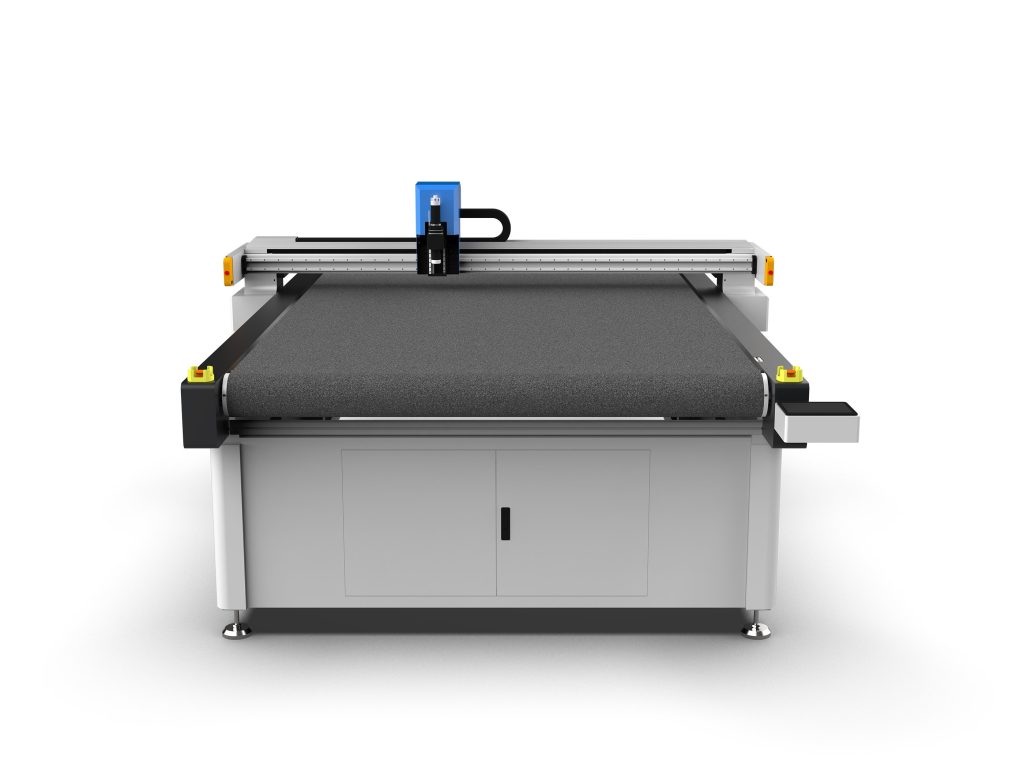
Choose the table size based on common cushion dimensions. For example, to produce 500mm×500mm cushions, it is recommended to select equipment with an effective cutting area of at least 1600mm×2500mm, so that multiple cut pieces can be nested in a single layout to improve material utilization. If long sofa cushions are involved, the table length should be increased accordingly.
2. Cutting thickness and material adaptability
The cutting thickness of an oscillating knife cutting machine depends on the blade length and oscillation amplitude. Standard models can cut 30-50mm foam, while extended-blade models can reach 100mm. It is necessary to confirm whether the equipment supports the materials you commonly use, such as high-density foam (density ≥45D), latex, coir, etc. Some materials require specially coated blades or auxiliary devices.
3. Positioning Accuracy and Repeat Accuracy
Cushions usually have curved edges and holes, and accuracy directly affects assembly quality. The positioning accuracy of high-quality equipment should reach ±0.1mm, with repeat positioning accuracy of ±0.05mm. Pay attention to the transmission method: the combination of gear rack + linear guide rail is more stable than belt drive.
4. Control System and Software
Mainstream equipment uses a motion controller + CAD/CAM software. The software should support common formats (DXF, PLT, AI) and provide automatic nesting, path optimization, and cutting simulation functions. The operation interface is best as a Chinese touchscreen to reduce training costs.
5. Production Efficiency
The cutting speed is usually 0-1200mm/s, and the actual efficiency depends on material thickness and graphic complexity. Taking 50mm thick foam and a simple cushion outline as an example, the cutting time for a single piece is about 30-60 seconds. Equipment capacity needs to be evaluated in combination with order volume.
III. Process Parameter Settings: Taking Foam Cushions as an Example
Correct process parameters are the key to ensuring cut quality and efficiency. The following are typical setting references:
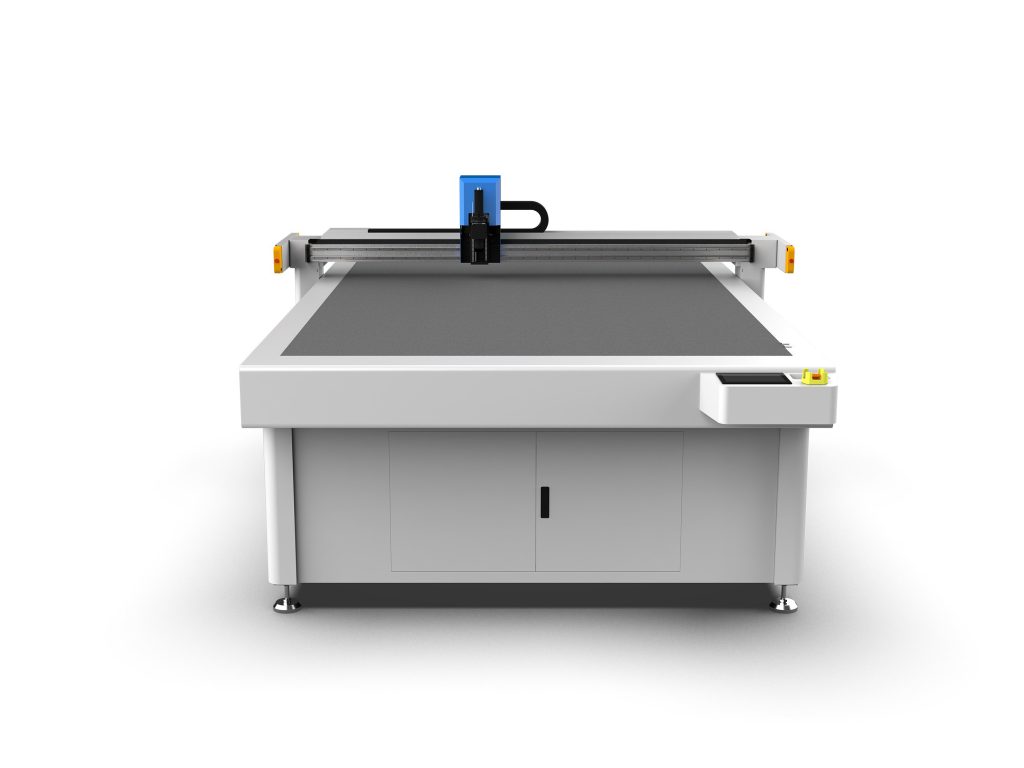
- Oscillation frequency: When cutting soft foam, set the frequency to 10,000-12,000 times/minute. Too high will cause the material to melt, while too low will result in rough cuts.
- Feed speed: Straight sections can be set to 800-1000mm/s, and arc sections reduced to 400-600mm/s to ensure contour accuracy.
- Blade selection: Serrated blades are suitable for high-density foam, while straight-edge blades are suitable for regular foam. Select the blade length according to thickness, generally extending 5-10mm below the bottom of the material.
- Vacuum adsorption: When cutting sponge, vacuum adsorption must be used to secure the material. The recommended vacuum level is -0.06 to -0.08 MPa. For porous materials, a breathable film can be placed over the table surface.
- Tool compensation: Set the compensation value according to the blade thickness, usually 0.2-0.5 mm, to ensure accurate cutting dimensions.
In actual operation, it is recommended to first make a test cut, measure the dimensions and observe the cut quality, and then fine-tune the parameters.
IV. Common Problems and Solutions
1. Burrs or burning at the cut edge
The cause may be excessive vibration frequency or too slow a feed rate, resulting in friction-generated heat. Reduce the frequency to 8000-9000 times/minute, increase the feed rate, or replace with a sharp blade.
2. Cutting dimension deviation
Check whether the tool compensation settings are correct, whether the transmission components are loose, and whether the material has shifted during cutting. Ensure the vacuum adsorption is in place, and add a material pressing device if necessary.
3. Blade breakage
This is usually caused by too fast a feed rate or hard impurities in the material. Reduce the speed, clean the material surface, and use a blade with better toughness.
4. Low software layout efficiency
Use the software’s automatic nesting function, set a reasonable spacing (usually 3-5mm), and regularly update the layout algorithm. For complex shapes, you can manually adjust the angle to improve utilization.
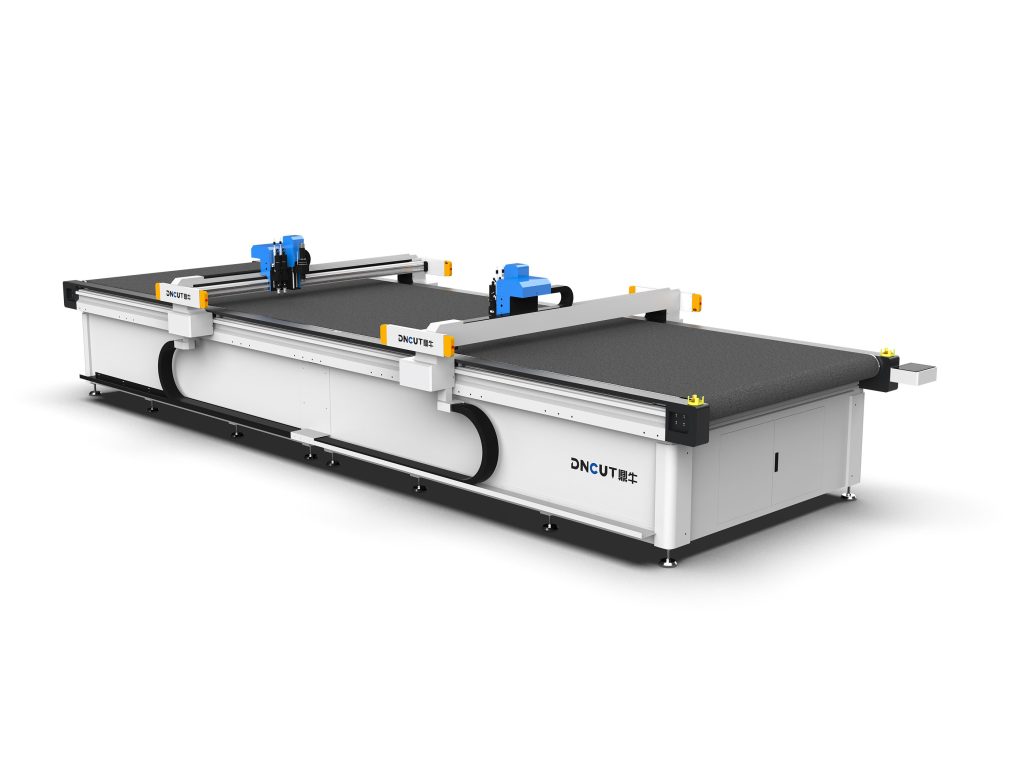
V. Maintenance and Care: Extending Equipment Lifespan
The daily maintenance of the cushion cutting machine directly affects its stability and service life:
- Daily: Clean the tabletop and vacuum adsorption holes, check the blade wear condition, and clean the dust on the guide rails.
- Weekly: Check the tension of the drive belt or rack, lubricate the linear guide rails, and clean the cooling fan of the electrical control cabinet.
- Monthly: Calibrate the machine origin, check the vacuum pump oil level (if it is an oil-type pump), and test the safety devices.
- Quarterly: Conduct a comprehensive inspection of electrical connections, replace worn blades and carbon brushes (if any), and back up system parameters.
Establish a maintenance record table to document the content of each maintenance session and any issues found, for easy traceability.
VI. Safety Operating Guidelines
Although the oscillating knife cutting machine is safer than laser equipment, basic guidelines must still be followed:
- Do not reach into the cutting area during operation; the equipment should be equipped with safety light curtains or emergency stop buttons.
- Wear cut-resistant gloves and use dedicated tools when replacing blades.
- Keep the work area clean and tidy to avoid material accumulation affecting heat dissipation.
- Non-professionals must not open the electrical control cabinet.
VII. Purchasing Recommendations and Cost Analysis
The price range for cushion cutting machines is quite broad: small benchtop devices cost about 30,000-50,000 yuan, while large high-precision devices cost 100,000-200,000 yuan. It is recommended to choose based on production capacity requirements and avoid over-investment. Also consider consumable costs (blades, vacuum film) and after-sales service response time. Prioritize suppliers with proven cases in the upholstered furniture industry, and request on-site trial cutting.
Regarding return on investment, calculating one machine replacing 3 cutting workers, the cost can usually be recovered in 6-12 months. In addition, automated cutting can reduce material waste by 5%-10%, further improving benefits.
Conclusion
The cushion cutting machine is an effective tool for improving production efficiency and product consistency. When selecting a model, material characteristics, precision requirements, production capacity, and maintenance costs must be comprehensively considered. Reasonable process parameters and standardized maintenance can maximize equipment value. We hope this guide provides practical reference for your equipment selection and production management.