
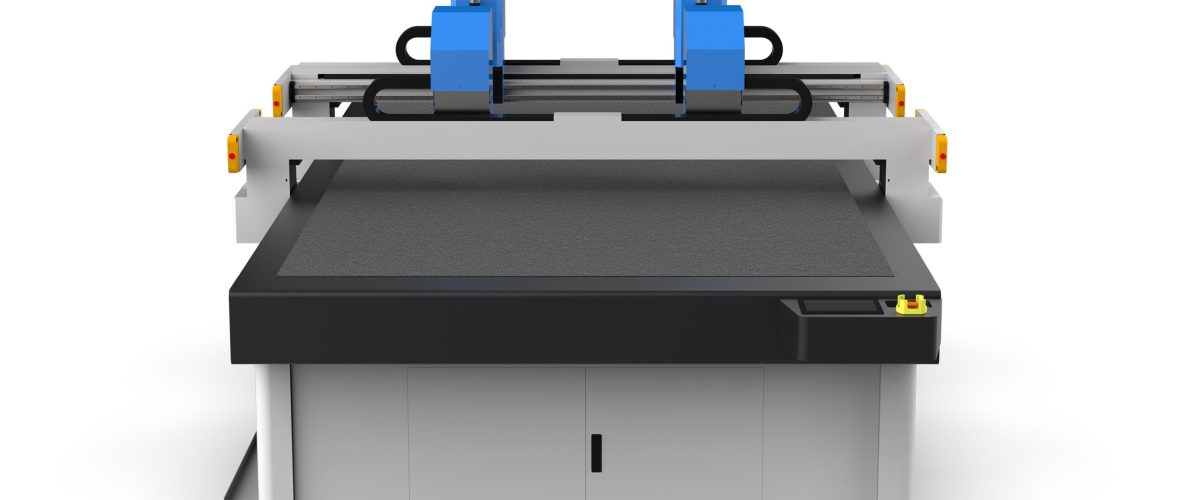
Shoe Material Cutting Machine: Intelligent Cutting Solutions for the Footwear Industry
In the footwear industry, shoe material cutting is a key process that affects product quality and production efficiency. Traditional manual cutting or die punching methods suffer from low precision, slow changeover, and large material waste. With the development of flexible material cutting technology, CNC oscillating knife cutting machines (i.e., shoe material cutting machines) have become mainstream equipment for processing components such as soles, uppers, linings, and midsoles. This article provides an in-depth discussion of the technical features, selection parameters, process applications, and maintenance points of shoe material cutting machines, offering practical reference for footwear manufacturers.
I. Core Types and Working Principles of Shoe Material Cutting Machines
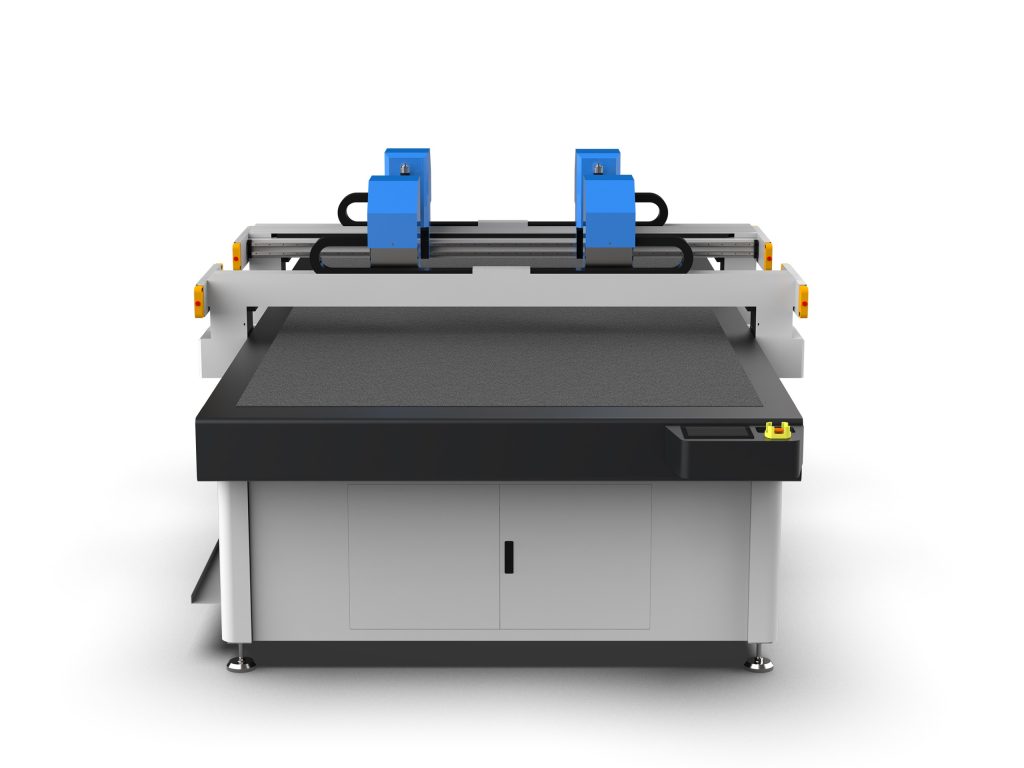
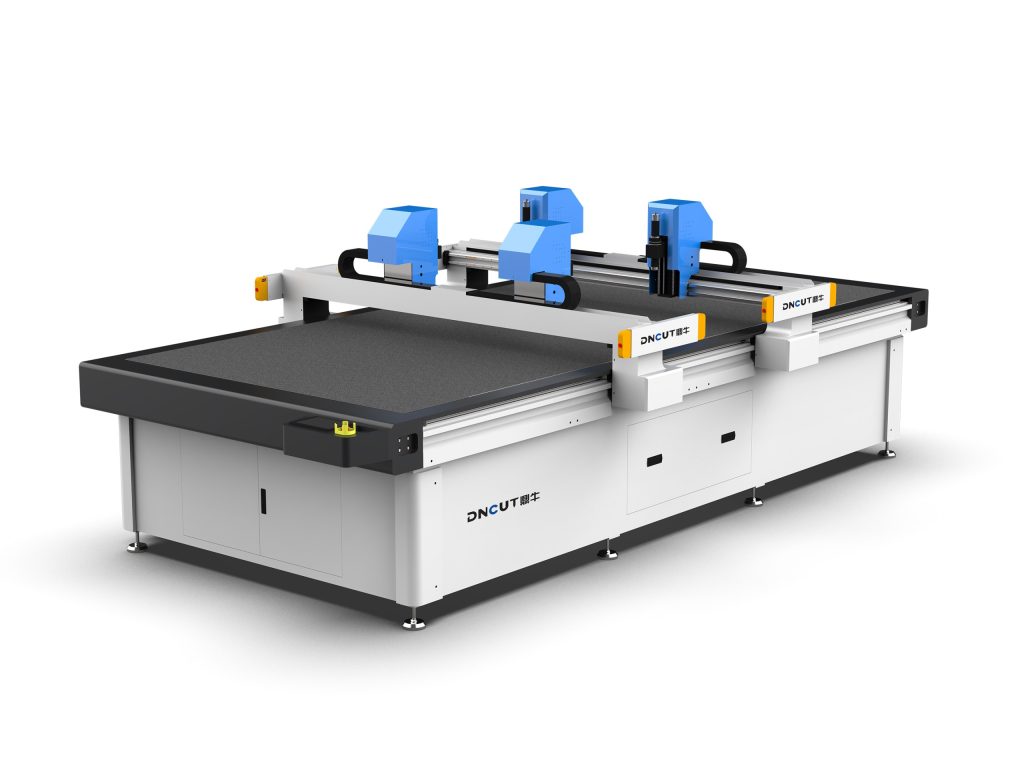
Shoe material cutting machines mainly adopt oscillating knife cutting technology, performing cold cutting of flexible materials through high-frequency vibrating blades. According to the cutting head structure, common types include:
- Single-head cutting machine: Suitable for small-batch, multi-variety production, with flexible tool changing and lower investment cost.
- Multi-head cutting machine: Equipped with 2-4 independent cutting heads, capable of simultaneously cutting different patterns or layered cutting, with significantly improved efficiency, suitable for large-batch orders.
- Cutting machine with projection positioning: Integrates a projector to project the cutting path onto the material surface, facilitating manual alignment and nesting, especially suitable for natural materials such as leather.
Working principle: CAD/CAM software converts design drawings into cutting paths, the control system drives the cutting head to move along the X/Y directions, and the blade vibrates up and down at high frequency of thousands of times per minute, easily cutting through leather, mesh fabric, EVA, TPU, and other materials, with neat cuts and no burnt edges.
II. Key Performance Parameters and Selection Points
When purchasing a shoe material cutting machine, the following parameters require special attention:
1. Cutting Precision and Repeat Positioning Accuracy
High-precision models can achieve repeat positioning accuracy of ±0.05mm and cutting precision of ±0.1mm, ensuring consistent dimensions of shoe components and reducing subsequent stitching errors. For high-end sports shoes, it is recommended to choose equipment with precision within ±0.05mm.
2. Cutting Speed and Acceleration
Cutting speed is usually measured by X/Y axis movement speed. High-quality models can reach over 1200mm/s, with acceleration of 0.5G-1G. High-speed models can increase production capacity, but the cutting process parameters must match the material to avoid rough cuts caused by excessive speed.
3. Cutting Thickness and Material Adaptability
The oscillating knife cutting thickness is generally 0.5-10mm (depending on material hardness), and can handle leather, PU, mesh fabric, EVA, sponge, TPU, carbon fiber, etc. For EVA midsoles with thickness exceeding 10mm, high-power oscillating knives or punching processes should be used instead.
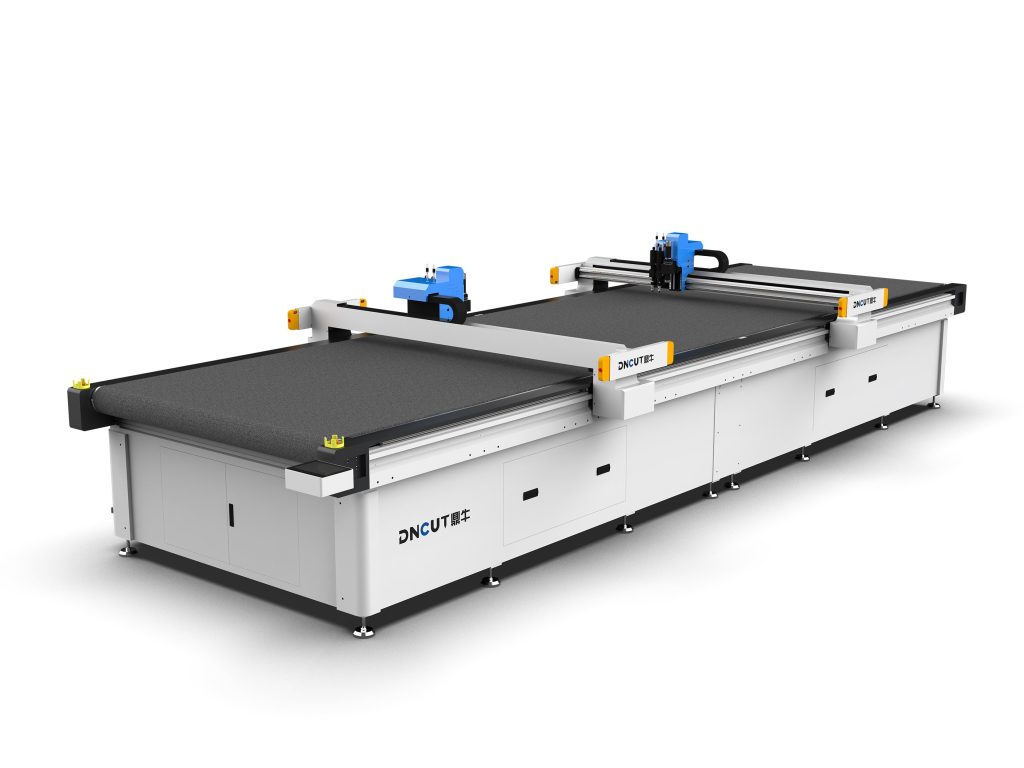
4. Working Table Size
Common table sizes are 1600mm×2500mm, 1800mm×3000mm, etc., which should be selected according to the maximum shoe component size and nesting method. If nesting layout is adopted, it is recommended to choose a large working area to reduce material waste.
5. Vacuum Adsorption System
Vacuum adsorption ensures the material remains fixed during cutting. The adsorption force must be adjustable to accommodate materials with different air permeability (e.g., mesh fabric requires lower adsorption force, leather requires higher adsorption force). Zoned adsorption function can further save energy.
6. Software and Automation Functions
It should support common CAD formats (DXF, PLT, AI, etc.) and have functions such as automatic nesting, path optimization, and intelligent deviation correction. The projection positioning system can greatly reduce alignment time, especially suitable for leather nesting.
III. Process Application Examples of Shoe Material Cutting
1. Upper Cutting
Upper materials are mostly multi-layer composites (leather + sponge + mesh fabric). During cutting, the blade vibration frequency and feed speed need to be controlled to avoid interlayer separation or cut melting. Recommended parameters: vibration frequency 3000-5000 times/minute, feed speed 200-400mm/s, using sharp new blades.
2. Sole Cutting
Sole materials such as EVA, TPU, and rubber have higher hardness, requiring large-amplitude oscillating knives (amplitude 1-2mm) and wear-resistant blades. The cutting speed should be appropriately reduced to 100-200mm/s, and water cooling or air cooling systems should be activated to prevent blade overheating.
3. Lining and Midsole Cutting
Lining materials are relatively thin, allowing high-speed cutting (500-800mm/s), with low adsorption force to prevent material deformation. Midsole materials (such as PHYLON) require attention to cutting depth control to avoid cutting through the bottom layer.
IV. Practical Tips for Improving Cutting Efficiency and Quality
- Optimize nesting: Use automatic nesting software to rotate and nest components, increasing material utilization by 5%-15%.
- Layered cutting: For multi-layer materials, adopt the strategy of cutting the top layer first and then the bottom layer to reduce interlayer pulling.
- Blade management: Establish blade life records, regularly check edge wear. Generally, blades should be replaced every 8 hours when cutting leather.
- Vacuum adsorption adjustment: Adjust adsorption force according to material air permeability. Excessive adsorption force on mesh materials can cause deformation; it is recommended to use low adsorption force combined with tape fixation.
- Regular calibration: Calibrate table levelness and cutting head verticality once a month to ensure stable cutting precision.
V. Maintenance and Common Problem Handling
Daily Maintenance
- Clean guide rails and racks daily to remove dust and material debris.
- Check blade clamping devices and vibration mechanisms weekly to ensure no looseness.
- Lubricate linear guide rails and lead screws monthly using special lubricating grease.
- Check vacuum pump filter elements quarterly and replace them promptly.
Common Problems and Countermeasures
- Rough cuts: Check whether the blade is worn, appropriately reduce cutting speed, and increase vibration frequency.
- Material displacement: Increase vacuum adsorption force or use fixtures for auxiliary fixation.
- Cutting dimension deviation: Calibrate cutting head verticality and table levelness, and check drive belt tension.
- Blade breakage: Check whether the cutting path is too sharp, reduce feed speed, and use blades with better toughness.
VI. Conclusion
As key equipment for footwear manufacturers to achieve automated and flexible production, the selection and application of shoe material cutting machines directly affect product quality and cost. Enterprises should choose appropriate models and configurations based on their own material characteristics, order structure, and precision requirements, and focus on daily maintenance and process optimization to fully leverage equipment performance. With the continuous advancement of intelligent cutting technology, shoe material cutting machines are developing toward higher precision, higher efficiency, and greater intelligence, bringing sustained value improvement to the footwear industry.