
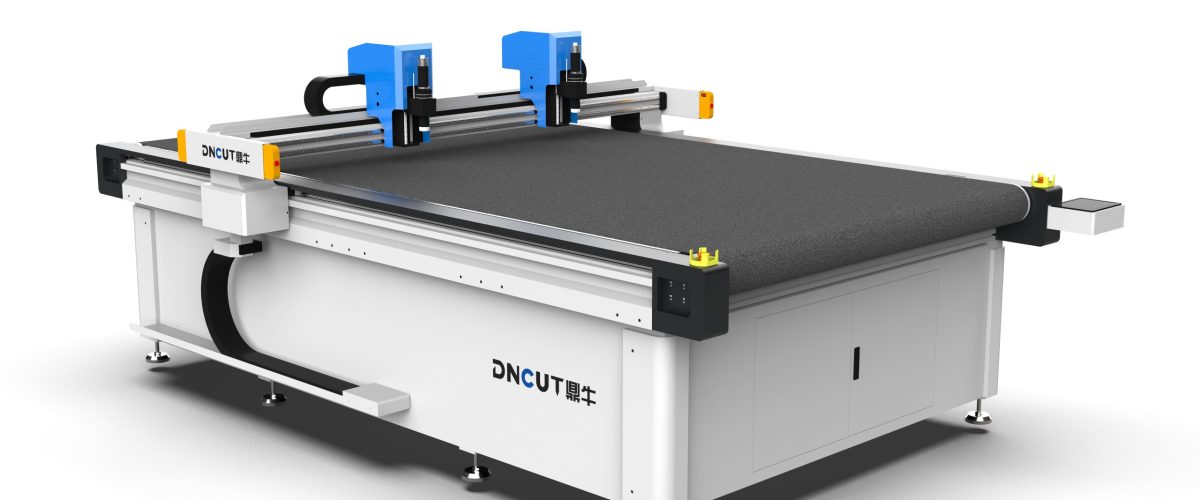
Insulation Cutting Machine: A Complete Guide from Selection to Operation
In industries such as building insulation, cold chain logistics, and air conditioning installation, the cutting quality of insulation materials (such as glass wool, rock wool, rubber-plastic, and polyurethane foam) directly affects construction efficiency and insulation performance. Traditional manual cutting has problems such as low precision, heavy dust, and low efficiency, while professional insulation cutting machines use CNC oscillating knife, pneumatic knife, or ultrasonic technology to achieve high-precision, dust-free rapid cutting. Based on actual production experience, this article systematically summarizes the selection parameters, operating techniques, and maintenance points of insulation cutting machines to help you make informed decisions.
I. Core Types and Application Scenarios of Insulation Cutting Machines
According to the cutting principle, mainstream equipment is divided into three categories:
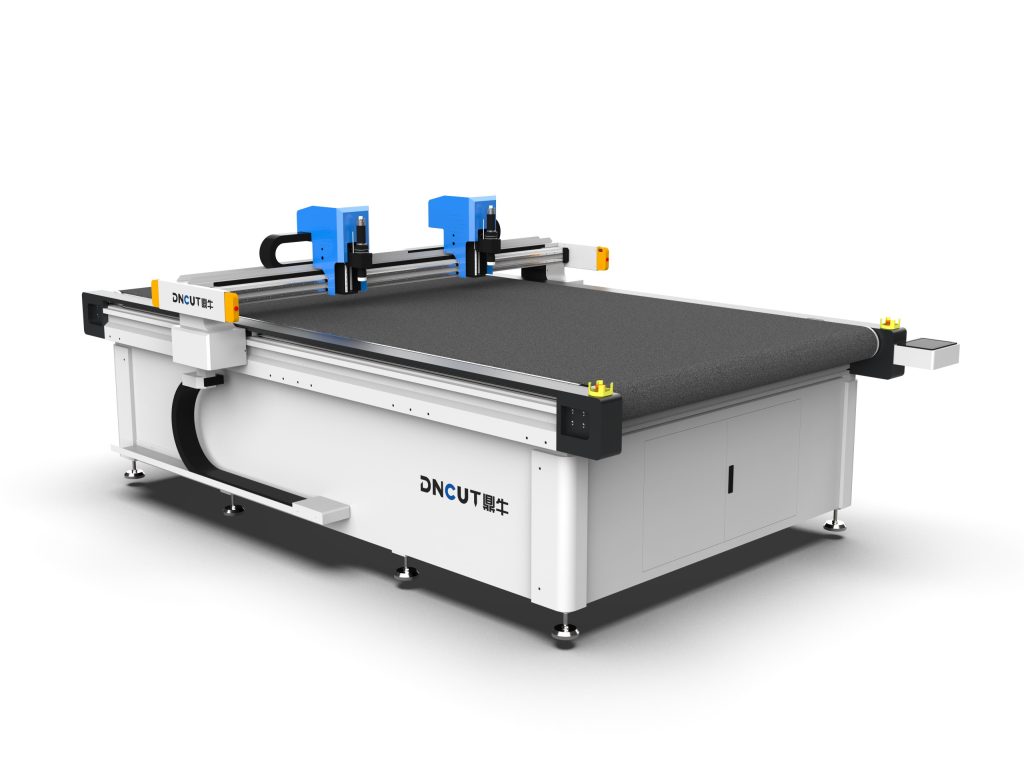
- CNC oscillating knife cutting machine: The blade reciprocates at high frequency (frequency is usually 3000-8000 times/min), suitable for cutting soft insulation materials such as glass wool, rock wool, and rubber-plastic sponge. Cutting thickness can reach 100mm, precision ±0.5mm. Representative models such as the DNCUT series are equipped with automatic feeding systems and are suitable for batch processing.
- Pneumatic knife cutting machine: Uses compressed air to drive the blade, with large cutting force, suitable for harder polyurethane foam (density ≥40kg/m³) and phenolic foam. Cutting speed can reach 20m/min, but the cut is slightly rough.
- Ultrasonic cutting machine: Uses high-frequency vibration (20-40kHz) to locally melt and separate the material, with a smooth cut and no burrs, particularly suitable for rubber-plastic insulation pipes and fine seals. However, equipment cost is relatively high, and cutting thickness generally does not exceed 30mm.
When choosing, comprehensive judgment should be made based on material type, thickness, output, and budget. For example, CNC oscillating knife is the first choice for large-batch cutting of glass wool rolls; while fixed-length cutting of air conditioning insulation pipes is more suitable for ultrasonic or pneumatic knife.
II. Key Selection Parameters: More Than Just Price
When purchasing an insulation cutting machine, the following parameters directly affect usage results and return on investment:
- Cutting thickness and width: Clarify the maximum thickness of commonly used materials (such as glass wool 50-100mm) and maximum width (such as 1.2m or 1.5m), and the equipment should have margin. Note: When cutting thickness increases, the oscillating knife frequency should be reduced accordingly, otherwise the blade is prone to overheating.
- Cutting precision: Repeat positioning accuracy should be ≤±0.2mm, cutting precision ≤±0.5mm. For insulation boards with high splicing requirements, insufficient precision will lead to excessive gaps and affect insulation performance.
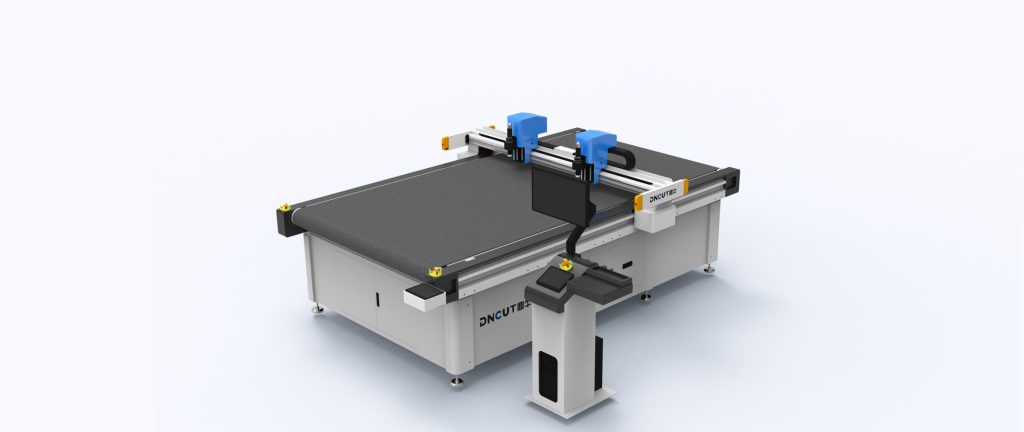
- Control system: Prioritize CNC systems with CAD import function, supporting DXF files to directly generate cutting paths. Servo motor drive is more stable than stepper motor, especially suitable for long-term continuous operation.
- Dust removal device: Cutting glass wool and rock wool generates a large amount of dust, so a negative pressure dust removal interface (air volume ≥2000m³/h) and dust collection bag must be equipped. Equipment without dust removal not only pollutes the environment but also accelerates mechanical wear.
- Table material: Felt table is suitable for soft materials with strong adsorption; hard plastic table is suitable for hard foam. Some high-end models use honeycomb aluminum tables, balancing flatness and breathability.
Taking an air conditioning insulation material processing factory as an example, its purchased DNCUT-1625 oscillating knife cutting machine (effective cutting area 1600×2500mm, maximum thickness 80mm, equipped with automatic feeding and dust removal system) increased production efficiency by 3 times and material utilization from 75% to 92%.
III. Operating Techniques: Improving Cutting Quality and Efficiency
1. Blade Selection and Replacement
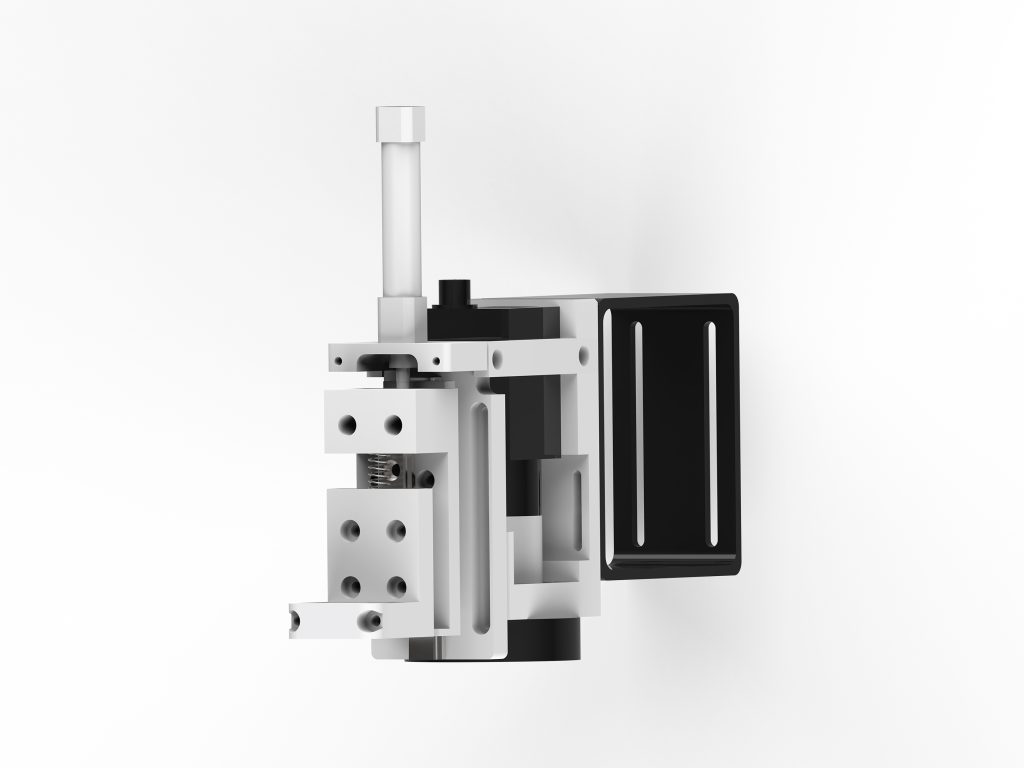
Common blade types for oscillating knife include: pointed knife (suitable for fine contours), round knife (suitable for fast straight-line cutting), serrated knife (suitable for hard foam). When cutting glass wool, it is recommended to use a pointed knife with a blade angle of 30°. Check wear every 8-10 hours of cutting, and replace in time when burrs appear at the cut or cutting resistance increases. When replacing the blade, be sure to turn off the power and use a special wrench to avoid blade damage.
2. Parameter Settings
Taking cutting 50mm thick glass wool as an example: set the oscillation frequency to 5000 times/min, feed speed 8-12m/min, blade amplitude 3mm. If cutting rubber-plastic sponge, the frequency can be increased to 7000 times/min, feed speed 15m/min. Note: Too fast feed speed will cause the cut to be slanted, too slow will cause material melting and sticking. It is recommended to test cut with waste material the first time, observe the cut quality, and then fine-tune.
3. Material Fixing and Feeding
When using a vacuum adsorption table, ensure the material is flat and fitted, with vacuum pressure ≥-0.06MPa. For roll materials, use an automatic feeding rack and maintain constant tension to avoid material wrinkling. When cutting small pieces, a thin sponge can be placed under the material to increase adsorption.
4. Common Problem Handling
- Burrs at the cut: Check whether the blade is worn, or reduce the feed speed by 10%-20%.
- Material melting and sticking: Mostly seen in rubber-plastic materials; reduce oscillation frequency or increase feed speed, or switch to ultrasonic cutting.
- Cutting size deviation: Check the tension of the timing belt, or recalibrate the origin. After long-term use, insufficient lubrication of the guide rail can also cause deviation.
IV. Maintenance: The Key to Extending Equipment Life
The daily maintenance of insulation cutting machines directly affects the failure rate and cutting precision:
- Daily: Clean table debris, check dust bag capacity, clean dust on the guide rail surface.
- Weekly: Apply lithium-based grease to linear guide rails and lead screws, check whether blade fixing screws are loose, clean the cooling fan filter of the electrical control box.
- Monthly: Check timing belt wear (replace if cracks or looseness appear), calibrate the cutting origin, test the emergency stop button function.
- Quarterly: Replace dust removal filter element, check servo motor cables for damage, apply grease to transmission gears.
Special reminder: After cutting glass wool, be sure to use compressed air to clean fiber residue at the blade clamping part, otherwise it will affect blade movement precision. A customer neglected this, causing blade deflection and cutting precision to drop to ±1.5mm, and only recovered after replacing the blade holder.
V. Safety Specifications: Details That Cannot Be Ignored
Insulation material cutting involves high-speed moving parts and dust, so safe operation is crucial:
- Operators must wear dust masks (KN95 level), goggles, and cut-resistant gloves.
- It is strictly forbidden to put hands into the cutting area while the equipment is running; material adjustment must be done with the machine stopped.
- The dust removal system must be interlocked with the equipment to ensure synchronous startup during cutting.
- Regularly check the grounding wire to prevent static electricity accumulation from causing fire (especially when cutting polyurethane foam).
- Keep a safety passage of more than 1 meter around the equipment to avoid debris accumulation.
VI. Selection Recommendations and Cost Analysis
According to production scale, recommendations are as follows:
- Small processing shops (daily output <500 pieces): Choose an economical CNC oscillating knife cutting machine, working area 1300×2500mm, power 3kW, price about 50,000-80,000 RMB. Focus on dust removal effect and after-sales response speed.
- Medium-sized factories (daily output 500-2000 pieces): Configure automatic feeding and dual-station alternating cutting system, working area 1600×2500mm, power 5.5kW, price about 120,000-180,000 RMB. It is recommended to choose a system with remote diagnosis function to reduce downtime.
- Large enterprises (daily output >2000 pieces): Consider multi-head or roll continuous cutting production lines, integrated with automatic nesting software, price above 300,000 RMB. Investment payback period is usually 1-2 years, mainly achieved by saving labor and materials.
Taking an insulation material factory as an example: manual cutting produces 200 pieces per person per day, the cutting machine (including 1 operator) produces 1500 pieces per day, labor cost reduced by 80%, material utilization increased by 15%, equipment investment 180,000 RMB, and cost recovered in 10 months.
VII. Future Trends: Intelligence and Flexibility
With the advancement of Industry 4.0, insulation cutting machines are developing toward intelligence:
- Visual recognition automatic deviation correction: Identify material edges through cameras and automatically adjust cutting paths, reducing dependence on manual tool alignment.
- IoT remote operation and maintenance: Equipment uploads operating data in real time, manufacturers can remotely diagnose faults and provide early warning for maintenance.
- Special tool heads for flexible materials: For new insulation materials such as aerogel felt, develop low-damage cutting tool heads to reduce fiber scattering.
For enterprises planning to upgrade equipment, it is recommended to prioritize models with open data interfaces for future access to MES systems.
Conclusion
An insulation cutting machine is not a simple “cutting tool” but core equipment for improving the quality and efficiency of insulation engineering. From parameter matching during selection, to detail control during operation, to persistence in daily maintenance, every step affects the final output. It is recommended that users provide material samples to manufacturers for trial cutting before procurement and inspect equipment operation on site. Only by choosing the right equipment and using it well can you gain an advantage in the fiercely competitive market.