
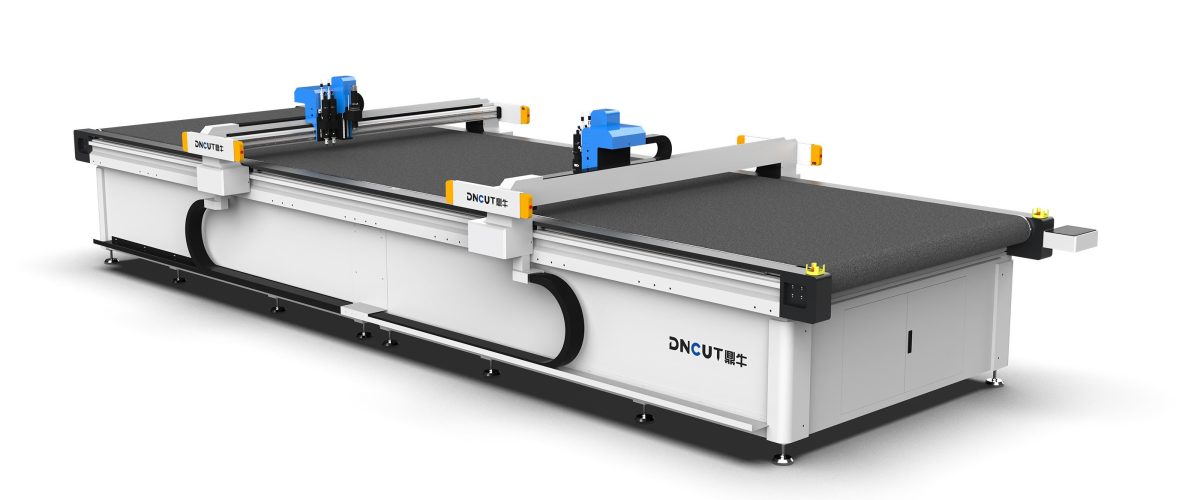
An oscillating knife cutting machine is a CNC device that drives a blade through high-frequency oscillation to perform cold cutting of flexible materials.
- The oscillation frequency is typically 8,000-12,000 strokes/minute; high frequency suits thin, soft materials, while low frequency suits thick, hard materials.
- It can cut up to 10 layers of fabric in a single pass, with a cutting speed of 10-30 m/min, and the cut edge is smooth with no burnt edges.
- Cutting natural leather 0.5-5 mm thick, at a speed of 8-15 m/min, with accuracy up to ±0.2 mm.
- For polyurethane foam with a density of 20-80 kg/m³, the cutting thickness can reach 200 mm, at a speed of 5-10 m/min.
- Carbon fiber prepreg requires diamond-coated blades, with the speed controlled within 5 m/min.
- Not suitable for high-hardness metals, glass-ceramics, dense materials over 300 mm thick, or high-melting-point plastics.
A Full Analysis of Materials Suitable for Oscillating Knife Cutting Machines
The oscillating knife cutting machine drives a blade through high-frequency oscillation (typically 8,000-12,000 strokes per minute) to achieve cold cutting of flexible materials. Unlike laser cutting, it does not produce a heat-affected zone, making it particularly suitable for temperature-sensitive materials. This article will specifically analyze the types of materials suitable for oscillating knife cutting machines and provide parameter references for actual processing.
1. Textile and Apparel Materials
The oscillating knife is an efficient cutting tool for the apparel and home textile industries, capable of handling a variety of fabrics:
- Natural fibers such as cotton, linen, silk, and wool: Cutting speed can reach 10-30 m/min, with a smooth cut edge and no burnt edges.
- Synthetic fibers such as polyester, nylon, and spandex: Attention must be paid to blade sharpness; it is recommended to check every 8 hours to prevent melting and sticking.
- Non-woven fabric: Commonly used for medical protective clothing and masks; during cutting, it must be secured with a vacuum table to prevent material displacement.
- Fiberglass cloth: Cutting generates dust, so a dust extraction device is required; carbide is recommended as the blade material.
For multi-layer cutting, the oscillating knife can cut up to 10 layers of fabric in a single pass (depending on thickness), far exceeding manual cutting in efficiency.
2. Leather and Fur
Natural leather and synthetic leather are another major application area for the oscillating knife:
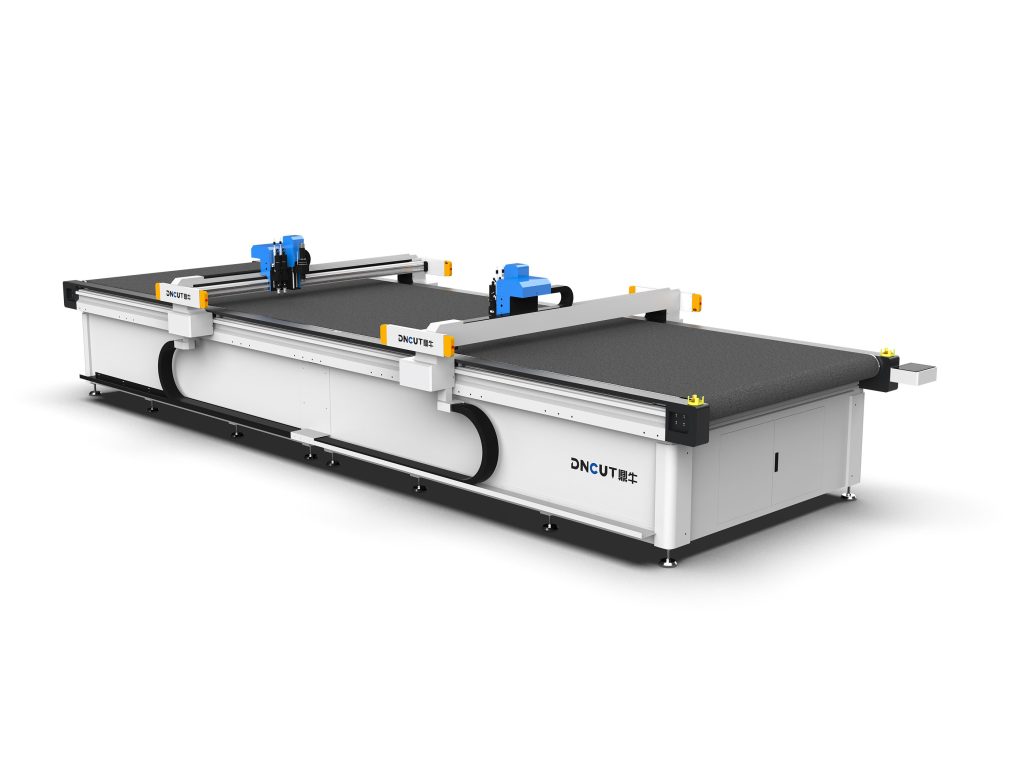
- Natural leather: thickness 0.5-5mm, cutting speed 8-15 m/min, blade angle of 30° or 45° is recommended to reduce edge burrs.
- Synthetic leather/PVC/PU: static electricity is easily generated during cutting, so an ion fan needs to be installed; the speed can be increased to 20 m/min.
- Fur: a serrated blade is required to prevent hair from tangling, along with a brush table surface.
In the automotive interior industry, the oscillating knife is used to cut seat leather and door panel upholstery, with accuracy up to ±0.2mm.
3. Foam and Sponge
Oscillating knife cutting of foam materials offers the advantages of no dust and no melting:
- Polyurethane foam (PU): density 20-80kg/m³, cutting thickness up to 200mm, speed 5-10 m/min.
- EPS/XPS insulation board: Use high-speed oscillation (12,000 times/minute) and a sharp blade during cutting to avoid cracking.
- Memory foam: The edges are smooth after cutting, with no subsequent processing required.
In the packaging industry, oscillating knife cutting is commonly used for EVA foam liners, providing high precision without generating debris.
4. Composite materials
The oscillating knife can cut a variety of composite materials, but material characteristics must be noted:
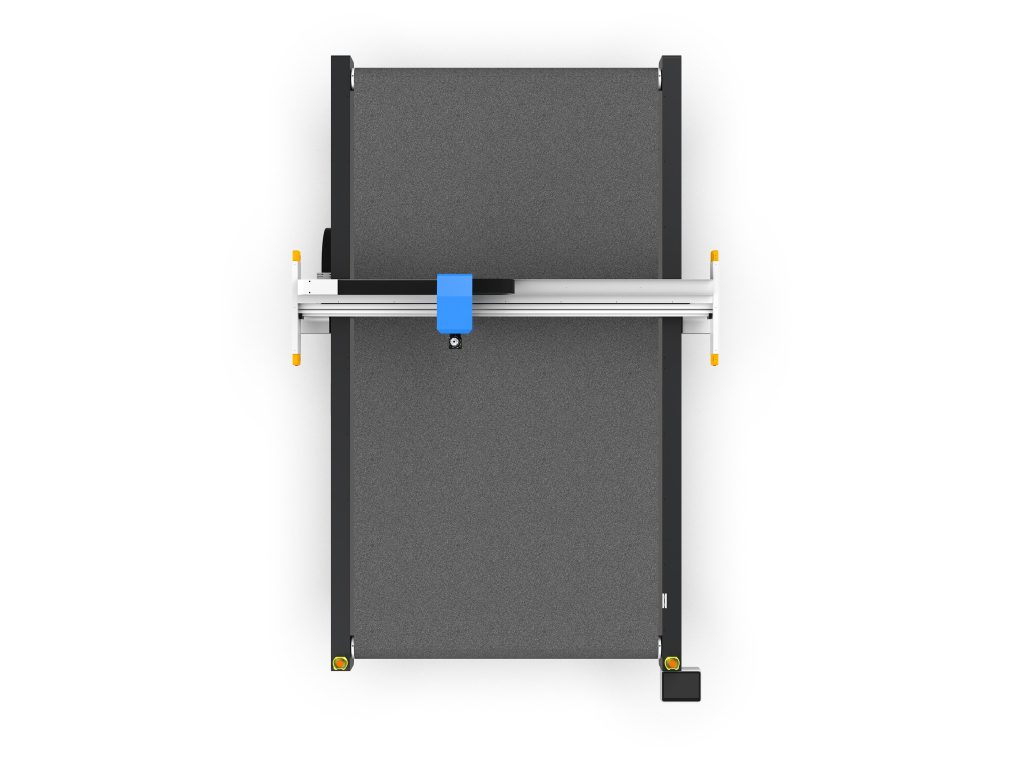
- Carbon fiber prepreg: Use a diamond-coated blade during cutting, with speed controlled within 5 m/min to prevent fiber pulling.
- Glass fiber reinforced plastic (FRP): A carbide blade is recommended, along with powerful dust extraction.
- Honeycomb paper core: Cutting speed can reach 15 m/min; the blade needs to be replaced regularly (replace once every 500 m cut).
In the aerospace field, oscillating knife cutting is commonly used for honeycomb core materials, and the cut quality is superior to milling.
5. Rubber and elastomers
The oscillating knife is suitable for cutting medium- and low-hardness rubber materials:
- Silicone rubber: hardness 50-70 Shore A, cutting speed 10 m/min, blade must be sharp.
- Nitrile rubber: prone to blade sticking during cutting; Teflon-coated blades are recommended.
- Rubber gaskets: thickness 1-10 mm, cutting accuracy ±0.1 mm.
Note: For high-hardness rubber (>80 Shore A), die cutting or waterjet cutting is recommended.
6. Paper and Cardboard
The oscillating knife is widely used in paper processing:
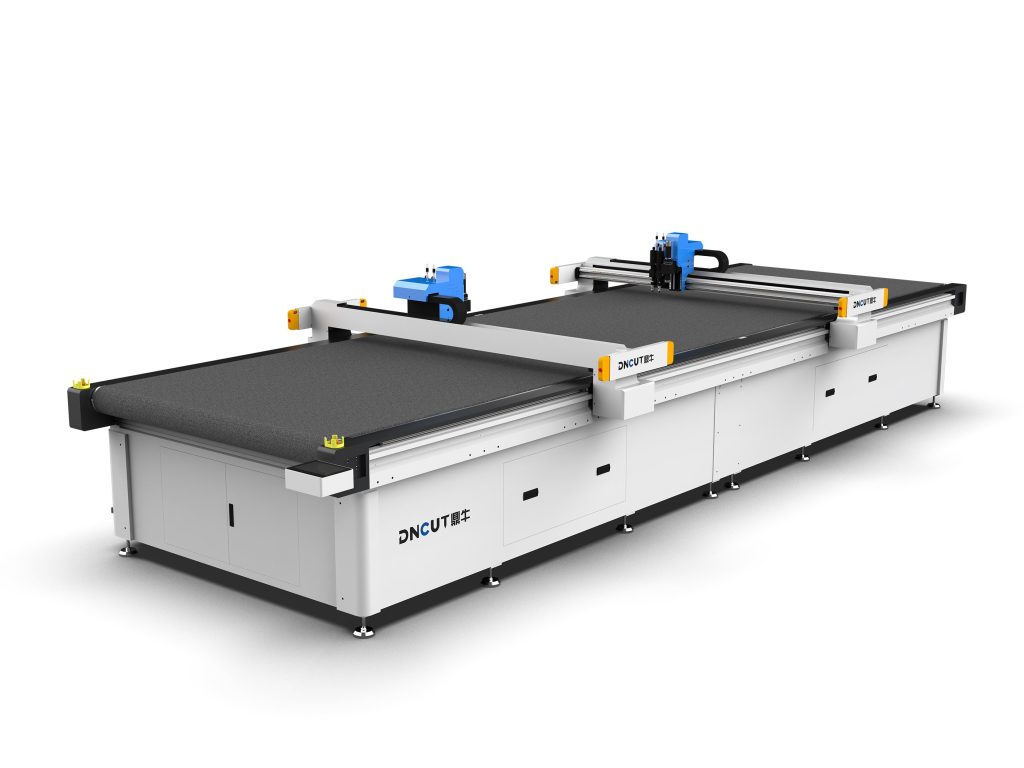
- Corrugated cardboard: cutting speed up to 30 m/min, blade life approximately 8-12 hours.
- Cardstock: thickness 0.5-3 mm, burr-free cutting edges.
- Kraft paper: serrated blades are required to prevent the paper from slipping.
In packaging prototyping, the oscillating knife can quickly cut carton samples without the need for tooling.
7. Other Materials
- Carpet: cutting speed 15 m/min, requires an oscillating knife combined with a rotary blade.
- Soundproof cotton: Dust is generated during cutting, so dust extraction is required.
- PVC flooring: Cutting speed 10 m/min, blade angle 45°.
- Solar backsheet: A dedicated blade is required to prevent delamination.
Unsuitable materials
The oscillating knife is not suitable for cutting the following materials:
- High-hardness metals (such as steel plate, aluminum plate)
- Brittle materials such as glass and ceramics
- Dense materials with a thickness exceeding 300mm
- High-melting-point plastics (such as PEEK)
Selection recommendations
When choosing an oscillating knife cutting machine, consider the following parameters based on material characteristics:
- Oscillation frequency: Typically 8000-12000 times/min; high frequency suits thin soft materials, low frequency suits thick hard materials.
- Blade type: Choose straight blade, serrated blade, circular blade, or special-shaped blade according to the material.
- Table configuration: The vacuum table is used to secure thin and light materials, while the brush table is used for plush materials.
- Power: Cutting thick foam requires a motor of 1.5kW or more; 0.75kW is sufficient for thin fabric.
Before actual processing, it is recommended to perform a trial cut with a sample to determine the optimal parameters.
FAQ
What materials is the oscillating knife cutting machine suitable for cutting?
The oscillating knife cutting machine is suitable for flexible materials such as textile fabrics, leather and fur, foam sponge, composite materials, rubber, paper and cardboard. It is not suitable for high-hardness metals, glass, or ceramics.
What are the speed and number of layers for cutting fabric with an oscillating knife?
When cutting natural fibers such as cotton, linen, silk, and wool with an oscillating knife, the speed can reach 10-30 m/min, and multilayer cutting can cut up to 10 layers of fabric at once, depending on the thickness.
What are the advantages of oscillating knife cutting foam materials?
Oscillating knife cutting foam produces no dust and no melting; polyurethane foam can be cut up to 200mm thick at a speed of 5-10 m/min, with smooth edges requiring no subsequent processing.
What should be noted when using an oscillating knife to cut carbon fiber prepreg?
When cutting carbon fiber prepreg with an oscillating knife, diamond-coated blades must be used, and the speed should be controlled within 5 m/min to prevent fiber pulling and ensure cut quality.
Which materials are not suitable for oscillating knife cutting machines?
Oscillating knife cutting machines are not suitable for high-hardness metals (such as steel plates and aluminum plates), brittle materials such as glass and ceramics, dense materials with a thickness exceeding 300mm, and high-melting-point plastics (such as PEEK).