

Fiber Cutting Machine: A Complete Guide from Selection to Efficient Production
In industries such as composites, textiles, automotive interiors, and aerospace, the cutting quality of fiber materials directly affects product performance and material utilization. Traditional manual cutting or die-cutting methods struggle to meet the production demands of multiple varieties and small batches, while CNC fiber cutting machines use oscillating knife technology to achieve high-precision, high-efficiency cutting of flexible materials. This article focuses on equipment selection, key parameters, operational practices, and maintenance, providing actionable references.
I. Core Types and Application Scenarios of Fiber Cutting Machines
Based on the cutting principle, fiber cutting machines are mainly divided into oscillating knife, laser, ultrasonic, and circular knife types. Different technologies differ significantly in their adaptability to fiber materials:
- Oscillating knife cutting machine: Cuts with a blade that oscillates up and down at high frequency, suitable for carbon fiber, glass fiber, aramid, prepreg, non-woven fabric, etc. The cut edges are clean with no heat-affected zone, and it is especially suitable for multi-layer stacked cutting (up to 10-20 layers, depending on material thickness).
- Laser cutting machine: Uses a high-energy laser beam to melt or vaporize the material, with high speed, but it causes thermal damage to the fibers, leading to carbonized edges, and is not suitable for heat-sensitive fibers (such as aramid and certain thermoplastic prepregs).
- Ultrasonic cutting machine: Uses ultrasonic vibration to locally melt and separate the material, with a good edge-sealing effect, and is suitable for thermoplastic fibers, but there is a thickness limit (usually ≤5mm).
- Circular knife cutting machine: Suitable for longitudinal slitting of continuous rolled materials, with high efficiency, but cannot perform complex contour cutting.
For multi-variety, complex-shaped fiber cutting, the oscillating knife cutting machine is the optimal choice for overall performance. The oscillating knife equipment provided by dncut adopts a servo control system, with cutting accuracy up to ±0.1mm and repeat positioning accuracy of ±0.05mm.
II. 6 Technical Parameters That Must Be Considered During Model Selection
When purchasing a fiber cutting machine, you should not only look at price and brand. The following parameters directly determine whether the equipment can meet your production needs:
1. Cutting Thickness and Number of Layers
The cutting capability of the oscillating knife depends on the blade amplitude and material characteristics. For example, when cutting carbon fiber prepreg (single layer thickness 0.2mm), 10-15 layers can be cut at one time; when cutting glass fiber cloth (0.5mm), it is recommended not to exceed 8 layers. The equipment parameter table should clearly specify the maximum cutting thickness (e.g., 20mm) and the recommended number of stacked cutting layers. If you need to cut thick composite materials (such as FRP above 30mm), you need to choose a heavy-duty oscillating knife with a large amplitude (≥8mm).
2. Cutting accuracy and repeat positioning accuracy
Fiber cutting has high precision requirements, especially for structural components in the aerospace field. Typically, the cutting accuracy of the equipment should be ≤±0.2mm, and the repeat positioning accuracy should be ≤±0.1mm. High-precision equipment uses ground-grade gear racks and linear guides, paired with servo motor closed-loop control. For example, dncut’s high-precision series uses dual-drive servos on the X/Y axes, with fast dynamic response, suitable for high-speed cutting of complex curves.
3. Maximum Cutting Speed
Cutting speed is affected by material type, thickness, and contour complexity. The typical cutting speed of an oscillating knife is 100-2000mm/s. For thin fiber cloth (such as 0.1mm non-woven fabric), the speed can reach 1500mm/s; for thick prepreg, it is recommended to control it at 300-600mm/s to ensure edge quality. The equipment should support segmented speed settings, automatically reducing speed at corners.
4. Working table dimensions
Select the table according to common cut piece dimensions. For example, 1600mm×2500mm tables are commonly used for cutting automotive interior parts; 1200mm×1200mm can be used for small aerospace parts. If cutting rolled materials, an automatic feeding system is required, and the table length can be extended to more than 3000mm.
5. Knife and tool system
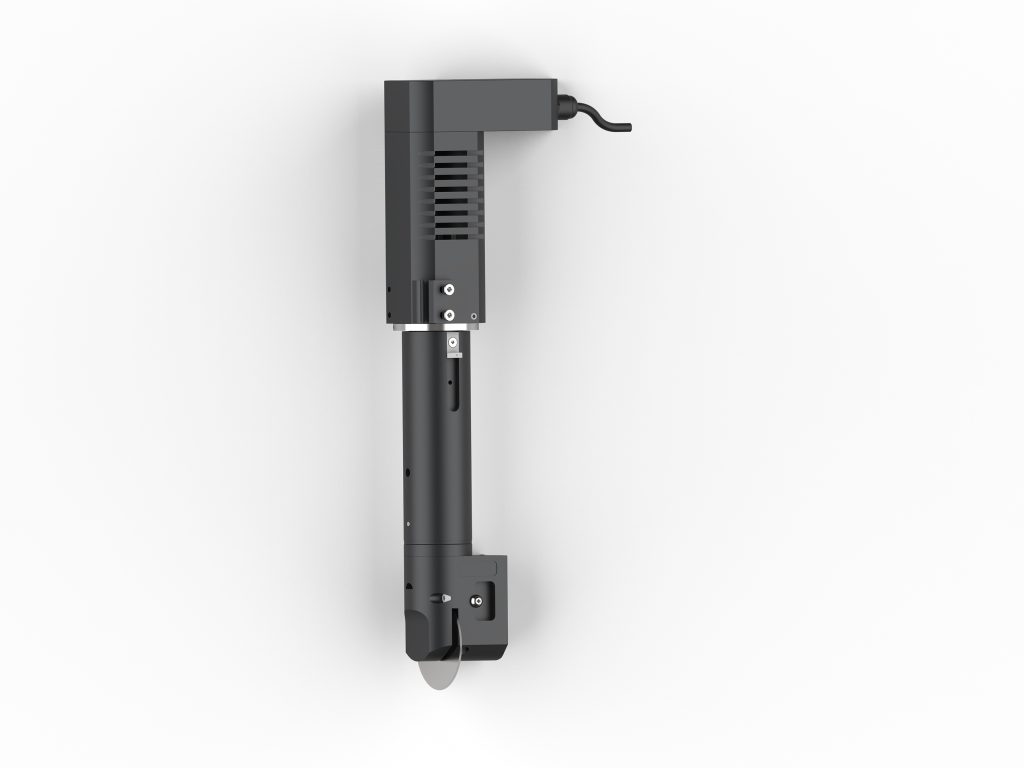
Commonly used knives for fiber cutting include: oscillating knife (general purpose), circular knife (for thick layers or high-density materials), drag knife (for thin materials), and punching knife (for hole punching). The equipment should have automatic tool change capability (tool magazine capacity ≥8) to reduce tool change time. In addition, attention should be paid to tool life: when cutting carbon fiber, the life of carbide blades is approximately 800-1200 meters of cutting length; spare knives are recommended.
6. Vacuum adsorption and zone control
Fiber materials are thin and light, and are prone to shifting during cutting, so a vacuum adsorption system must be equipped. The adsorption force should be ≥0.06MPa, and the worktable should be divided into multiple independently controlled zones (e.g., 8 zones), so that when cutting small pieces, only the corresponding zone is activated, saving energy and preventing material deformation caused by excessive adsorption.
III. Operating Tips: 5 Methods to Improve Cutting Quality and Efficiency
1. Reasonable Layout and Path Optimization
Use CAD/CAM software for automatic nesting to increase material utilization by 5%-15%. The cutting path should follow the principle of “inside first, outside later; small first, large later” to avoid displacement caused by material stress release during cutting. For multi-layer stacked cutting, it is recommended to use a “bridging” method to connect the layers and prevent small pieces from scattering.
2. Parameter Matching: Speed, Amplitude and Tool
Different fiber materials require different parameter combinations. For example:
- Carbon fiber prepreg (0.2mm/layer, 10 layers): vibration frequency 1800 times/min, amplitude 6mm, cutting speed 400mm/s, using a pointed oscillating knife.
- Fiberglass cloth (0.5mm/layer, 5 layers): vibration frequency 1500 times/min, amplitude 8mm, cutting speed 600mm/s, use circular knife or oscillating knife.
- Aramid non-woven fabric (0.3mm/layer, 3 layers): vibration frequency 2000 times/min, amplitude 4mm, cutting speed 800mm/s, use drag knife.
It is recommended to perform a trial cut before formal production, observe the edge quality (burrs, delamination) and fine-tune the parameters.
3. Reasonable use of vacuum adsorption
For porous fiber materials (such as fiberglass cloth), vacuum adsorption may cause the material to be sucked through, affecting cutting accuracy. A breathable film can be placed underneath the material, or zoned adsorption with reduced adsorption force can be used. For prepreg, excessive adsorption force will cause the material to stick to the table surface; it is recommended to use medium adsorption force (0.04-0.05MPa).
4. Tool Wear Monitoring and Replacement
Regularly check tool wear. If burrs appear on the cutting edge or cutting resistance increases, replace the tool promptly. It is recommended to inspect the blade after every 500-800 meters of cutting; carbide blades can be reground 2-3 times. Use a tool life management system to record the cutting length of each tool and automatically remind for replacement.
5. Environmental Control
Fiber materials are sensitive to humidity and temperature, especially carbon fiber prepreg. It is recommended to control the workshop temperature at 20±3°C and the relative humidity at 50±10%. The equipment should be well grounded to prevent static electricity from causing the material to attract dust.
IV. Maintenance: The Key to Extending Equipment Life
The fiber cutting machine is precision equipment, and daily maintenance cannot be ignored. The following is the weekly and monthly maintenance checklist:
Weekly Maintenance
- Clean the worktable surface and vacuum adsorption holes to remove fiber dust.
- Check whether the tool is installed securely and whether the blade has chipping.
- Clean dust from the guide rails and racks, and apply special lubricating grease.
- Check the pneumatic filter and drain water.
Monthly Maintenance
- Check whether the servo motor and driver connection cables are loose.
- Calibrate the machine origin and parallelism (use a dial indicator, error ≤0.05mm).
- Check the vacuum pump oil level and belt tension.
- Update the control software and back up parameters.
In addition, the guide rail grease and vacuum pump oil should be replaced every six months, and a professional should be asked to inspect the electrical system.
V. Common Problems and Solutions
Problem 1: Burrs or delamination on the cutting edge
Cause: worn tool, excessive speed, or insufficient amplitude. Solution: replace the blade, reduce the cutting speed by 10%-20%, and increase the amplitude by 1-2mm.
Problem 2: Cutting dimension deviation
Cause: Insufficient vacuum adsorption causes material displacement, or guide rail wear. Solution: Check the adsorption zone settings and clean the adsorption holes; check the straightness of the guide rail and replace the slider if necessary.
Problem 3: Material lifting during cutting
Cause: Release of internal stress in the material or uneven adsorption force. Solution: Use bridge nesting, increase the adsorption area, or cover the material with a thin sheet.
VI. Summary
The selection of a fiber cutting machine requires comprehensive consideration of material characteristics, cutting thickness, precision requirements, and production efficiency. Oscillating knife technology, with its advantages of no thermal damage, high precision, and adaptability to multi-layer cutting, has become the mainstream choice for fiber material processing. Through proper parameter settings, standardized maintenance, and continuous process optimization, you can significantly improve cutting quality and reduce material waste. dncut offers fiber cutting machines in various specifications and can customize solutions according to your specific needs. For further technical consultation, please feel free to contact our engineering team.