
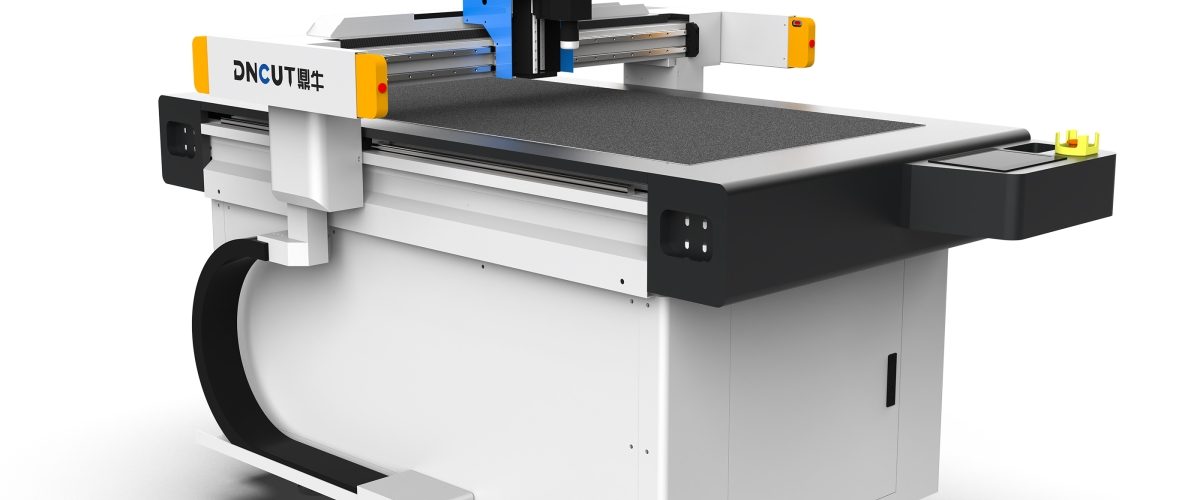
What is a carton sample making machine?
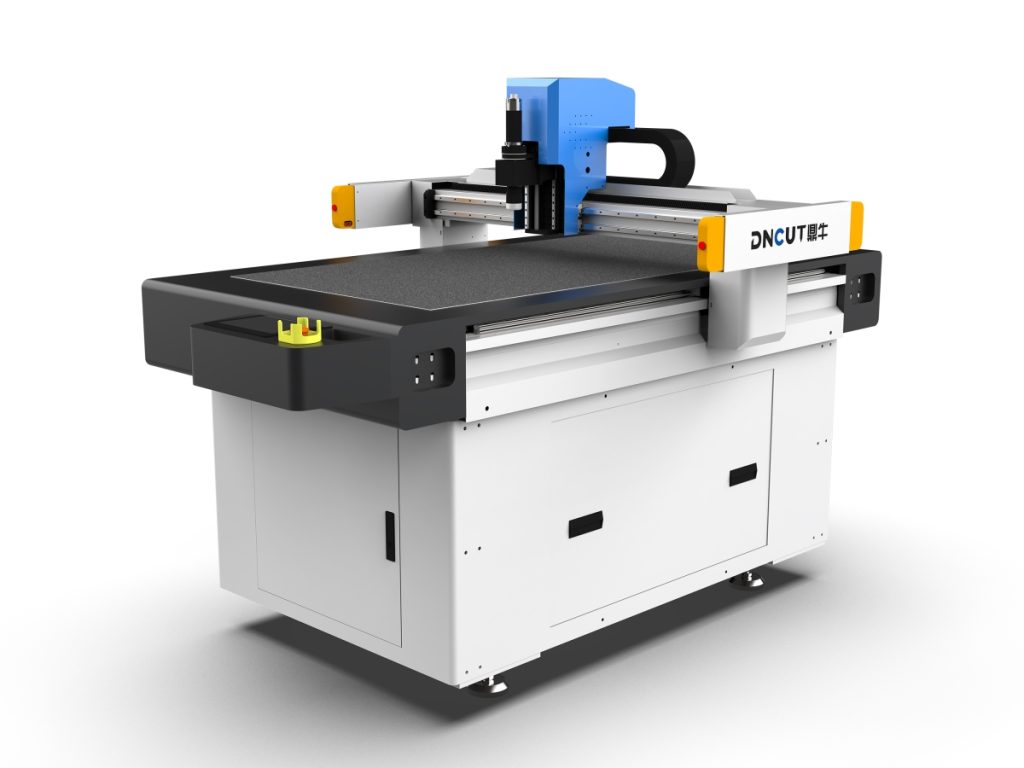
A carton sample making machine (also known as a carton proofing machine or sample cutting machine) is a CNC device used in the packaging industry for quickly producing carton and box samples or small-batch production. It uses computer-controlled cutting heads (such as an oscillating knife, drag knife, creasing wheel, etc.) to perform cutting, creasing, drawing, and other processes on materials such as cardboard, corrugated paper, and card stock, replacing traditional manual sample making and greatly improving sample precision and production efficiency.
Compared with laser cutting machines, the sample making machine uses physical blade cutting, leaving no burnt edges, making it more suitable for paper products that are temperature-sensitive or need to retain the original color of the material. At the same time, it can integrate creasing, V-grooving, drawing, and other functions, achieving multiple uses in one machine.
Core working principle and key components
1. Motion control system
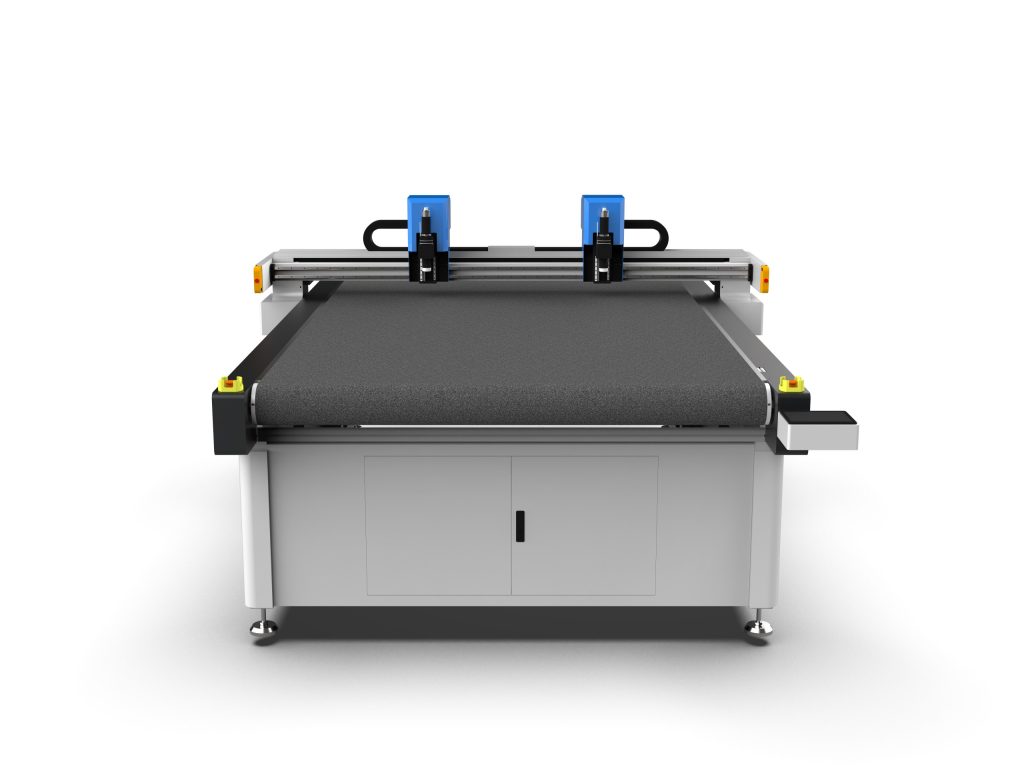
The sample cutting machine typically adopts a gantry structure, with the X/Y axes driven by servo motors, and repeat positioning accuracy up to ±0.05mm. High-precision linear guides and rack-and-pinion transmission ensure long-term stability. Some high-end models are equipped with a CCD vision positioning system, which can automatically identify registration marks on the material and compensate for material deformation or position deviation.
2. Cutting tool head
Depending on material thickness and type, different tools can be selected:
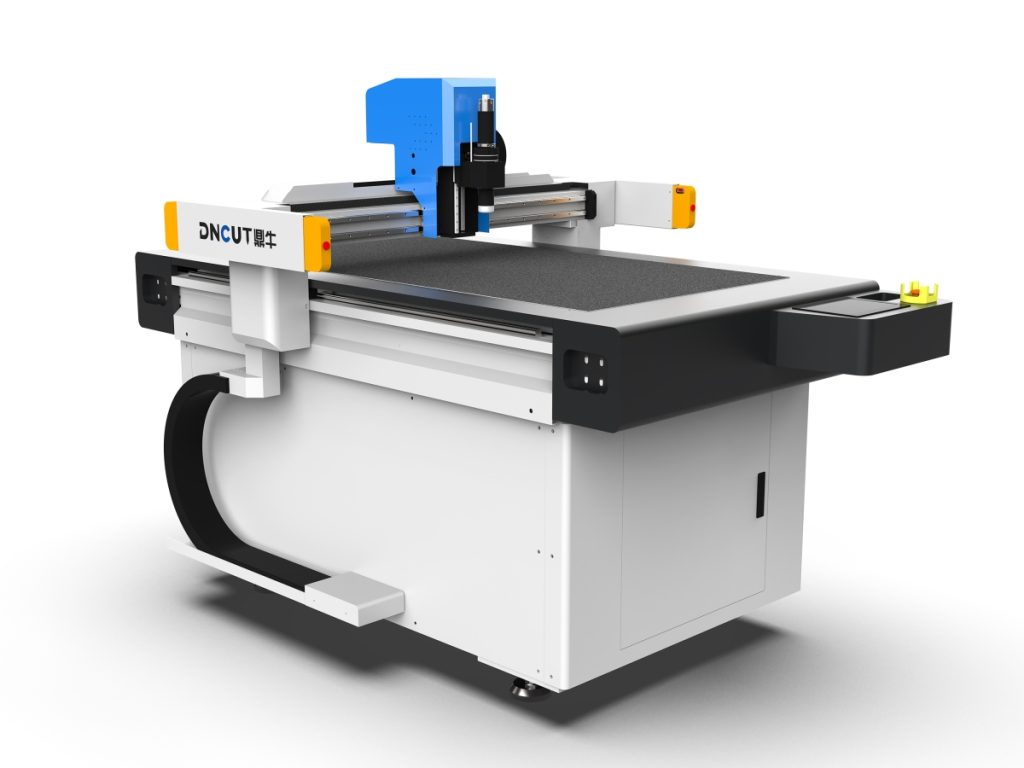
- Oscillating knife: Suitable for medium-thick materials such as corrugated cardboard and honeycomb cardboard, with a cutting thickness of up to 20mm and good incision verticality.
- Drag knife: Used for thin card paper and white card paper, with fast cutting speed and smooth edges.
- Creasing wheel: Used to make creases, with adjustable pressure to prevent cardboard from cracking.
- Drawing pen: Used to mark dimensions, patterns, or text.
- V-groove knife: Used to make 45° or 90° V-shaped grooves for easy bending and forming.
3. Vacuum adsorption table
The table adopts multi-zone vacuum adsorption to ensure the material stays fixed during cutting. The adsorption force is adjustable to prevent thin paper from deforming. The table material is mostly aluminum alloy or honeycomb board, balancing flatness and lightweight.
Selection points: how to choose a suitable sample cutting machine
1. Processing size and material range
Choose the table specification according to common order sizes, e.g. 1300mm×2500mm can cover most carton samples. Confirm the maximum cutting thickness of the equipment (usually corrugated cardboard ≤15mm, card paper ≤2mm) and material types (cardboard, grey board, honeycomb paper, foam, etc.).
2. Accuracy and speed
Repeat positioning accuracy should be ≤0.1mm, and cutting speed is recommended to be ≥800mm/s (depending on the material). High-speed models can improve the efficiency of small-batch production, but rigidity and cost need to be balanced.
3. Tool configuration and automation
The automatic switching function of multiple tool heads can reduce manual tool change time and is suitable for complex samples. CCD vision positioning and automatic feeding systems can further improve the degree of automation, but they need to be weighed against budget and output.
4. Software Compatibility
Ensure the equipment supports common design file formats (such as AI, DXF, PLT, PDF), and comes with dedicated die-cutting software that can automatically generate crease lines and cutting paths, and optimize layout to reduce material waste.
5. Brand and After-Sales Service
Choose a manufacturer with technical support, and pay attention to warranty period, spare parts supply, and training services. Domestic brands such as dncut offer cost-effective solutions, while imported brands offer high precision but are expensive.
Operating Tips and Common Problem Solving
1. Material Fixing and Adsorption
Before cutting, ensure the material is flat and the vacuum adsorption force is moderate. For warped cardboard, you can first flatten it with a heavy object or increase the adsorption zones. For thin paper, it is recommended to reduce the adsorption force to avoid deformation.
2. Tool Selection and Parameter Settings
Adjust the blade tip extension length according to material thickness (typically 0.5-1mm beyond the material thickness). The oscillating knife frequency and amplitude affect cutting quality; for corrugated cardboard, high frequency and low amplitude are recommended to reduce burrs. The creasing pressure must be adjusted according to the cardboard grammage to avoid creasing through or making the crease too shallow.
3. Path optimization and layout
Use the software’s automatic nesting function to nest and arrange multiple samples, improving material utilization. The cutting path should follow the principle of inside first, outside later, and small first, large later, to avoid material displacement.
4. Common Problems and Countermeasures
- Rough cutting edges: Check blade wear, adjust cutting speed, or replace the oscillating knife.
- Crease line cracking: Reduce creasing pressure, or switch to a round creasing wheel, and pre-crease if necessary.
- Material displacement: Increase vacuum adsorption force, or use tape to assist fixation.
- Accuracy deviation: Calibrate the servo system, and check guide rail lubrication and belt tension.
Maintenance and Safety Guidelines
Clean the table and guide rails daily, check blade wear and vacuum lines weekly, and lubricate transmission components monthly. Wear protective gloves during operation and avoid contact with moving parts. The equipment should be properly grounded to prevent electrostatic interference.
Application Scenarios and Benefit Analysis
The sample cutting machine is widely used in carton factories, printing plants, design companies, etc., for rapid verification of structural designs, production of customer samples, and small-batch production. Compared with manual sample cutting, efficiency is increased by 5-10 times, accuracy is improved, and material waste is reduced. Based on an average of 20 samples per day, the equipment investment can be recovered in about 6-12 months.
Conclusion
The cardboard box sample cutting machine is a practical tool for packaging companies to enhance their competitiveness. When selecting a model, it is necessary to comprehensively consider materials, precision, automation requirements, and budget. During operation, focus on parameter optimization and maintenance to maximize benefits. With the development of CNC technology, sample cutting machines are evolving toward higher precision and greater intelligence, bringing more possibilities to the packaging industry.