
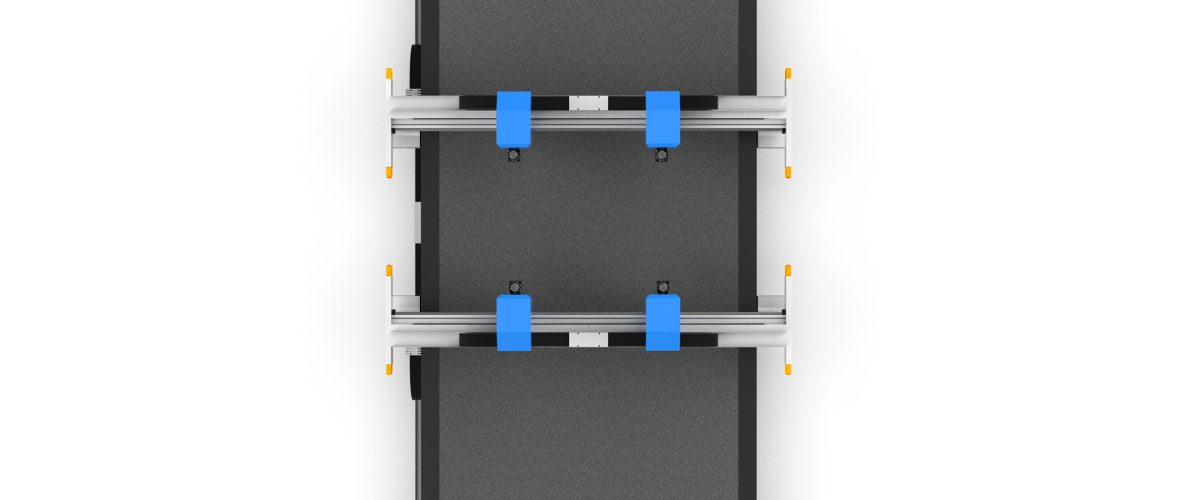
Overview of Leather Cutting Equipment
Leather cutting is a key process in industries such as luggage, footwear, automotive interiors, and furniture. Traditional manual cutting has low efficiency and poor precision, and modern CNC cutting equipment has become mainstream. Among these, the oscillating knife cutting machine is widely used in leather processing due to its cold cutting, no smoke or dust, and adaptability to a variety of flexible materials. This article will focus on the oscillating knife cutting machine, providing a practical guide from equipment types and selection parameters to operating techniques and maintenance.
Main Types of Leather Cutting Equipment
1. Oscillating Knife Cutting Machine
Uses a high-frequency up-and-down moving blade to cut materials, suitable for leather, fabric, foam, cardboard, etc. The cutting thickness is usually 0.5-10mm (depending on material density), and the cutting accuracy can reach ±0.1mm. Advantages: no heat-affected zone, neat edges, can cut complex shapes.
2. Laser cutting machine
Uses a laser beam to melt or vaporize materials, with fast cutting speed, but it produces burnt edges and smoke, and affects the natural grain of leather. It is mostly used for non-natural leather or occasions with low edge requirements.
3. Waterjet cutting machine
Uses high-pressure water flow for cutting, with no heat effect, but the equipment cost is high and the cutting speed is slow. It is suitable for thick leather or composite materials.
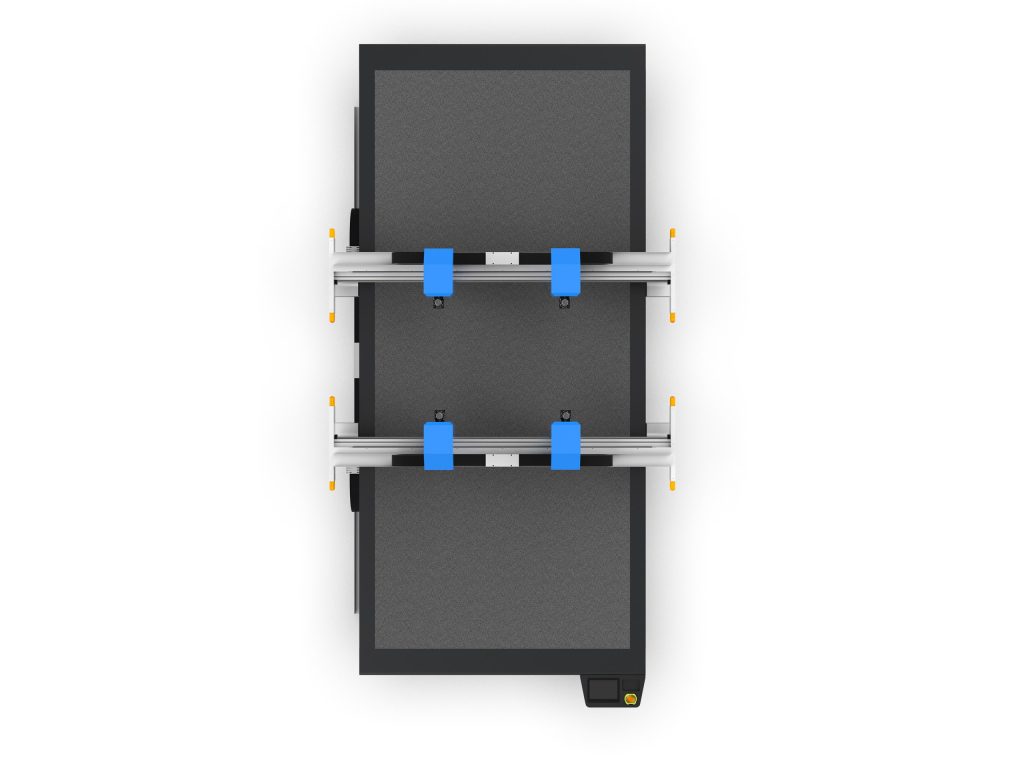
4. Punching Machine
Die stamping offers high efficiency but requires making molds, making it suitable for large-volume standardized production with poor flexibility.
Overall comparison shows that the oscillating knife cutting machine performs in a balanced way in terms of flexibility, precision, and environmental friendliness, making it an ideal choice for small- to medium-batch, multi-variety leather cutting.
Key Parameters for Selecting an Oscillating Knife Cutting Machine
1. Cutting Area
Choose according to common leather sizes and layout requirements. For example, standard cowhide measures about 1.5m×1.5m; it is recommended to choose equipment with an effective cutting area of at least 1.6m×1.6m, such as model 1625 (1.6m×2.5m) or model 2030 (2.0m×3.0m), so that multiple pieces of leather can be laid out at one time.
2. Cutting Thickness and Material Adaptability
Oscillating knife cutting machines can typically cut leather with a thickness of 0.5-10mm. For thick leather (such as automotive seat leather), a high-power motor (e.g., 1.5kW or above) and reinforced blades are required. Also confirm whether the equipment supports other materials (such as fabric and foam) to expand the application range.
3. Cutting accuracy
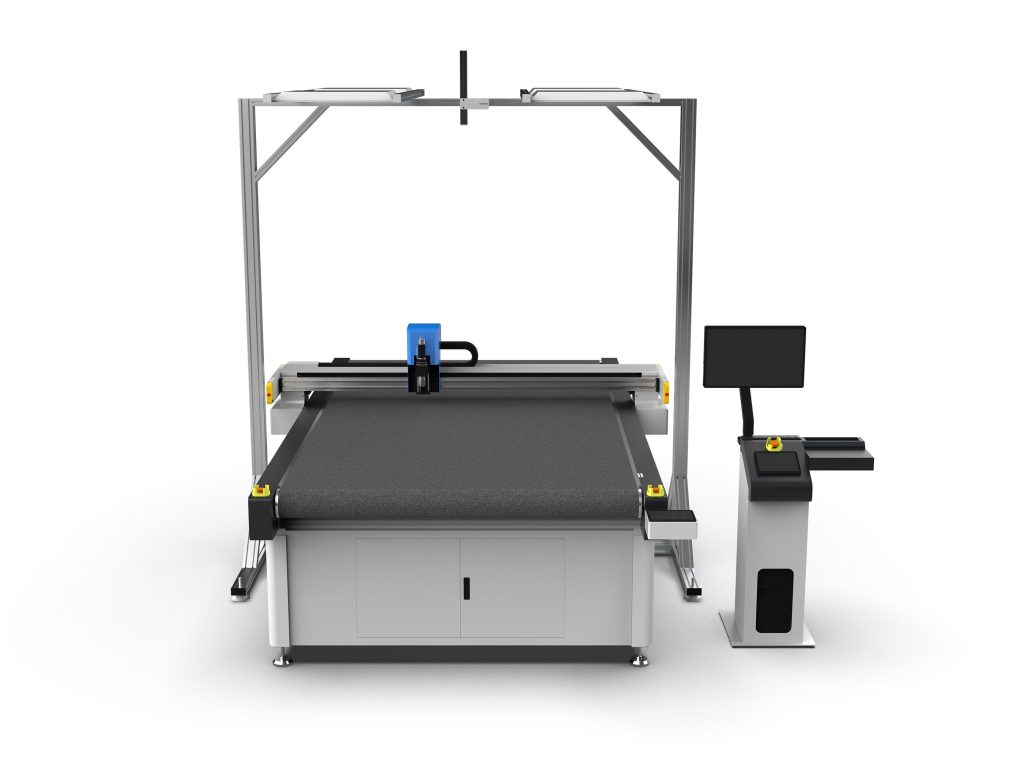
Precision depends on the transmission system (rack and pinion or belt), guide rail quality, and control system. High-precision equipment can achieve repeat positioning accuracy of ±0.05mm and cutting accuracy of ±0.1mm. For fine patterns (such as shoe upper cutouts), it is recommended to choose models with servo motor + rack and pinion transmission.
4. Control System and Software
Mainstream control systems support formats such as DXF, PLT, and AI, and feature automatic nesting and path optimization. The operation interface should be a Chinese touchscreen for workers to get started quickly. Some high-end models support visual recognition, which can automatically identify and avoid leather defects to improve material utilization.
5. Knife System
The oscillating knife cutting machine can be equipped with various knives: oscillating knife (general purpose), round knife (suitable for thick materials), V-knife (suitable for grooving), pneumatic knife (suitable for soft materials). When purchasing, confirm whether knife replacement is convenient and whether it has an automatic knife adjustment function.
6. Adsorption System
The vacuum adsorption worktable ensures that the material does not shift during cutting. The adsorption force needs to be adjusted according to the air permeability of the material. For porous leather, zoned adsorption control is required to avoid insufficient adsorption force.
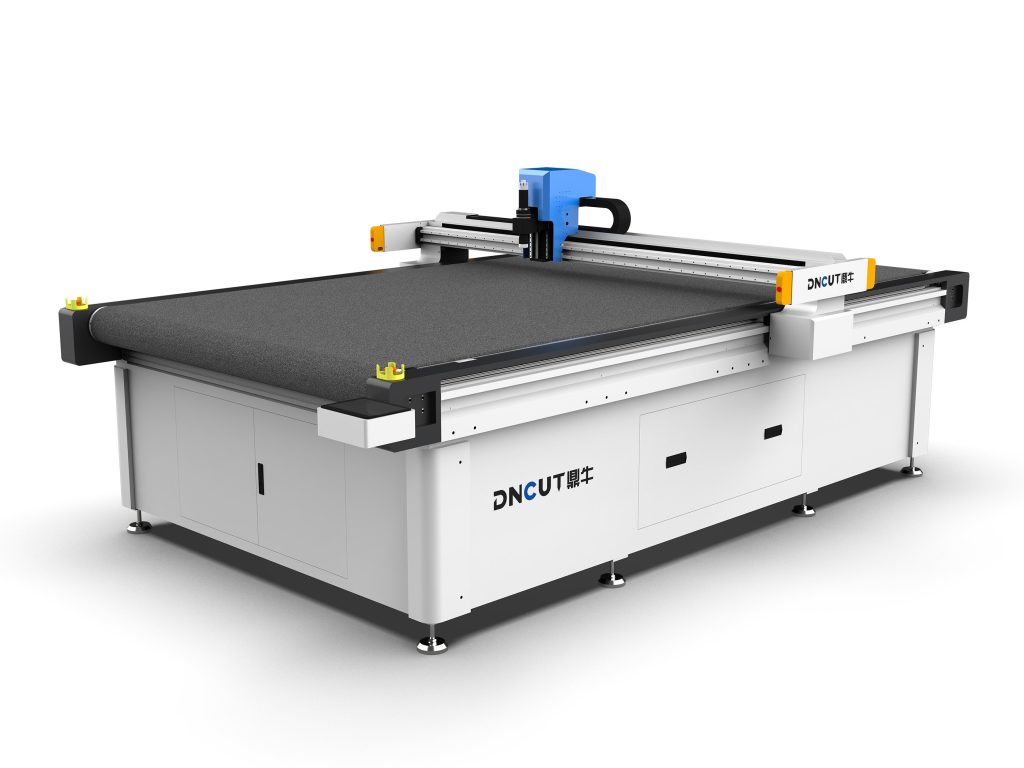
Operating tips and parameter settings
1. Material fixing
Leather should be laid flat on the worktable and secured with vacuum adsorption. For rolled materials, it must first be unrolled and left to rest to eliminate curling. The recommended vacuum negative pressure is -0.6 to -0.8 bar, adjusted according to leather thickness and air permeability.
2. Cutting parameters
Oscillation frequency: usually 1000-3000 times/min; use low frequency (1000-1500) for thick materials and high frequency (2000-3000) for thin materials. Feed speed: depending on material thickness and pattern complexity, generally 500-1500 mm/s. Blade extension length: slightly greater than the material thickness, usually with a 0.5-1 mm margin.
3. Layout optimization
Use the software’s automatic nesting function, combined with marking of defective areas in the leather, to maximize material utilization. For natural leather, manual layout is recommended to avoid scars and areas with uneven grain.
4. Common Issue Handling
- Rough cutting edges: Check blade sharpness, reduce feed speed, increase oscillation frequency.
- Material displacement: Check suction force, ensure the leather fully adheres to the table, and consider adding a film overlay.
- Incomplete cutting: Increase blade extension length, check whether the blade is worn, and adjust cutting depth.
Maintenance and Care
1. Daily Maintenance
- Clean the worktable and guide rails every shift to remove leather debris.
- Check blade wear and replace in time (usually every 8-12 hours, depending on the material).
- Check whether the vacuum adsorption pipeline is blocked.
2. Regular maintenance
- Lubricate the guide rails and lead screws weekly with lithium-based grease.
- Check the tension of the drive belt and the backlash of the rack and pinion monthly.
- Calibrate the equipment accuracy quarterly, using a standard circle to test cutting accuracy.
3. Long-term shutdown
Clean the equipment, apply anti-rust oil, disconnect the power and air supply, and cover with a dust cover.
Selection recommendations and summary
When selecting leather cutting equipment, it is necessary to comprehensively consider production scale, material type, precision requirements, and budget. For leather processing enterprises with small-to-medium batch sizes and multiple varieties, the oscillating knife cutting machine is the most cost-effective choice. It is recommended to prioritize mid-to-high-end models equipped with automatic nesting, visual recognition, and zoned vacuum adsorption functions to improve material utilization and production efficiency. Before purchasing, be sure to provide actual material samples for trial cutting to verify the cutting performance and precision of the equipment. Correct model selection and standardized operation and maintenance can significantly extend equipment life and reduce production costs.