
Challenges and Equipment Selection for Faux Fur Cutting
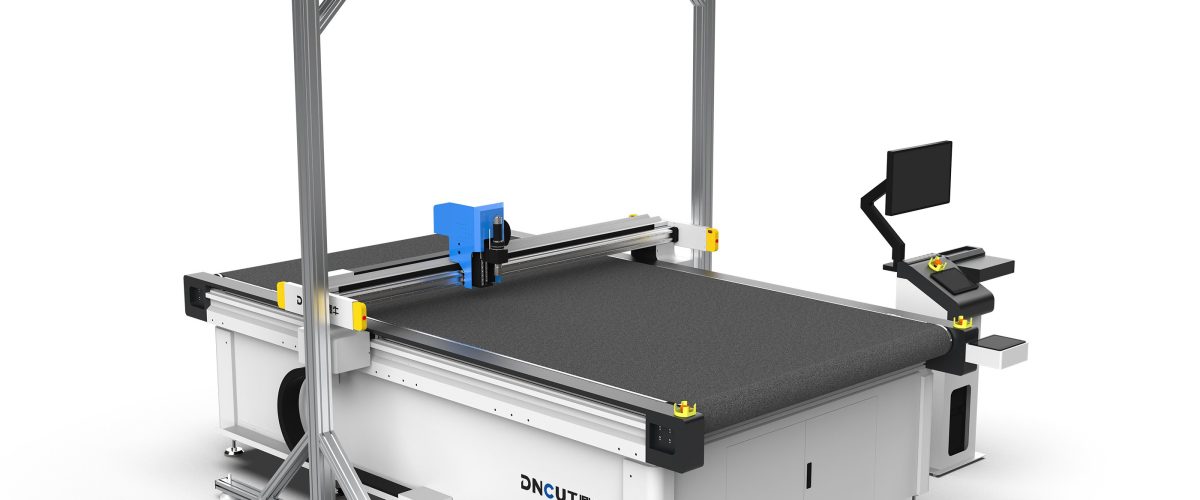
Faux fur (including imitation fur, plush, plush toy fabrics, etc.) has characteristics such as long fibers, easy matting, easy melting, and easy static generation. Traditional blade cutting tends to pull the fibers, resulting in uneven cuts and fused edges; laser cutting produces burnt edges and odors. Therefore, the oscillating knife cutting machine has become the mainstream choice for faux fur cutting. Combined with vacuum adsorption to secure the material, it can achieve high-precision cutting with no fused edges.
1. Core Components: Cutting Tools and Adsorption System
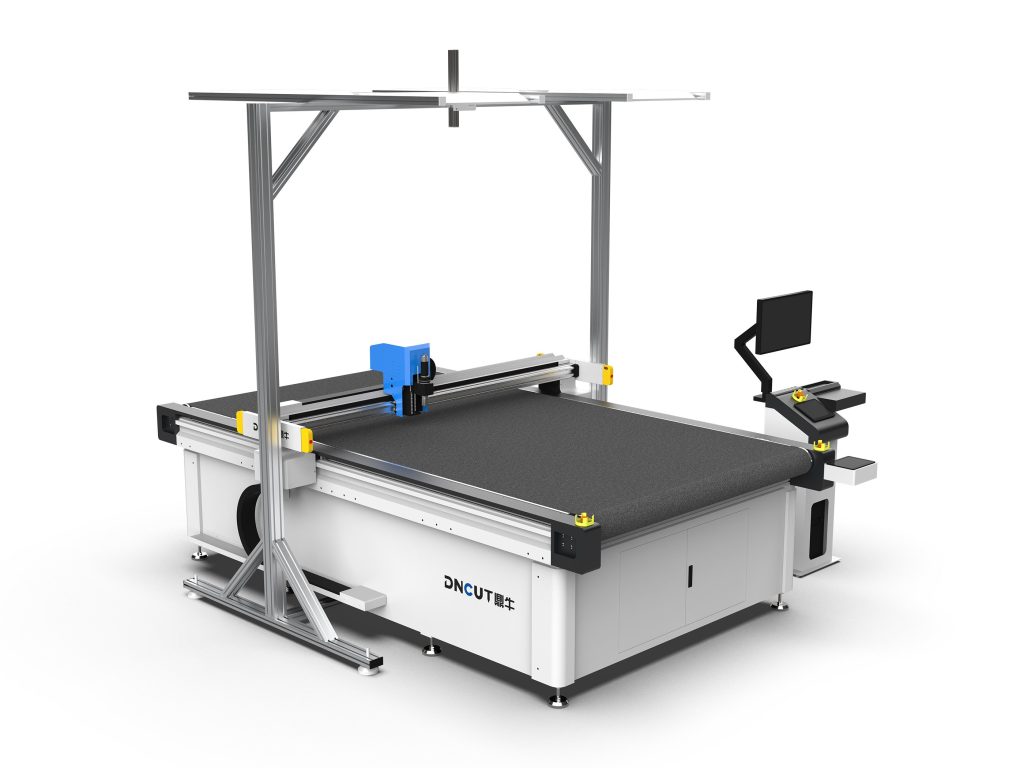
Artificial fur cutting usually uses an oscillating knife or a circular knife. The oscillating knife is suitable for complex contours and thick materials, while the circular knife is suitable for straight lines and fast cutting. For blade material, carbide or ceramic coating is recommended to reduce wear and fiber adhesion. The vacuum adsorption system needs zone control functionality to automatically adjust suction according to the cutting area, ensuring the plush fabric does not shift during cutting. The adsorption platform usually adopts a brush or honeycomb structure, with suction recommended at ≥20kPa, which can be increased to 30kPa for heavy artificial fur.
2. Key Parameter Settings
- Cutting speed: Usually set at 200-600mm/s. Too fast a speed can easily cause fiber pulling, while too slow a speed results in low efficiency. For plush material, it is recommended to start tuning at 300mm/s.
- Tool amplitude: The oscillating knife amplitude is generally 1-3mm. Too large an amplitude can easily cause the plush to lie flat, while too small an amplitude results in incomplete cutting. It is recommended to adjust according to material thickness; typically the amplitude is 0.5-1 times the material thickness.
- Tool frequency: High-frequency vibration (e.g., 10,000-15,000 times per minute) can reduce cutting resistance, but attention must be paid to tool heating. A cooling system or intermittent operation can be equipped.
- Vacuum negative pressure: Adjust according to material thickness and pile length. For thin materials, the negative pressure can be reduced to avoid marks; for thick materials, the negative pressure needs to be increased to ensure fixation.
3. Common Issues and Solutions
Issue 1: Uneven cuts and fiber pulling. The cause may be dull blades or excessive speed. Solution: Regularly check blade wear, replace or sharpen the blade every 500-800 meters of cutting; reduce cutting speed by 10%-20%; use a sharp new blade.
Issue 2: Material displacement causing precision deviation. Check whether the vacuum adsorption is uniform, clean the adsorption platform, and ensure no debris is blocking it; for highly breathable plush materials, cover with a thin film to assist adsorption.
Issue 3: Melted and fused cutting edges. This is usually caused by tool overheating. Reduce the oscillation frequency or increase the interval time; check whether the cooling system is working properly; avoid continuous long-time cutting in the same area.
Problem 4: Plush pile flattening affects appearance. Optimize the tool path to minimize tool movement in non-cutting areas; adopt a unidirectional cutting strategy to avoid back-and-forth cutting that causes the pile direction to become disordered.
4. Maintenance and Care
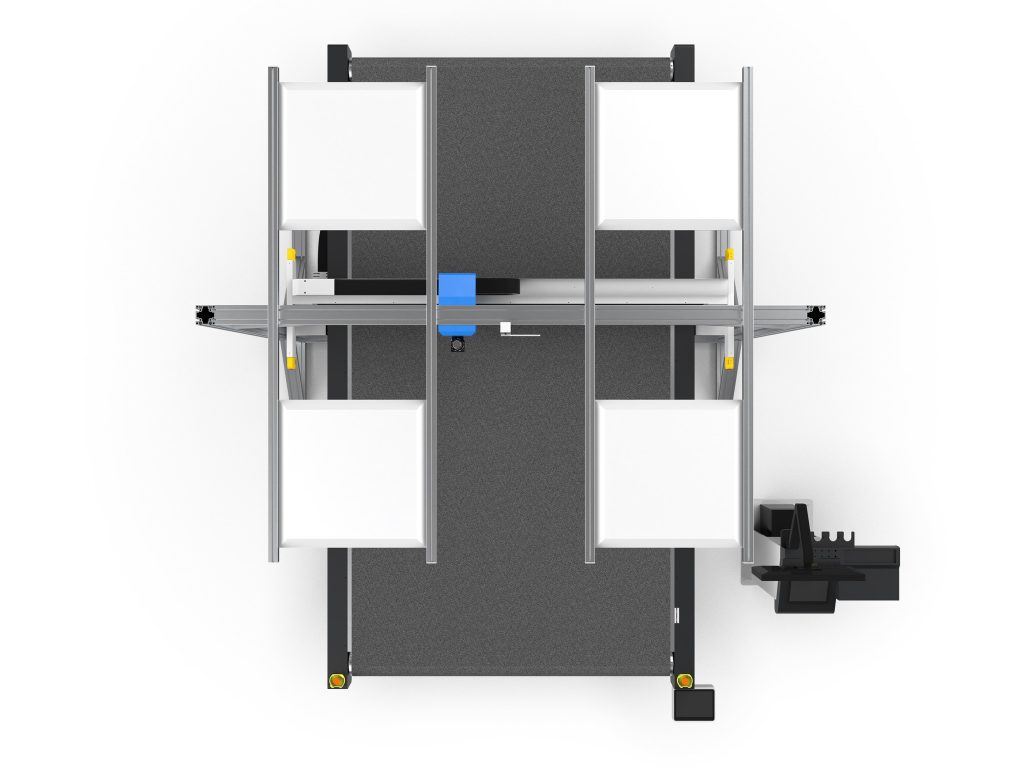
Clean the adsorption platform and knives daily to remove fiber residue; check the vacuum pump filter weekly, clean or replace it; lubricate the guide rails and transmission components monthly; regularly calibrate the parallelism between the knife and the table to ensure consistent cutting depth. For ceramic knives, avoid collision with hard objects.
5. Selection Recommendations
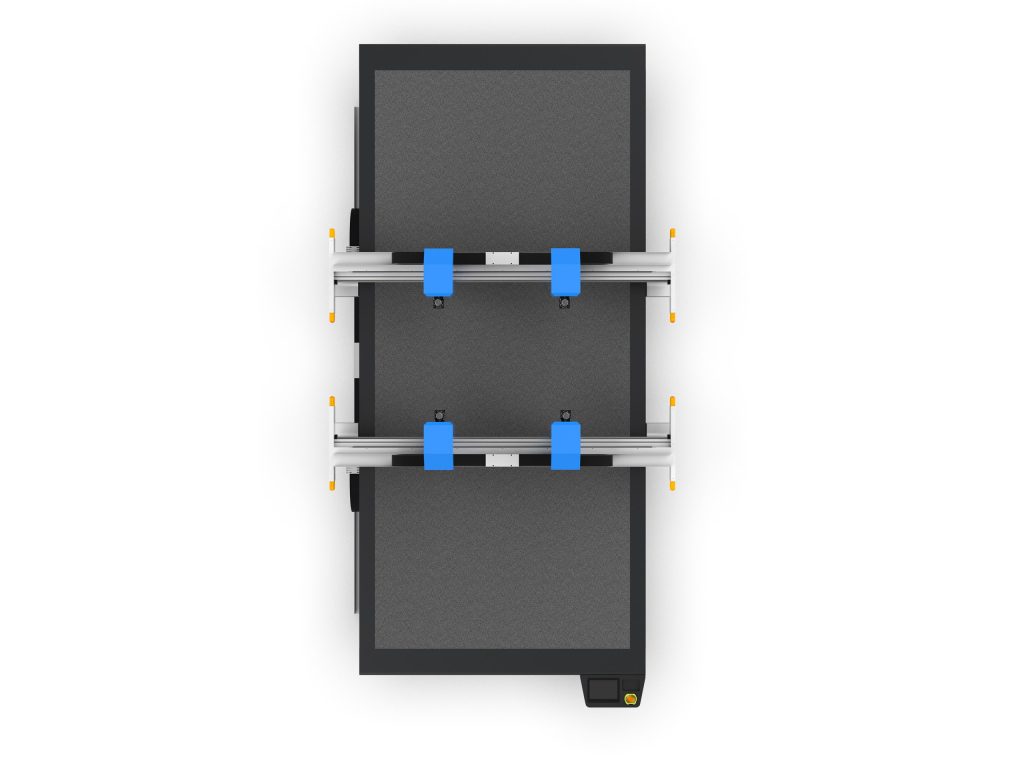
Select equipment according to production needs: for small-batch, multi-variety production, a flatbed oscillating knife cutting machine with a working area of 1600mm×2500mm is sufficient; for large-batch continuous production, an automatic feeding system is recommended; for ultra-thick faux fur (>30mm), custom extended knives and an enhanced adsorption system are required. Check whether the equipment supports CAD import, automatic nesting, and intelligent adsorption zone control.
Through reasonable equipment selection and parameter optimization, faux fur cutting can achieve efficient, high-quality production and reduce material waste.