
Crystal Board Cutting Machine: A Complete Guide from Selection to Process
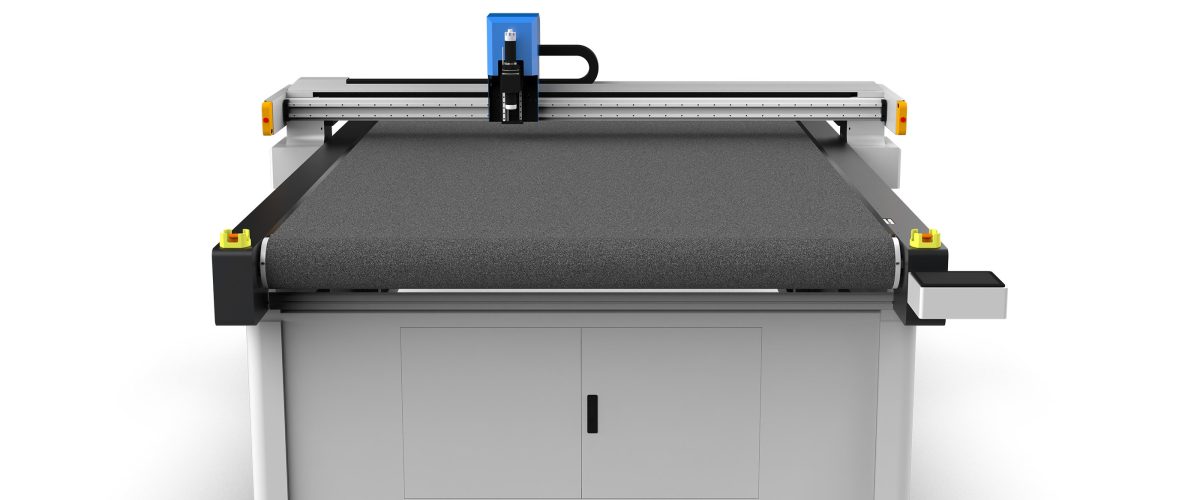
Crystal board (typically referring to acrylic/PMMA board, PC board, or PVC board) is widely used in advertising signage, furniture, light boxes, protective covers, and other fields due to its high transparency, weather resistance, and ease of processing. Traditional manual cutting or sawing methods suffer from low precision, rough edges, and significant material waste. The oscillating knife cutting machine (also known as a crystal board cutting machine) performs cold cutting through a high-frequency vibrating blade, with no thermal effect, no dust, and smooth cuts, and has become the mainstream equipment for crystal board processing. This article focuses on equipment selection, process parameters, operating techniques, and maintenance, providing practical and actionable guidance.
I. Core Types and Selection Criteria of Crystal Board Cutting Machines
1.1 Classification by Cutting Principle
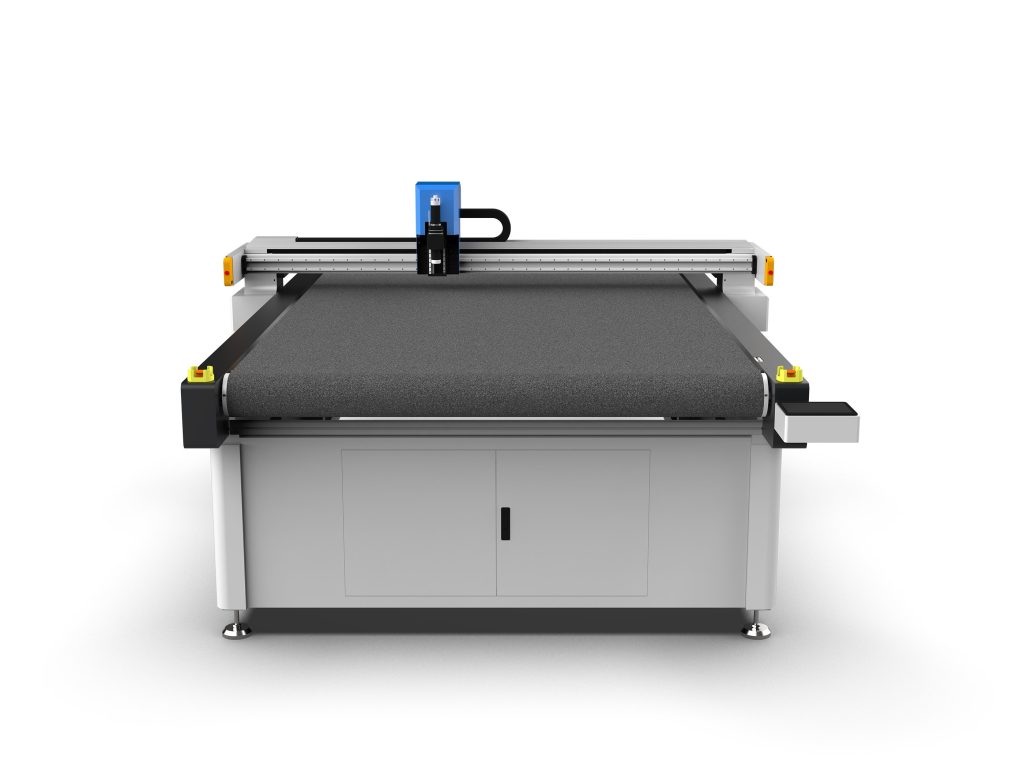
- Oscillating knife cutting machine: The blade vibrates up and down at high frequency of thousands of times per minute (typically 1,000-10,000 times/min), and the material does not deform or burn during cutting. Suitable for crystal boards with a thickness of 0.5-10mm, with good cut verticality, and can be equipped with various blade heads (such as 45° and 30° pointed blades).
- Drag knife cutting machine: The blade is fixed and cutting relies on mechanical dragging, suitable for thin boards (≤3mm) and simple graphics, with low cost but slightly inferior precision.
- Laser cutting machine: Thermal cutting, edges will turn yellow and produce toxic gases, not recommended for transparent crystal boards, especially prone to carbonization for PC boards.
For crystal boards, the oscillating knife cutting machine is the first choice because its cold cutting characteristics can maintain the original transparency of the material and produce no smoke or dust.
1.2 Key Selection Parameters
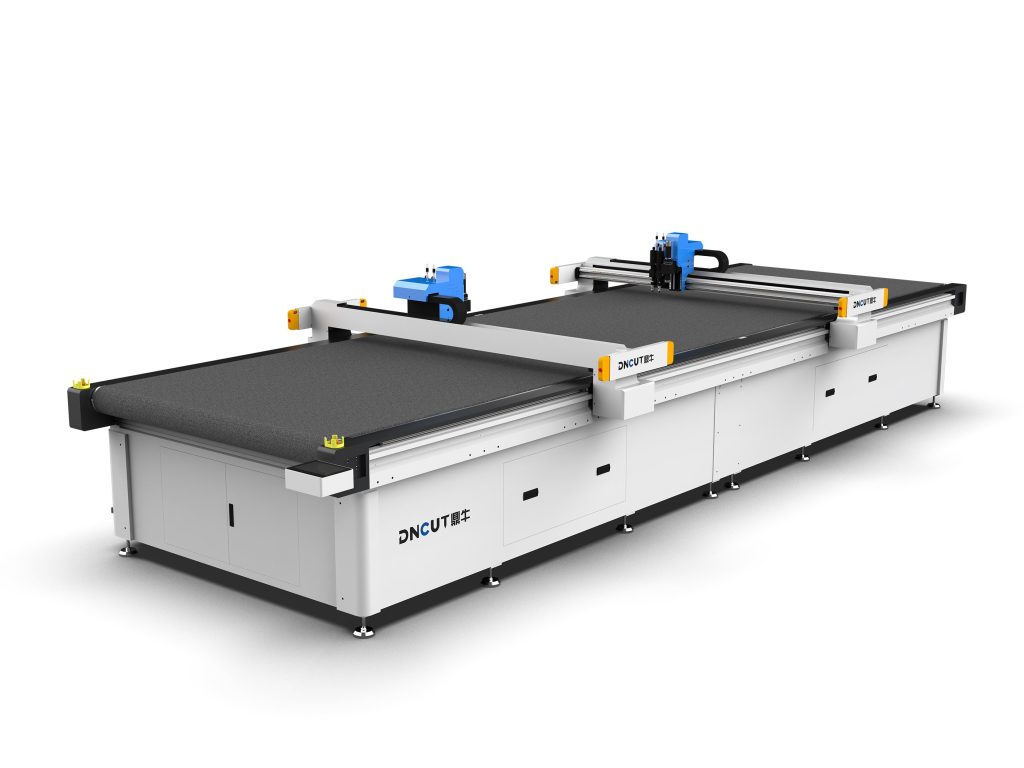
- Effective cutting working area: Choose according to common board sizes, such as 1300×2500mm, 1600×3000mm, etc. If processing large-format advertising boards, it is recommended to choose models of 1600×3000mm or above.
- Cutting thickness: Oscillating knife cutting machines can typically cut 0.5-10mm, and some heavy-duty models can reach 15mm. For thicknesses exceeding 10mm, it is recommended to use a CNC engraving machine or sawing.
- Positioning accuracy: Repeat positioning accuracy should be ≤0.05mm to ensure batch cutting consistency.
- Transmission method: Gear rack (high speed, long stroke) or timing belt (high precision, low noise). For precision cutting of crystal boards, ground-grade gear rack + linear guide rail is recommended.
- Control system: Mainstream systems are DSP or PC-based, supporting HPGL, DXF, and PLT formats, with automatic nesting and breakpoint resume cutting functions.
- Vacuum table: Zoned vacuum adsorption to ensure thin boards do not move during cutting. For 0.5-2mm thin boards, a high-negative-pressure vacuum pump is required.
II. Process Parameter Settings and Optimization
2.1 Blade Selection and Angle
- 45° pointed blade: General-purpose type, suitable for straight lines and simple curves, cutting thickness 0.5-5mm.
- 30° pointed blade: Used for fine patterns and small-radius arcs (R≤2mm), but the blade tip wears easily, requiring reduced cutting speed.
- Round blade: Suitable for thick boards (5-10mm) and long straight-line cutting, reducing cutting resistance.
Blade material is recommended to be carbide or high-speed steel with hardness above HRC60 for long service life.
2.2 Vibration Frequency and Cutting Speed
The higher the vibration frequency, the smoother the cut, but blade wear accelerates. For 3mm acrylic board, the recommended frequency is 8,000-12,000 times/min, and the cutting speed is 800-1,500mm/s. Too fast a speed will cause serrated marks on the cut, while too slow a speed results in low efficiency. During actual debugging, first test-cut at a medium speed, observe the cut surface quality, and then adjust gradually.
2.3 Downward Pressure and Compensation
The downward pressure needs to be adjusted according to board thickness: for 0.5-1mm boards, pressure 0.1-0.2MPa; for 2-3mm boards, 0.2-0.4MPa; for 5mm and above, 0.4-0.6MPa. Excessive pressure can easily cause blade bending or material cracking. At the same time, set tool compensation in the software (typically 0.05-0.1mm) to offset the blade width.
2.4 Adsorption and Fixation
Be sure to turn on vacuum adsorption before cutting to ensure the board fits tightly against the table. For small-sized workpieces, auxiliary pressure strips or dedicated fixtures can be added. Avoid pressing the board by hand during cutting to prevent displacement.
III. Operating Procedures and Common Problem Solutions
3.1 Standard Operating Procedure
- Check whether the blade is sharp and securely installed.
- Clean the table to ensure no debris.
- Place the board flat on the table, turn on adsorption, and check for warping.
- Import the cutting file and set parameters (speed, frequency, pressure).
- Perform a test cut and check the kerf quality and dimensional accuracy.
- Perform batch cutting and conduct regular spot checks.
- After cutting is completed, turn off adsorption, remove the workpiece, and clean the table.
3.2 Common Problems and Countermeasures
- Cut turns white or has burrs: The blade is dull or the vibration frequency is too low. Replace the blade or increase the frequency to above 10,000 times/min.
- Incomplete cut: Insufficient downward pressure or insufficient blade protrusion length. Increase pressure or adjust the blade tip protrusion (typically 3-5mm).
- Material displacement: Insufficient adsorption force or board warping. Check the vacuum pump and sealing strips, or use double-sided tape for auxiliary fixation.
- Cutting dimension deviation: Transmission backlash or tool compensation not set. Calibrate the gear rack backlash and correctly set the compensation value in the software.
- Blade breakage: Feed speed too fast or hard impurities encountered. Reduce the feed speed and clean the board surface.
IV. Maintenance and Safety Specifications
4.1 Daily Maintenance
- Clean the table and guide rails every shift to remove chips.
- Check blade wear weekly and replace in time.
- Lubricate linear guide rails and gear racks monthly (use lithium-based grease).
- Check the vacuum pump filter quarterly, clean or replace.
- Regularly calibrate equipment accuracy (use a standard circle or square frame for testing).
4.2 Safety Precautions
- Do not wear gloves during operation to prevent being caught by the blade.
- Wear cut-resistant gloves when replacing the blade and use dedicated tools.
- During equipment operation, keep all body parts away from moving components.
- Ensure good grounding to avoid static electricity accumulation.
- When cutting PC boards, pay attention to ventilation to avoid inhaling dust (although cold cutting produces very little dust, protection is still required).
V. Application Cases and Benefit Analysis
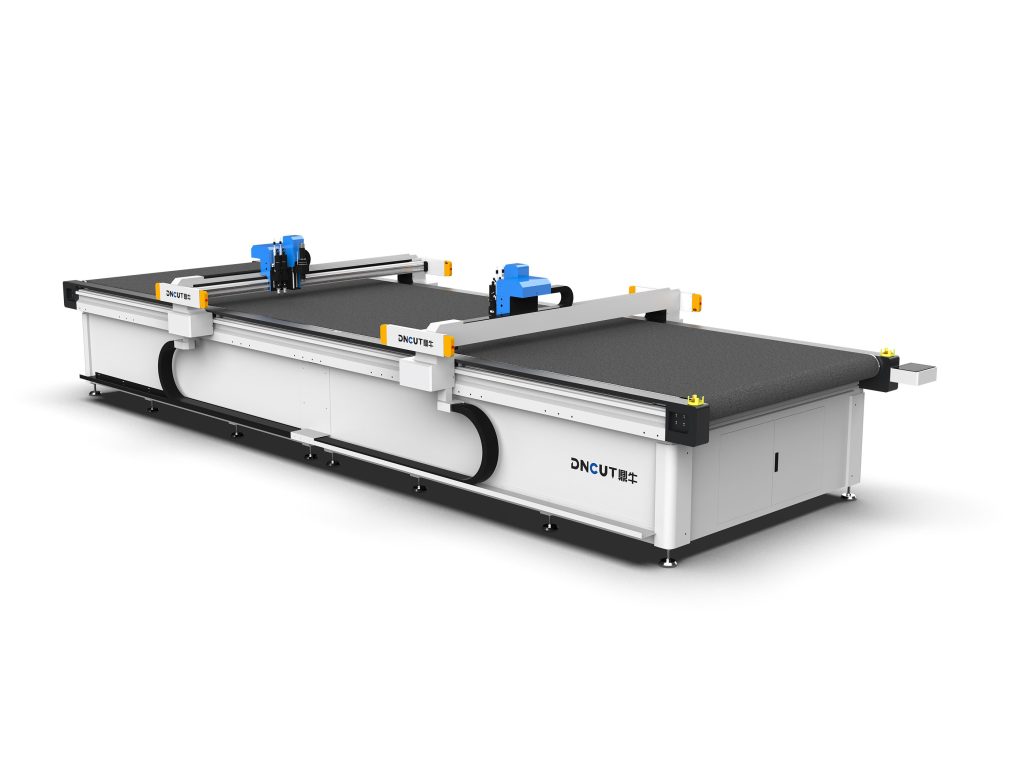
Taking an advertising signage company as an example, it uses a 1600×3000mm oscillating knife cutting machine to process 3mm acrylic boards, with a cutting speed of 1,200mm/s and a vibration frequency of 10,000 times/min. The cuts can be used directly without polishing. Compared with traditional sawing, efficiency is increased by 3 times, material utilization is improved by 15%, and there is no dust pollution. The equipment investment payback period is about 6-12 months.
Summary: The selection of a crystal board cutting machine requires comprehensive consideration of working area, thickness, precision, and control system; process parameters need to be optimized according to material thickness and blade type; daily maintenance and safe operation are key to ensuring equipment life and personnel safety. Through scientific selection and fine-tuning, the crystal board cutting machine can significantly improve processing quality and production efficiency.