
What Is an Inflatable Material Cutting Machine?
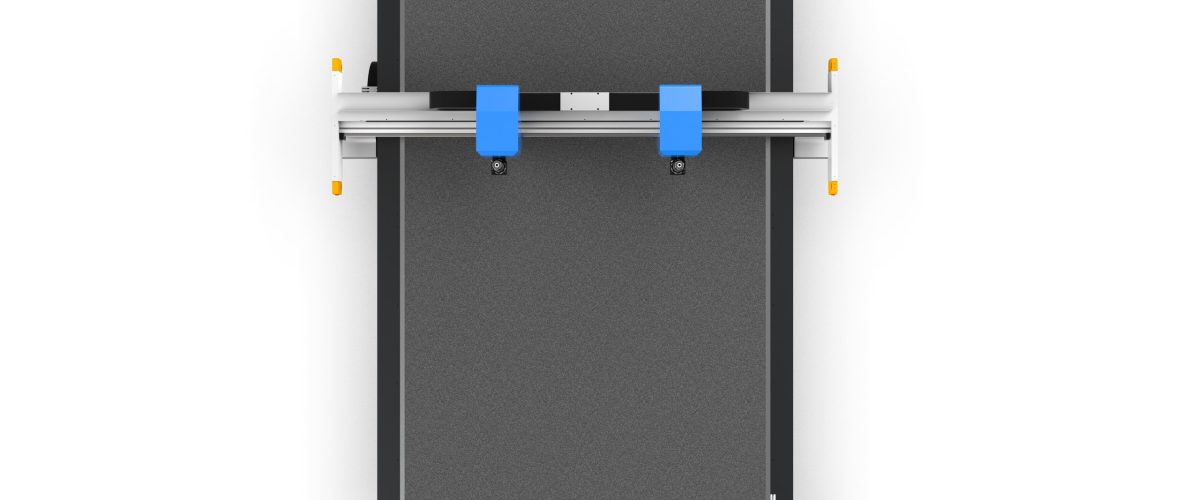
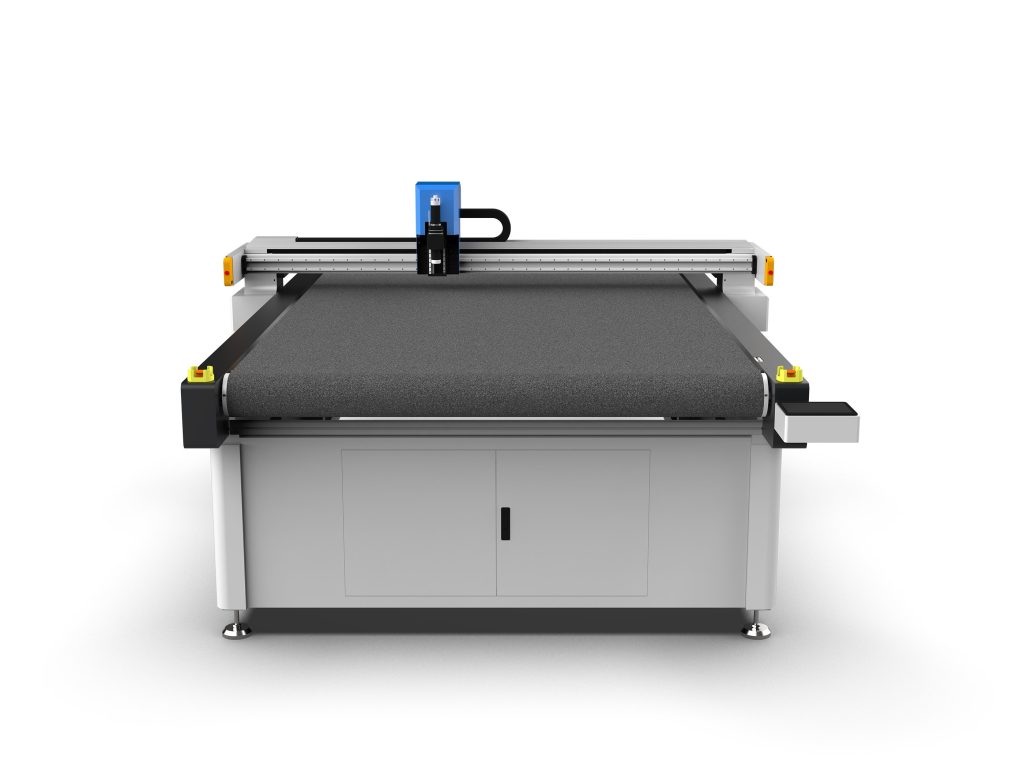
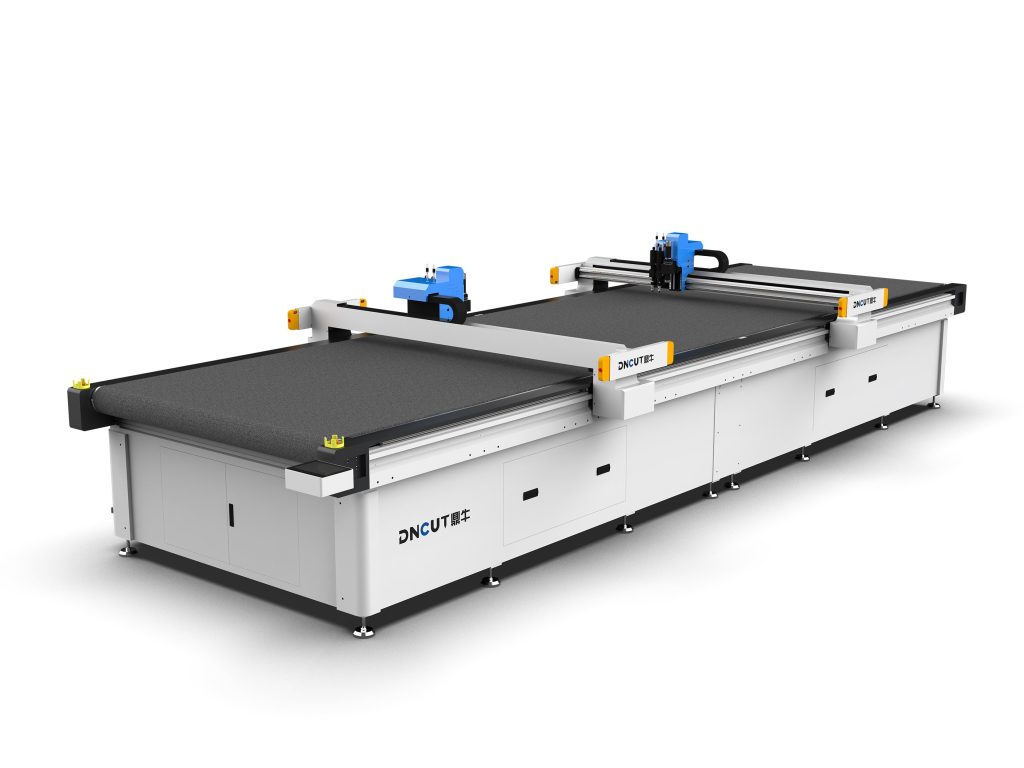
An inflatable material cutting machine is a CNC cutting device designed specifically for cutting inflatable products (such as air mattresses, swim rings, inflatable tents, inflatable models, etc.). It typically uses an oscillating blade (such as a pneumatic knife or electric knife) or a laser (less commonly used for inflatable materials) for cutting, but the mainstream solution is oscillating knife cutting, because it produces no smoke or odor, delivers clean cutting edges, and can handle multiple layers of material. The inflatable material cutting machine imports graphics through CAD/CAM software and controls the knife head to move along a preset path, achieving high-precision and high-efficiency cutting.
Compared with ordinary cutting machines, inflatable material cutting machines need to solve problems such as the softness and easy deformation of inflatable materials, as well as interlayer sliding during multi-layer cutting. Therefore, the equipment is usually equipped with a vacuum adsorption table, an automatic feeding system, and intelligent nesting software to ensure cutting accuracy and material utilization.
Core Working Principles of Inflatable Material Cutting Machines
1. Cutting Methods
Mainstream inflatable material cutting machines use a high-frequency oscillating knife (with vibration frequency up to 10,000-20,000 times per minute). The blade moves up and down, generating almost no lateral force during cutting, so the material does not deform. For thicker inflatable materials (such as PVC laminated mesh fabric), a pneumatic knife can be used, with a cutting thickness of up to 50 mm. Some machines are also equipped with a circular knife or drag knife for different materials.
2. Vacuum Adsorption System
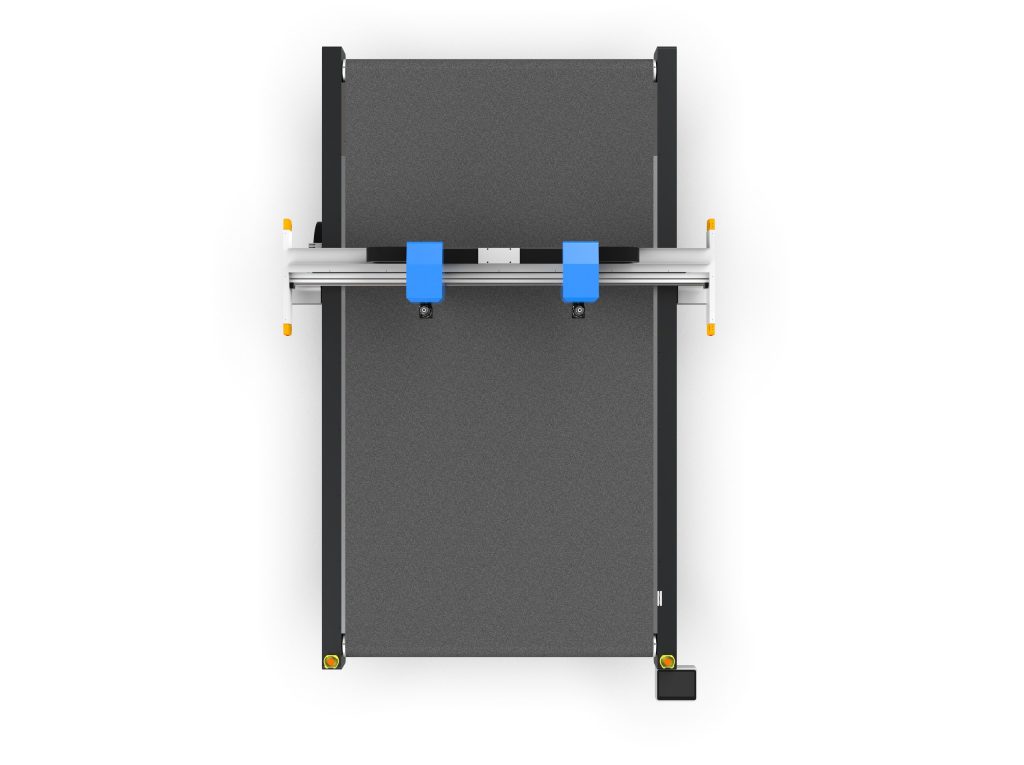
Inflatable materials tend to move during cutting, so the machine table is usually a honeycomb structure connected to a vacuum pump underneath, generating negative pressure to firmly hold the material on the table. The vacuum adsorption force can generally reach 15-25 kPa, ensuring that the material does not shift during cutting.
3. Automatic Feeding and Nesting
For roll-form inflatable materials (such as TPU and PVC film), the machine is equipped with an automatic feeding rack and works with software for intelligent nesting to maximize material utilization. The feeding accuracy is usually ±0.1 mm, ensuring the accuracy of continuous cutting.
Key Performance Parameters and Selection Points
When purchasing an inflatable material cutting machine, pay attention to the following parameters:
- Cutting area: Common specifications include 1600 mm × 2500 mm and 2100 mm × 3000 mm. Choose according to production needs. Large-area cutting can reduce splicing and improve efficiency.
- Cutting thickness: Generally, an oscillating knife can cut ≤30 mm, and a pneumatic knife can cut ≤50 mm. Choose according to material thickness.
- Cutting accuracy: Repeat positioning accuracy should be ≤0.05 mm, and cutting accuracy should be ±0.1 mm. High precision ensures accurate splicing.
- Maximum cutting speed: Usually 1000-1500 mm/s, but the actual speed is affected by material thickness and graphic complexity.
- Vacuum pump power: ≥5.5 kW to ensure sufficient adsorption force. For large-area cutting, 7.5 kW or above is recommended.
- Control system: Mainstream brands such as Beckhoff and Delta support formats such as HPGL and DXF, with user-friendly operation interfaces.
- Tool configuration: Equipped with at least an oscillating knife, drag knife, and circular knife to adapt to different materials (such as PVC, TPU, and PE).
In addition, consider the machine’s degree of automation: functions such as automatic feeding, automatic tool changing, and automatic material edge recognition can significantly improve production efficiency. For small-batch, multi-variety production, models with CCD vision positioning are recommended for cutting printed inflatable materials.
Operating Process and Techniques of Inflatable Material Cutting Machines
1. Material Preparation
Place the inflatable material flat on the cutting table and ensure there are no wrinkles. For roll materials, unfold them using the automatic feeding rack and secure them with vacuum adsorption. Note: A small amount of temporary adhesive may be sprayed between material layers, or electrostatic adsorption may be used to prevent sliding, but ensure that the material is not contaminated.
2. Graphic Import and Nesting
Design graphics using CAD software and import them into the cutting software for nesting. The software should support an automatic nesting function to minimize waste. For inflatable products, consider the welding allowance (usually 5-10 mm) and reserve it in the graphics.
3. Parameter Settings
Set cutting parameters according to material type and thickness:
- Oscillation frequency: Use high frequency (18,000 times/min) for thin materials (<1 mm), and low frequency (10,000 times/min) for thick materials.
- Cutting speed: Thin materials can be cut at high speed (1200 mm/s), while thick materials require lower speed (600 mm/s).
- Blade extension length: Slightly greater than the material thickness, usually 0.5-1 mm more.
- Vacuum adsorption force: Adjust according to material breathability. For non-breathable materials (such as TPU), the adsorption force can be reduced to 10 kPa; for breathable materials (such as fabric), it needs to be increased to 20 kPa.
4. Trial Cutting and Calibration
Before formal cutting, perform a trial cut to check whether the cutting edge is smooth and the dimensions are accurate. If there is any deviation, adjust the knife pressure or speed. For multi-layer cutting, ensure there is no misalignment between layers.
5. Mass Production and Monitoring
Start automatic cutting, monitor the cutting process, and clean up waste promptly. Check blade wear regularly; generally, the blade needs to be replaced every 200-300 meters of cutting (depending on material abrasiveness).
Common Problems and Solutions
- Uneven cutting edges: May be caused by a dull blade or improper oscillation frequency. Replace the blade or adjust the frequency.
- Material displacement: Check whether the vacuum adsorption force is sufficient, or increase the adsorption area. For small pieces, use clamps for assistance.
- Inconsistent cutting depth: Check the flatness of the table, or adjust the knife pressure. An uneven table needs to be re-milled.
- Feeding deviation: Calibrate the feed rollers to ensure uniform tension. Clean the feed rollers regularly.
- Software nesting errors: Update the software version and check graphic closure.
Maintenance Guide
To ensure the long-term stable operation of the inflatable material cutting machine, perform the following maintenance:
- Daily: Clean the table and guide rails, and check whether the vacuum pipeline is blocked.
- Weekly: Check blade wear and clean dust from the electrical control cabinet.
- Monthly: Lubricate the guide rails and lead screws, and check belt tension.
- Quarterly: Calibrate cutting accuracy and replace the vacuum pump filter.
- Annually: Perform a comprehensive inspection of the electrical system and replace worn parts.
In addition, operators should receive training and be familiar with emergency stop and daily maintenance procedures.
Application Fields and Market Trends
Inflatable material cutting machines are widely used in fields such as advertising inflatable models, water inflatable toys, inflatable furniture, medical inflatable cushions, and automotive airbags (sample cutting). As inflatable materials develop toward eco-friendliness (TPU, bio-based materials) and compositeness, cutting machines need to have stronger adaptability. Future trends include: higher-precision vision cutting, AI intelligent nesting, and IoT remote monitoring. When choosing equipment, it is recommended to give priority to models with upgrade potential.
In short, the inflatable material cutting machine is key equipment for improving the production efficiency and quality of inflatable products. Through reasonable selection, standardized operation, and regular maintenance, the return on investment can be maximized.