
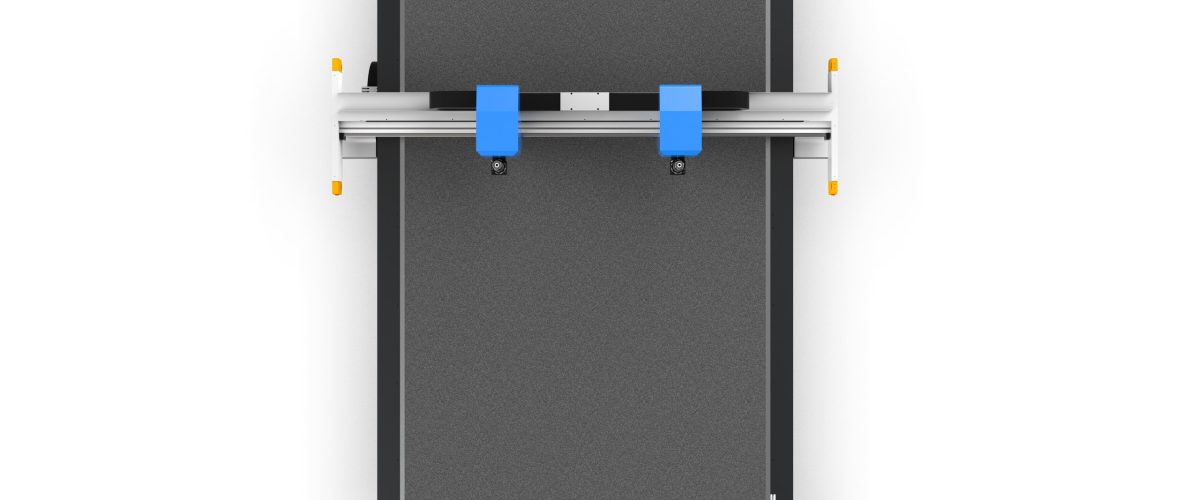
Overview of Leather Cutting Equipment
Leather cutting is a key process in industries such as luggage, footwear, automotive interiors, and furniture. Traditional manual cutting has low efficiency and poor precision, and modern CNC cutting equipment has become mainstream. Among these, the oscillating knife cutting machine is widely used in leather processing due to its cold cutting, smokeless, and dust-free characteristics and its adaptability to various flexible materials. This article focuses on the oscillating knife cutting machine and provides a practical guide covering equipment types, selection parameters, operating techniques, and maintenance.
Main Types of Leather Cutting Equipment
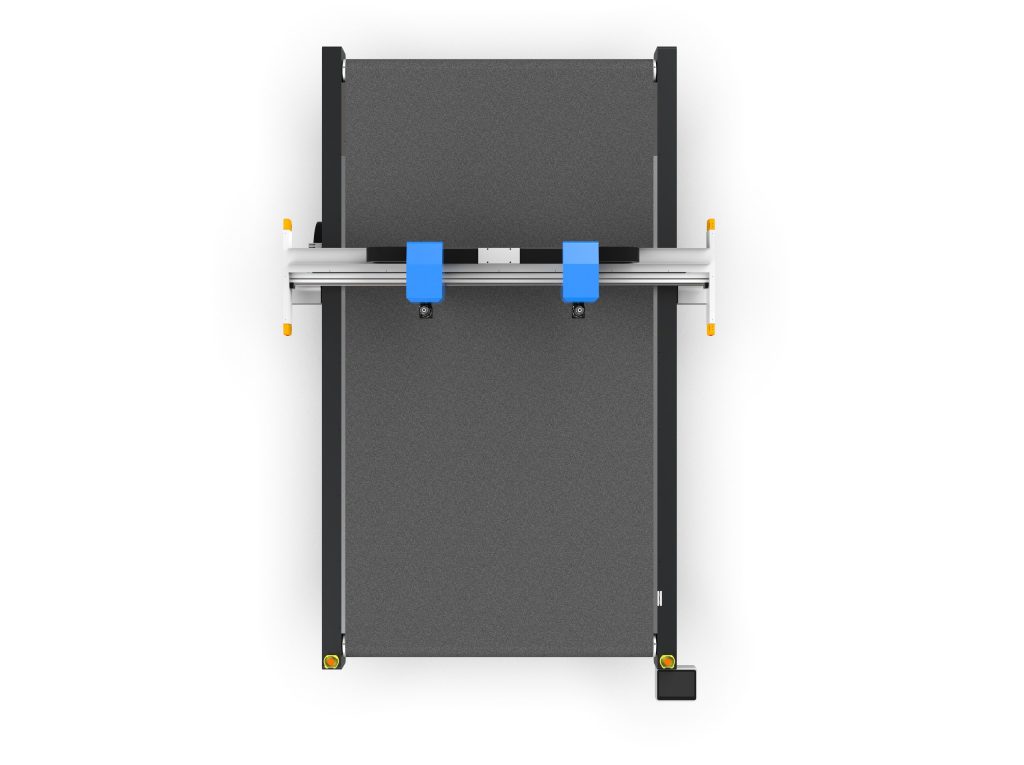
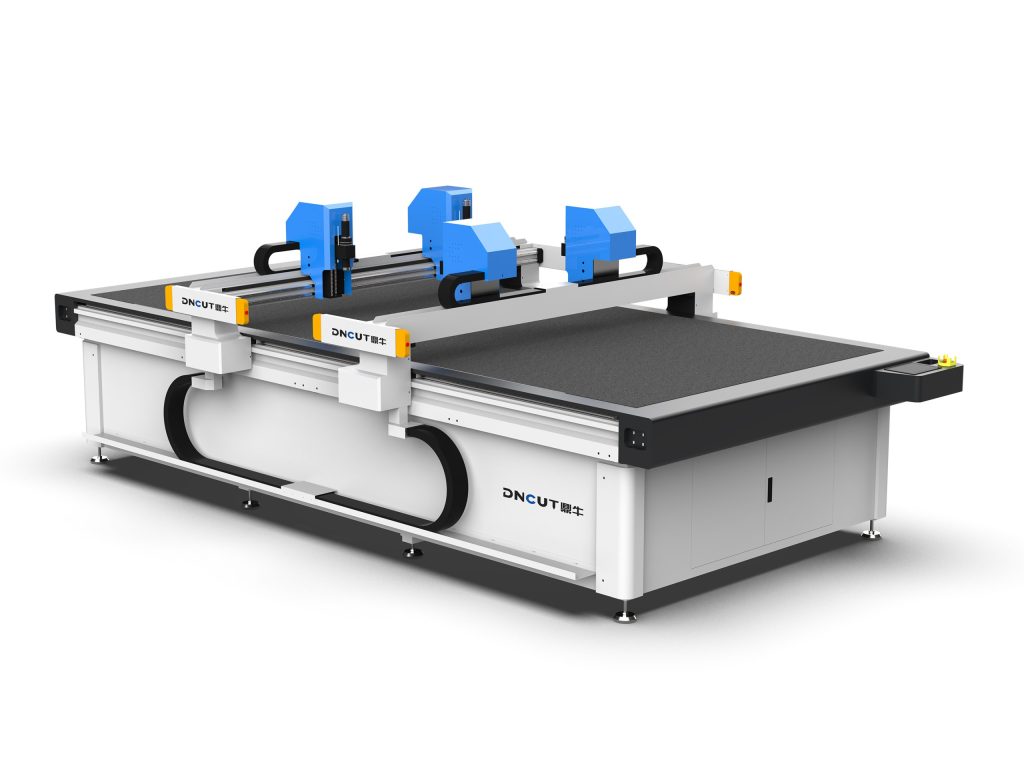
1. Oscillating Knife Cutting Machine
It cuts materials through a blade that moves up and down at high frequency, and is suitable for leather, fabric, foam, cardboard, and more. The cutting thickness is usually 0.5-10 mm (depending on material density), and the cutting accuracy can reach ±0.1 mm. Advantages: no heat-affected zone, neat edges, and the ability to cut complex patterns.
2. Laser Cutting Machine
It uses a laser beam to melt or vaporize materials. The cutting speed is fast, but it produces burnt edges and smoke, which affects the natural grain of leather. It is mostly used for non-natural leather or occasions with low edge requirements.
3. Waterjet Cutting Machine
It uses high-pressure water flow for cutting and has no thermal impact, but the equipment cost is high and the cutting speed is slow. It is suitable for thick leather or composite materials.
4. Punch Press
It performs stamping through dies and has high efficiency, but dies need to be made. It is suitable for large-volume standardized production and has poor flexibility.
In comprehensive comparison, the oscillating knife cutting machine performs in a balanced way in terms of flexibility, precision, and environmental friendliness, and is an ideal choice for small- and medium-batch, multi-variety leather cutting.
Key Parameters for Selecting an Oscillating Knife Cutting Machine
1. Cutting Area
Choose according to common leather sizes and nesting requirements. For example, the standard cowhide size is about 1.5 m × 1.5 m. It is recommended to choose equipment with an effective cutting area of at least 1.6 m × 1.6 m, such as the 1625 model (1.6 m × 2.5 m) or the 2030 model (2.0 m × 3.0 m), so that multiple leather sheets can be nested at one time.
2. Cutting Thickness and Material Adaptability
Oscillating knife cutting machines can usually cut leather with a thickness of 0.5-10 mm. For thick leather (such as automotive seat leather), it is necessary to choose a high-power motor (such as 1.5 kW or above) and reinforced blades. At the same time, confirm whether the equipment supports other materials (such as fabric and foam) to expand the application range.
3. Cutting Accuracy
Accuracy depends on the transmission system (rack and pinion or belt), guide rail quality, and control system. The repeat positioning accuracy of high-precision equipment can reach ±0.05 mm, and the cutting accuracy is ±0.1 mm. For fine patterns (such as shoe upper cutouts), it is recommended to choose models with servo motors + rack and pinion transmission.
4. Control System and Software
Mainstream control systems support formats such as DXF, PLT, and AI, and have automatic nesting and path optimization functions. The operation interface should be a Chinese touch screen for workers to get started quickly. Some high-end models support visual recognition, which can automatically identify leather defects and avoid them, improving material utilization.
5. Tool System
Oscillating knife cutting machines can be equipped with a variety of tools: oscillating knife (general purpose), round knife (suitable for thick materials), V-knife (suitable for grooving), and pneumatic knife (suitable for soft materials). When purchasing, confirm whether tool replacement is convenient and whether it has an automatic tool adjustment function.
6. Adsorption System
The vacuum adsorption worktable ensures that the material does not shift during cutting. The adsorption force needs to be adjusted according to the air permeability of the material. For porous leather, zone-controlled adsorption is required to avoid insufficient adsorption force.
Operating Techniques and Parameter Settings
1. Material Fixation
Leather should be laid flat on the worktable and fixed using vacuum adsorption. For rolled materials, they need to be unrolled first and left to stand to eliminate curling. The recommended adsorption negative pressure is -0.6 to -0.8 bar, adjusted according to leather thickness and air permeability.
2. Cutting Parameters
Oscillation frequency: usually 1000-3000 times/min; use low frequency (1000-1500) for thick materials and high frequency (2000-3000) for thin materials. Feed speed: generally 500-1500 mm/s, depending on material thickness and pattern complexity. Blade extension length: slightly greater than the material thickness, usually with a margin of 0.5-1 mm.
3. Nesting Optimization
Use the software’s automatic nesting function together with marking of leather defect areas to maximize material utilization. For natural leather, manual nesting is recommended to avoid scars and areas with uneven grain.
4. Troubleshooting Common Problems
- Rough cutting edges: Check blade sharpness, reduce feed speed, and increase oscillation frequency.
- Material shifting: Check the adsorption force, ensure the leather fits fully against the table, and consider adding a film overlay.
- Incomplete cutting: Increase blade extension length, check whether the blade is worn, and adjust cutting depth.
Maintenance and Care
1. Daily Maintenance
- Clean the worktable and guide rails every shift to remove leather debris.
- Check blade wear and replace in time (usually every 8-12 hours, depending on the material).
- Check whether the vacuum adsorption pipeline is blocked.
2. Regular Maintenance
- Lubricate guide rails and lead screws weekly using lithium-based grease.
- Check transmission belt tension and rack-and-pinion clearance monthly.
- Calibrate equipment accuracy quarterly, using a standard circle to test cutting accuracy.
3. Long-Term Shutdown
Clean the equipment, apply anti-rust oil, disconnect the power and air supply, and cover with a dust cover.
Selection Recommendations and Summary
When choosing leather cutting equipment, it is necessary to comprehensively consider production scale, material type, accuracy requirements, and budget. For leather processing enterprises with small- and medium-batch and multi-variety production, the oscillating knife cutting machine is the most cost-effective choice. It is recommended to give priority to mid- to high-end models with automatic nesting, visual recognition, and zone-controlled adsorption functions to improve material utilization and production efficiency. Before procurement, be sure to provide actual material samples for trial cutting to verify the equipment’s cutting effect and accuracy. Correct selection and standardized operation and maintenance can significantly extend equipment life and reduce production costs.