
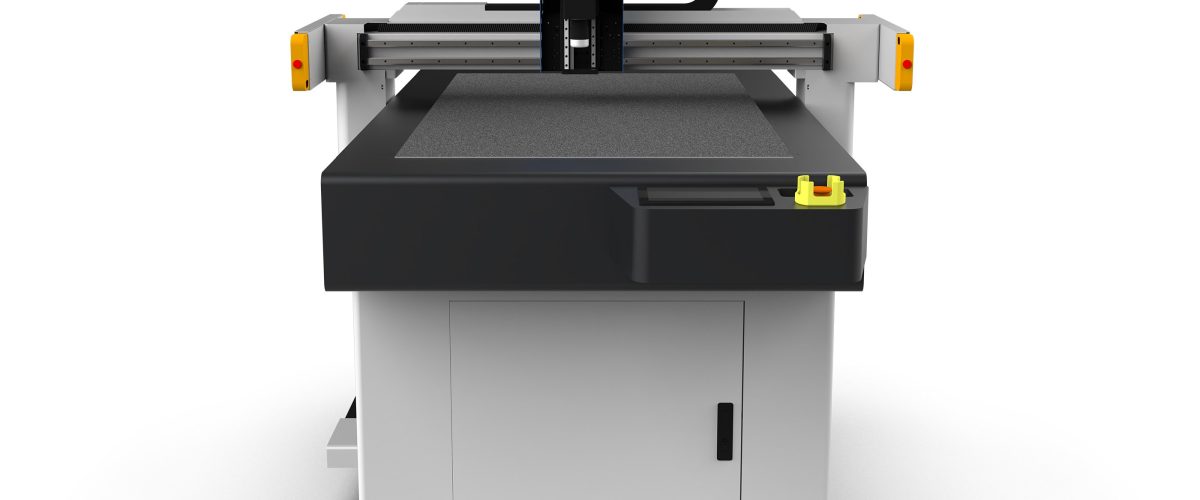
Carbon Fiber Cutting Machine: A Practical Guide from Selection to Maintenance
Carbon fiber composite materials are increasingly widely used in fields such as aerospace, automotive, and sports equipment, yet their cutting processing faces many challenges: fibers wear down tools, cutting generates fine dust, prepreg sticks to the blade, and cut edges are prone to delamination and fuzzing. Traditional manual cutting or ordinary cutting machines struggle to meet precision and efficiency requirements, which is why carbon fiber cutting machines have emerged. Based on actual production experience, this article systematically reviews the selection parameters, operating key points, and maintenance specifications of carbon fiber cutting machines, providing a reference for your equipment procurement and production management.
I. Core Technical Parameters of Carbon Fiber Cutting Machines
When purchasing a carbon fiber cutting machine, you cannot look only at brand and price; you must pay attention to the following hard specifications:
- Cutting accuracy: Repeat positioning accuracy should be ≤±0.05mm, and cutting contour accuracy ≤±0.1mm. For aerospace-grade prepreg, it is recommended to choose a high-precision model of ±0.03mm.
- Cutting speed: Idle speed ≥60m/min, and cutting speed is adjustable between 5-30m/min according to material thickness. High-speed models can increase production capacity by more than 30%.
- Effective cutting working area: Common specifications include 1600mm×2500mm, 2000mm×3000mm, etc. It should be selected according to the maximum workpiece size and nesting efficiency, with a 10%-20% margin reserved.
- Knife system: Oscillating knives, circular knives, and ultrasonic knives are commonly used for carbon fiber cutting. The oscillating knife frequency is typically 10,000-20,000 strokes/min, with an adjustable amplitude of 0.5-2mm.
- Vacuum adsorption system: Adsorption force ≥20kPa, with zoned control of at least 4 zones, ensuring reliable fixation of thin-layer prepreg.
- Dust removal device: A high-efficiency dust collector must be equipped, with air volume ≥2000m³/h and filtration accuracy ≤5μm, to prevent carbon fiber dust from harming health.
II. Key Points for Selecting a Carbon Fiber Cutting Machine
1. Select the knife according to material characteristics
Carbon fiber prepreg (such as epoxy-based) is quite tacky at room temperature and tends to stick to the blade. It is recommended to use an ultrasonic cutting knife, which reduces friction and blade sticking through high-frequency vibration, resulting in clean cuts without burrs. For cured carbon fiber panels, however, a diamond-coated carbide circular knife or laser cutting should be used (but laser cutting creates a heat-affected zone, so caution is required).
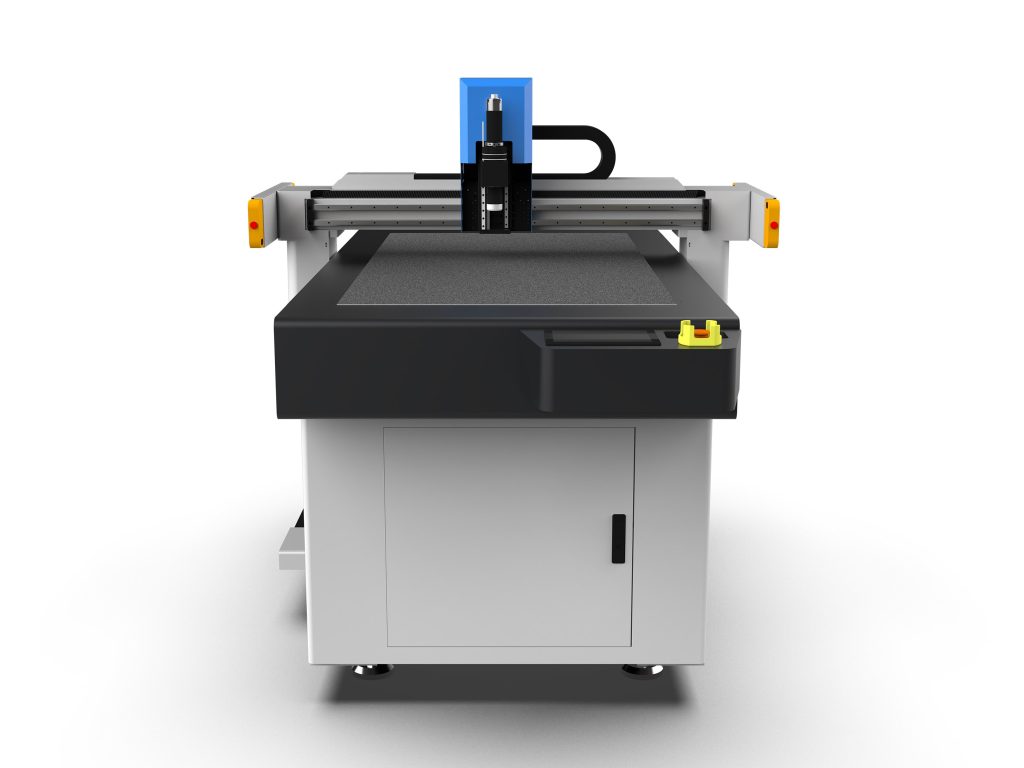
2. Pay attention to feeding and layout software
An efficient cutting table should be equipped with an automatic feeding system and intelligent nesting software. The feeding system must ensure the prepreg is flat and wrinkle-free, with tension control accuracy of ±2N. The nesting software should support automatic path optimization, common-edge cutting, and bridging, increasing material utilization to over 85%.
3. Evaluate dust extraction and safety configurations
Carbon fiber dust is conductive and can easily trigger allergies, so the equipment must integrate negative-pressure dust extraction, with dust concentration in the work area ≤1mg/m³. At the same time, the equipment should have light curtain protection, emergency stop buttons, and tool guards, complying with CE safety standards.
III. Operating Techniques and Parameter Settings
Correct operating parameters are key to ensuring cutting quality. The following are recommended parameters for carbon fiber prepreg (single-layer thickness 0.125mm, epoxy resin content 35%):
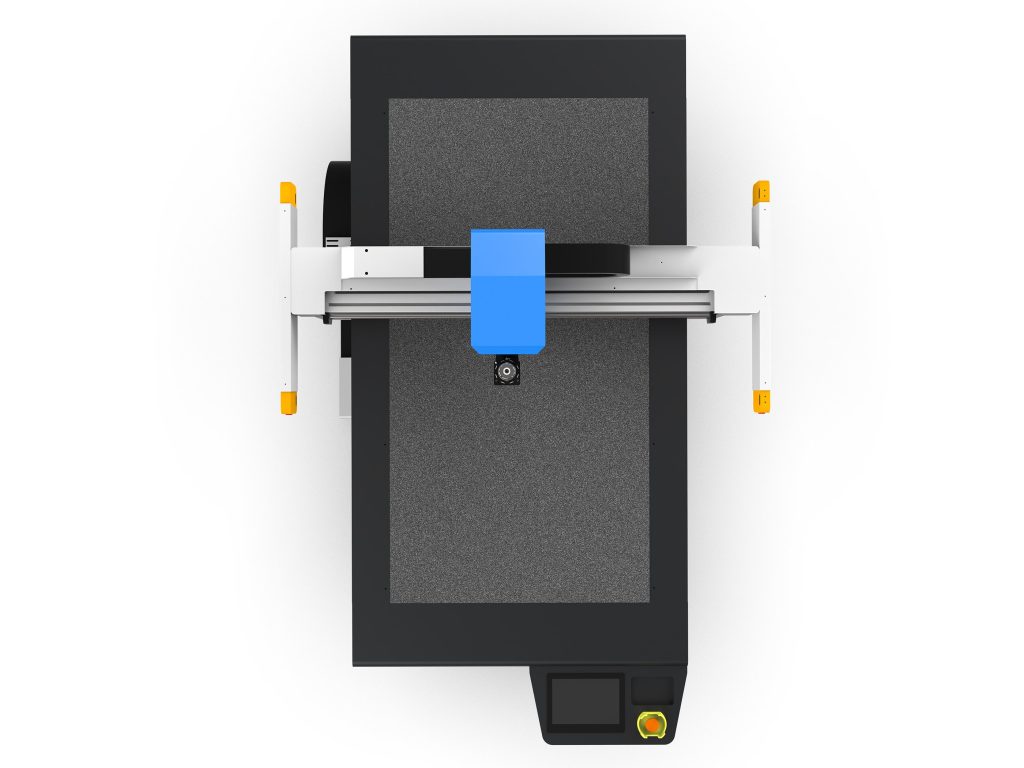
- Oscillating knife frequency: 18,000 times/minute
- Amplitude: 1.2mm
- Cutting speed: 15m/min (straight lines), 8m/min (curves)
- Knife pressure: 0.3MPa (adjusted according to the number of layers; increase by 0.05MPa for each additional layer)
- Vacuum adsorption: -25kPa, zone-based activation
- Cutting depth: slightly greater than the total material thickness (e.g., set 2.2mm for 2mm-thick material) to ensure complete cutting without damaging the bottom film
Operating notes:
- Clean the blade with alcohol before cutting to remove resin residue.
- Check blade wear every 50-100 meters of cutting. Carbon fiber wears the blade edge quickly; it is recommended to replace or sharpen the blade every shift.
- For multi-layer prepreg (e.g., 8 layers), adopt a layered cutting strategy with a depth of 0.3mm per layer to avoid delamination caused by cutting through in one pass.
- After cutting, promptly clean the table with a vacuum cleaner to prevent carbon fiber debris from scratching the material.
IV. Common Problems and Solutions
1. Fuzzing at the cut edge and fiber pull-out
Causes: dull blade, too low oscillation frequency, or too fast cutting speed. Solution: replace with a new blade, increase the frequency to 20,000 times/minute, and reduce the speed by 20%.
2. Prepreg sticking to the blade
Cause: resin temperature is too high or the blade has no coating. Solution: control the workshop temperature at 20±2℃, use Teflon-coated blades, or enable ultrasonic assistance.
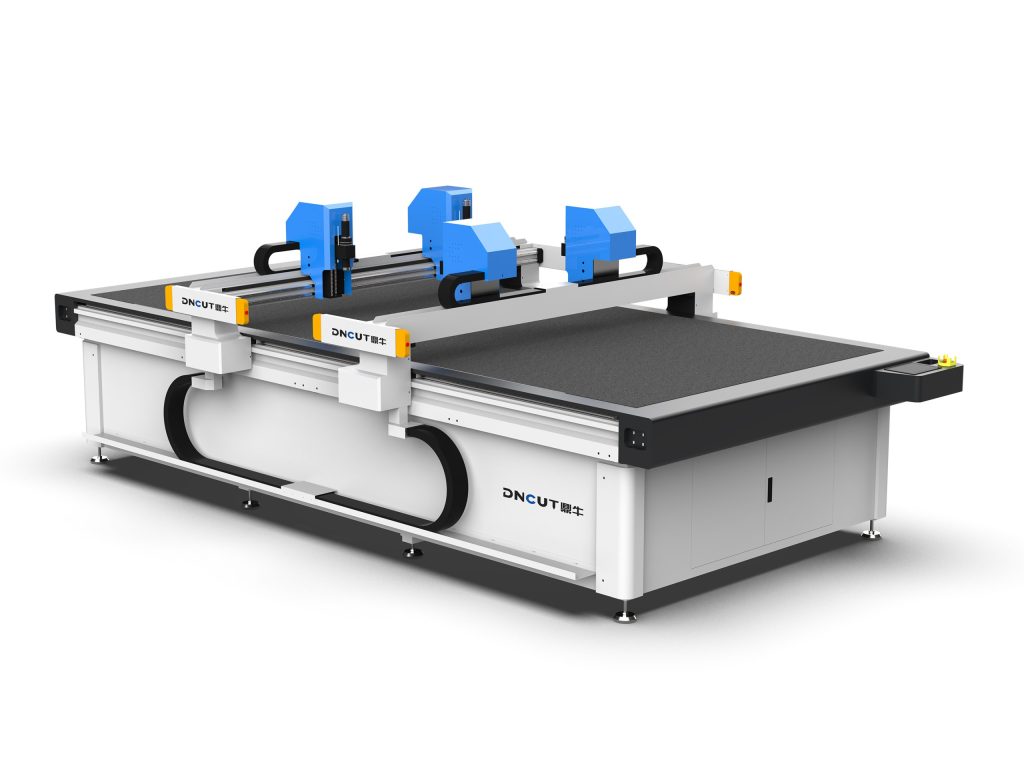
3. Cutting Dimension Deviation
Cause: Insufficient vacuum adsorption causes material displacement, or guide rail wear. Solution: Check the sealing strips of the adsorption zones to ensure vacuum degree ≥-20kPa; lubricate the guide rails regularly and calibrate accuracy once every six months.
4. Dust accumulation
Cause: Insufficient dust removal airflow or clogged filter element. Solution: Clean the filter element every two weeks, check the airtightness of the ducts monthly, and ensure the airflow is not lower than 80% of the rated value.
V. Maintenance plan
The service life of a carbon fiber cutting machine depends on daily maintenance. It is recommended to implement the following plan:
- Daily: Clean the table, blade and dust suction port; check whether the vacuum pressure meets the standard.
- Weekly: Clean the dust filter; check knife wear and sharpen if necessary; lubricate the linear guides.
- Monthly: Calibrate cutting accuracy (test with a standard circle); check belt tension; clean dust from the electrical control cabinet.
- Every six months: Replace the vacuum adsorption sealing strips; fully calibrate the equipment level; check cable wear.
In addition, it is recommended to sign an annual maintenance contract with the supplier to ensure timely replacement of key components (such as servo motors and oscillating knife heads).
VI. Conclusion
The carbon fiber cutting machine is the core equipment for improving the cutting quality and efficiency of composite materials. When selecting a model, three key elements must be closely addressed: precision, tooling, and dust extraction; during operation, parameters must be finely adjusted and the maintenance plan strictly executed. Only by combining equipment performance with process details can high-quality, low-cost production of carbon fiber parts be achieved. If you would like to further discuss cutting solutions for specific materials (such as aramid and glass fiber), you are welcome to contact our technical team.