
Granular Fleece Cutting Machine: A Complete Guide from Selection to Efficient Production
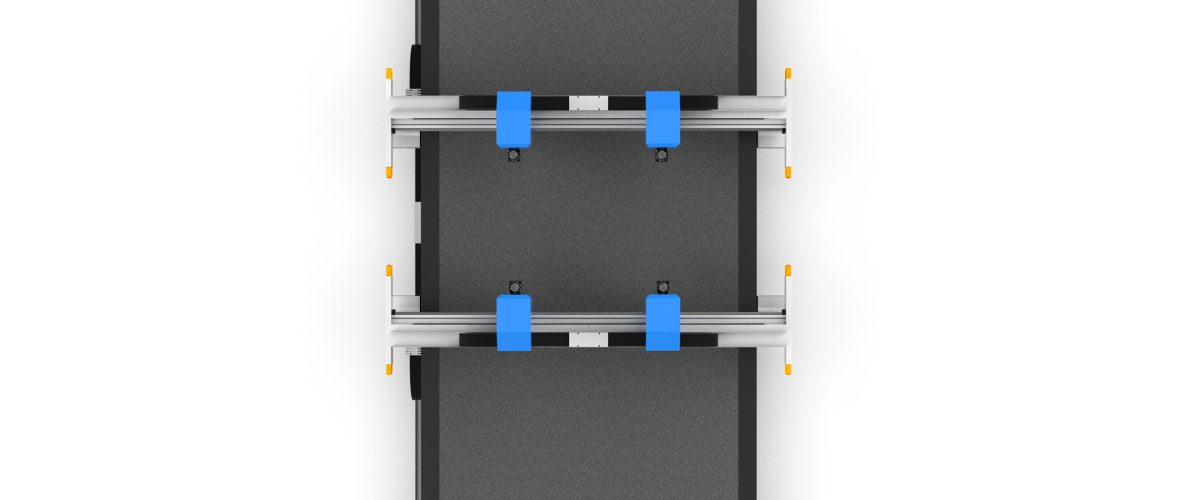
Granular fleece (also known as lamb fleece or granular cashmere) is a fabric with a granular pile surface, widely used in apparel, home textiles, toys, and other fields. Due to its fluffy, soft, and easily deformable characteristics, traditional cutting methods are difficult to ensure precision and efficiency. The granular fleece cutting machine (usually using oscillating knife or laser technology) has become the key equipment to solve this challenge. This article will delve into the technical points, selection parameters, operating techniques, and maintenance methods of granular fleece cutting machines, providing practical reference for your production.
I. Challenges of Granular Fleece Cutting and Equipment Types
The cutting difficulties of granular fleece mainly come from three aspects:
- Bulky and easily deformed: The fabric is thick and rebounds after compression, resulting in unstable cutting dimensions.
- Lint shedding: A large amount of fiber dust is generated during cutting, affecting equipment lifespan and cutting quality.
- Heat sensitivity: Some granular fleece contains chemical fiber components, and laser cutting is prone to melted edges and scorching.
In response to these characteristics, the current mainstream granular fleece cutting machines fall into two categories:
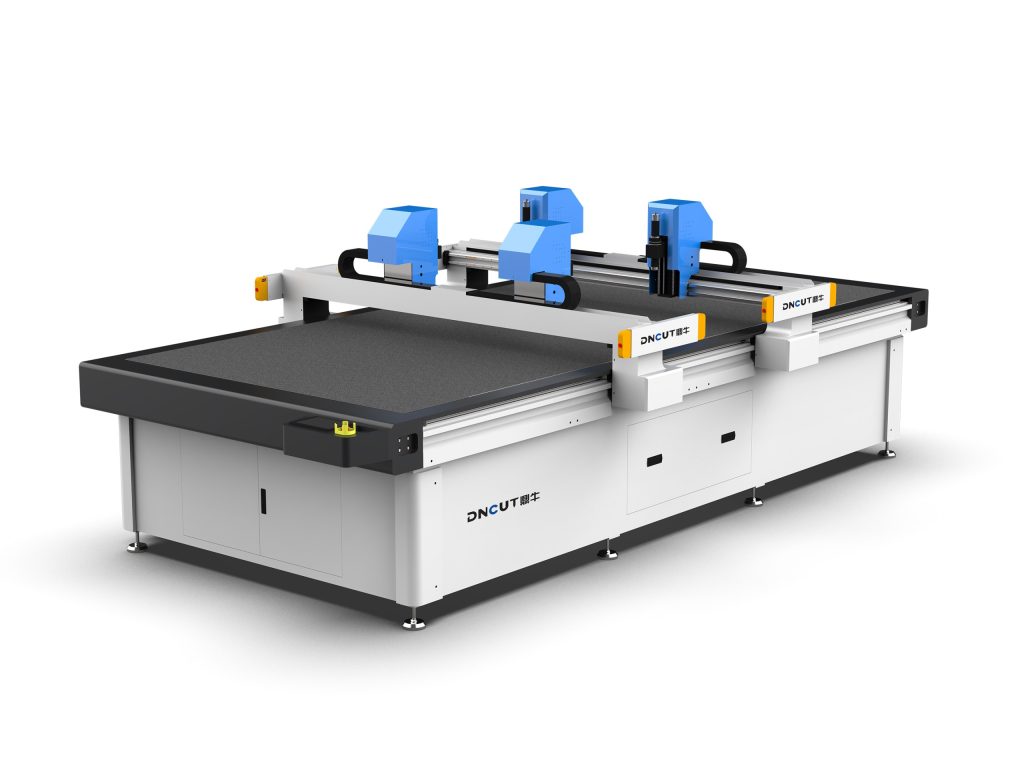
- Oscillating knife cutting machine: Cold cutting is performed by a blade moving up and down at high frequency, with no thermal effect and a smooth cut, suitable for most granular fleece. Typical parameters: vibration frequency 2000-3000 times/min, cutting thickness up to 50mm (depending on fabric density).
- Laser cutting machine: Cutting is performed by melting with a laser beam. It is fast, but the edges will have melting marks, so it is only suitable for occasions where there are no strict requirements on the cut edge or where edge wrapping will be performed afterward. Recommended power 60-100W, and equipped with an air blow device to reduce burnt edges.
For high-quality granular fleece products (such as high-end clothing and plush toys), it is recommended to use an oscillating knife cutting machine to ensure that the cut edges have no melted edges and no scorching yellowing.
II. Key Parameters for Selecting a Granular Fleece Cutting Machine
When purchasing, pay close attention to the following technical indicators:
1. Cutting Thickness and Blade Stroke
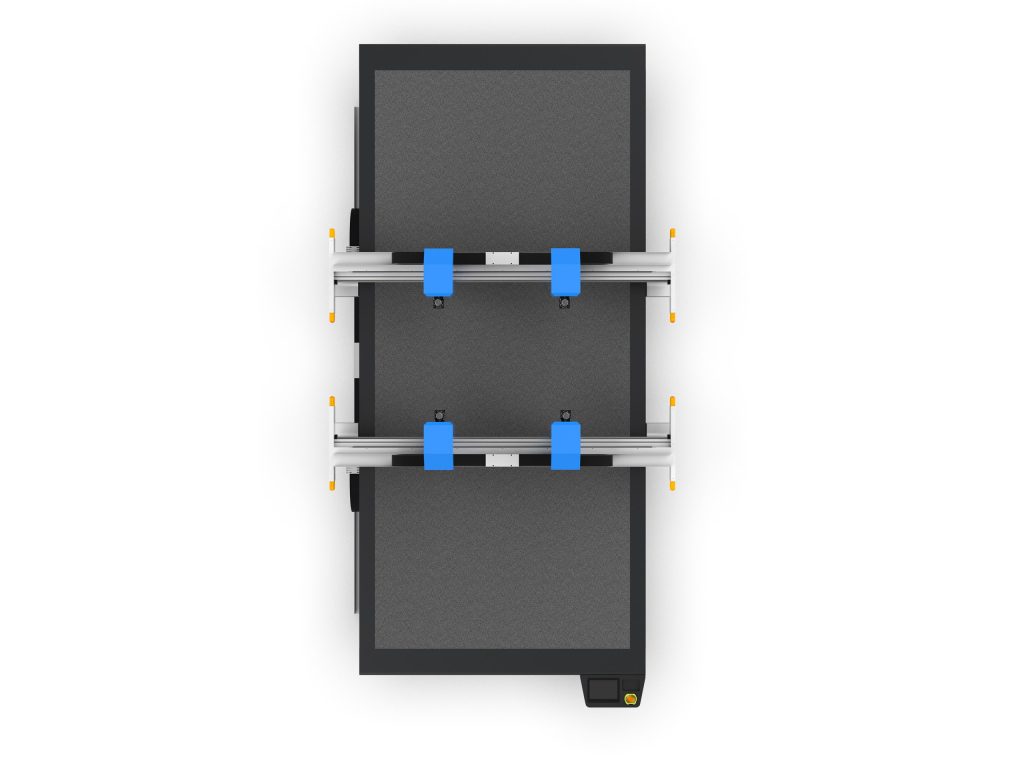
The thickness of granular fleece is usually between 5-30mm, and some ultra-thick fabrics can reach 50mm. The maximum cutting thickness of the cutting machine should be greater than 1.5 times the fabric thickness to ensure the blade has sufficient stroke to penetrate the fabric. For example, to cut 20mm thick granular fleece, it is recommended to choose a model with a stroke of ≥30mm.
2. Vibration Frequency and Cutting Speed
The higher the vibration frequency, the smoother the cut surface, but the faster the blade wears. For granular fleece, it is recommended that the vibration frequency be 2000-3000 times/minute. The cutting speed needs to be adjusted according to the fabric thickness: for thin materials (20mm), 5-8m/min is recommended.
3. Adsorption and Fixation System
Granular fleece is fluffy and prone to shifting during cutting. A vacuum adsorption table must be equipped, with adsorption force ≥0.6MPa, to ensure the fabric stays firmly against the table during cutting. Zoned control of the table can further improve adsorption efficiency.
4. Blade material and cooling
Carbide blades are recommended for good wear resistance. For long-term continuous cutting, an air-cooling or water-cooling system is required to prevent the blade from overheating and causing the fabric to melt. Recommended cooling air volume ≥0.5m³/min.
5. Dust removal and filtration system
Cutting granular fleece generates a large amount of lint dust. The equipment should be equipped with a high-efficiency dust removal device with filtration accuracy ≤5μm, and the dust collection box should be cleaned regularly to prevent dust accumulation from affecting electrical components.
6. Control System and Software
Modern cutting machines mostly use CNC systems, supporting CAD file import, automatic nesting, and path optimization. It is recommended to choose software that supports common formats (DXF, PLT, AI) and has automatic contour recognition to reduce manual intervention.
III. Operating Tips and Parameter Settings
Correct operation can significantly improve cutting quality and efficiency:
1. Fabric Pretreatment
Before cutting, lay the granular fleece flat for 24 hours to allow it to naturally rebound and avoid dimensional deviation caused by curling. For fabrics prone to shedding, gently dab the surface with tape to remove loose fibers.
2. Parameter Settings Reference
- Oscillation frequency: thin materials 2500-3000 times/min, thick materials 2000-2500 times/min.
- Cutting speed: thin materials 12-15m/min, thick materials 6-8m/min.
- Blade angle: 15° or 22° sharp-angle blades are recommended to reduce cutting resistance.
- Vacuum adsorption level: -0.6 to -0.8 bar to ensure the fabric is secured.
3. Layout and path optimization
Use the software’s automatic nesting function to arrange parts as compactly as possible and reduce idle travel. For granular fleece, it is recommended to use an “inside first, outside later” cutting sequence to prevent the fabric from shifting due to stress release.
4. Precautions for multi-layer cutting
Granular fleece can be cut in multiple layers (usually no more than 5 layers), but ensure that each layer is separated by thin paper and increase the suction force. Too many layers will cause dimensional deviation in the bottom layer, so it is recommended to perform a trial cut for verification first.
IV. Common Problems and Solutions
The following are common problems in granular fleece cutting and the corresponding measures:
- Rough cut edges: Check whether the blade is worn and replace it with a new one; reduce the cutting speed; increase the vibration frequency.
- Fabric displacement: Check whether the vacuum adsorption is working properly and clean the table sealing strips; add adsorption zones; reduce the cutting speed.
- Blade overheating: Check whether the cooling system is working and clean the air duct; reduce continuous cutting time and operate intermittently.
- Dust accumulation: Clean the dust collection box every shift; check whether the filter bag is damaged; increase the dust removal frequency.
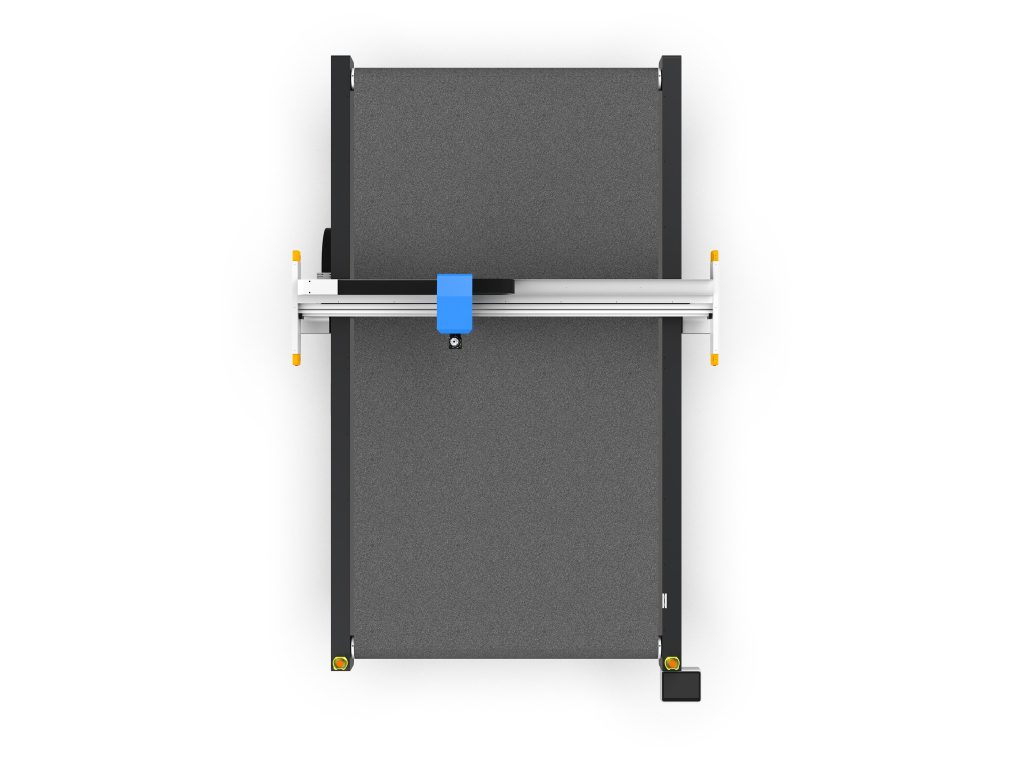
- Cutting dimension deviation: Calibrate X/Y axis accuracy; check timing belt tension; ensure the fabric is flat and free of tension.
V. Key Maintenance Points
Regular maintenance can extend equipment life and reduce downtime:
- Daily: Clean lint from the table surface and blade; check whether the vacuum adsorption pipeline is blocked; clean the guide rails and apply lubricating oil.
- Weekly: Check blade wear and replace if necessary; clean dust from the electrical cabinet; test the emergency stop button function.
- Monthly: Check timing belt tension; replace the dust filter (or clean it); calibrate cutting accuracy.
- Quarterly: Perform a comprehensive check of pneumatic circuit sealing; replace worn guide wheels; upgrade control software.
Special reminder: Granular fleece dust is flammable. Be sure to keep the equipment clean, keep it away from fire sources, and equip it with a fire extinguisher.
VI. Selection Recommendations and Summary
When choosing a granular fleece cutting machine, comprehensive consideration should be given based on production scale, fabric characteristics, and quality requirements:
- Small batch, multiple varieties: Choose a desktop oscillating knife cutting machine, working area 1.6m×2.5m, power 3-5kW.
- Large-volume, continuous production: choose a gantry cutting machine with a working area of 2m×3m or more, equipped with an automatic feeding system and a power of 7-10kW.
- Special requirements for the cut edge (such as no melted edge): an oscillating knife model must be selected, avoiding laser.
Correct model selection, standardized operation, and regular maintenance can fully leverage the performance of the granular fleece cutting machine, improving product quality and production efficiency. We hope this guide can provide valuable reference for your production practice.