
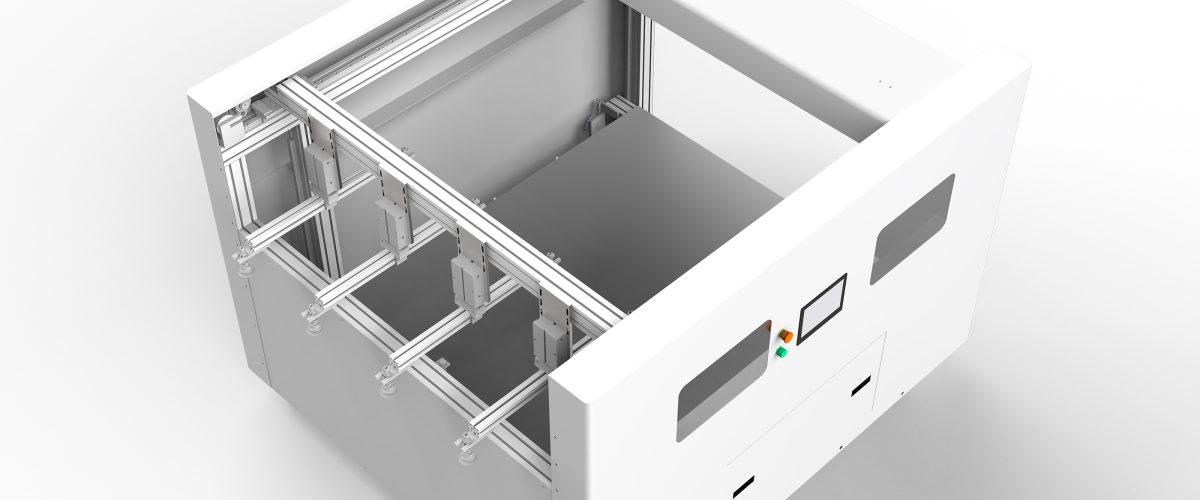
Coil Car Mat Cutting Machine: A Complete Guide from Selection to Efficient Production
Coil car mats are widely used in automotive interiors and home applications due to their wear resistance, easy cleaning, and comfortable feel. However, cutting coil material (typically PVC or TPE coil with a non-woven fabric or rubber backing) has always been a challenge: traditional stamping dies have long lead times and high costs, while manual cutting offers poor precision and low efficiency. The oscillating knife cutting machine, with its flexibility and precision, has become the mainstream equipment for processing coil car mats. This article provides a practical technical guide from four aspects: equipment selection, process parameters, operating techniques, and maintenance.
I. Core Selection Parameters of Coil Car Mat Cutting Machines
When purchasing a coil car mat cutting machine, you should not only look at the price but focus on the following parameters to ensure the equipment can process coil materials stably over the long term.
1. Cutting Head Type and Power
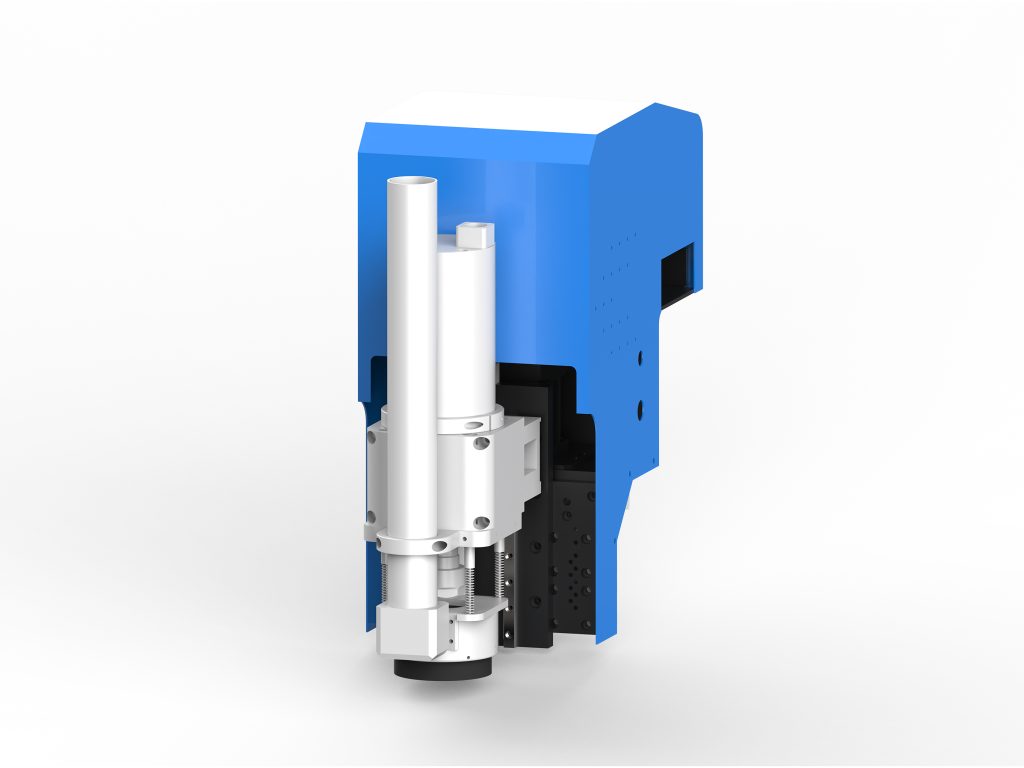
Cutting coil car mats typically uses an oscillating knife (also called a vibrating knife), where the blade vibrates up and down at high frequency (generally 10,000-20,000 times/minute), applying shear force rather than pressure to the material, so the cutting edge is clean without coil fraying or melted edges. For coil car mats with a thickness of 10-25mm, it is recommended to choose a cutting head with a power of no less than 1.5kW to ensure sufficient penetration during high-speed cutting.
2. Effective Cutting Working Area
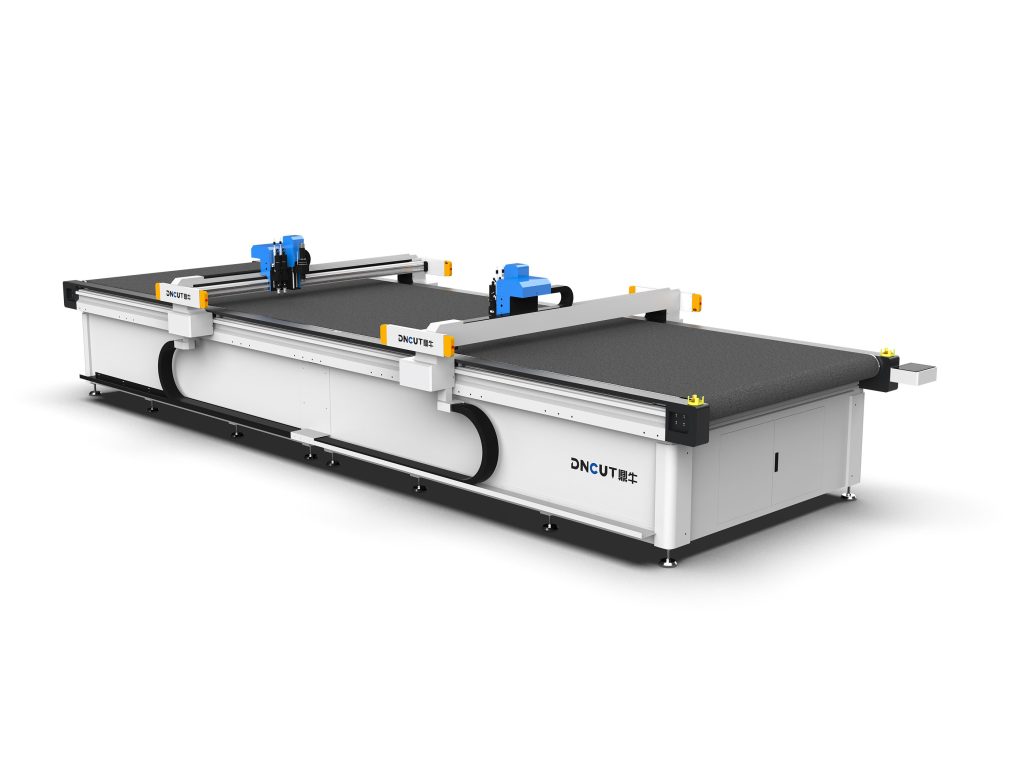
Based on common car mat sizes (e.g., a single mat is at most about 800mm×600mm), it is recommended to choose equipment with a working area of at least 1600mm×2500mm, so that multiple mats can be nested and cut in one pass, improving material utilization. If producing large-format floor mats (e.g., 1200mm×1800mm), a machine with a larger working area, such as 2100mm×3100mm, is required.
3. Transmission System and Precision
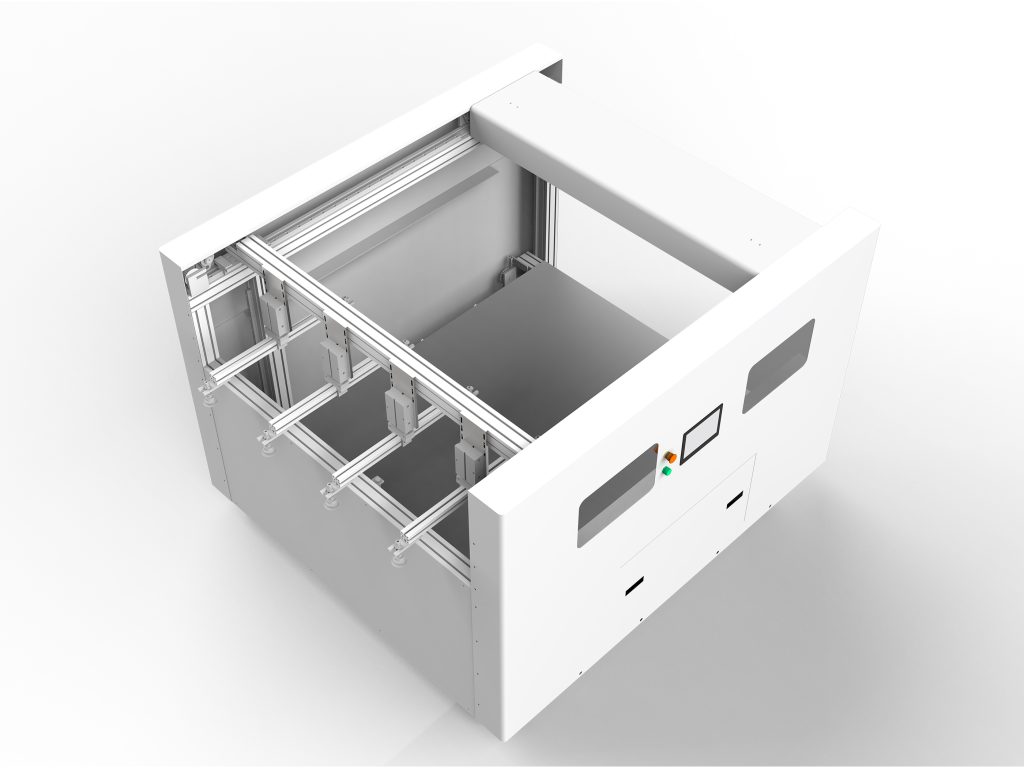
Coil car mat cutting has high precision requirements (especially for edge contours and mounting holes). It is recommended to choose models using rack-and-pinion transmission, with repeat positioning accuracy within ±0.1mm. Also, pay attention to the power of the X and Y axis servo motors to ensure no step loss when cutting thick and heavy materials.
4. Adsorption and Fixation Method
Coil material is porous and soft, and tends to shift during cutting. Therefore, the equipment must be equipped with a vacuum adsorption table, and the vacuum pump power should match the table area (usually no less than 5.5kW). A zone-based adsorption function is also very practical, as it can activate vacuum only in the corresponding area according to the actual cutting region, saving energy and concentrating the adsorption force.
5. Blades and Tool Magazine
For coil materials, wave blades or pointed blades are recommended. Wave blades are suitable for cutting thicker coil, reducing cutting resistance; pointed blades are suitable for fine contours. If the equipment is equipped with an automatic tool change system (tool magazine), tool change time can be greatly reduced and production efficiency improved. Carbide blades are recommended for longer life.
II. Process Parameter Settings for Coil Car Mat Cutting
Reasonable parameter settings are key to ensuring cutting quality and efficiency. The following parameters are based on processing experience with common coil car mats (15mm thick, non-woven fabric backing) and should be fine-tuned according to material batch and equipment condition in actual use.
1. Cutting Speed
The initial speed is recommended to be set at 800-1200mm/s. Too fast a speed will cause burrs on the cutting edge or incomplete cutting; too slow a speed will affect efficiency and may cause material edge melting due to friction heat. For coil thicker than 20mm, it is recommended to reduce to 600-800mm/s.
2. Blade Vibration Frequency
The vibration frequency is generally set at 12,000-15,000 times/minute. The higher the frequency, the smoother the cutting edge, but the faster the blade wears. For ordinary coil, 12,000 times/minute is sufficient; if cutting mats with complex patterns, it can be increased to 15,000 times/minute to ensure clear details.
3. Cutting Depth and Knife Pressure
The cutting depth should be slightly greater than the total material thickness (e.g., if the material is 15mm thick, set the cutting depth to 16-17mm) to ensure complete cut-through without excessively cutting into the adsorption table. The knife pressure (pneumatic or electric) needs to be adjusted according to material density, usually set at 0.3-0.5MPa, based on the material not moving and the blade not bending during cutting.
4. Adsorption Vacuum Level
The vacuum level is recommended to be maintained at -0.6 to -0.8bar. Insufficient adsorption force will cause the material to shift during cutting, resulting in dimensional deviation; excessive adsorption force may over-compress the material and affect cutting depth consistency. For coil with particularly strong porosity, a thin PET film can be covered on the material surface to assist adsorption.
III. Operating Techniques and Common Problem Solutions
1. Layout Optimization
Use cutting software (such as CAD/CAM or dedicated nesting software) for automatic nesting, nesting mat contours as closely as possible to reduce edge waste. For left-right symmetrical mats, mirror nesting can be used to further improve material utilization. Typically, optimized nesting can increase material utilization from 70% to over 85%.
2. Cutting Sequence
It is recommended to cut internal holes (such as mounting clip holes) first, then the outer contour. This way, the integrity of the material can be used to maintain stable adsorption, avoiding material loosening after the outer contour is cut, which would reduce the cutting precision of internal holes.
3. Common Problems and Countermeasures
- Rough edges: Check whether the blade is worn, appropriately increase the vibration frequency or reduce the cutting speed.
- Incomplete cutting: Increase the cutting depth or knife pressure, and check whether the blade is properly installed.
- Material shifting: Increase the vacuum level, check whether the sealing strip of the adsorption table is intact, or use tape to assist fixation.
- Blade breakage: Reduce the cutting speed, check whether the blade protrudes too much, or whether hard impurities are mixed in the material.
IV. Maintenance and Safety Specifications
Regular maintenance is the foundation for ensuring long-term stable operation of the equipment. It is recommended to clean the table and guide rails every shift, check blade wear every week (generally replace or sharpen after 8-12 hours of continuous cutting), and check the lubrication status of the transmission rack and pinion every month. The vacuum pump needs regular cleaning of the filter screen to prevent coil debris from clogging. In terms of safety, hands are strictly prohibited from entering the cutting area during operation, and the equipment should be equipped with an emergency stop button and light curtain protection (optional).
In summary, the selection of a coil car mat cutting machine requires comprehensive consideration of material characteristics, production scale, and precision requirements, while reasonable process parameters and standardized operation are the keys to maximizing equipment performance. We hope this guide provides practical help for your production practice.