
Core Challenges and Equipment Selection for Glass Fiber Cutting
Glass fiber materials are widely used in composites, construction, and electronics due to their high strength, high-temperature resistance, and insulation properties. However, their cutting process faces three major challenges: extremely rapid tool wear (the abrasiveness of glass fiber is about 5-10 times that of carbon steel), cutting edges prone to burrs and delamination, and severe dust pollution (affecting health and equipment lifespan). Therefore, ordinary cutting equipment is not up to the task, and a cutting machine specifically designed for glass fiber must be selected.
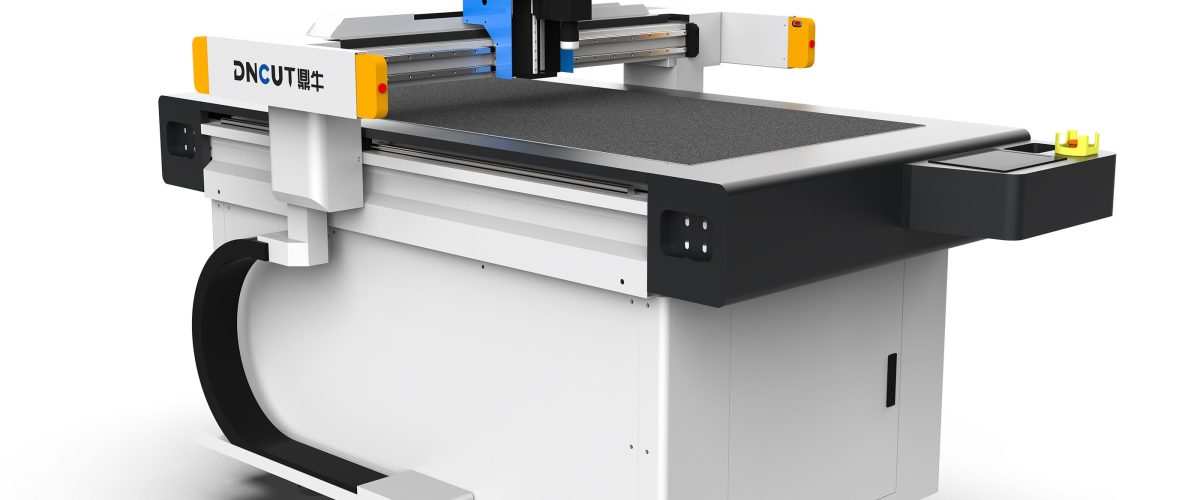
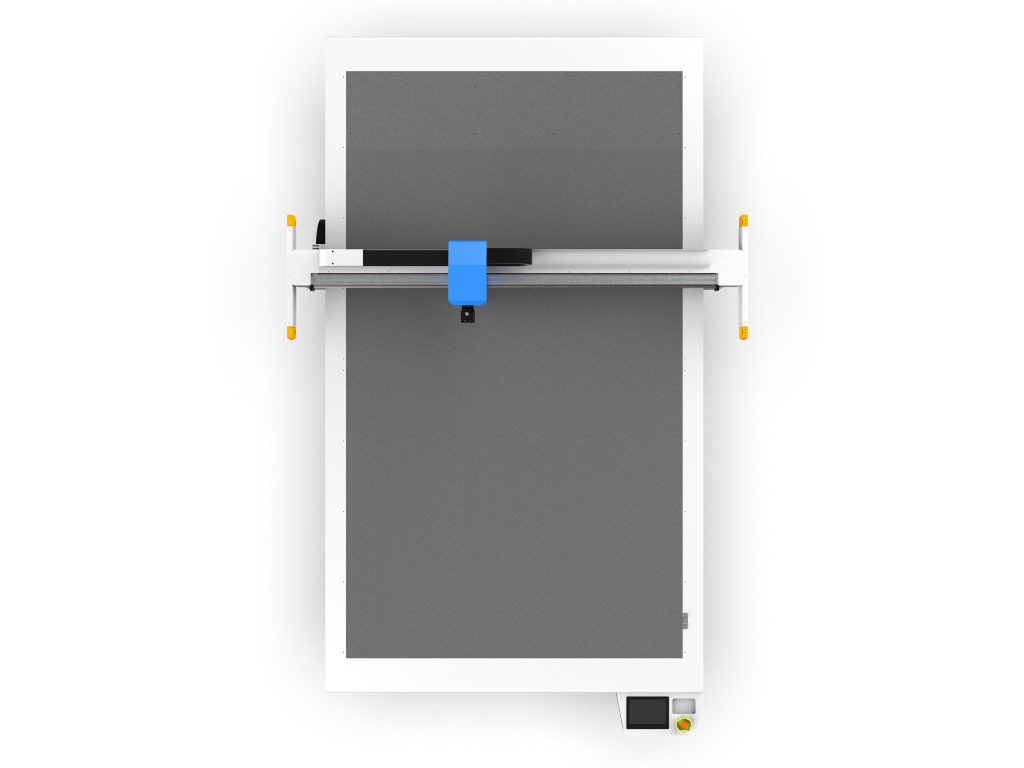
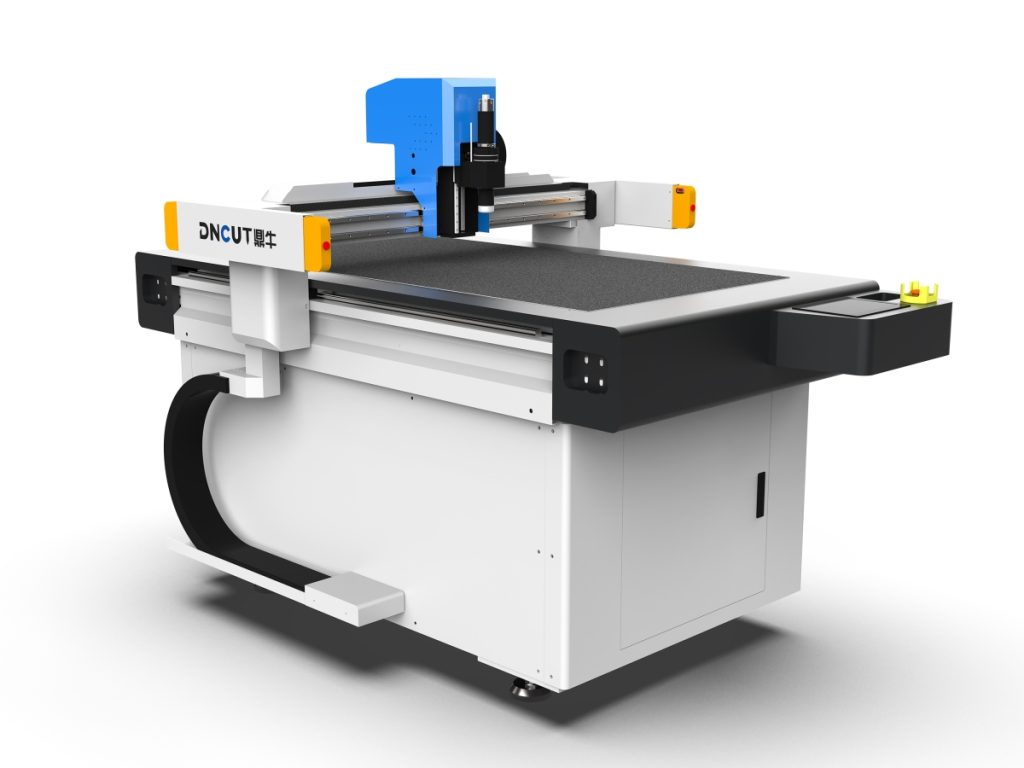
The current mainstream solutions include ultrasonic cutting machines, laser cutting machines, and oscillating knife cutting machines. Ultrasonic cutting reduces friction between the blade and the material through high-frequency vibration (20-40kHz), making it suitable for thin-layer fiberglass cloth (0.1-0.5mm); the cut is smooth but the speed is relatively slow (about 5-10m/min). Laser cutting offers high precision (±0.1mm), but the heat-affected zone causes scorching and strength reduction at the fiberglass edges, and the equipment cost is high. The oscillating knife cutting machine (such as the DNCUT series) uses a high-frequency reciprocating carbide blade (frequency 2000-5000 times/minute) combined with a servo control system, and can efficiently cut multi-layer fiberglass (total thickness up to 10mm), with neat cuts and controllable dust, making it the most cost-effective choice.
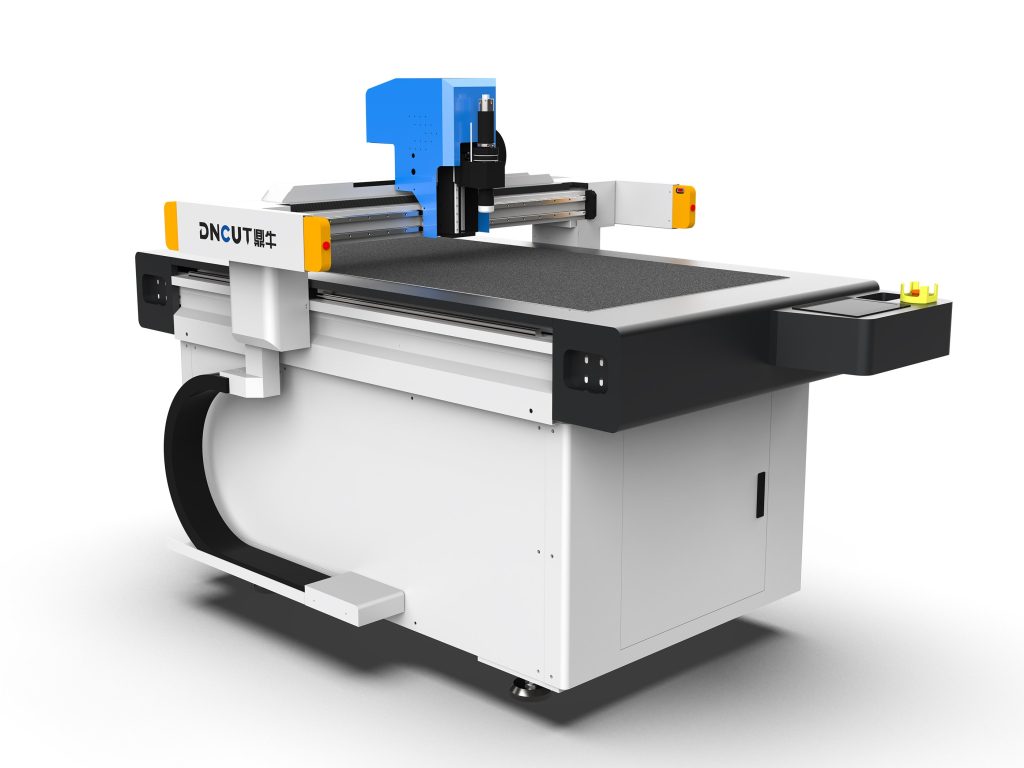
Key evaluation points during selection:material thickness and number of layers (single-layer thin fabric can use ultrasonic, multi-layer thick felt is recommended to use an oscillating knife), cutting accuracy requirements (within ±0.2mm requires a high-rigidity frame and servo drive), production efficiency (oscillating knife cutting speed can reach 30-60m/min, far higher than ultrasonic), dust handling capability (requires a dust collection device).
Key process parameter setting and optimization
Fiberglass cutting quality depends on parameter matching. The following takes an oscillating knife cutting machine as an example and gives typical parameter ranges:
- Blade material: Solid carbide (tungsten steel) blades with hardness above HRA90, or diamond-coated blades are recommended, which can extend service life by 3-5 times. Avoid using ordinary high-speed steel, as wear will cause tearing at the cut.
- Cutting speed: Adjust according to material thickness. Thin fabric under 0.5mm: 40-60m/min; 1-3mm fiberglass board: 20-30m/min; thick board above 5mm: 10-15m/min. Excessive speed will cause blade overheating and material delamination.
- Oscillation frequency: Typically set at 2000-4000 strokes/min. The higher the frequency, the smoother the cut, but blade wear accelerates. For prepreg with high resin content, it is recommended to reduce the frequency to 1500-2500 strokes/min to prevent resin adhesion.
- Feed pressure: Maintain constant pressure (0.2-0.5MPa) through pneumatic or servo control. Excessive pressure will cause material deformation, while too little will result in incomplete cutting.
- Blade angle: The tip angle is recommended at 30°-45°; the smaller the angle, the sharper the blade, but the strength decreases. For thick glass fiber, use 45°-60° to enhance durability.
In actual production, it is recommended to perform a small-sample trial cut first and observe the burrs and delamination at the cut with a magnifying glass. If burrs appear, increase the oscillation frequency or reduce the feed speed; if delamination appears, reduce the cutting pressure or replace with a sharper blade.
Dust Control and Safety Protection
Fiberglass dust is a clear occupational health hazard (it can cause skin irritation and respiratory diseases) and must be strictly controlled. The cutting machine should be equipped with an integrated negative-pressure dust collection system, with the suction inlet positioned as close to the cutting point as possible (distance ≤50mm) and an air volume of no less than 200m³/h. The dust collection bag must be made of anti-static material and cleaned regularly. At the same time, the equipment should be equipped with a fully enclosed protective cover and an interlocking device to ensure it cannot be opened during operation. Operators must wear dust masks (N95 grade) and protective goggles.
In addition, water-soluble coolant (concentration 5-8%) can be used as blade coolant, which both reduces temperature and suppresses dust flying, but attention must be paid to subsequent drying to avoid affecting fiberglass performance.
Maintenance and Common Problem Handling
The maintenance focus of the fiberglass cutting machine lies in tool management and guide rail cleaning. Blades should be replaced promptly after wear (typically requiring a tool change every 8-12 hours of continuous cutting), otherwise cut quality drops sharply. When replacing, a tool presetter must be used to calibrate the tool tip position, and repeat positioning accuracy should be controlled within ±0.05mm. Guide rails and lead screws should be cleaned every shift to prevent fiberglass dust accumulation from causing wear. Check the air circuit filter weekly and lubricate transmission components monthly.
Common problems and countermeasures:
- Severe burrs at the cut edge: Check whether the blade is worn (replace when the edge radius > 0.02mm), or increase the oscillation frequency by 10%-20%.
- Material delamination: Reduce the cutting pressure, or switch to a wavy-edge blade to reduce tearing.
- Dimensional deviation: Check whether the servo motor encoder is contaminated by dust; clean or replace it.
- Dust leakage: Check whether the dust collection pipeline is blocked, and whether the suction inlet is aimed at the cutting area.
Application Cases and Benefit Analysis
A certain wind turbine blade manufacturer adopted the DNCUT oscillating knife cutting machine to cut glass fiber multiaxial fabric (surface density 800g/m², 4 layers), replacing the original manual cutting. Parameter settings: the blade is diamond-coated cemented carbide, oscillation frequency 3000 times/min, cutting speed 25m/min, dust collection air volume 300m³/h. Results: cutting efficiency increased 4 times (from 200 pieces per shift to 800 pieces), cut burr height reduced from 0.3mm to 0.05mm, blade life extended from 2 hours to 10 hours, saving about 120,000 yuan in tool costs per year. At the same time, dust concentration dropped from 8mg/m³ to below 0.5mg/m³, meeting occupational health standards.
In summary, the selection of a fiberglass cutting machine must closely align with material characteristics, process parameters need to be optimized through trial cutting, and strict dust protection and tool maintenance must be ensured. Only through systematic control can efficient, high-quality production be achieved.