
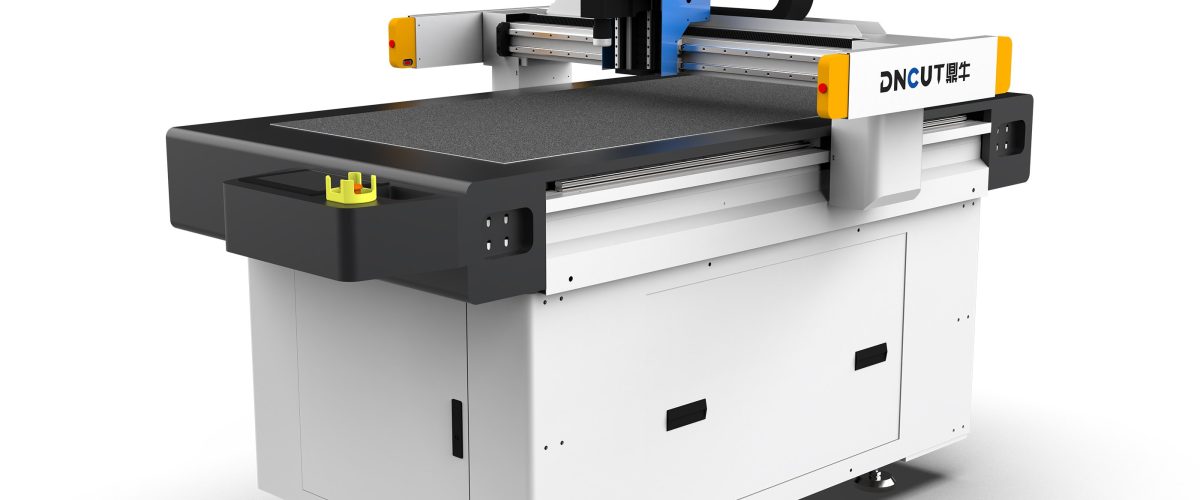
Challenges of Fleece Cutting and Equipment Selection
Fleece fabrics (such as velvet, flannel, and coral fleece) have fluffy surface fibers and a soft texture, which makes them prone to fiber pulling, uneven edges, and layer misalignment during cutting. Traditional manual cutting is inefficient and difficult to guarantee precision, while ordinary blade cutting machines easily cause damage to the fleece surface. Therefore, when selecting a suitable fleece cutting machine, key attention should be paid to the blade type, cutting method, and feeding system.
1. Blade Types and Cutting Principles
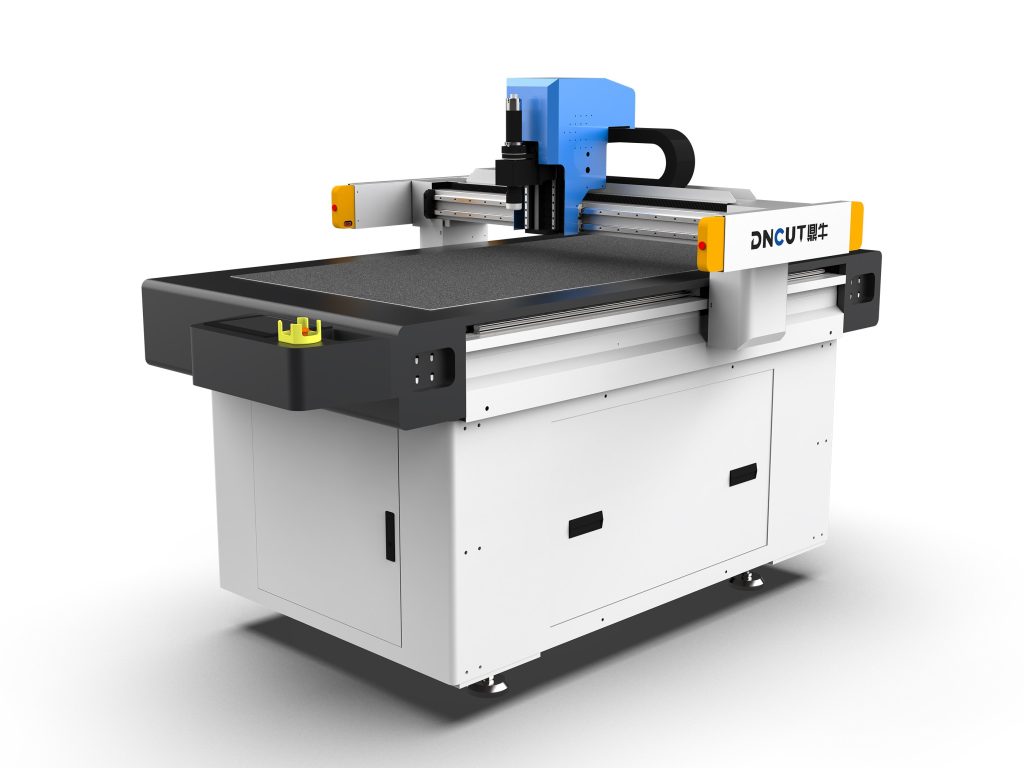
For velvet cutting, it is recommended to use an oscillating knife (also known as a reciprocating knife) or a rotary knife. The oscillating knife cuts through high-frequency up-and-down vibration, exerting little compression on the material, which effectively reduces fiber pulling and produces clean cuts. The rotary knife is suitable for long straight cuts, but attention must be paid to blade sharpness to avoid pilling on the velvet surface. For complex patterns, a laser cutting machine can be used, but the issue of melted edges on velvet must be considered; low-power multiple-pass cutting is usually recommended.
2. Key Parameter Settings
- Cutting speed: It is recommended to keep it at 200-400 mm/s. Too high will cause rough cuts, while too low will result in low efficiency.
- Blade frequency: The oscillating knife frequency is usually 3000-5000 times/minute, adjusted according to the thickness of the flannel; use low frequency for thick materials.
- Vacuum adsorption: A vacuum adsorption table must be equipped, with a negative pressure value recommended of -0.06 to -0.08 MPa, to ensure the flannel is fixed and does not move.
- Blade angle: Use 30° or 45° sharp-angle blades to reduce cutting resistance.
3. Equipment selection recommendations
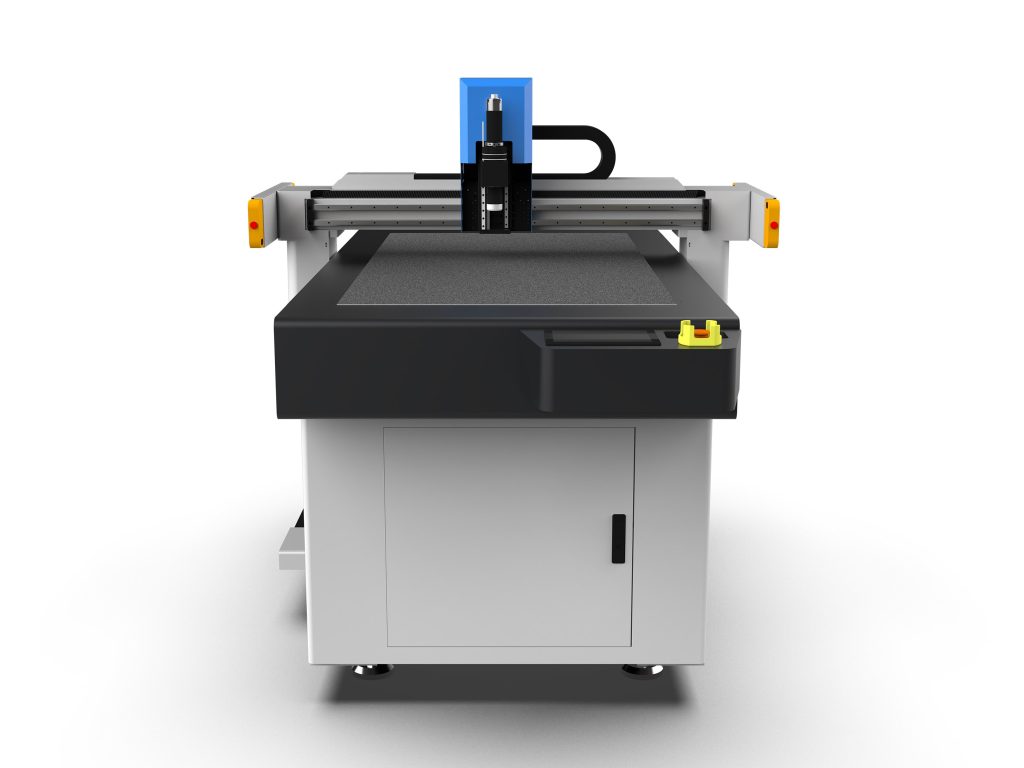
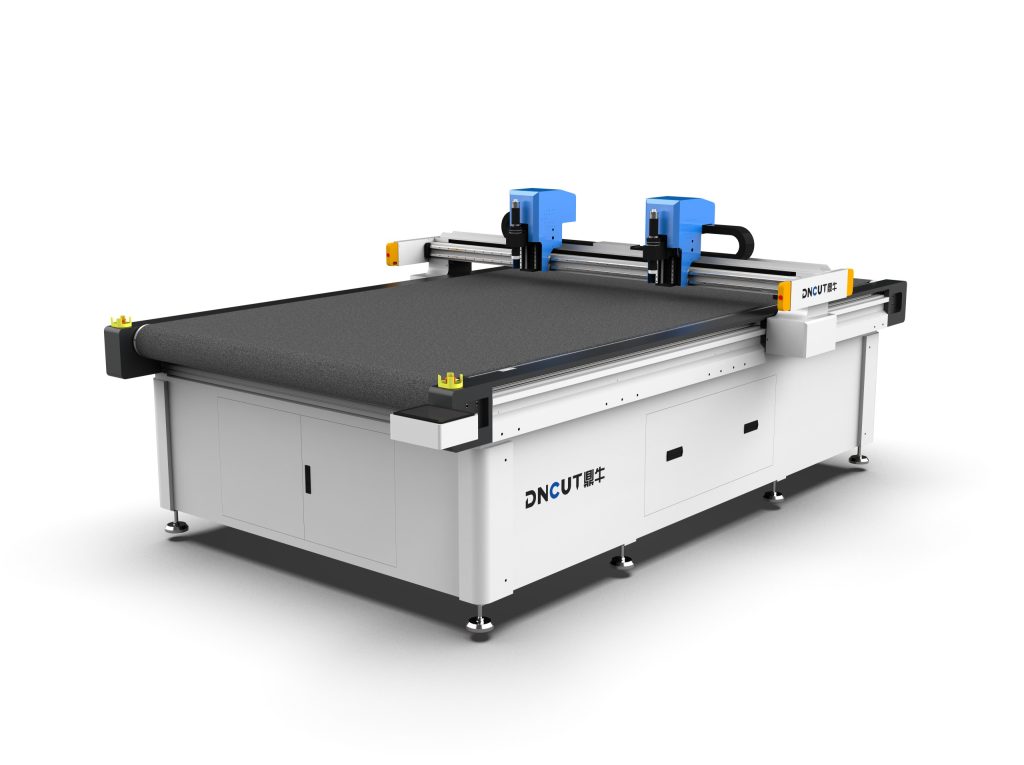
Choose based on production scale: for small-batch, multi-variety production, a flatbed cutting machine (such as the DNCUT flatbed series) can be selected, supporting a 1.6m×2.5m table; for large-batch continuous production, it is recommended to choose a roll-material cutting machine equipped with an automatic feeding system, with feeding accuracy required to reach ±0.5mm. At the same time, pay attention to whether the equipment has an automatic knife sharpening function to reduce downtime.
Operating Process and Process Optimization
1. Pretreatment and Material Spreading
Before cutting flannel, it needs to undergo 24 hours of natural shrinkage to avoid dimensional changes after cutting. The number of spreading layers should not be too many, generally no more than 8 layers, with thin paper used between each layer to prevent fiber entanglement. After spreading, the surface needs to be lightly brushed to remove floating fibers.
2. Cutting Path Planning
Use CAD software to optimize nesting and make the cutting path as continuous as possible to reduce idle travel. For plush fabric, it is recommended to use an “inside first, outside later” cutting order to avoid material deformation caused by cutting the edges first. For complex shapes, add lead-in lines to ensure a clean cut at the starting point.
3. Parameter adjustment and trial cutting
Be sure to perform a trial cut before formal cutting: take a small piece of plush fabric, adjust the blade frequency and speed, and observe whether the cut is smooth and whether there are burnt edges or burrs. If fiber pulling occurs, reduce the cutting speed or increase the blade frequency; if the cut is melted, reduce the laser power or switch to a mechanical knife.
Maintenance and Common Issues
1. Daily Maintenance
- Clean the blade and table surface every shift to remove residual fabric fibers.
- Check the sealing of the vacuum adsorption system weekly and clean the filter.
- Apply grease to the guide rails and lead screws monthly, and check the belt tension.
2. Common Problems and Solutions
Problem 1: Fuzzing at the cut edge. The cause may be a dull blade or too low a frequency. Solution: Replace the blade or increase the frequency to 4500 times/minute.
Problem 2: Material displacement. Check whether the vacuum negative pressure reaches -0.06 MPa, or increase the coverage of the adsorption area.
Problem 3: Decreased cutting accuracy. Check whether the guide rail has fiber tangled around it, clean it and calibrate the origin.
Safety and Efficiency Improvement
Wear a dust mask during operation to avoid inhaling flannel fibers. The equipment should be well grounded, and the emergency stop button should be checked regularly. In terms of efficiency, an automatic tool change system (optional) can be configured to reduce tool change time; when using multi-layer cutting, ensure consistent tension in each layer. Through reasonable parameter settings and maintenance, the production efficiency of the flannel cutting machine can be increased by more than 30%.