
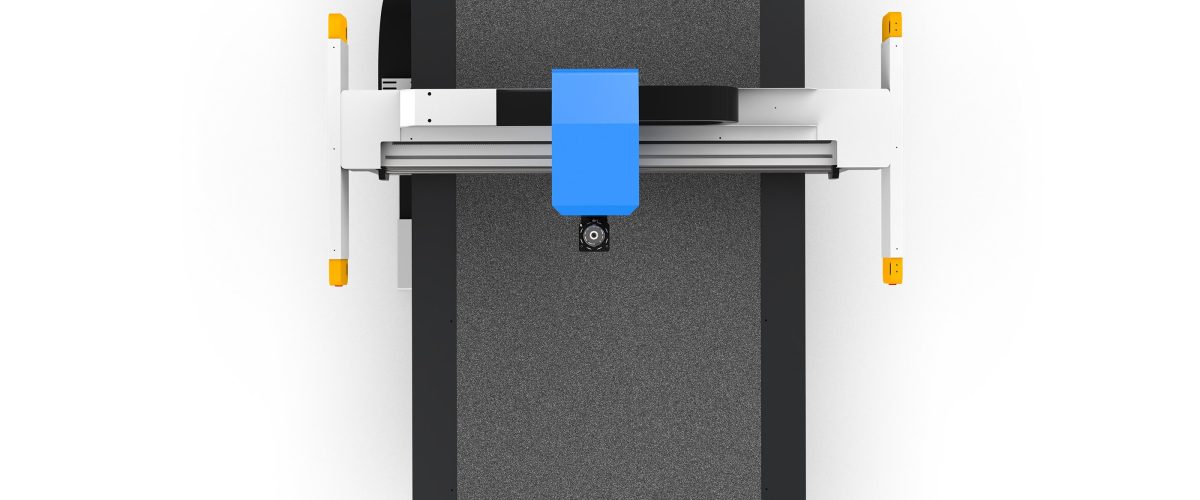
Analysis of Core Parameters of Carbon Fiber Cutting Machine
Carbon fiber composite materials are widely used in aerospace, automotive manufacturing, and sports equipment fields due to their high strength and low density characteristics. Achieving high-precision cutting requires professional equipment—the carbon fiber cutting machine. Its core performance parameters directly affect cutting quality and production efficiency.
Cutting Accuracy: Within ±0.1mm
Precision carbon fiber cutting machines adopt closed-loop servo control systems, combined with high-resolution grating rulers (resolution up to 0.001mm), ensuring positioning error is controlled within ±0.1mm. For example, model DNC-800F is equipped with a 4-axis linkage system, supporting complex contour cutting, suitable for carbon fiber cloth or prepreg with thickness of 1~6mm.
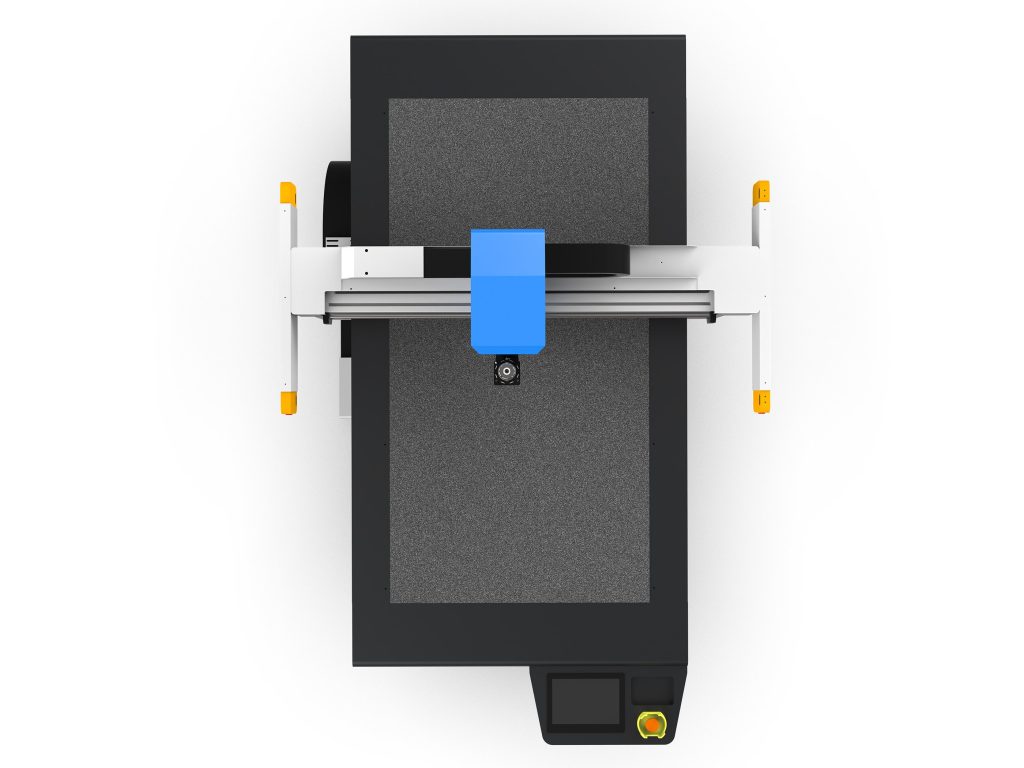
Tool System: Dual Oscillating High-Speed Rotary Cutting Head
The standard configuration is a tungsten carbide alloy blade with a diameter of 150mm and a rotational speed of up to 8000rpm. The blade edge angle is designed at 12° to reduce material tearing. An optional diamond-coated cutter head is available, extending the service life to over 2000 hours, particularly suitable for high-hardness carbon fiber/epoxy resin composites (such as T700/T800 grade).
Worktable: Vacuum Adsorption + Pneumatic Clamping
The worktable features a 304 stainless steel panel and is equipped with a vacuum adsorption system with 200 sets of independent air holes, with a maximum negative pressure of -90kPa. Combined with a pneumatic clamping device (pressure 0.4~0.6MPa), it effectively prevents material displacement or edge lifting during high-speed cutting, especially suitable for large panels with a working area width of 1200mm and length of 2000mm.
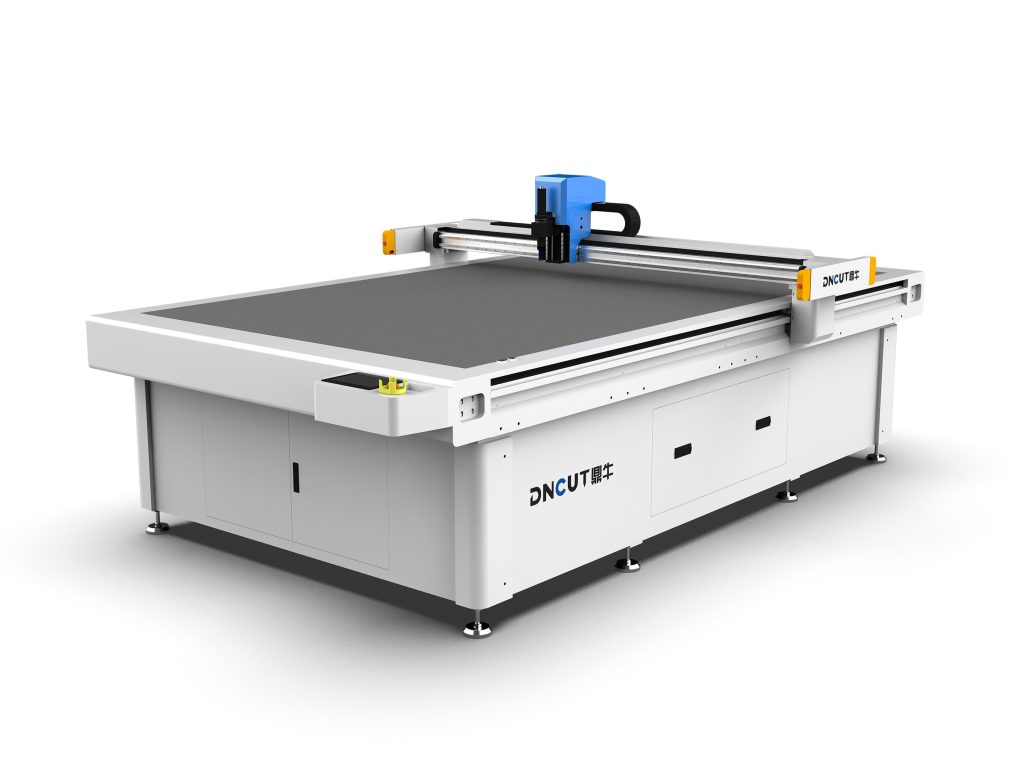
Cutting Speed and Power
Typical cutting speed range is 50–300 mm/min, automatically adjusted according to material thickness and number of layers. For example, when cutting a single-layer 3 mm thick carbon fiber sheet, the recommended speed is 150 mm/min; for multilayer stacking (≤8 layers), it is recommended to reduce to 80 mm/min to avoid burrs. The motor power of the whole machine is 7.5 kW, equipped with a variable frequency drive, with a response time of less than 20 ms.
Key operating techniques in practical applications
Material pretreatment: degreasing and flattening
Residual release agent or grease on the surface of carbon fiber materials will reduce tool life and cause adhesion. After wiping with isopropyl alcohol, it should be left to stand in a constant-temperature and constant-humidity environment (23±2°C, relative humidity 50±5%) for no less than 4 hours before loading onto the machine. For roll materials, they need to be straightened through a tension roller system, with tension controlled at 5–8 N.
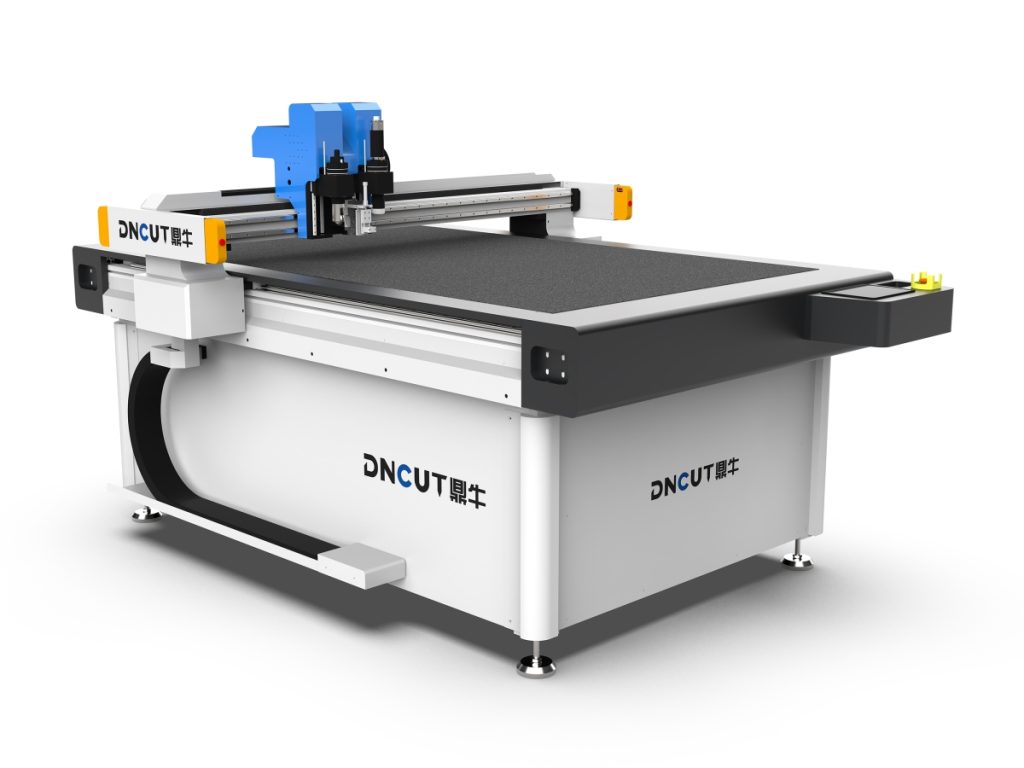
Blade Maintenance: Regular Replacement and Alignment
The blade wear condition should be checked after every 500 square meters of cutting. When the cutting edge shows obvious chipping or there are scorch marks on the cut edge, the blade must be replaced. Tool setting procedure: use a 0.02mm feeler gauge to check the gap between the tool tip and the worktable surface, and adjust it to 0.05±0.01mm. It is recommended to perform tool center calibration once a month.
Program optimization: path planning and feed strategy
Set a “segmented feed” strategy in the CNC system: the first segment uses 50% of the rated speed for pre-cutting, and after completing the contour, enter full-speed cutting. For inner holes or narrow slots (width < 10mm), enable the "serrated feed" mode to reduce stress concentration. At the same time, enable the "thermal compensation" function to automatically correct coordinate offsets according to room temperature changes.
Common problems and solutions
- Severe burrs: Check blade sharpness and confirm whether the cutting speed is too high; it is recommended to reduce the speed by 30% and increase the idle travel (≥5mm).
- Material delamination: Check whether the vacuum adsorption is even and whether the clamping air pressure is insufficient; replace the sealing strip if necessary (recommended quarterly replacement).
- Abnormal tool wear: Analyze the material composition; if it contains mixed glass fiber, switch to a diamond-coated cutter head; also check whether the cooling system is blocked.
Safety Protection Specifications
The equipment must be equipped with a laser-sensing protective door (response time ≤50ms), and a dust collection device (filtration accuracy ≤1μm) must be installed in the cutting area. Operators must wear dust masks (N95 or above), goggles, and anti-static gloves. It is strictly prohibited to manually clean up waste materials while the equipment is running.
Selection Advice: Match the Model to the Application Scenario
For small-batch custom parts (such as drone wings), choose the desktop model DNC-500E, with a maximum working width of 500mm and support for manual teach programming; for continuous production lines (such as new energy vehicle battery pack housings), the industrial-grade DNC-1200X is recommended, featuring an automatic loading/unloading interface (supporting robot docking) and capable of cutting sheets of 1000×2000mm or larger.