
Corrugated proofing machine: a complete guide from selection to efficient use
A corrugated proofing machine is key equipment for packaging companies to achieve rapid sample production and verify structural designs. Whether it is a carton factory, color box factory, or design company, a corrugated proofing machine with stable performance can significantly shorten delivery times and reduce trial-and-error costs. Starting from practical applications, this article systematically explains the selection parameters, operating points, and maintenance methods of corrugated proofing machines to help you make wiser decisions.
I. Core types and applicable scenarios of corrugated proofing machines
The mainstream corrugated proofing machines on the market can be divided into three categories by cutting method:
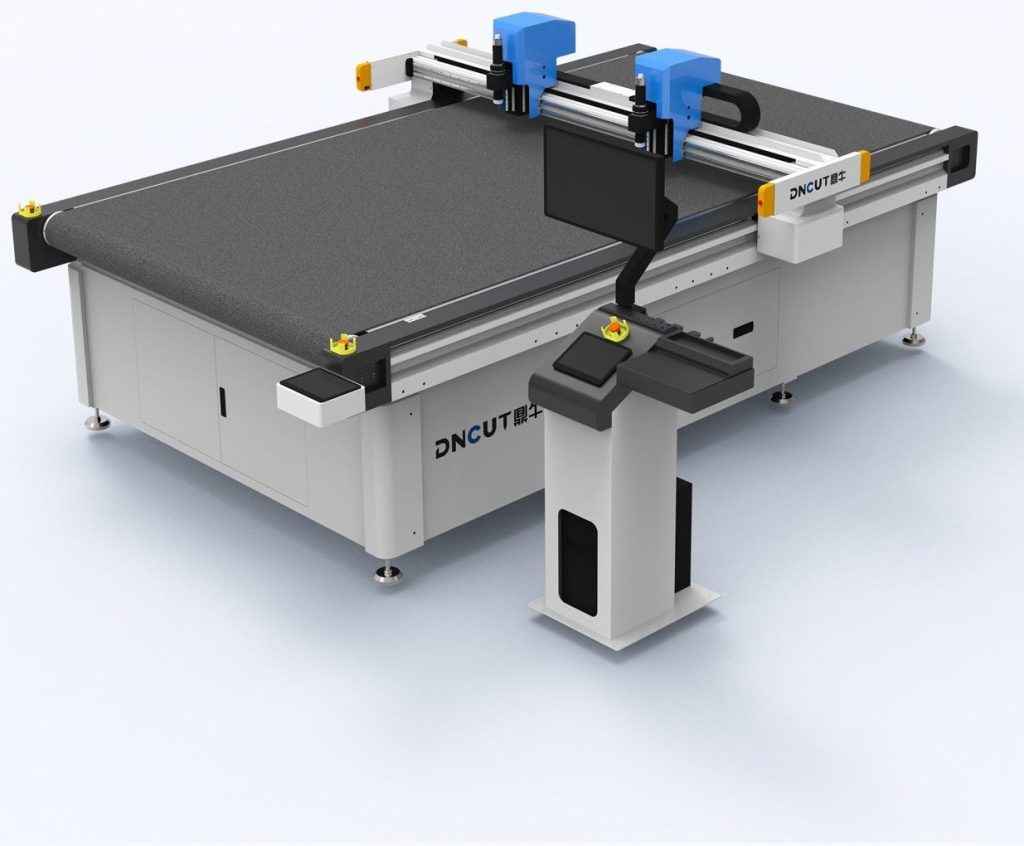
- Oscillating knife sample making machine: Uses a high-frequency oscillating blade to cut corrugated cardboard, producing smooth cuts without burrs, suitable for display stands and irregular boxes with high precision requirements. Cutting thickness is typically 1-10mm, and the maximum feed working area is commonly 1300mm×2500mm.
- Laser sample making machine: Uses a non-contact laser beam for cutting, with speeds up to 60m/min, but edges may show carbonization and it is not suitable for corrugated cardboard with high glue content; mostly used for white cardstock or thin corrugated board.
- Circular knife/drag knife sample making machine: Simple structure and low cost, suitable for straight-line cutting and simple creasing, but poor adaptability to complex shapes, with accuracy generally around ±0.5mm.
For most carton factories and color box factories, the oscillating knife proofing machine is the most cost-effective choice. It can handle corrugated cardboard (E-flute, B-flute, C-flute) and is also compatible with cardstock and gray board, offering multiple uses in one machine.
II. Key Parameters Explained: How to Understand Equipment Specifications
1. Cutting accuracy and repeat positioning accuracy
Cutting accuracy refers to the deviation between the actual cutting line and the design line; a high-quality oscillating knife proofing machine can achieve ±0.1mm. Repeat positioning accuracy refers to the error when returning to the same position multiple times, usually required to be within ±0.05mm. These two parameters directly affect whether the sample can match the downstream die-cutting plate.
2. Maximum cutting thickness and material adaptability
The nominal cutting thickness of a corrugated proofing machine usually refers to the total thickness of a single-layer corrugated board. For example, E-flute is about 1.5-2mm thick, B-flute about 3mm, and C-flute about 4mm. If multi-layer composite corrugated board needs to be cut (such as AB-flute, 7-8mm thick), it is necessary to confirm whether the equipment is equipped with extended blades and a vibration motor of sufficient power. It is recommended to bring actual production board samples for on-site trial cutting when purchasing.
3. Worktable dimensions
Common specifications include 1300×2500mm, 1600×2800mm, 1800×3000mm, etc. When choosing, consider the unfolded dimensions of the cartons most frequently proofed, and reserve a 10% margin. If space is limited, consider models with an automatic feeding system, which achieve large-format processing through segmented cutting.
4. Creasing and Grooving Functions
Corrugated proofing machines are usually equipped with creasing wheels and slotting knives. The creasing depth must be adjustable to suit different flute types and cardboard thicknesses; slotting widths are generally available in 3mm, 5mm, and 7mm options, corresponding to different box-type requirements. Some high-end models support automatic tool changing, reducing manual intervention.
III. Operating Procedure and Practical Tips
1. File Preparation and Layout
Export the design file in DXF or AI format, and check whether the layers for cut lines, crease lines, and slot lines are separated. When laying out, follow the principle of “inside first, outside later; small first, large later” to reduce material waste. It is recommended to reserve a safety margin of at least 20mm at the edge of the cardboard to prevent the cardboard from shifting during cutting.
2. Cardboard Fixing and Tool Alignment
Use the vacuum adsorption table to secure the cardboard; it is recommended to adjust the vacuum level to -0.06~-0.08MPa. When setting the knife, first manually lower the knife tip to the cardboard surface, then finely adjust it downward by 0.1-0.2mm to ensure it cuts through but not too deeply. When cutting corrugated cardboard, the knife tip should be slightly lower than the bottom surface of the cardboard by 0.1mm to avoid the bottom layer of cardboard not being cut through.
3. Parameter Setting Reference
- Vibration frequency: For corrugated cardboard, 8000-12000 times/min is recommended; for cardstock, it can be increased to 15000 times/min.
- Cutting speed: Straight segments can be set to 800-1200mm/s, while curved segments should be reduced to 400-600mm/s to ensure accuracy.
- Creasing pressure: Adjust according to cardboard thickness; approximately 0.2-0.3MPa for E-flute and 0.3-0.4MPa for B-flute.
4. First Article Inspection and Batch Sampling
After the first article is completed, use calipers to measure key dimensions (such as box length, width, height, and slot positions) and compare them with the design values. Once confirmed correct, save the parameter template so that subsequent similar orders can call it directly. During batch sampling, it is recommended to inspect once every 5-10 samples to prevent dimensional drift caused by tool wear.
IV. Common Problems and Solutions
- Fuzzing or tearing at the cut edge: Check whether the blade is worn (usually needs replacement after cutting 200-300 meters), or reduce the cutting speed and increase the oscillation frequency.
- Unclear crease lines: Increase the creasing pressure or replace the creasing wheel (its diameter decreases after wear).
- Cardboard displacement causing misaligned cuts: Check whether the vacuum adsorption is leaking air, or add auxiliary pressure rollers.
- Inconsistent cutting depth: Calibrate the levelness of the table surface, or check whether the blade tip is bent due to collision.
V. Maintenance and Consumables Management
After work each day, clean paper scraps and dust from the table surface, wipe the guide rails with a soft cloth and apply a small amount of grease. Every week, check whether the blade fixing screws are loose and whether the vacuum lines are blocked. Once a month, calibrate the table levelness (using a dial indicator) and check the tension of the drive belt.
Regarding consumables, oscillating knife blades are wearing parts, and it is recommended to keep 2-3 sets on hand; creasing wheels and slotting knives should be replaced every 3-6 months depending on usage frequency. When purchasing consumables, make sure they match the equipment brand, as inferior blades will accelerate wear on the oscillating motor.
VI. Selection Recommendations: Matching to Business Needs
If your proofing orders are mainly conventional cartons with a daily proofing volume of 20-50 pieces, choosing an oscillating knife proofing machine with a working area of 1300×2500mm and an accuracy of ±0.2mm is sufficient, priced at approximately 60,000-100,000 RMB. If complex structures such as display stands and irregular boxes are involved, it is recommended to choose a high-configuration model with CCD vision positioning and automatic tool changing, with accuracy up to ±0.1mm, priced at 150,000-250,000 RMB. For design companies or small-batch multi-variety scenarios, a desktop-level small proofing machine with a working area of 600×900mm can be considered, which occupies little space and is flexible to operate.
Final reminder: before purchasing, be sure to ask the supplier to provide a sample machine for trial cutting, using your own cardboard and typical graphics to test the cutting effect, creasing quality and efficiency. Also confirm software compatibility (whether it supports direct import of DXF, AI, PDF) and after-sales response time; these details are often more important than the parameter sheet.