
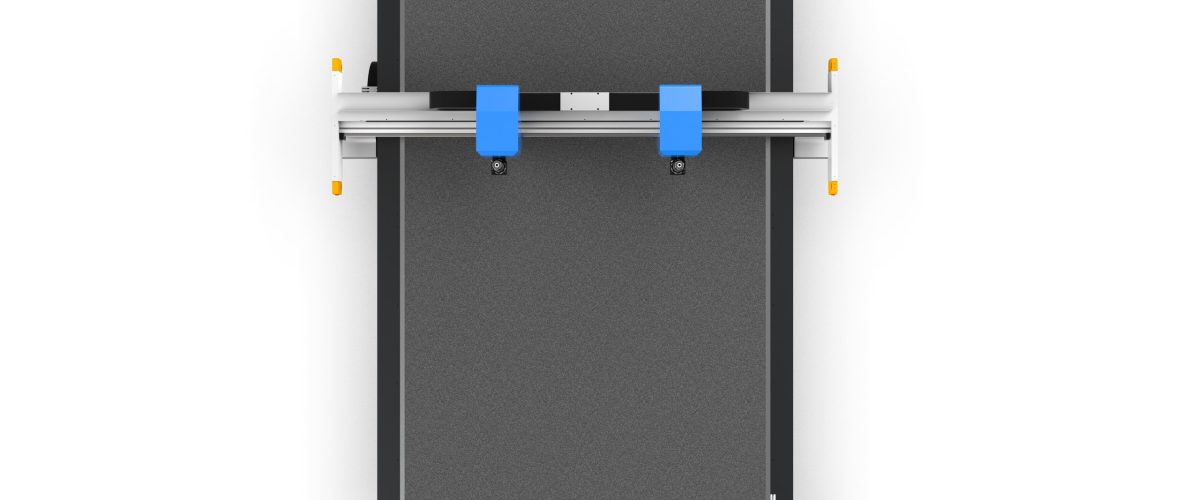
Overview of Floor Cutting Machines
Floor cutting machines are equipment specifically designed for cutting various types of flooring materials, widely used in the construction and renovation, floor installation, and wood processing industries. Depending on the cutting principle, they are mainly divided into two categories: oscillating knife floor cutting machines and diamond saw blade floor cutting machines. Oscillating knife cutting machines cut through high-frequency reciprocating blades, suitable for soft and medium-hard materials; diamond saw blade cutting machines cut hard materials through high-speed rotating saw blades. Choosing the right floor cutting machine not only improves work efficiency but also ensures cutting quality and reduces material waste.
Types and Features of Floor Cutting Machines
Oscillating Knife Floor Cutting Machines
The oscillating knife floor cutting machine uses the high-speed reciprocating motion of the blade (usually at a frequency of 2000-5000 times/minute) for cutting. During the cutting process, there is no dust and low noise, and the cut is flat without burrs. This type of equipment is particularly suitable for cutting soft or medium-hard materials such as SPC flooring, LVT flooring, PVC flooring, and rubber flooring. Its maximum cutting thickness is generally 5-20mm, depending on the blade type and material hardness. Because it uses a cold cutting method, it does not generate high temperatures, so it will not burn the edges of the material and keeps the material in its original condition.
Diamond saw blade floor cutting machine
The diamond saw blade floor cutting machine uses a diamond-coated saw blade and cuts hard materials such as ceramic flooring, stone flooring, and concrete through high-speed rotation (typically 3000-6000 rpm). This type of equipment has high cutting efficiency and neat cuts, but it generates dust and noise, so it needs to be equipped with a dust removal device. The maximum cutting thickness can reach 30-50 mm, making it suitable for high-intensity operations.
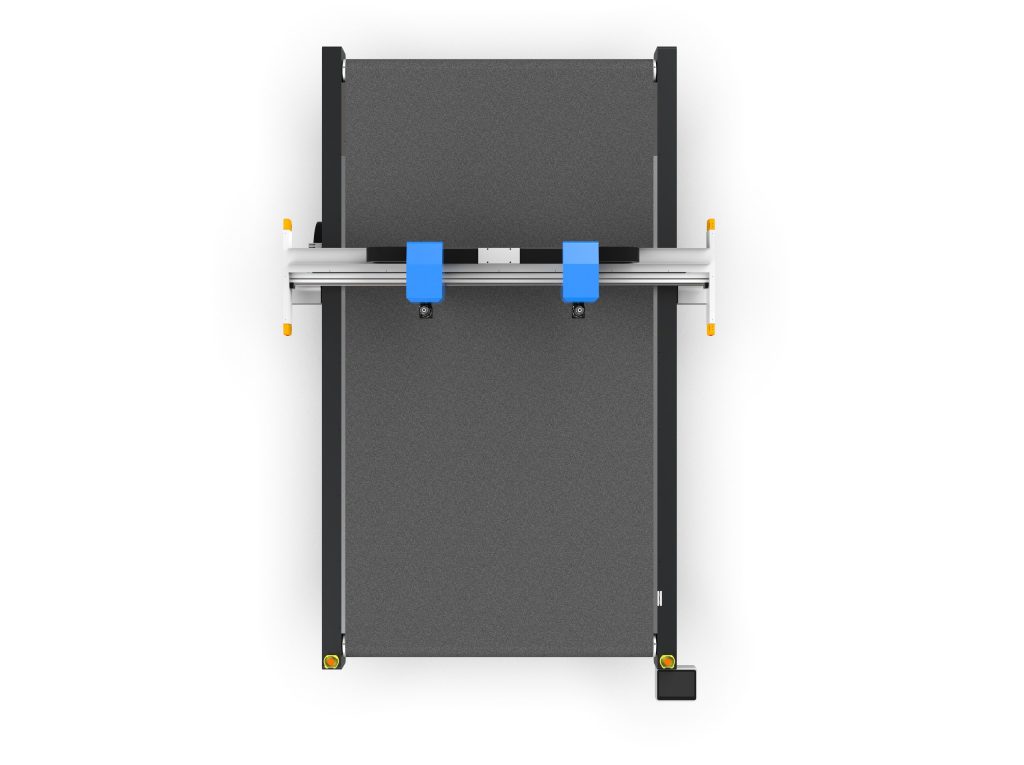
Interpretation of Core Parameters
- Cutting thickness: Refers to the maximum material thickness the equipment can cut. Oscillating knife cutting machines typically handle 5-20mm, while diamond saw blade cutting machines can reach 30-50mm. When purchasing, choose based on the thickness of commonly used materials and leave a margin.
- Cutting speed: The cutting speed of oscillating knife cutting machines is typically 0-30 m/min, and for diamond saw blade cutting machines, 0-20 m/min. The speed is adjustable to suit different materials.
- Motor power: Oscillating knife cutting machines generally have a power of 200-500W, while diamond saw blade cutting machines have a power of 800-2000W. The higher the power, the stronger the cutting capability.
- Blade/saw blade specifications: Oscillating knife blades typically have a length of 60-100mm, and diamond saw blades generally have a diameter of 110-150mm.
- Worktable size: Common worktable sizes range from 1200mm×600mm to 3000mm×1500mm, chosen according to the dimensions of the materials being processed.
Key Points for Selecting a Floor Cutting Machine
Choose the Type Based on Material
If mainly cutting soft flooring such as SPC, LVT, and PVC, prioritize the oscillating knife floor cutting machine, as it produces no dust and delivers good cut quality. If hard flooring such as ceramic and stone needs to be cut, a diamond saw blade cutting machine should be selected. For mixed-material processing, a multi-functional cutting machine can be considered, but note that its performance may not match that of dedicated equipment.
Focus on Cutting Accuracy and Stability
Cutting accuracy directly affects the seam quality of floor installation. Equipment with high guide rail precision and good body rigidity should be selected. Typically, the cutting straightness error of a high-quality cutting machine should be less than 0.1mm/m, and the repeat positioning accuracy should be less than 0.05mm. On-site trial cutting is recommended to check whether the cut is flat and vertical.
Consider the Degree of Automation
For mass production, it is recommended to choose a CNC floor cutting machine, which can achieve automatic feeding, multi-knife cutting, and complex pattern cutting to improve efficiency. For small batches or on-site construction, manual or semi-automatic equipment can be selected for easy movement and operation.
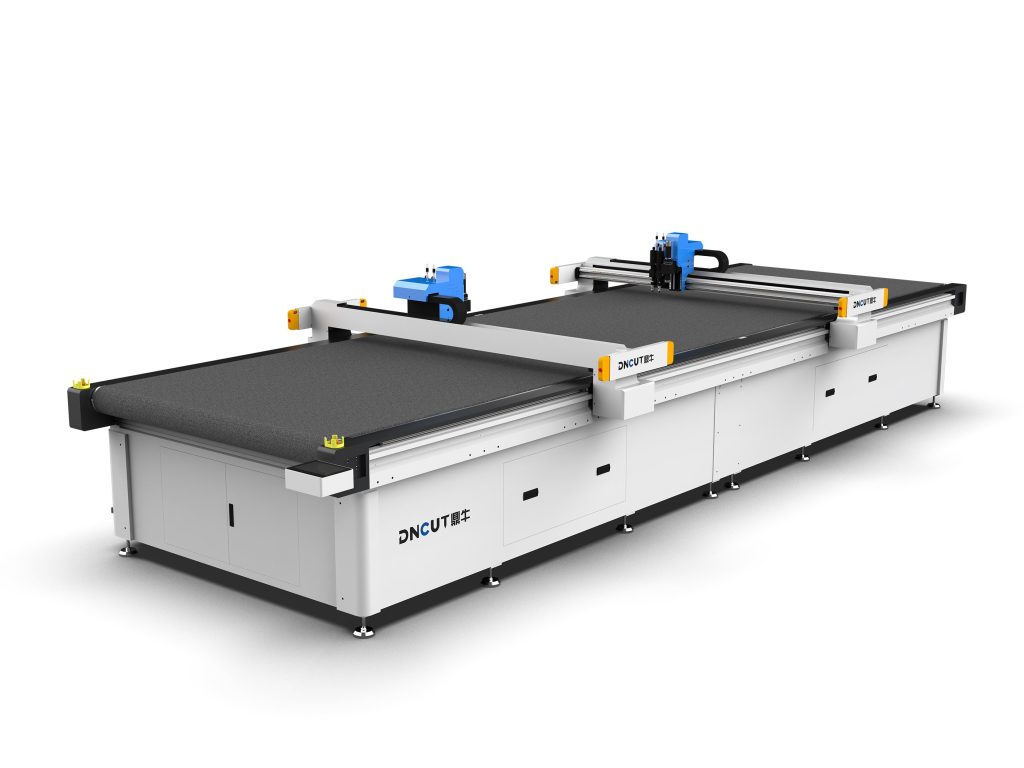
Safety and Environmental Features
Check whether the equipment is equipped with safety protection devices, such as blade guards, emergency stop buttons, two-hand operation buttons, etc. For diamond saw blade cutting machines, attention should be paid to the dust extraction interface and noise level (should be below 85dB). The oscillating knife cutting machine itself produces little dust, but electrical safety still needs attention.
Brand and After-Sales Service
Choose a brand with a good reputation to ensure parts supply and repair services. Understand the warranty period (usually 1-2 years) and response time. Industry certifications such as CE certification can be used as reference.
Floor Cutting Machine Operating Tips
Preparation Work
Check whether the blade/saw blade is intact and securely installed. Adjust the cutting depth so that it is slightly greater than the material thickness (usually 1-2mm more) to avoid incomplete cutting or damage to the workbench. For an oscillating knife cutting machine, select the appropriate blade and oscillation frequency according to the material hardness.
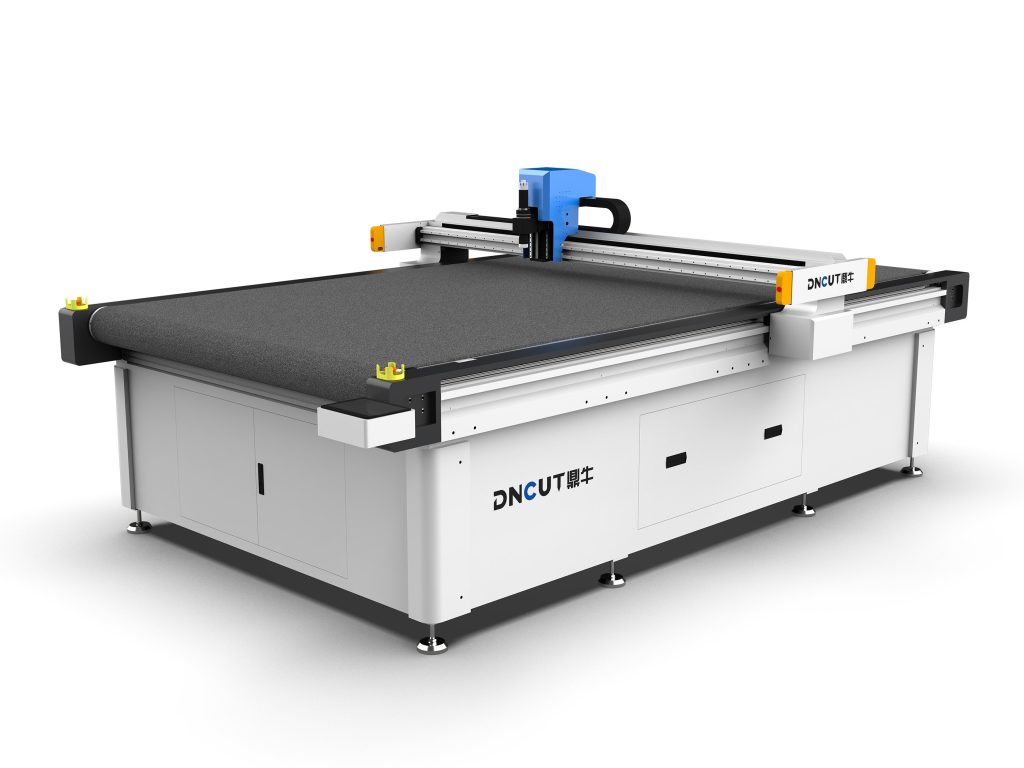
Cutting Process
Maintain a steady material feed to prevent blade deflection or material chipping caused by excessive force. For long-sized flooring, use auxiliary support stands to prevent the material from sagging. When cutting hard materials, appropriately reduce the feed speed and turn on the cooling system (if available). Listen carefully to the cutting sound; if any abnormality occurs, stop the machine immediately for inspection.
Common Problem Handling
- Burrs at the cut: May be caused by a dull blade or excessive feed speed; replace the blade or reduce the speed.
- Skewed cutting: Check whether the guide rail is loose or whether the material is placed flat.
- Blade breakage: Usually caused by cutting material that is too thick or improper blade installation; strictly follow the equipment parameters.
Maintenance and Care
Regularly clean the equipment, especially the guide rails and transmission components, to prevent dust accumulation. After each shift, clean off residue on the blade/saw blade. Lubricate moving parts according to the manual and check belt tension. When not in use for a long time, disconnect the power supply and take dustproof and moistureproof measures. Regularly inspect electrical wiring to ensure safety.
Summary
Choosing the right floor cutting machine requires comprehensive consideration of material type, cutting accuracy, production efficiency, and budget. Proper use and maintenance of the equipment can extend its service life and ensure cutting quality. We hope this guide helps you make an informed decision and improve the efficiency and effectiveness of your floor cutting operations.